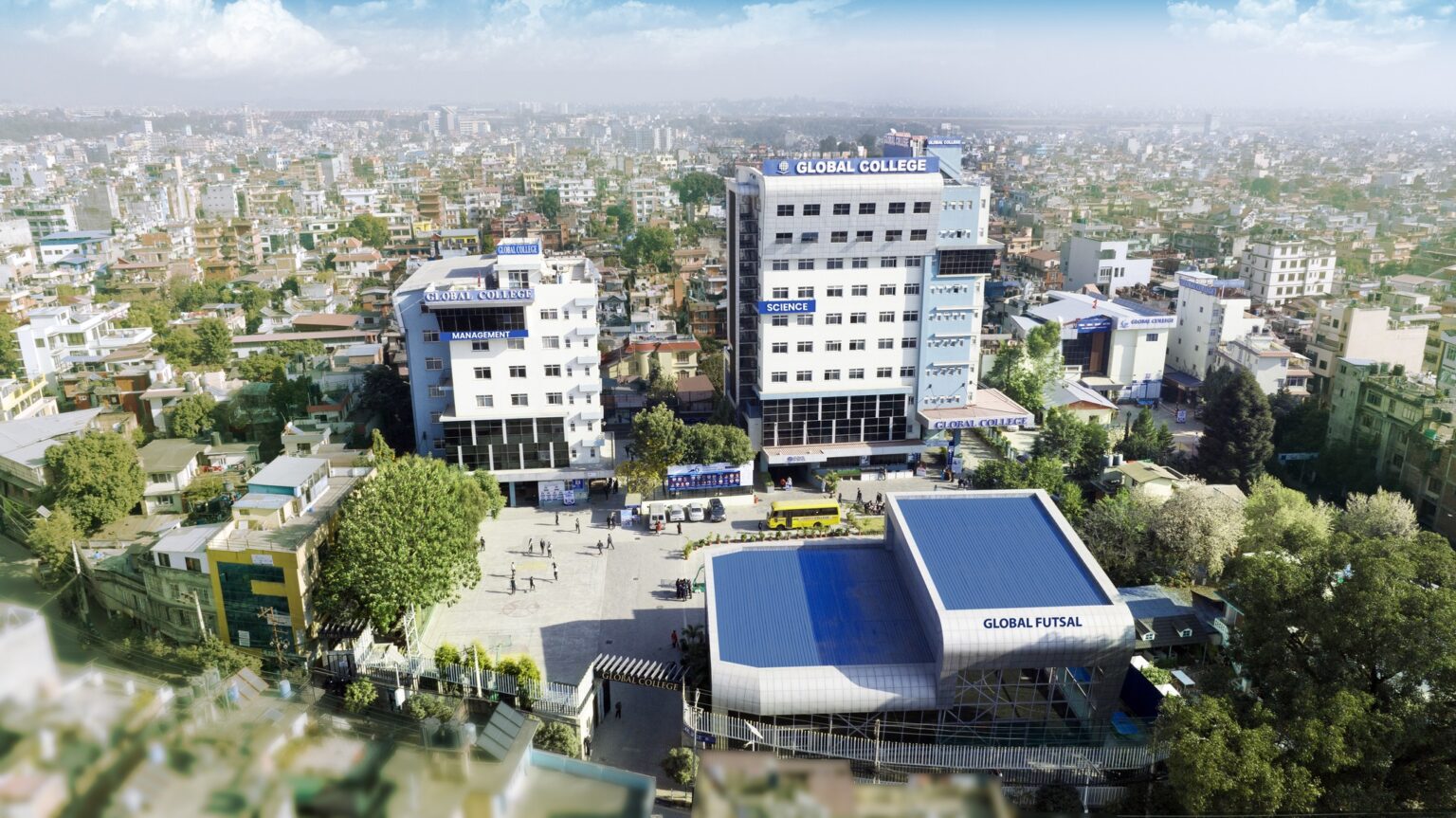
Global College of Social Science and Technology (GCST) is a Purbanchal University-affiliated college in Mid-Baneshwor, Kathmandu. Established in January 2006 and formerly known as the College of Development Studies (CDS), the college offers the Master in Development Studies and Bachelor of Technology in Artificial Intelligence.
GCST follows a participatory and practical approach to education. Discussions, field visits, workshops, seminars, group work, research, and presentations form part of the academic experience. Students are encouraged to examine social and technical issues, exchange ideas, and connect classroom concepts with community and professional settings. The college also provides classroom, library, computer-lab, mentoring, scholarship, and student-activity support.
| Attribute | Details |
|---|---|
| College Name | Global College of Social Science and Technology |
| Abbreviation | GCST |
| Previous Name | College of Development Studies |
| Previous Abbreviation | CDS |
| Established | January 2006 |
| Affiliation | Purbanchal University |
| Location | Mid-Baneshwor, Kathmandu, Nepal |
| Programs | MDevS and B.Tech. in AI |
| Teaching Approach | Participatory and practical |
| MDevS Duration | Two years, four semesters |
| B.Tech. in AI Duration | Four years, eight semesters |
| MDevS Seats | 33 |
| B.Tech. in AI Seats | 48 |
GCST began in January 2006 as the College of Development Studies. Its academic identity was initially associated with development studies, including interdisciplinary study, field-based learning, research, and engagement with social issues.
The institution now operates as the Global College of Social Science and Technology. The current name reflects its academic coverage of both social science and technology through two undergraduate and postgraduate programs.
The college remains based in Mid-Baneshwor, Kathmandu, where it conducts academic activities for students enrolled in its development studies and artificial intelligence programs.
GCST is affiliated with Purbanchal University (PU). Its academic programs follow the relevant university structure, requirements, and examination arrangements.
The affiliation connects the college’s two programs with the university’s academic system while GCST manages teaching, student support, classroom activities, field engagement, and related academic work at the college level.
GCST offers one master’s program and one bachelor’s program.
| Program | Duration | Seats |
|---|---|---|
| Master in Development Studies (MDevS) | Two years, four semesters | 33 |
| B.Tech. in Artificial Intelligence | Four years, eight semesters | 48 |
The Master in Development Studies is an interdisciplinary postgraduate program covering development from social, economic, policy, and research perspectives. It brings together subject areas such as economics, sociology, public policy, health, education, and the environment.
Students examine development theories and their practical application. The program also covers data collection, interpretation, research methods, fieldwork, and thesis writing.
Learning activities include:
Group discussions and peer learning
Case studies and scenario analysis
Guest sessions with development professionals
Field-based activities
Collaborative projects
Independent research
Thesis preparation
Applicants are expected to hold a bachelor’s degree in a relevant field and meet the university’s academic criteria. The application process includes submission of an application form and academic records, followed by an entrance examination. An interview may also form part of the process when required.
The Bachelor of Technology in Artificial Intelligence is a four-year program divided into eight semesters. It has a total intake of 48 students.
The program is designed around the academic and practical study of artificial intelligence and related technology subjects. Its longer semester structure allows students to progress through foundational, technical, and applied areas over four academic years.
The college’s computer laboratory, classroom resources, project-based activities, and collaborative teaching practices support the technical nature of the program.
Teaching at GCST is structured around participation rather than one-way classroom delivery. Lectures are supported by discussion, practical assignments, case analysis, presentations, field exposure, and group work.
Students are encouraged to ask questions, discuss different viewpoints, and take part in collaborative academic activities. This approach is particularly relevant to development studies, where social issues require field observation and contextual analysis, and to technology education, where students need regular practical engagement.
Common learning activities include:
Classroom lectures followed by open discussion
Group assignments and peer learning
Workshops and seminars
Case-based academic work
Field visits and educational tours
Student presentations
Research discussions
Practical examples and simulations
Continuous academic feedback
The teaching process also gives students opportunities to work independently and in teams.
The faculty team includes educators, researchers, and development practitioners with experience in academic and professional work. Some faculty members have been involved in national and international projects and continue to take part in research and development-related activities.
Faculty members guide students through lectures, assignments, practical work, research, and presentations. Academic mentoring is also available for students working on research topics, assignments, and thesis planning.
The interaction between faculty and students is supported through discussion-based classes and continuous feedback. This gives students regular opportunities to clarify academic concepts and improve their work during the course of study.
GCST classrooms are arranged to support lectures, discussions, presentations, and group activities. Projectors and whiteboards are available for classroom teaching.
The classroom setup supports both conventional instruction and participatory sessions in which students present ideas, discuss cases, and work with classmates.
The college library contains books, journals, and research materials connected with its academic programs. Students also have access to digital resources for study and research.
The library is relevant to students completing assignments, reviewing academic literature, preparing presentations, and conducting research.
The computer laboratory provides internet access and software required for research, presentations, and technical academic work.
It supports students who need digital tools for data work, report preparation, research, programming, and course-related practical activities.
Student life at GCST includes academic and non-academic activities. Students take part in classroom discussions, workshops, presentations, cultural programs, educational tours, and recreational events.
Activities outside regular classes include:
Educational tours and local field trips
Cultural events and celebration programs
Research discussions
Student presentations
Sports and recreational activities
Guest talks
Group discussions on development topics
These activities create opportunities for students from different academic backgrounds to interact and work together.
Informal student groups arrange talks, invite guest speakers, and conduct discussions on development and related issues. These groups give students space to exchange ideas outside formal classroom sessions.
Student-led research discussions and presentations also contribute to the academic environment. Participation in such activities allows students to practise communication, coordination, and academic discussion.
GCST offers scholarship support for eligible students based on merit and financial need.
The available forms of support include:
Scholarships for academically performing students
Support for students from remote areas
Support for students from marginalized backgrounds
Assistance for students facing financial hardship
Scholarship decisions depend on the applicable college criteria and the student’s circumstances.
Research is part of the academic environment at GCST, particularly within the Master in Development Studies program. Students engage in fieldwork, data collection, presentations, independent research, and thesis writing.
Academic engagement at the college has included:
Participation in seminars and conferences
Faculty research published in journals
Student-led research activities
Internship experiences
Academic presentations
Field-based assignments
These activities place research and practical observation alongside classroom study.
GCST graduates have entered NGOs, research institutions, government agencies, and international organizations. Some have continued their education abroad, while others have worked in policy, research, and field-level development activities in Nepal.
These paths reflect the development studies background of the institution and the professional settings associated with research, public policy, community work, and development practice.
Students receive guidance for assignments, research, presentations, fieldwork, and thesis preparation. Mentoring provides a point of contact for students who need help organizing academic work or developing a research plan.
Continuous feedback is also part of the teaching process. Rather than relying only on final examinations or submissions, students can receive comments during classroom activities, assignments, discussions, and project work.
GCST has a focused academic structure built around two programs. Students can expect regular classroom participation, group work, practical assignments, research-related activities, and direct engagement with faculty members.
The MDevS program has a strong connection with social research, fieldwork, development theory, and public issues. The B.Tech. in AI program represents the college’s technology-focused academic area.
Across both programs, the college places emphasis on responsibility, critical thinking, participation, and the practical use of academic knowledge.
GCST stands for Global College of Social Science and Technology.
The college was previously known as the College of Development Studies, abbreviated as CDS.
GCST was established in January 2006.
The college is located in Mid-Baneshwor, Kathmandu, Nepal.
GCST is affiliated with Purbanchal University.
The college offers the Master in Development Studies and Bachelor of Technology in Artificial Intelligence.
The Master in Development Studies takes two years and is divided into four semesters.
The B.Tech. in Artificial Intelligence takes four years and is divided into eight semesters.
The MDevS program has 33 seats, while the B.Tech. in AI program has 48 seats.
The college follows a participatory and practical teaching approach involving discussions, assignments, field visits, workshops, seminars, presentations, and collaborative activities.
GCST offers scholarship support based on merit and financial need, including support for academically performing students and students from remote or marginalized backgrounds.
The college has classrooms with projectors and whiteboards, a library with print and digital resources, and a computer laboratory with internet access and academic software.