The London College
- Established2022
- Courses 2 offered
- Affiliation University of the West of Scotland
- Facilities24 listed
About The London College
The London College (TLC), Tinkune, Kathmandu, is a specialist institution that offers British undergraduate degrees in computing fields through an academic partnership with the University of the West of Scotland (UWS). Established in 2022 as an extension of the International School of Management and Technology (ISMT), the college focuses on modern areas such as BSc (Hons) Computing Science and BSc (Hons) Computer Networking.
Located at Tinkune, a key junction in Kathmandu, The London College gives students access to an international curriculum while studying in Nepal. Its programmes follow UK academic standards and are delivered within the context of local needs, making it suitable for students who want an international qualification without leaving the country.
Through its academic partnership with UWS and its connection with ISMT and other sister institutions, the college builds a learning route that links classroom study, practical exposure, and global degree recognition. Students study in Kathmandu while receiving a degree awarded by a UK public university, which can help them compete in both local and overseas job markets.
Highlights
-
Name of Institution: The London College (TLC), Tinkune, Kathmandu
-
Year of Establishment: 2022 A.D.
-
Location: Tinkune, Kathmandu, Nepal
-
Academic Partner University: University of the West of Scotland (UWS), United Kingdom
-
Programmes Offered: 4 Years British Degree - BSc (Hons) Computing Science and BSc (Hons) Computer Networking
-
Institution Type: British-degree centre offering UK honours degrees in Nepal
-
Primary Focus Areas: Computing, networks, cyber security, data-related fields, and emerging digital technologies
-
Sister Institutions (College Network): ISMT College (Kathmandu, Chitwan, Butwal, Pokhara, Itahari, Biratnagar), Stamford College Kathmandu (SCK), Chitwan College of Technology (CCT), and Kathmandu College of Technology (KCT).
- Scholarship: TLC provides up to a 100 percent scholarship to eligible students.
Academic Programs Offered
BSc (Hons) Computing Science
The BSc (Hons) Computing Science programme at The London College follows the curriculum of the University of the West of Scotland. It covers core foundations of modern computing along with advanced topics that reflect current practice in software and data-related work.
Across the four years, students study subjects such as:
-
Programming and software development
-
Web development and internet scripting
-
Database systems and data engineering
-
Data structures and algorithms
-
Operating systems and cloud services
-
Fundamentals of data science and artificial intelligence applications
-
DevOps, mobile development, and big data topics
-
A final-year honours project in a chosen area of computing
The programme combines classroom teaching with practical tasks, projects, and group work. Students build problem-solving habits, coding fluency, and an understanding of how computing systems operate in real settings. Common career paths after graduation may include software developer, data analyst, systems analyst, AI or machine-learning roles, web and app developer, or IT consultant in business, industry, or the public sector.
BSc (Hons) Computer Networking
The BSc (Hons) Computer Networking programme prepares students to work with modern communication systems and networked infrastructure. It follows the UWS scheme and blends fundamental networking with newer topics such as cloud platforms, network security, and automation.
Key academic areas include:
-
Network concepts and architectures
-
CCNA-based modules in switching, routing, and enterprise networks
-
Applied mathematics for computing
-
Operating systems with a focus on network services
-
Unix and Windows server administration
-
Virtualisation and cloud computing
-
Information security management and network security
-
Wireless networking, network management, monitoring, and automation
-
A final-year honours project related to networking or security
Students spend significant time in lab settings, configuring routers, switches, servers, and virtual environments using industry tools. Graduates may pursue roles such as network engineer, systems administrator, cloud infrastructure specialist, network security analyst, infrastructure architect, or technical support engineer.
Admission Process
Eligibility and Entry Background
The London College delivers UK honours degrees; entry expectations follow British undergraduate norms and the partnership rules of UWS. In practice, applicants are generally expected to have completed 10+2 or equivalent secondary education from a recognised board or qualification framework, along with adequate grades and English language proficiency as required by the partner university and the college at the time of admission.
As detailed criteria can change according to university policy, applicants should refer to the latest admission notices or directly contact the college administration for current requirements, credit transfer rules, and any English-language conditions. This approach helps students rely on official and up-to-date information instead of outdated assumptions.
Application Steps
The college typically follows a structured admission sequence such as:
-
Initial enquiry and counselling at the TLC or ISMT information desk
-
Submission of application form with academic certificates, transcripts, and identification documents
-
Review of academic background against UWS entry norms
-
Possible interview, counselling discussion, or orientation session
-
Offer of place, followed by registration and fee payment within the stated period
Students are encouraged to keep copies of all documents, follow the official calendar, and clarify any credit transfer, gap-year, or work-experience issues directly with the college administration.
Orientation and Academic Induction
New students usually participate in briefing sessions that explain the UWS programme structure, assessment pattern, credit system, and academic support available at The London College. Such induction activities introduce learners to the learning platform, key staff members, and student support services in Kathmandu while also explaining how their degree connects to the parent university in Scotland.
Teaching Faculty and Learning Approach
The London College states that it employs qualified and experienced faculty members who bring teaching experience and field exposure into the classroom. The staff work within UWS quality-assurance systems while also responding to the Nepali context, so students receive both international curriculum content and local guidance.
Learning is built around a mix of lectures, lab classes, project work, and group activities. Students work on real-life cases, technical exercises, and team projects that build both subject knowledge and skills such as communication, collaboration, and independent study.
Professional computing practice modules, work-based learning units, and group projects help students connect academic material with workplace expectations. Throughout the programme, assessment may include written exams, lab tests, coursework, presentations, and the final honours project supervised by faculty members.
Infrastructure and Learning Facilities
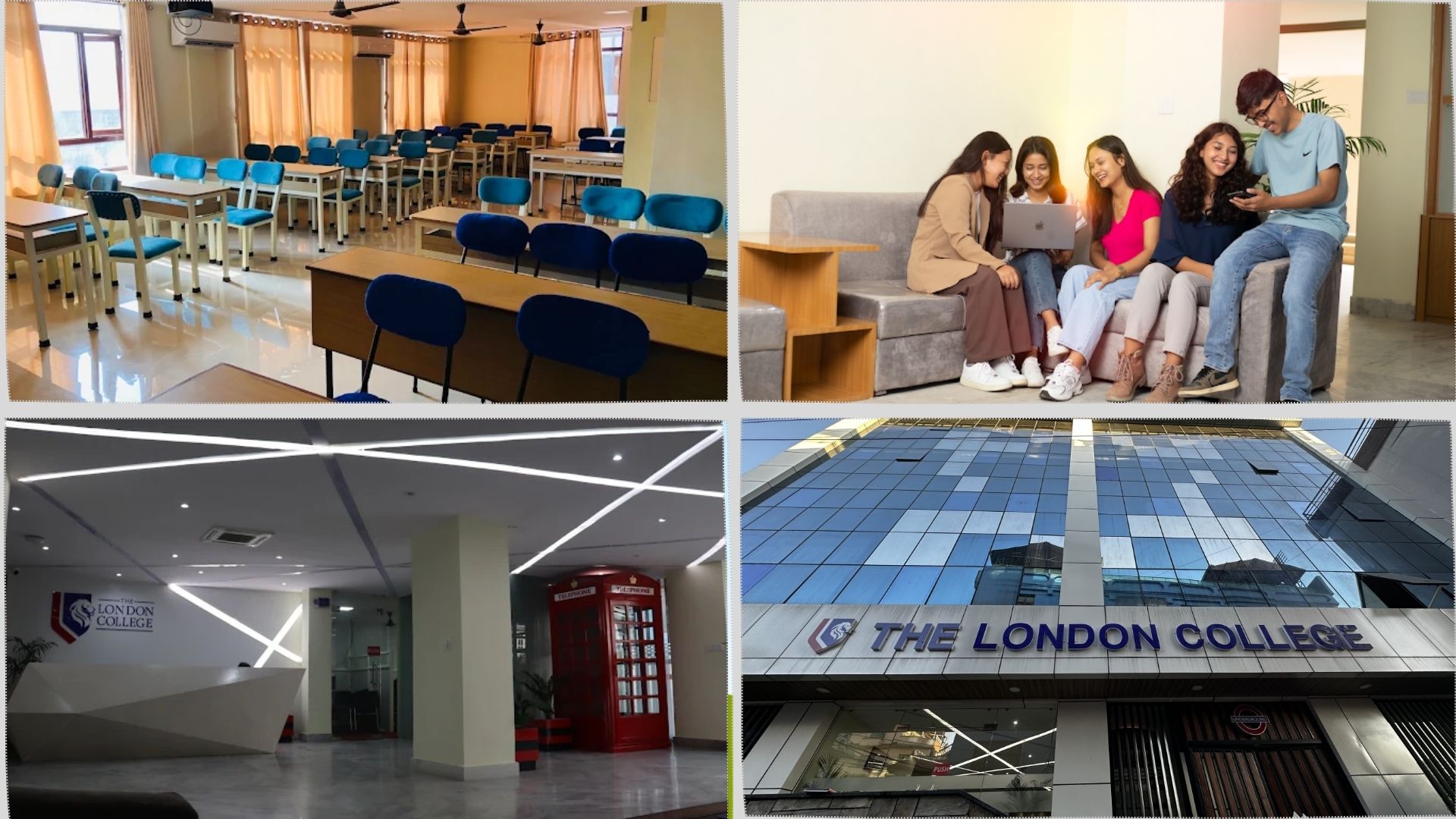
The London College highlights the use of modern facilities for computing and networking education. The campus includes computer laboratories, cyber-security and networking setups, and classrooms equipped with digital teaching tools. These facilities support modules in programming, networking, cloud services, data science, and AI-related subjects.
Students have access to hardware such as routers, switches, servers, and security devices, along with software platforms used in the global IT sector. This gives them space to practise configuration, scripting, deployment, and troubleshooting under supervision.
Additional resources may include a library or digital resource centre, reference material from UWS, and online learning platforms that support coursework, project guidance, and communication between staff and students. The college also mentions “tech-enabled classrooms” and learning spaces that support group discussions and presentations.
Student Life and Campus Experience
While the institution has a strong academic focus, its published information also highlights the value of overall student growth. The London College describes its environment as creative, challenging, and engaging, giving learners space to grow personally and academically.
Students can interact with peers from different batches of computing and networking, share ideas around projects and competitions, and participate in activities that develop confidence and communication. The connection with ISMT and other sister colleges further broadens the student community and exposure.
The college culture encourages students to take responsibility for their learning while receiving guidance from teachers and support staff. This helps them adjust to a university-style workload and builds habits that are useful for future employment or postgraduate study.
Extracurricular Activities (ECA)
The London College notes that it organises a range of activities beyond classroom study, which may include:
-
Technical events related to computing, networks, and cyber security
-
Group projects and presentations that simulate professional tasks
-
Co-curricular events under various courses and units
-
Club-type activities and informal learning circles within the broader institutional network
Such engagement supports interpersonal skills, leadership, and time management. Activities like project showcases, coding sessions, or security challenges can help students link their interests with structured academic work and keep in touch with emerging trends in digital technology.
Scholarships and Financial Support
The London College provides up to 100 percent scholarships mainly for students enrolled in its computing degrees.
-
BSc (Hons) Computing Science
-
BSc (Hons) Computer Networking
Scholarship support may come from two directions:
-
The London College Scholarships: Internal schemes based on academic performance, potential, or financial need, helping learners manage tuition and related study costs.
-
External Scholarships: Funding from other organisations, foundations, or agencies that recognise students pursuing IT and computing degrees.
Institutional Milestones
Even as a comparatively new institution, The London College has several notable points in its short history:
-
Establishment in 2022 as a dedicated centre for UK computing degrees in Nepal
-
Formal academic partnership with the University of the West of Scotland for BSc (Hons) Computing Science and BSc (Hons) Computer Networking
-
Integration into a broader network of institutions including ISMT and technical colleges in various cities
-
Development of a curriculum and delivery model that follow British honours-degree structures while running in Kathmandu
Why Choose The London College, Kathmandu?
Students considering The London College often focus on a mix of academic, practical, and future-career reasons:
-
UK Honours Degree in Nepal: Learners study in Kathmandu but receive a UWS degree, which carries international recognition and can support further study or work abroad.
-
Focused IT and Networking Programmes: The college specialises in computing-related disciplines rather than running a wide mix of unrelated programmes, giving clear identity to its academic offerings.
-
Curriculum Linked to Industry Practice: Modules include work-based learning, group projects, DevOps, virtualisation, network automation, security, and cloud systems, all of which reflect modern IT practice.
-
Modern Labs and Infrastructure: Students work with up-to-date hardware and software, including CCNA-aligned components and cloud platforms.
-
Supportive Career Services and Alumni Links: The college mentions career-services support and a growing alumni network that can assist with guidance, referrals, and mentoring.
Message from the Principal
In the official message, the Principal explains that The London College was founded with a clear aim: to offer internationally recognised qualifications through a UK university while responding to the educational needs of Nepal. The college seeks to keep higher education comparatively accessible in cost and at the same time aligned with industry expectations.
The Principal notes that students at TLC work toward a UK degree that can open future academic and career doors. The message stresses that the college wants graduates who not only know their subject, but can apply their knowledge and problem-solving skills in real work settings. Project work, classroom discussion, presentations, and varied forms of assessment are used to involve students actively in the learning process.
The Principal invites prospective students to visit the campus, talk with the academic team, and explore the programmes and learning environment directly so that they can decide whether the college matches their own aspirations.
Conclusion
The London College (TLC) in Tinkune, Kathmandu offers British honours degrees in Computing Science and Computer Networking through its academic partnership with the University of the West of Scotland. Since 2022, it has developed academic programmes, laboratories, and internal systems that follow UK university standards while taking into account the needs of Nepali students who want an international path in IT-related studies.
With its focused computing programmes, links with ISMT and sister institutions, scholarship opportunities, and a growing learning community, The London College is one of the available options in Nepal for students who wish to build their future in software, networking, cyber security, and related fields while studying in Kathmandu.
Frequently Asked Questions (FAQ)
How new student-friendly is the BSc (Hons) Computing Science programme?
The BSc (Hons) Computing Science programme is suitable for students who are new to computing as well as those who already have some background. In the early semesters, you start with the basics: computing systems, web development, introductory programming, mathematics for computing, and database systems.
Once this foundation is in place, the course gradually moves towards topics such as data science and AI-related applications. Throughout this process, faculty members guide you so that you build confidence before working with more complex ideas.
What are the main advantages of studying at The London College instead of going abroad?
At The London College, you can study in Kathmandu and still earn a British honours degree from the University of the West of Scotland. This helps you manage living costs and stay close to your family while following an international curriculum.
You study within the UWS degree framework, use current IT tools, and follow UK academic standards without needing to move to the UK for the full duration of your studies.
How does the college connect students with industry practice?
The college includes industry-linked modules, work-based learning units, and group projects in the curriculum. Where available, placements and practical tasks give students exposure to real work situations.
The London College maintains relationships with professional bodies and partner organisations, organises interactions with practitioners, and uses real-world cases in coursework. This helps students understand how the concepts they study are used in actual workplaces.
What facilities support the networking and cyber security components?
The college runs computing and networking laboratories equipped with routers, switches, servers, and security tools in line with CCNA and current networking practice.
Students work on configuration, troubleshooting, virtualisation, cloud networking, and information security exercises inside these labs. This hands-on work helps them connect theory with day-to-day technical tasks.
What scholarships are available for IT students at The London College?
The London College offers its own scholarships for selected IT programmes, with particular focus on BSc (Hons) Computer Science and network-related degrees. Students can also look into external scholarships provided by other organisations.
Some scholarship schemes may also include opportunities for mentoring, involvement in research activities, or internships. For the latest information on categories, eligibility, and application deadlines, applicants should contact the college or refer to its official information channels.
Affiliations
Courses Offered 2
Infrastructure & Facilities 24
- Cafeteria
- Library
- Sports
- Internet
- Auditorium
- Science Lab
- A/C Classrooms
- Health Care
- Conference
- Multimedia
- Parking
- Journal
- Placement
- Counselling
- Scholarships
- E-library
- Tour
- Online Learning
- CCTV
- Computer Lab
- Classrooms
- Club
- Conference Hall
- ECA
Latest Updates & Notices
Contact The London College, Kathmandu
- AddressTinkune, Kathmandu, Nepal
- Phone +977-1-9802343351
- Phone +977-1-5912578
- Phone +977-1-5912579
- Email admission@thelondoncollege.edu.np
- Website thelondoncollege.edu.np
- Contact personThe London College, Kathmandu