How to apply this course
Hi sir/ma'am. I am a SEE passed student and i want to study diploma in pharmacy. So, it would be great if you would tell me that what is the process of filling a form for it . Thank You for your service.




College of Medical Sciences (CMS) is a private medical institution in Bharatpur, Chitwan, Nepal, established through an agreement signed on 8 August 1993 between the International Society for Medical Education Private Limited (ISME) and the Ministry of Education, Government of Nepal. CMS enrolled its first MBBS batch in 1996 and functions as an academic campus integrated with a tertiary-care teaching hospital for patient-based learning.
Affiliated to Kathmandu University, CMS runs undergraduate, postgraduate, and super-specialty programs in medicine, dentistry, nursing, and allied health fields. The institution’s academic approach centers on clinical competence, ethical practice, community-oriented care, and structured training that moves from foundational sciences to supervised clinical responsibility.
| Item | Details |
|---|---|
| Name | College of Medical Sciences (CMS) |
| Location | Bharatpur, Chitwan, Nepal (Mahendra National Highway) |
| Founding milestone | Agreement signed on 8 August 1993 |
| First MBBS intake | 1996 |
| University affiliation | Kathmandu University |
| Main clinical training site | CMS Teaching Hospital (tertiary-care teaching hospital) |
| Academic levels | Undergraduate, postgraduate (MD/MS), super-specialty (DM/M.Ch), and allied health programs |
| Library resources | 20,000+ reference books; internet access; HINARI access to 17,000+ full-text medical journals; extended hours |
| Lecture infrastructure | Seven lecture halls, each accommodating 150+ students |
| Hostels | Three hostel campuses with separate arrangements for male and female students |
| Key clinical milestone | Kidney transplantation performed on 11 April 2015 in Bharatpur (outside Kathmandu Valley) |
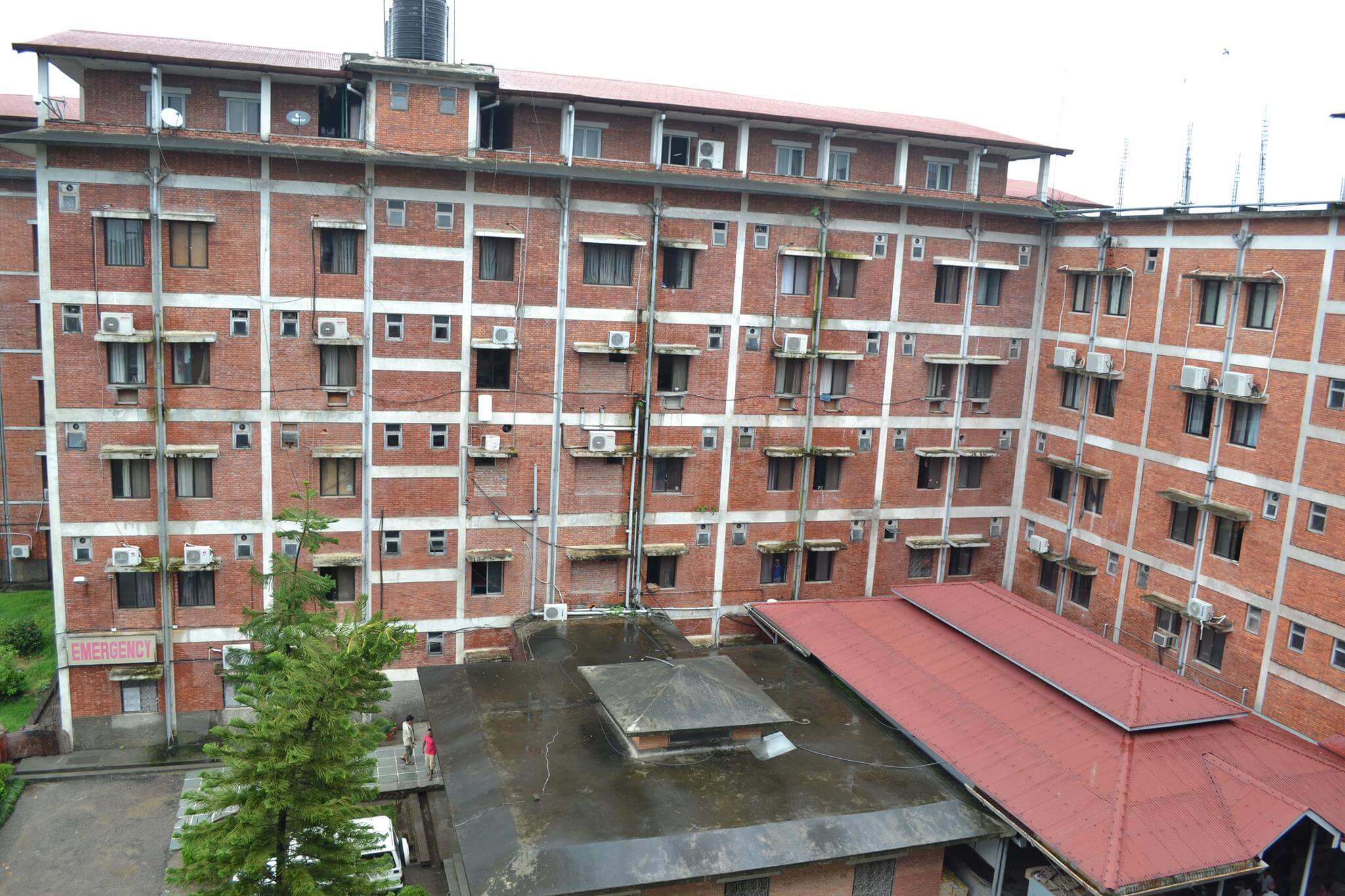
CMS began as a collaborative initiative aimed at expanding medical education and health services beyond Kathmandu Valley. The institution has developed over time through phased improvements in academics, hospital services, and student support facilities. CMS operates under management established by Shri Nagender K. Pampati and Dr. V. Natraj Prasad, with leadership that combines academic governance and hospital administration to keep clinical teaching aligned with patient care delivery.
The institution’s long-term direction is guided by a clear commitment to ethics, professional conduct, and community-oriented healthcare. Students receive structured exposure to foundational sciences, clinical medicine, and supervised hands-on training in hospital and community settings. Research is treated as an essential academic responsibility, focused on local health priorities, cost-effective healthcare delivery, and clinically meaningful learning.
To function as an independent Centre of Excellence committed to high quality specialized health care services in the country, and to conduct research on relevant local health problems for the holistic development of community services and medical education.
To actively promote and preserve high values and ethics in education; produce medical and paramedical professionals of global standards; build a centre of excellence in medical education; and maintain modern facilities and equipment for specialized health care services in the region.
CMS is affiliated to Kathmandu University and recognized by the Nepal Medical Council. Recognition and listings referenced in institutional records also include the Sri Lanka Medical Council, the General Medical Council of Great Britain (UK), the Educational Commission for Foreign Medical Graduates (ECFMG), and inclusion in WHO’s World Directory of Medical Schools and FAIMER (USA). Regulatory recognition and directory listings can be updated by external authorities, so applicants who need a specific regulator’s eligibility pathway should confirm the current status before applying.
CMS maintains an academic environment built around classroom instruction, small-group learning, and hospital-based clinical education.
Key academic facilities include:
Multi-storied, ventilated lecture halls equipped with modern audio-visual tools
Seminar rooms and tutorial rooms for group teaching
Media lab and computer-aided learning centre
CCTV connectivity across learning and clinical areas
Air-conditioned OPDs and major academic and clinical departments
CMS has seven lecture halls. Each hall accommodates over 150 students, with furniture and audio-visual equipment designed for large-group teaching and interactive sessions.
The Central Library supports undergraduate and postgraduate learning with extended hours and a mixed collection of print and digital resources.
Library features include:
Air-conditioned reading environment
More than 20,000 reference books
National and international journals
Internet connectivity in the library and departments
Access to HINARI, providing access to more than 17,000 full-text medical journals
Departmental libraries maintained by academic departments
Personalized information service with 10 tablet computers
Photocopying facilities
Operating hours: 7:00 AM to 11:00 PM on working days; up to 5:00 PM on Saturdays
The library also supports local medical professionals in Bharatpur by extending services to meet professional reference needs.
CMS Teaching Hospital is the core site for clinical teaching, bedside learning, and supervised procedural exposure. The hospital functions as a tertiary-care service centre and a structured training environment where students learn to integrate history, examination, diagnostics, and management under faculty guidance.
Institutional records reference both a 500-bed development phase and a 1050-bed tertiary-care facility. The hospital has expanded through staged development, and the campus operates as a large clinical teaching platform with ICU and OT complex services supporting undergraduate and postgraduate training.
Clinical education runs through:
OPD postings and supervised history-taking
Ward postings and bedside teaching
Exposure to diagnostics and imaging workflows
Clinical skill development under supervision
Structured rotations aligned with curriculum and examination requirements
Internship training through compulsory rotating postings
CMS runs programs in medicine, dentistry, nursing, allied health sciences, and postgraduate clinical and basic sciences. Program availability and seat allocation depend on academic year approvals and program matrices.
MBBS
Bachelor of Dental Surgery (BDS)
BSc Nursing
Bachelor of Physiotherapy (BPT)
BSc Laboratory Medicine
BSc Medical Imaging Technology (BScMIT)
Bachelor in Health Informatics
Bachelor in Yogic Science and Wellbeing (BYSW)
BSc Nursing
BSc Nursing (Post Basic)
BMLT (3 years)
Staff Nurse program
Pharmacy program
Postgraduate training is offered in basic medical sciences and clinical sciences.
Basic Medical Sciences (3 years)
MS Anatomy
MD Physiology
MD Biochemistry
MD Pathology
MD Microbiology
MD Pharmacology
MD Community Medicine
MD Forensic Medicine
Clinical Sciences
MD General Medicine
MD Paediatrics
MD Anaesthesiology
MD Radio-Diagnosis
MD Dermatology, Venereology & Leprosy
MS General Surgery
MS Orthopaedics
MD Obstetrics & Gynaecology
MS Otorhinolaryngology
MS Ophthalmology
MD General Practice (MDGP)
Super-specialty training is offered in:
DM Cardiology (3 years)
DM Neurology (3 years)
DM Nephrology (3 years)
DM Gastro Medicine (3 years)
DM Gastroenterology
DM Neonatology
M.Ch Urology (3 years)
M.Ch Cardio Thoracic & Vascular Surgery (3 years)
M.Ch Gastro Surgery (3 years)
M.Ch Neuro Surgery (3 years)
M.Ch GI Surgery
M.Ch Neurosurgery
M.Sc. Microbiology & Applied Molecular Biology
M.Sc. Physiology
M.Sc. Anatomy
A program-seat matrix referenced for Kathmandu University includes:
MBBS: 130 seats
BDS: 50 seats
BSc Nursing: 60 seats
BPT: 20 seats
BSc Laboratory Medicine: 15 seats
BScMIT: 10 seats
Bachelor in Health Informatics: 30 seats
MD/MS/DM/M.Ch seats vary by specialty (examples include Anaesthesiology, Dermatology, Internal Medicine, Obstetrics & Gynaecology, Paediatrics, Radio Diagnosis, Surgery, Orthopaedics, ENT, Community Medicine, Pathology, Microbiology, Pharmacology, Biochemistry, Anatomy, and several DM/M.Ch programs with limited seats)
MBBS intake has also operated in a 150-seat model with a defined category distribution, including Nepal Government nominees and self-financing categories. The active seat matrix depends on the academic year and regulatory allocation.
The MBBS program runs for five and a half years:
Pre-clinical phase: 2 years (4 semesters)
Clinical phase: 2.5 years (5 semesters)
Compulsory rotating internship: 1 year
Core disciplines include:
Anatomy
Physiology
Biochemistry
Pharmacology
Pathology
Microbiology
Community Medicine
The pre-clinical phase builds foundational knowledge and introduces early clinical orientation. Medical informatics is included for computer literacy relevant to medical education and clinical systems.
Clinical teaching covers major clinical and para-clinical disciplines through structured hospital postings and academic sessions. Teaching methods include:
Hospital postings and bedside teaching
Didactic lectures
Seminars and group discussions
Integrated teaching sessions
Problem-based learning sessions
Fieldwork and community exposure
Students are expected to maintain full engagement in academic activities. A minimum of 75% attendance is required separately in theory and practical classes to remain eligible for university examinations, except under unavoidable circumstances.
Academic evaluation includes internal assessment and university examinations:
Internal assessments are held at the end of each semester
Eligibility for university examinations depends on meeting internal assessment requirements
University examinations in basic medical sciences are held at the end of the first and second year
Promotion to later semesters depends on clearing the required subjects within the defined time limits
Supplementary examinations are conducted every six months as per examination schedules
The internship is a 12-month compulsory rotating residential training period in teaching hospital units and community health centres. The internship focuses on:
supervised clinical responsibility
safe decision-making and escalation
practical skills and patient communication
team-based care delivery
professional conduct and ethics in real clinical settings
On completion, graduates are prepared to:
apply principles and practice of modern medicine
diagnose and manage common clinical conditions under accepted standards
respond to emergencies and initiate early management
communicate effectively with patients and relatives
participate in immunization programs and community health activities
manage medico-legal responsibilities within clinical practice
work in multidisciplinary teams
maintain ethical practice and professional responsibility
The BDS program started in 2011. The academic program runs for a minimum of four and a half years, followed by a one-year compulsory internship after passing the final university examination.
BDS training progresses through:
Part I: Basic Medical Sciences and Dental Sciences
Part II: Dental Clinical Sciences and related medical clinical sciences
Students move into advanced clinical training after meeting the subject clearance requirements for earlier phases within the stipulated time.
Academic regulations include:
Merit award in the Final BDS University Examination remains applicable even when one or more subjects were cleared in compartmental examinations, provided the final examination is completed within the minimum stipulated time of four and a half years
Re-totaling is governed by university examination rules; re-totaling does not apply to practical and clinical examinations
Promotion to Semester IX (Final BDS) requires successful completion of Part II (3rd Year) and Part III (4th Year) examinations
Compartmental examinations are held after six months for failed subjects, as per university schedule
Disciplinary actions are governed by university rules; cancelled examinations due to disciplinary action do not count as attempts, while examinations undertaken before suspension are counted
Admissions depend on program level, applicant category, and academic year allocation.
MBBS intake has operated under a category distribution that includes Nepal Government nominees and self-financing students (including foreign applicants and self-financing Nepali students).
Selection routes include:
Kathmandu University competitive medical entrance examination and counseling for self-financing Nepali students
Government nomination pathways for allocated seats, linked to entrance test participation and selection criteria
Entrance examination and counseling pathways for foreign candidates, with acceptance of recognized entrance tests from the relevant year in the candidate’s country where applicable
Applicants enter through academic pathways that include:
10+2 or equivalent with Physics, Chemistry, Biology, and English, meeting minimum subject-wise and aggregate requirements
A Levels equivalence considerations where applicable
Bachelor of Science pathway in relevant sciences, subject to prior completion of the required foundational science subjects
Health sciences certificate-level pathways where applicable, aligned with eligibility rules and entrance requirements
International applicants typically prepare:
Grade XII / A Level transcript or mark sheet
Passport page showing name and nationality
Entrance test score sheet where available (examples referenced include NEET/SAT)
Recent photograph
Applicants who need category-specific requirements should confirm the current list at the time of application.
The Medical Education Department supports academic governance, teaching quality, and continuing education. Core functions include:
policy decisions for undergraduate teaching and training by senior faculty leadership
postgraduate academic committee guidance for postgraduate training across departments
periodic training programs for faculty development and continuing education for health professionals
teacher training workshops aligned with advances in teaching technologies
orientation programs on vaccine-preventable diseases organized through WHO-linked activities
The Social Welfare Department supports community-oriented healthcare by:
creating public awareness about health and prevention
motivating community members to access health services through relevant agencies
encouraging early diagnosis and timely treatment
supporting prevention of disability through awareness and early intervention
Community engagement remains an important part of clinical learning and professional formation, building skills in communication, public health awareness, and service delivery beyond hospital settings.
CMS maintains three hostel campuses with separate arrangements for male and female students:
Bageshwori (Juniors)
Chitwan Keyman (Juniors)
Kshetrapur (Senior Girls + Interns)
Student welfare and supervision include:
hostel wardens housed within hostel blocks
some senior professors accommodated on campus
guest room for parents and a visitor waiting room
campus hospital attended by qualified doctors for emergency medical services
an emergency vehicle stationed on campus for transport when hospitalization is required
Hostel campuses provide mess and canteen services for students and staff. Meal options include Nepali, South Indian, North Indian, Chinese, Continental, and other preparations. Food preparation follows hygienic supervision practices to support nutrition and consistency.
A Student Amenities Center operates within the hostel complex, supporting day-to-day needs such as:
stationery
photocopy services
internet access
snacks and basic supplies
Campus life includes facilities for physical activity and wellbeing:
indoor and outdoor playgrounds
yoga facilities
gymnasiums
The Principal’s administrative office is located within the CMS Teaching Hospital premises for access by staff, students, and the public. Core administrative sections operate in the same premises, including:
personnel, establishment, and general administration
fiscal and planning
medical education wing
academic and examination cell
public relation office
central stores and purchase section
estate office
Operational support includes:
maintenance engineering
civil construction maintenance
computer maintenance supported by trained technical staff
safe drinking water supply maintained through facility teams
generators for emergency power supply in Bageshwori and hospital complexes, and in hostels
A fleet of buses and other vehicles supports transport for students, faculty, and staff across college and hospital needs
The security department is headed by a retired army officer and supported by security guards working around the clock to maintain safety of life and property
CMS is located on the Mahendra National Highway in Bharatpur, Chitwan, offering access by road and air.
Approximate distances include:
146 km from Kathmandu
240 km from Gorakhpur (India)
126 km from Raxaul (India)
Access routes also connect through Kakarvitta with proximity to New Jalpaiguri and Siliguri (West Bengal).
International travel connects through Kathmandu. Domestic flights from Kathmandu to Bharatpur/Narayangarh take about 20 minutes. Taxi services connect the airport to the teaching hospital in about five minutes.
On 11 April 2015, a kidney transplantation was performed in Bharatpur at CMS, recorded as the first successful kidney transplantation outside Kathmandu Valley.
MBBS: 2213
MD/MS: 290
DM/M.Ch: 30
BDS: 178
Graduate totals are updated over time, so applicants seeking current figures for a specific year should confirm the latest count.
CMS is located in Bharatpur, Chitwan, Nepal, on the Mahendra National Highway, with access by road and domestic flights through Bharatpur/Narayangarh.
CMS is affiliated to Kathmandu University.
CMS runs MBBS and BDS programs, along with nursing, physiotherapy, laboratory medicine, medical imaging technology, health informatics, and postgraduate programs including MD/MS and DM/M.Ch super-specialty training, plus selected master’s programs in basic medical sciences.
MBBS runs for five and a half years: two years pre-clinical, two and a half years clinical, and a one-year compulsory rotating internship.
Yes. CMS maintains three hostel campuses: Bageshwori (Juniors), Chitwan Keyman (Juniors), and Kshetrapur (Senior Girls + Interns), with separate arrangements for male and female students.
The Central Library holds more than 20,000 reference books, provides internet access, and supports access to medical journals through HINARI. Library hours extend from 7:00 AM to 11:00 PM on working days and up to 5:00 PM on Saturdays.
Self-financing Nepali applicants enter through Kathmandu University’s competitive medical entrance examination and counseling processes. Government nomination pathways follow allocated seat rules linked to entrance test participation and selection criteria.
International applicants typically prepare academic transcripts (Grade XII/A Levels), passport identification, entrance test scores where applicable, and a recent photograph. Category-specific requirements can vary by intake year.
Hi sir/ma'am. I am a SEE passed student and i want to study diploma in pharmacy. So, it would be great if you would tell me that what is the process of filling a form for it . Thank You for your service.