Dibya Jyoti Multiple Campus (दिव्य ज्योती बहुमुखी क्याम्पस) is a community-run, non-profit higher education institution located at Bardaghat-2, Chisapani, Nawalparasi (Bardaghat Susta West), Lumbini Province. Established on 16 Mangsir 2047 B.S. (02 December 1990), the campus was formed through the efforts of social workers, academicians, and administrators to expand access to higher education in the area. It is affiliated with Tribhuvan University and recognized by the University Grants Commission (UGC).
The campus began with Proficiency Certificate Level studies in Humanities and Social Sciences and later expanded into bachelor’s and master’s programs in management, education, and humanities. Over the years, it has built its identity as a community campus that serves students from diverse backgrounds, including economically disadvantaged and marginalized groups.
Its academic direction combines affordability, access, and steady institutional development, while its current work includes academic quality improvement, infrastructure expansion, teacher training, scholarship support, and continued progress in the QAA process.
Established: 1990 AD (2047 B.S.)
Location: Bardaghat-2, Chisapani, Nawalparasi (Bardaghat Susta West), Lumbini Province
Affiliation: Tribhuvan University
Recognition: University Grants Commission (UGC)
Institution Type: Community campus, TU-affiliated, and QAA-accredited by UGC Nepal.
Campus Chief: Sagarmani Pandey
Programs Offered: BBA, B.Ed., BBS, BA, MBS, M.Ed.
Academic Team: 32 teaching staff and 10 non-teaching staff
Land Area: 7-10-0 bighas
Academic Scope: Bachelor’s and master’s programs in management, education, and humanities
Contact: dibyajyoticampus2047@gmail.com
Phone: +977-78-580031 / 078-580209 / 078-580509 / 9857080759
Dibya Jyoti Multiple Campus was established to make higher education available to students in Bardaghat and nearby areas at a manageable cost. In a district where there was no constituent campus of Tribhuvan University, the institution took on a significant educational role. Its background reflects a community initiative rather than a commercial model, and that orientation still shapes its structure and priorities.
The campus identifies itself as a non-profit institution committed to accessible higher education. It has placed consistent emphasis on serving students from Dalit, Madhesi, Tharu, Muslim, Indigenous, women, low-income, and other underrepresented groups. This social purpose is visible in its scholarship practices, fee concessions, community engagement, and academic expansion from bachelor’s to master’s level.
Its vision focuses on national recognition in higher and technical education. Its mission centres on affordable education, social uplift, production of qualified graduates, labour-market relevance, and academic research. The stated institutional goals include academic growth, equal access, stakeholder satisfaction, graduate placement, institutional sustainability, and gender and social inclusion.
The campus received UGC accreditation in 2075 B.S. It has also completed the first phase of the QAA process, and the SSR has been submitted for the second cycle. The campus has continued to work on its academic and physical condition with support from the UGC and different levels of government. Alongside this, it has aimed to build a more research-oriented teaching environment and a stronger academic base for long-term institutional growth.
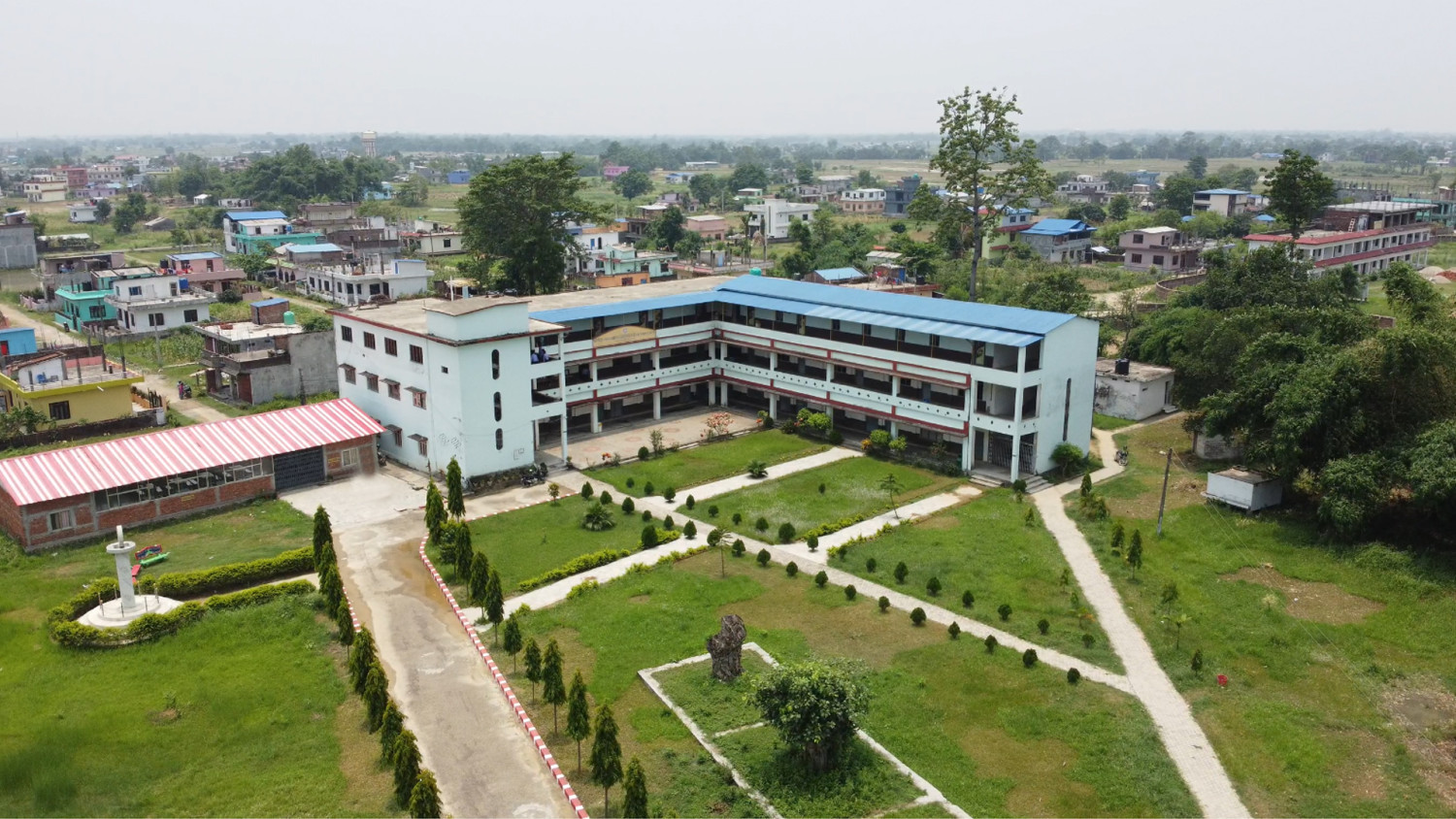
Its location also contributes to its role. The campus is situated around the middle section of the East-West Highway and near Daunne hill, giving it visibility and access for students from Bardaghat and surrounding areas. The institution describes its setting as peaceful and pleasant, and this has become part of the academic atmosphere it presents to students and guardians.
Dibya Jyoti Multiple Campus runs programs under the faculties of management, education, and humanities. The campus offers both bachelor’s and master’s level study under Tribhuvan University.
The management stream includes BBA, BBS, and MBS. At the campus level, the management areas mentioned include account, finance, and marketing, while BBA is also presented with account, finance, marketing, and CSIT. BBS follows the TU four-year annual structure. BBA follows the TU semester structure of 4 years and 8 semesters, while MBS follows the semester structure of 2 years and 4 semesters.
BBS is designed for broad management study and builds academic grounding in business, economics, law, communication, accounting, marketing, research, and concentration areas. BBA is more structured around managerial training and modern business education. MBS extends study to advanced management-level coursework in the TU semester system.
The education faculty offers B.Ed. at the bachelor’s level and M.Ed. at the master’s level. At Dibya Jyoti Multiple Campus, the B.Ed. subject areas listed are English, Health, Nepali, and Mathematics. The M.Ed. subjects in operation are Nepali and EPM.
The TU four-year B.Ed. is an annual-system program designed to prepare competent teachers for secondary-level teaching. It combines communication skills, professional core courses, specialization major and minor areas, and teaching practicum. The M.Ed. is a two-year, four-semester program under the Faculty of Education and is structured around professional core courses, specialization courses, teaching practice, and thesis writing.
The humanities stream at the campus operates BA at the bachelor’s level. The subject areas listed for BA include English, Sociology, Economics, Nepali, and Political Science. TU’s four-year BA structure provides an interdisciplinary space for study under the Faculty of Humanities and Social Sciences.
BA: 29/02/2055 B.S. (12/06/1998)
BBS: 19/03/2059 B.S. (03/07/2002)
B.Ed.: 17/08/2064 B.S. (02/12/2007)
MBS: 10/11/2064 B.S. (22/02/2008)
M.Ed.: 14/10/2067 B.S. (28/01/2011)
BBA: 21/10/2077 B.S. (03/02/2021)
Academic registration, examinations, and results follow TU rules, faculty requirements, and the applicable academic calendar. Annual-system and semester-system programs both operate at the campus according to TU faculty structures. This gives Dibya Jyoti Multiple Campus a mixed academic profile, with traditional annual programs such as BBS and B.Ed. alongside semester-based programs such as BBA, MBS, and M.Ed.
Admission at Dibya Jyoti Multiple Campus follows the rules of Tribhuvan University, the concerned faculty, and campus notices.
Admission notices are published by the campus for available programs.
Eligible applicants submit the prescribed application form with the required academic records.
Selection may follow merit, entrance procedure, or both, depending on the program.
BBA applicants are required to appear in the TU CMAT for bachelor’s programs.
Selected students complete admission by submitting documents and paying the prescribed fees.
Registration, examinations, and result procedures follow TU regulations and the academic calendar.
For master’s level study, admission is handled through the concerned campus or faculty process, and entrance requirements may apply according to the program.
For TU bachelor’s programs, general eligibility is completion of Class 12 or equivalent recognized by TU. For BBA, TU requires twelve-year schooling or equivalent, minimum D+ in each subject of Grade 11 and 12 with CGPA 1.80 or more, or at least second division in 10+2, PCL, or equivalent, along with completion of the admission procedure and the CMAT requirement.
For B.Ed., TU eligibility is Class 12, PCL, or equivalent, with subject-related requirements depending on the selected specialization area. For BA, TU accepts students who have passed Grade 12, PCL, or equivalent recognized by Tribhuvan University, subject to the faculty’s entry conditions. For master’s programs such as MBS and M.Ed., applicants are expected to hold the relevant bachelor’s qualification recognized under TU rules.
Class 12 / +2 or equivalent academic transcript
Character certificate from the previous institution
Migration certificate if the previous board or university is different
Transfer certificate (TC)
Citizenship certificate or birth certificate copy
Passport-size photographs
Entrance scorecard if required by the program
Completed admission or application form
Admission fee payment receipt
Equivalence certificate for a foreign qualification
Bachelor’s degree transcript or marksheet
Bachelor’s degree certificate or provisional certificate
Character certificate from the bachelor-level institution
Migration certificate if the bachelor’s degree is from another university
Transfer certificate (TC)
Citizenship certificate or birth certificate copy
Passport-size photographs
Entrance scorecard if required by the program
Completed admission or application form
Admission fee payment receipt
Equivalence certificate for a foreign degree
The campus has 32 teaching staff and 10 non-teaching staff. This staffing base supports academic programs across management, education, and humanities at both bachelor’s and master’s levels.
The teaching process uses the traditional lecture method as a general foundation, but the campus also uses group discussion, field visit, presentation, and case study methods to make classroom work more student-oriented. Digital tools, including projector boards, are already part of teaching-learning activities. The institution has also worked to make classrooms more technology-friendly and has conducted training for teachers to improve teaching capacity.
Research orientation has also received attention. A two-day capacity enhancement training for teachers’ research work has been conducted, and the campus has identified the development of a research-based teaching environment as one of its major academic priorities. In practical terms, this means that the institution is not limited to classroom lectures alone; it is also trying to build a more active academic culture through research, discussion, and applied learning.
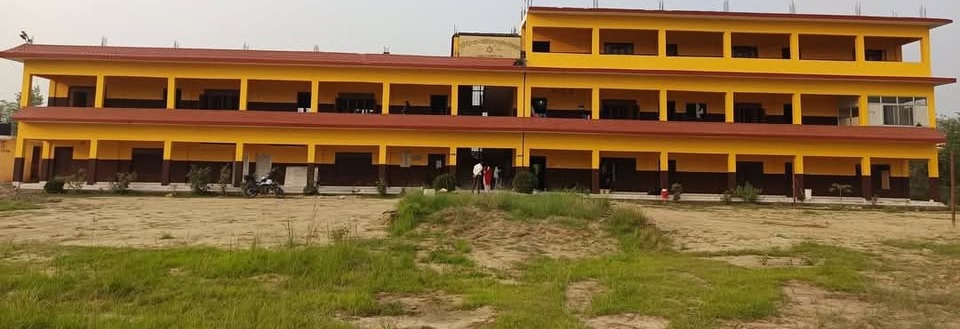
The campus occupies 7-10-0 bighas of land and has developed its physical base over time.
Classrooms and laboratories
Playground
Parking facilities
Library and library furniture reconstruction work
Administrative building under construction
Process moved forward for a well-equipped library building
Technology-friendly classrooms
Guest room and meeting room improvements
Drinking water tank repair and operation
Steel railings installed on verandas for safety
Compound wall and boundary works in selected sections
Two buses in operation from internal resources
Incubation centre built with the collaboration of Nabil Bank
Painting and maintenance work in academic and administrative buildings
Physical construction and maintenance have been supported by the UGC, federal government, provincial government, and local government. The campus reports that a UGC budget has been allocated for the construction of an administrative building, while another major allocation has been connected to the process for a new library building. The Education faculty building has also received maintenance, room addition, and painting support.
These facilities show a campus that is expanding in stages rather than all at once. Existing infrastructure supports regular teaching, while construction and improvement work continue around administration, library services, campus safety, transport, and student support spaces.
Student life at Dibya Jyoti Multiple Campus is shaped by a combination of academic routine, community connection, and an inclusive social base. The campus identifies a peaceful and pleasant environment as one of its strengths, and this fits with its role as a community institution serving local and nearby students.
The campus has built access for students from marginalized and low-income backgrounds into its identity. Scholarships, fee concessions, and support for bachelor’s to master’s study at minimal fees have helped make the institution more open to students who may otherwise face financial barriers. The presence of parent gatherings, stakeholder interactions, and community-based committees also means that campus life is connected closely to the surrounding society.
The institution also notes the existence of an educational counselling role at the local level. This adds another dimension to the student experience, especially for new entrants navigating program choice and admission. With management, education, and humanities programs operating together, students study in a campus environment that brings different academic interests into regular contact.
Entrepreneurship-related training conducted with Nabil SSE
Public health-related programs
City cleanliness drives
Blood donation activities
Health camps
Parent and stakeholder interaction programs
Study visits for teachers, students, staff, and management members
Community awareness activities connected to social responsibility
These activities show that the campus does not separate education from community participation. Student involvement extends beyond classroom study into social campaigns, awareness work, and skill-based training.
Dibya Jyoti Multiple Campus has maintained several forms of scholarship and financial support for students.
Scholarships for Dalit students
Scholarships for women students
Scholarships for Indigenous nationalities
Support for low-income students
Scholarships for meritorious students
Fee concessions based on internal and annual results
UGC scholarship support for selected students
Provincial government scholarship support
Bardaghat Municipality scholarship support
Continuation of the campus 3 percent scholarship policy for poor, meritorious, and students from backward areas
The campus records indicate that 49 students were selected under a UGC scholarship at the rate of Rs 15,000 per year for 4 years. Bardaghat Municipality selected 22 bachelor-level students for scholarships at Rs 8,000 and Rs 15,000. A provincial scholarship amount of Rs 2,85,000 was also received, with the interview process completed. Alongside outside support, the campus has continued its own scholarship policy and fee concessions for students who meet the internal criteria.
Established on 16 Mangsir 2047 B.S. (02 December 1990)
Expanded from PCL study to bachelor’s and master’s programs
UGC accreditation received in 2075 B.S.
First phase of the QAA process completed
SSR submitted for the second cycle of QAA-related work
BA, BBS, B.Ed., MBS, M.Ed., and BBA launched in different phases from 1998 to 2021
Entrepreneurship training agreement signed with Nabil SSE
Incubation centre constructed for entrepreneurship-related programs
BBA fourth-semester students Pooja Pandey and Anjana Kafle secured first and second positions with GPA 3.84 and 3.83
In BBA second-semester results, all participating students passed; Navindra Gupta and Sushma Regmi secured GPA 3.96, with recognition at the national level
In BBS fourth-year results, 69 students passed out of 91, including 1 distinction and 24 first divisions
Capacity enhancement training held for teachers’ research work
Classroom painting, guest room management, table reconstruction, railings, water tank repair, and wall works completed in phases
Two buses brought into operation from internal resources
TU-affiliated community campus with bachelor’s and master’s study options
Programs available in management, education, and humanities
Affordable-fee orientation as a non-profit institution
Scholarship support for marginalized, low-income, and meritorious students
Established academic presence in Bardaghat since 1990
Mix of annual and semester-based TU programs
Teaching methods that include lectures, discussion, field visits, presentations, and case studies
Classrooms, laboratories, library services, playground, parking, transport, and incubation support
Peaceful campus environment with strong community ties
Continued work on academic quality, infrastructure, and QAA-related progress
The message from Campus Chief Sagarmani Pandey presents Dibya Jyoti Multiple Campus as a community-based institution shaped by inclusion, academic responsibility, and local access to higher education. It places attention on students from socially and economically marginalized groups and links the campus mission to affordable education, scholarships, and a supportive academic setting.
The message also points to technology-friendly teaching, qualified faculty members, a peaceful study environment, and practical learning support. It presents the campus as a place where students and guardians can expect academic seriousness, social responsibility, and a community-oriented educational culture.
Dibya Jyoti Multiple Campus has grown from a community initiative into a TU-affiliated institution with programs across management, education, and humanities. Its institutional record shows a steady expansion of academic offerings, support for students from diverse backgrounds, and ongoing work in infrastructure, scholarships, quality assurance, and teaching improvement.
For students looking for a community campus in Bardaghat with bachelor’s and master’s level study, Dibya Jyoti Multiple Campus offers an established academic setting, broad program coverage, and a structure shaped by access, affordability, and long-term institutional development.
Contact Dibya Jyoti Multiple Campus's administrative office for detailed information on the course, admissions, location, fees, scholarships, facilities, counseling, or eligibility.
Dibya Jyoti Multiple Campus
Email Address: dibyajyoticampus2047@gmail.com
Phone Number: +977-78-580031/ 078-580209/ 078-580509/ 9857080759
Website: https://djmc.edu.np
Location: Nawalparasi (Bardaghat Susta west), Chaisapani, Nawalparasi, Lumbini Province of Nepal
Dibya Jyoti Multiple Campus is a community-run, non-profit higher education institution established in 1990 AD (2047 B.S.) at Bardaghat-2, Chisapani, Nawalparasi (Bardaghat Susta West), Lumbini Province.
The campus is affiliated with Tribhuvan University and recognized by the University Grants Commission (UGC).
The campus offers BBA, B.Ed., BBS, BA, MBS, and M.Ed..
Yes. BBA admission follows the TU process, and applicants are required to appear in the TU CMAT for bachelor’s programs.
Yes. The campus provides scholarship and financial support for Dalit students, women, Indigenous nationalities, low-income students, and meritorious students. It also receives UGC, municipal, and provincial scholarship support.
Teaching includes lecture-based classroom work along with group discussion, field visit, presentation, case study, and digital tools such as projector boards.
The Campus Chief is Sagarmani Pandey.
The campus has classrooms, laboratories, a library, playground, parking, transport support through two buses, technology-friendly classrooms, and an incubation centre for entrepreneurship-related programs.