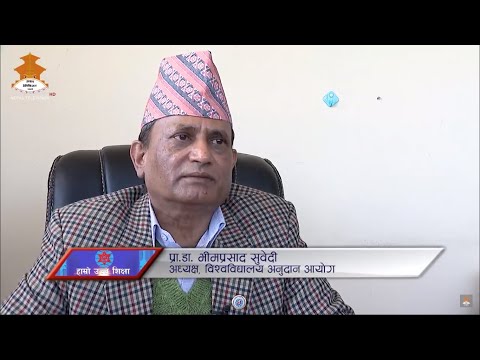
University Grants Commission Nepal (UGC), also known as Vishwavidyalaya Anudan Aayog (विश्वविद्यालय अनुदान आयोग), is a statutory, autonomous public body established under the University Grants Commission Act, 2050 (1993 A.D.). Its mandate focuses on grant distribution for universities and supporting quality education through defined academic standards.
UGC’s office operates from Sanothimi, Bhaktapur (Kathmandu Valley area), and publishes official notices, forms, reports, and program documents through its website.
-Building.jpg)
The Act’s authentication/publication date is 2050-8-7 B.S. (Nov 22, 1993).
The Act came into force via Nepal Gazette notification, with the commission prescribed to be appointed from 2051-2-2 B.S. (May 16, 1994 A.D.).
The Act states the office of the commission shall be located at Kathmandu Valley (UGC currently operates from Sanothimi, Bhaktapur).
UGC’s work affects multiple groups:
universities and higher education institutions (public and, under conditions, private colleges)
faculty members and researchers (research, training, research culture support)
students and scholars (scholarship/fellowship-related programs and exchanges)
government and policymakers (consultation and policy advice on higher education, including new universities)
UGC’s functions, duties, and powers include:
advising the Government of Nepal regarding establishing universities
formulating policies for providing grants received from various sectors to universities
providing grants to universities and recommending additional grants as needed
maintaining coordination among universities (including academic programs aligned with standards)
designing programs to enhance academic standards and making provisions to maintain standards
arranging for scholarship and fellowship exchange with universities/academic institutions inside and outside Nepal
submitting annual reports on activities to the Government of Nepal.
This section translates UGC’s mandate into what people commonly look for in practice.
UGC:
develops/updates grant-related policies and mechanisms (how public grants are distributed)
disburses grants to universities and supports recommendations for additional funding when required
may provide financial assistance to private colleges that meet prescribed conditions (as per the Act and related rules/procedures).
UGC’s Research and Scholarship Division is responsible for:
preparing and improving policies/programs related to research and scholarship
preparing short-, mid-, and long-term plans and budgets for these programs
updating research program guidelines
monitoring, supervision/mentoring, and evaluation of research programs
working to strengthen research quality standards and best practices.
UGC’s Quality Assurance and Accreditation Secretariat focuses on:
ensuring methods and processes for quality assurance and accreditation
getting approval for required standards/indicators and using them to evaluate and classify eligible higher education institutions and programs
issuing accreditation certificates (including for institutions/programs operating in Nepal under affiliation with foreign universities, following due process).
UGC’s University Coordination Division works on:
coordination among universities on issues like academic quality, curriculum, degrees, and related matters
frameworks related to institutional adjustment/management of public/community higher education institutions
coordination and record-keeping related to bilateral understandings between Nepali and foreign universities
equivalence-related guideline work (where applicable)
preparing indicators related to degrees, teacher evaluation, infrastructure evaluation, curriculum and student evaluation
preparing grant-determination criteria and determining grants accordingly.
UGC’s Planning/Monitoring/Evaluation Division supports:
coordination and monitoring/evaluation of divisional work
support to develop higher education policy/strategy/objectives (short, mid, long term)
preparation of annual plans and budget frameworks, in coordination with other divisions
integrating institutional plans into national planning processes via the education ministry route.
UGC’s General Administration Division covers:
staffing and HR administration (appointments, transfers, promotions, performance evaluation)
coordination and operational monitoring of branches/divisions
procurement/payment systems and property protection/management
meeting and committee management, record keeping, and implementation follow-up
ICT planning/implementation to improve speed, transparency, and service delivery
providing legal advice related to higher education laws/rules and representing UGC legally when needed.
Because UGC programs are notice-based, the practical path is usually the same across grants, research calls, scholarships, and QAA:
Check official notices and program documents on UGC’s website (notices and TOR are routinely published there).
Download the relevant forms/guidelines (UGC maintains a downloads/forms area, including QAA and research-related forms).
Prepare and submit exactly as the notice requires (deadline, format, eligibility, submission channel).
Track updates through the same official channels (UGC posts results/notices and publishes reports).
UGC’s legal role centers on grants, standards, coordination, and system-level programs. Admission, exams, transcripts, and routine student administration are typically handled by the university/institution itself (unless a specific UGC notice/program says otherwise).
Use UGC’s website sections for scholarship notices/documents/results, and follow the specific notice for eligibility and required documents.
Follow the QAA methods/standards process managed through the QAA Secretariat and use the approved standards/indicators pathway described by UGC, then submit as per the published process/forms.
The UGC Act defines the Commission’s composition, including:
Chairperson (Government-nominated renowned educationist)
two Vice-Chancellors (nominated from among VCs)
Member (Education Sector), National Planning Commission
Secretary, Ministry of Education
Secretary, Ministry of Finance
two members from among learned persons/senior professors with special contributions in higher education
two members from among persons of different walks of life with special contribution in education
Secretary as Member-Secretary
Nominated members serve a four-year term and may be reappointed.
UGC’s annual report describes the apex body (the Board) as consisting of eleven members headed by the Executive Chairman.
UGC publicly lists major functional divisions/secretariats, including:
General Administration Division
Research and Scholarship Division
University Coordination Division
Planning, Monitoring and Evaluation Division
Quality Assurance and Accreditation Secretariat
Office location: Sanothimi, Bhaktapur
Email: ugc@ugcnepal.edu.np
Phone: +977-1-6638548, +977-1-6638549, +977-1-6638550
Website: www.ugcnepal.edu.np
Office hours (as published by UGC):
Winter schedule (Kartik 16 to Magh 15): Sun–Thu 10:00–4:00; Fri 10:00–3:00
Summer schedule (Magh 16 to Kartik 15): Sun–Thu 10:00–5:00; Fri 10:00–3:00
Sources Used: UGC Nepal official website (Introduction, Divisions, Contact); University Grants Commission Act, 2050 (1993 A.D.); UGC Annual Report 2018/19 (2075/76)
Note: In my earlier message, I mistakenly displayed placeholder citation IDs. Below are FAQs backed by verifiable official pages and documents.
UGC Nepal (Vishwavidyalaya Anudan Aayog – विश्वविद्यालय अनुदान आयोग) is a statutory public body established under the University Grants Commission Act, 2050 (1993 A.D.).
UGC’s office is at Sanothimi, Bhaktapur. The published contact email is ugc@ugcnepal.edu.np and phone numbers include 01-6638548, 01-6638549, 01-6638550.
UGC publishes services across areas such as research support, thesis/dissertation research grants, research infrastructure support, capacity-building/visits/special programs, and grants to universities.
Yes. UGC maintains dedicated sections for scholarship notices, scholarship documents (guidelines/directives), and scholarship results on its official site.
UGC publishes scholarship-related forms under its official “Scholarship forms” page.
UGC provides official application forms for programs such as PhD fellowship/research support, MPhil fellowship, postdoctoral fellowship, and partial support for PhD fellows.
UGC publishes grant-allocation related forms under its official “Forms related to grant” section (use the official downloads/forms menu).
UGC publishes an official list of “QAA received HEIs” that includes institutions and status/validity notes. To verify a campus, match the institution name and details in that list.
UGC publishes QAA-related guidelines (for example, “Educational Quality Assurance and Accreditation Guidelines 2081”) in its resources/content section.
UGC’s Research and Scholarship Division publishes its responsibilities, including developing/updating research program guidelines, preparing plans/budgets, monitoring and evaluating UGC-supported research projects, and promoting research culture in higher education institutions.
UGC maintains an information center on its official website with sections such as notices, news, tenders, press releases, bulletins, journals/magazines, annual reports, policies/plans, and progress reports.
UGC publishes result-related updates and related notices under scholarship results and sometimes separate posts about applications/requests concerning scholarship results. The safest approach is to follow the exact instructions in the relevant notice and contact UGC using the official email/phone listed on the website.


.jpg)