CTEVT - Council for Technical and Vocational Training
- Established1989
- Services 5 offered
- Affiliation CTEVT
About CTEVT - Council for Technical and Vocational Training
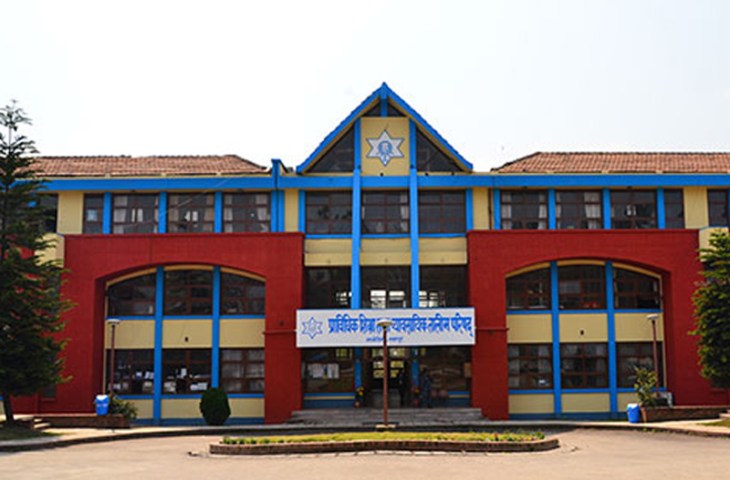
Council for Technical Education and Vocational Training (CTEVT) - प्राविधिक शिक्षा तथा व्यावसायिक तालिम परिषद्
The Council for Technical Education and Vocational Training, established to address Nepal’s need for skilled technical human resources for economic transformation and industrial development, is an autonomous national body known in short as “CTEVT.”
The Government of Nepal considers this institution a foundational pillar in achieving the goal of “Skilled Human Resources: Prosperous Nepal.” Its primary responsibility is to make technical education accessible, inclusive, and aligned with labor-market needs.
CTEVT is not only a training center; it is the apex body responsible for nationwide technical education curriculum development, quality control, examination management, and skills certification.
Key features:
-
Formulates and facilitates the implementation of vocational and technical education policy in Nepal.
-
Arranges scholarships for groups who want to learn skills but are held back due to economic or other reasons.
-
Develops skill-testing standards (NSTB) to help Nepalese compete in the international labor market.
Identity and Legal Foundation
The credibility of any public institution rests on its legal foundation. The legal standing of CTEVT is as follows:
Official Name:
-
In Nepali: प्राविधिक शिक्षा तथा व्यावसायिक तालिम परिषद्
-
In English: Council for Technical Education and Vocational Training (CTEVT)
Legal Basis: The institution was established under the “Council for Technical Education and Vocational Training Act, 2045 (BS).” To update the Act over time, the first amendment was made in 2050 (BS) and the second amendment in 2063 (BS). The Act establishes the Council as an “autonomous and organized body with perpetual succession.”
Establishment Date: It was formed on 2045 Falgun 12 (BS), corresponding to February 1989 (AD).
Institutional Status: It is an autonomous institution under the Government of Nepal, Ministry of Education, Science and Technology. Autonomy means it can make routine administrative, academic, and financial decisions independently, but it must comply with national education policy and government directives.
Head Office: Sanothimi, Bhaktapur, Nepal.
Official Web Portal: www.ctevt.org.np (Parents and students should always verify the authenticity of any information by checking the website’s “Notice” or “Result” section.)

Mandate, Objectives, and Core Functions
CTEVT was established with the core purpose of “developing technical education and promoting vocational training in Nepal.” Its major functions can be grouped as follows:
A) Regulating and Standard Setting
-
Develops curricula that define what should be taught at each level of education.
-
Revises curricula in line with market demand and technological change.
B) Program Operation
-
Operates educational programs nationwide through its constituent schools, partner schools, and affiliated private institutions.
C) Accreditation and Affiliation
-
Grants approval after assessing whether an institution is qualified to deliver technical education by checking physical infrastructure, trainer qualifications, and laboratories.
D) Skills Testing and Certification
-
Through the National Skill Testing Board (NSTB), certifies skills of Nepalese workers who learned through informal means or returned from foreign employment, and issues certificates.
E) Scholarships and Access
-
Provides categorized scholarships for remote areas, marginalized communities, indigenous groups, Dalit communities, and talented students.
Governance and Organizational Structure
To strengthen transparency, CTEVT follows a multi-level governance system:
A) The Council
-
A high-level council operates under the chairpersonship of the Minister or State Minister for Education, Science and Technology.
-
Members include secretaries from government ministries, a member of the National Planning Commission, and education experts.
-
This council makes key policy decisions.
B) Executive Leadership
-
For day-to-day operations, the Government of Nepal appoints one Vice-Chairperson and one Member Secretary.
C) Central Directorates and Divisions
-
Office of Controller of Examinations (OCE): Main body for conducting exams and publishing results.
-
Curriculum Development Directorate: Develops new curricula and revises existing ones.
-
Accreditation and Affiliation Directorate: Grants affiliation based on quality standards.
-
Administration and Planning Directorate: Manages finance and human resources.
-
National Skill Testing Board (NSTB): Conducts skill assessment and grading.
D) Provincial Offices
According to federalism, CTEVT has provincial offices in all seven provinces:
-
Koshi Province Office: Itahari
-
Madhesh Province Office: Janakpur/Dhanusha
-
Bagmati Province Office: Hetauda
-
Gandaki Province Office: Pokhara
-
Lumbini Province Office: Butwal
-
Karnali Province Office: Birendranagar
-
Sudurpashchim Province Office: Dhangadhi
Educational Programs and Pathways
Certificate (PCL) and Diploma-Level Programs
A) Health Science Sector
Programs in this sector operate under strict regulation of the Medical Education Commission and relevant subject councils.
-
PCL in Nursing (Certificate Level Nursing)
-
Produces skilled staff nurses.
-
Prioritizes clinical practice in hospitals alongside theoretical learning.
-
After completion, students can take the Nepal Nursing Council licensing examination, and it builds a pathway toward nursing officer roles or advancing abroad as an RN.
-
PCL in General Medicine (H.A. – Health Assistant)
-
A backbone of rural health services in Nepal.
-
Covers diagnosis and treatment of common illnesses, community health, and public health management.
-
Graduates can register with the Nepal Health Professional Council (NHPC) and become eligible to work in health posts or hospitals.
-
Diploma in Pharmacy (Pharmacy)
-
Focuses on pharmaceutical science, composition, storage, and patient counseling.
-
After completion, graduates can register with the Nepal Pharmacy Council as an assistant pharmacist and may open a pharmacy or work in the pharmaceutical industry.
-
Certificate in Medical Lab Technology (Lab Technician)
-
Teaches laboratory testing techniques for blood, urine, and other biological samples.
-
Highly important for modern diagnosis and enables work as a Grade B lab professional.
-
PCL in Radiography (Radiology)
-
Teaches operation of X-ray, ultrasound, CT scan, and MRI equipment for internal imaging.
-
Radiation safety and radiographic imaging are core components.
-
PCL in Ophthalmic Science (Eye Examination)
-
Aims to produce ophthalmic assistants for identifying vision problems, conducting glasses-related checks, and supporting basic treatment of common eye conditions.
-
High demand in community eye hospitals in Nepal.
-
PCL in Dental Science (Dental Hygiene)
-
Teaches cleaning of teeth and gums, basic treatment of dental conditions, and skills such as taking dental X-rays.
-
Supports dentists and provides dental health counseling.
-
PCL in Ayurveda (Ayurveda)
-
Studies herbal and natural treatment systems.
-
Prepares graduates to provide health services as Ayurveda-based practitioners (Kaviraj).
-
PCL in Physiotherapy
-
Teaches rehabilitation skills using exercises, machines, and therapies to improve musculoskeletal and nerve-related conditions.
-
Its role is increasing in rehabilitation and trauma centers.
B) Engineering Sector
This sector aims to produce overseers (Assistant Engineers).
-
Diploma in Civil Engineering
-
Skills include design, cost estimation, and construction supervision for buildings, roads, bridges, and irrigation projects.
-
Widely demanded in Nepal’s public and private construction sectors.
-
Diploma in Electrical Engineering
-
Covers house and industrial wiring, hydropower projects, and operation and maintenance of power plants.
-
Diploma in Mechanical Engineering
-
Covers design and maintenance of large machinery, hydraulic systems, and heating and cooling systems.
-
Diploma in Computer Engineering
-
Provides foundational skills in computer hardware, networking, and basic software development.
-
Serves as a strong academic base for starting an IT career.
-
Diploma in Geomatics Engineering (Survey)
-
Trains manpower for land measurement and mapping, enabling work as Amin or surveyor in survey offices or road projects.
-
Diploma in Architecture Engineering
-
Covers drafting building drawings, artistic interior and exterior design (draughtsmanship), and construction estimation.
-
Diploma in Electronics and Communication
-
Covers mobile technology, telecommunications, satellite communication, and design of electronic devices.
-
Diploma in Automobile Engineering
-
Focuses on maintenance of modern vehicles (cars, scooters, buses), including engines, gears, and electrical systems.
C) Agriculture and Forestry
-
Diploma in Agriculture (Plant Science)
-
Studies crop development, modern farming methods, and soil protection.
-
Commonly referred to as Agriculture Junior Technician (JT) in everyday usage.
-
Diploma in Agriculture (Animal Science)
-
Covers livestock farming, animal health testing, and fodder production.
-
Supports animal health services and commercial dairy production.
-
Diploma in Forestry (Forestry)
-
Key areas include forest conservation, plantation, wildlife management, and medicinal herb cultivation.
-
This qualification is required to compete for government ranger positions.
-
Diploma in Food and Dairy Technology
-
Teaches processing, packaging, and quality control of food and dairy products.
D) Hospitality and Creative Sector
-
Diploma in Hotel Management (DHM)
-
Covers cooking, food and beverage service, and front desk management.
-
Supports employment pathways in hotels and overseas service sectors.
-
Diploma in Interior Design
-
Focuses on creative work that makes interior spaces functional and user-friendly.
-
Diploma in Fashion Design
-
Covers garment structure, fashion trends, and foundational principles and practice of clothing design.
-
Diploma in Entrepreneurship Development
-
Provides practical knowledge in market research, investment, and management for youths who want to start new businesses.
Verification and Legal Compliance
While operating and studying CTEVT programs, the following must be officially verified:
-
Duration: All these courses are full-time, three-year programs. Duration changes only in specific bridge courses or exceptional situations.
-
Credit hours and curriculum: CTEVT sets credit hours and teaching hours in line with international standards, often with a 60:40 theory-to-practical ratio, and in some cases 30:70.
-
License: After completing diploma programs in health fields, a name registration certificate (licence exam) is mandatory. In engineering, it provides recognition such as associate membership status or eligibility to apply for public service roles considered equivalent to Kharidar/Subba-level categories.
-
Renewal check: Based on the latest list published in CTEVT’s annual report and website, these programs are currently in operation. Some older programs (such as older-structure TSLCs) have been revised and renamed.
Quality Control for Students
Before enrolling in any college for these programs, check the following four points:
-
Affiliation: Has the institution received seat allocation approval from CTEVT for the current year?
-
Subject Code: Is the official subject code in the curriculum the same as the subject the college claims to teach?
-
Infrastructure: Are workshops and labs physically available for practical classes?
-
Licensing Council: If it is a health-related program, is the college listed by the relevant council (example: Nepal Health Professional Council)?
18-Month Pre-Diploma Level (Pre-Diploma)
CTEVT operates 18-month pre-diploma programs to produce skilled basic-level manpower. These programs are especially focused on hands-on training, including institutional training and on-the-job training (OJT) in industry/workplaces within the 18-month period.
Based on CTEVT’s latest curriculum structure and market demand, key programs are as follows:
1) Engineering Sector
This sector offers the highest number of programs for infrastructure construction and maintenance:
-
Pre-Diploma in Civil Engineering (Civil Engineering): Also commonly called “Sub-Overseer,” supports building, road, and infrastructure construction.
-
Pre-Diploma in Survey Engineering (Aming/Surveying): For land measurement and mapping work (Amins).
-
Pre-Diploma in Electrical Engineering (Electrical): House wiring, electrical machinery maintenance, and distribution systems.
-
Pre-Diploma in Mechanical Engineering (Mechanical): Maintenance and production in industrial machinery.
-
Pre-Diploma in Automobile Engineering (Automobile): Maintenance of cars, motorcycles, and engines.
-
Pre-Diploma in Computer Engineering (Computer Engineering): Hardware repair, networking, and basic software operation.
-
Pre-Diploma in Refrigeration and Air Conditioning (Ref and AC): Repair of refrigerators, air conditioners, and cooling systems.
-
Pre-Diploma in Electronics Engineering (Electronics): Repair of mobile phones, radios, televisions, and small electronic items.
2) Agriculture and Forestry
These subjects are important for the rural economy and modern farming systems:
-
Pre-Diploma in Agriculture (Plant Science): Known as JTA-Agri; focuses on crop improvement and modern agricultural techniques.
-
Pre-Diploma in Animal Science (Animal Science): Animal health, medication, and livestock management (VJT).
-
Pre-Diploma in Forestry (Forestry): Forest conservation, nursery management, and forest guard-related work.
3) Health Science
Important note: Due to the Medical Education Act and recent government policies, nursing and some clinical 18-month courses are currently being revised into diploma-level programs. Currently running or specialized technical courses include:
-
Pre-Diploma in Ayurveda (Ayurveda): Identification of medicinal herbs and traditional treatment methods.
-
Pre-Diploma in Lab Assistant (Medical Lab Technology): To support laboratories in health institutions.
-
Pre-Diploma in Social Mobilization (Social Mobilization): For roles related to community health and social mobilization.
4) Hospitality and Management
For quicker entry into tourism and service sectors:
-
Pre-Diploma in Culinary Arts (Culinary Arts/Cook): Professional kitchen management and cooking skills.
-
Pre-Diploma in Hotel Management (Hotel Management): For waiting, housekeeping, and reception roles.
Key points to know for the pre-diploma level
Entry Requirements:
-
Generally, applicants must have appeared in SEE or an equivalent examination and obtained results.
-
Minimum GPA and grade requirements must meet the standard set each year by CTEVT’s admission guideline.
Program Structure:
-
Total duration: 18 months.
-
On-the-Job Training (OJT) is mandatory. In the final months, students must learn directly at a relevant company or workplace, and the certificate is issued only after passing.
Opportunities and Pathways:
-
Those who complete this level receive recognition equivalent to “Level 2.”
-
Eligible to apply through the Public Service Commission for fourth-level (assistant) technical positions.
-
After completing pre-diploma and gaining a few years of experience, entry into the three-year diploma level may be possible through credit transfer or bridge courses (as per current government standards).
Suggestion for parents and students:
The 18-month pre-diploma is a strong pathway to enter employment sooner. However, before enrolling, it is essential to verify whether the institution has renewed its status with CTEVT and to conduct an on-site inspection to confirm adequate practical laboratory facilities for the subject.
Apprenticeship Program (Apprenticeship) – 24 Months
This program is a newer and effective concept of CTEVT. Students spend a major share of their time (about 70% to 80%) learning by working directly in an industry or workplace, and the remaining time learning theory at an educational institution.
Why is it necessary?
It provides industry with the skilled workers it needs and gives students an opportunity to learn while earning.
Collaboration:
There is direct participation of private industries and professional associations in this program.
Vocational/Short-Term Courses
For individuals who cannot commit to three years of study, life-useful training is offered from one week up to six months.
-
Minimum 390 hours of training: Considered a “Level 1” standard.
-
Major trainings: Mobile repair, house wiring, sewing and cutting, doll making, beautician training, plumbing, scaffolding, masonry, and related skills.
-
Certification: These trainings are linked to NSTB standards, which later supports wage growth based on verified skills.
Career and Academic Pathways
After receiving a certificate from CTEVT, how can students progress? Clear pathways are as follows:
1) Entry into Labor Market
-
This is considered the main advantage. A diploma-level technician often has a higher chance of getting employment sooner than someone who completed general bachelor’s degrees such as B.A. or BBS.
-
It can support entry into technical roles at levels associated with positions such as Nayab Subba or fifth-level technical roles.
2) Academic Escalation
-
Diploma graduates can study bachelor-level programs in relevant subjects at universities (TU, KU, PoU, and others), such as Bachelor of Engineering, BSc Nursing, or BSc Agriculture.
-
Universities and the National Examination Board have recognized these certificates as equivalent to Grade 12 (such as I.Sc. or Grade 12 in management/science).
3) Entrepreneurship
-
Many technicians have opened garages, medical shops, agriculture farms, or construction companies, creating employment for themselves and others.
4) International Career
-
Many CTEVT curricula are designed on international accreditation-oriented standards. Therefore, those who wish to go abroad with these certificates generally do not have to struggle as much for equivalency, although they must follow the rules of the destination country.
Practical guidance
Before investing in technical education, one should not choose only “popular” subjects. If you want to enter employment quickly, the 18-month pre-diploma or apprenticeship is a suitable option. If you plan to study further and become an officer or engineer, choosing the three-year diploma pathway is appropriate. Always confirm whether the program aligns with the National Qualifications Framework and whether the relevant professional council (example: Nepal Nursing Council for nursing) has authorized the college for admissions.
Admission and Entrance Process
A defined method and process must be followed for admission into technical education:
Intake Schedule: Generally, admissions open nationwide soon after SEE results are published (typically in Ashadh/Shrawan).
Minimum Qualification:
-
Diploma level (engineering/health): Must obtain Grade C or the specified minimum GPA (as per current standards).
-
For health programs, science and mathematics in SEE must be passed as compulsory subjects.
Entrance Exam: CTEVT has its own centralized entrance examination system. Applicants become eligible for admission only after passing the entrance exam. The exam is used for merit listing.
Required Documents:
-
SEE/SLC character certificate and marksheet (original plus photocopy)
-
Citizenship certificate or birth registration
-
Passport-size photo
-
For applicants claiming targeted quota categories, a verified government recommendation letter
Scholarships and Quota System
To ensure education access for marginalized communities, the state provides two types of scholarships through CTEVT:
A) Classified (Free) Scholarship
This is a major facility. Applications are called each year during admissions. Specific criteria and quotas are set (such as women, Dalit, persons with disabilities, economically disadvantaged Muslims, conflict-affected individuals, geographically remote areas, and similar categories). Scholarship recipients do not have to pay fees.
B) Merit Scholarship
A scholarship provided by the respective school or institution to the top one or two students in each faculty based on performance.
Caution
Many students lose scholarships due to incomplete documentation. For Dalit or economically disadvantaged recommendations, documents must be submitted only in the official format issued by the District Administration Office or the respective rural municipality/municipality.
Affiliation, Equivalency, and Quality
In Nepal, private or community schools must obtain CTEVT affiliation to run technical programs.
Equivalency: If a Nepalese student has obtained a technical diploma or training abroad (especially from India or third countries), an equivalency certificate from CTEVT is required for employment in Nepal. The student must submit academic certificates, syllabus details, and proof that the foreign institution is officially recognized.
How to identify an authorized teaching institution: Before enrolling, students should check the “List of Schools” section on the website to confirm whether the institution is approved by CTEVT.
Examinations, Certificates, and Verification Services
The Office of Controller of Examinations is the most public-facing area of CTEVT. Common services needed in daily life include:
-
Viewing results: Visit www.ctevt.org.np and check using the symbol number.
-
Duplicate certificate: If a certificate is lost or torn, one can publish a notice in a national daily and, after paying required fees, obtain a replacement.
-
Name/date of birth correction: If there is an error in the certificate compared to Grade 10 documents or citizenship, an application can be submitted using the prescribed form at the examination office.
-
Certificate verification: For foreign study or employment, certificates must be verified with stamp and signature from CTEVT before sending documents to the Ministry of Foreign Affairs.
National Skill Testing Board (NSTB):
Not everyone has time or money to attend school or college. Some people gain skills over years as motor mechanics, carpenters, or beauticians without holding a formal degree. In such cases, NSTB provides support.
Process: An individual applies by submitting work-experience evidence; practical and written tests are conducted; if passed, an official National Skill Certificate is issued.
Benefit: It helps individuals receive skill-based remuneration in Nepal and abroad.
Common Public Issues, Problems, and Solutions
Common issues faced by students and parents and practical solutions are as follows:
Symbol number missing or not working in exam results
Solution: Do not panic. Register a contact application (retention request) at the examination office with the admit card.
If a college demands extra fees
Solution: CTEVT sets teaching fee standards for each health and engineering program. If an institution demands more, submit a written complaint with evidence to the relevant provincial office or CTEVT administration.
If you are late in filling the entrance exam form
Solution: After the deadline, extensions are generally not provided, but in some cases one may apply by paying a late fee. Official notices must be checked regularly.
Problems in foreign certificate equivalency
Solution: The foreign institution must be official. In the case of India, it must be recognized by AICTE.
Stakeholder Checklists
A) For students/parents
-
Check whether the chosen college’s affiliation is valid.
-
Prepare category-specific documents in advance when filling scholarship forms.
-
After SEE, take counseling on the post-study career path (employment or further education) before investing three years.
B) For educational institutions
-
Employ trainers who meet prescribed qualifications and are registered with relevant councils.
-
Do not compromise on labs and practical materials; affiliation can be revoked if standards are not met during monitoring.
C) For returnees from foreign employment
-
Get your skills verified through NSTB; it can support access to concessional credit as well.
Digital Services and Use of Information Technology
CTEVT has moved most services online:
-
Examination Portal: Used by students to submit exam application forms and view results.
-
Scholarship Portal: Developed to increase transparency in scholarship selection through online processes.
Suggestion
If the website is difficult to open, clear cache or use a laptop instead of a mobile device.
Legal Accountability and Public Governance
As a public body, CTEVT falls under the Right to Information (RTI) law and within the jurisdiction of the Commission for the Investigation of Abuse of Authority.
Grievance-handling officials: CTEVT has separate arrangements for an information officer and a grievance-handling officer.
Exam confidentiality: Any manipulation of question papers or results is considered a serious legal offense.
Conclusion
In a developing nation like Nepal, the principle of “skills over degrees” must become effective. It appears necessary for an institution as influential as CTEVT to be more active in detailed monitoring of institutions across the country and in developing curricula aligned with the global market.
This article is intended to help students overcome confusion and understand verified facts. Technical education is a medium that not only improves an individual’s living standard but also makes a concrete contribution to the national economy.
Glossary and FAQ
-
TSLC: Technical School Leaving Certificate (now pre-diploma).
-
Affiliation: Permission granted by the government to private institutions to teach based on specific standards (affiliation).
-
Accreditation: Assurance of quality for an academic program or institution.
-
NSTB: National Skill Testing Board.
-
Constituent School: A constituent institute run with the Council’s budget and direct supervision.
Frequently Asked Questions - FAQs
After SEE, what GPA is required to enroll in CTEVT diploma or pre-diploma programs?
This can change slightly each year according to CTEVT’s admission guideline. Generally:
-
Diploma (health): Minimum C grade in compulsory science, mathematics, and English, and overall 2.0 GPA.
-
Engineering/others: Minimum C grade in compulsory science and mathematics, and D or D plus in English (as per older standards). In the current integrated system, a minimum GPA of about 1.6 to 2.0 is generally required. It is safest to check the official admission notice for the new academic session.
What is the difference between classified (free) scholarship and merit scholarship?
A classified scholarship is a fully free scholarship awarded through nationwide competition after the Council issues a notice, targeting economically disadvantaged groups, remote areas, persons with disabilities, and other specified categories. A merit scholarship is provided by the respective institute to one top-scoring student within its quota based on the entrance examination.
After passing a diploma, can one study bachelor-level programs at a university?
Yes. Nepal’s universities and the National Examination Board have recognized CTEVT’s three-year diploma as equivalent to Grade 12. However, to study at bachelor level, one must pass the relevant university entrance exam, and some technical subjects may require specific percentage marks or grade provisions.
How can one confirm whether a private institute or college is affiliated with CTEVT?
There are two ways:
-
Visit www.ctevt.org.np and check the list of affiliated colleges in the “Institutions” section.
-
Visit the college and request a copy of the affiliation or renewal letter issued by the Council. Always verify the program name and seat count.
What is the process to correct a wrong name or date of birth on my certificate?
If there is an error, an application must be submitted to the Office of Controller of Examinations (OCE), Sanothimi, through the school or college where you studied. You must submit the original admit card, marksheet, a copy of the SEE certificate or citizenship, and pay the prescribed fee. The application must be submitted within the specified time limit from the issuance of the certificate.
Does a diploma certificate obtained from India or other foreign countries get recognized in Nepal?
Foreign certificates do not receive automatic recognition. Equivalency must be determined. Students must submit proof that the foreign college is official, syllabus details, and all marksheets, and obtain an “equivalency confirmation certificate” from CTEVT.
Where can one complain if a college charges more than the fee prescribed by CTEVT?
Students or parents can submit a written complaint to the relevant provincial office of CTEVT. Evidence such as vouchers or receipts should be attached. Information can also be provided to the Monitoring and Evaluation Directorate at the central office.
Is a license mandatory to work after studying nursing or H.A. (Health Assistant)?
Yes. After completing studies, students of all health-related technical programs can work professionally only after passing the name registration certificate (licence exam) conducted by the relevant council, such as the Nepal Nursing Council or the Nepal Health Professional Council.
I do not have a college certificate, but I have extensive work experience. Can I get a certificate?
Yes. The NSTB under CTEVT conducts skill tests. Based on your experience, you can pass level 1, 2, 3, or 4 tests and obtain an official certificate. This is useful for those going abroad or starting their own business.
Can I enroll by paying money directly without taking the entrance exam?
No. Under CTEVT rules, passing the centralized entrance exam is mandatory for admission to diploma or certificate programs. Admission without taking the entrance exam or without participation is considered illegal, and the student’s registration is not processed.
Contact Details
CTEVT - Council for Technical and Vocational Training
-
Location: Sanothimi Bhaktapur, Nepal
-
Phone: +977-1-6631458, +977-1-6631459, +977-1-6630769
-
Fax: +977-1-6635125
-
E-mail: info@ctevt.org.np, research@ctevt.org.np
-
Website: www.ctevt.org.np
-
P.O. Box: 3546, Kathmandu, Nepal
Special note for readers
Because CTEVT notices change frequently (especially admission quotas, fees, and grading systems), use the above information as guidance and always check the latest year’s official admission guideline before making a final decision. If someone claims they can arrange admission without an exam, it may be fraud. Stay cautious.
Last Update: 2082 Poush 13 (December 28, 2025).
Official Source: Council for Technical Education and Vocational Training Act, 2045 (BS) and the official portal ctevt.org.np.
(For detailed and time-sensitive changes, always treat the Council’s latest official notices as the final reference.)
Affiliations
Services Offered 5
Latest Updates & Notices
- 15 Sep 26 CTEVT Bars Ownership Transfer of Non-Profit Institutions
- 08 Aug 26 CTEVT Extends Diploma and Pre-Diploma Admission Deadline
- 23 Jul 26 CTEVT Pre-Diploma Special Chance Exam Routine 2083
- 08 Jul 26 CTEVT Special Scholarship Result for Diploma Levels 2083
- 17 Jun 26 CTEVT Diploma and Certificate Level Exam Form Notice 2083
- 17 Jun 26 CTEVT Opens 480 Free Technical Scholarship Seats for 2083
- 05 Jun 26 CTEVT Koshi Province Office Publishes Scholarship Merit List for Health Programs
- 04 Jun 26 CTEVT Koshi Province Publishes Free Scholarship Merit List 2083
Contact CTEVT - Council for Technical and Vocational Training, Bhaktapur
- AddressBhaktapur Road, Madhyapur Thimi Municipality, Sanothimi, Bhaktapur Nepal
- Phone +977-1-6631458
- Phone +977-1-6631459
- Phone +977-1-6630769
- Email info@ctevt.org.np
- Website ctevt.org.np
- Contact personCTEVT - Council for Technical and Vocational Training
