Eastern College of Engineering is an engineering college established in 2000 AD in Biratnagar, Morang. It is located at Radhakrishna Marga, Bhupalgram, Tinpaini Chowk, Biratnagar, an urban area of eastern Nepal.
The college is run by three business groups from Eastern Nepal: Vishal Group, Rathi Group, and Debenara Group. Its academic focus is engineering education, with undergraduate programs in civil, computer, and electronics and communication engineering, along with M.Sc. in Engineering Management.
Eastern College of Engineering is affiliated with Purbanchal University, Biratnagar, and is recognized by the Nepal Engineering Council (NEC). The institution has received ISO 9001:2015 certification.
Established: 2000 AD
Location: Radhakrishna Marga, Bhupalgram, Tinpaini Chowk, Biratnagar, Morang, Nepal
Affiliation: Purbanchal University, Biratnagar
Recognition: Nepal Engineering Council (NEC)
Quality Certification: ISO 9001:2015
Academic Level: Bachelor’s and Master’s engineering programs
Bachelor’s Programs: Civil Engineering, Computer Engineering, and Electronics & Communication Engineering
Master’s Program: M.Sc. in Engineering Management
Available Seats: BE Civil – 96, BE Computer – 48, BE EC & Automation – 30
Admission Requirement: Applicants must meet the stated academic eligibility and pass the entrance examination conducted by Purbanchal University
Academic Facilities: Engineering laboratories, library, internet and email access, and Research & Development cell
Practical Exposure: Industrial and technical visits, group presentations, live-project involvement, guest lectures, and industry-focused seminars
Student Support: Placement assistance, canteen, backup generator, sports, and extracurricular activities
Eastern College of Engineering began in 2000 AD with an institutional structure supported by Vishal Group, Rathi Group, and Debenara Group. Its development has centered on engineering and technology education in Biratnagar.
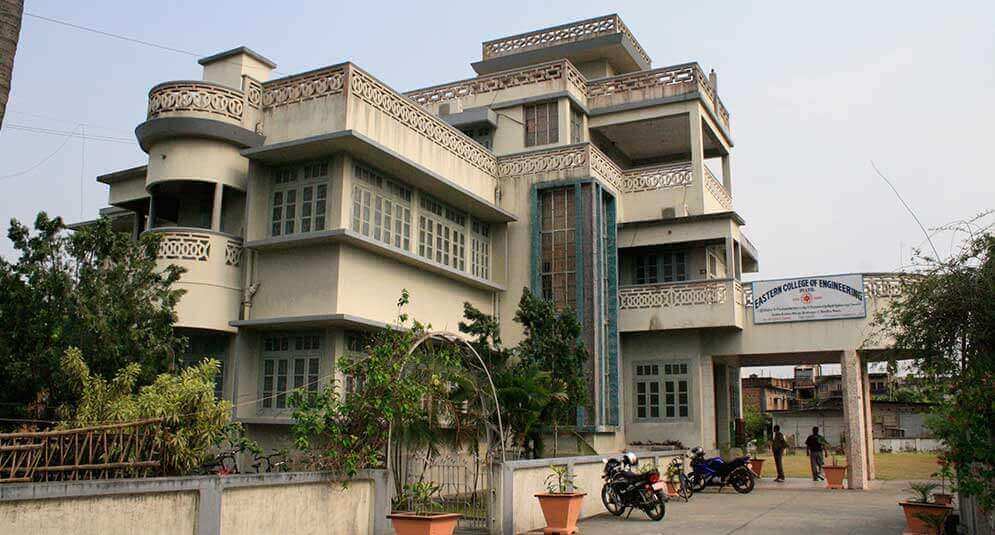
The college combines university-based engineering curricula with laboratory work, technical activities, industrial exposure, group presentations, seminars, and project-related learning. Its academic setting also includes library services, discipline-specific laboratories, sports activities, and student support facilities.
Rather than limiting engineering education to classroom theory, the college incorporates practical components through laboratories and exposure to technical processes. Industrial and technical visits are used to introduce students to operating environments outside the campus, while seminars and group presentations give them additional opportunities to work with engineering and technical topics.
The college operates under the academic affiliation of Purbanchal University. Its engineering programs therefore follow the university's academic and examination structure.
Recognition by the Nepal Engineering Council is an important institutional element for its engineering education. The college has also received ISO 9001:2015 certification related to its quality-management system.
The undergraduate engineering curricula include theory, tutorials, laboratory or practical work, drawing, workshops, projects, and discipline-specific subjects. Course structures identify credit hours and separate internal and final assessment components.
The main bachelor's programs cover civil engineering, computer engineering, and electronics and communication engineering. The seat figures shared for these programs are:
| Program / Admission Seat Label | Seats | Course Details |
|---|---|---|
| Bachelor of Civil Engineering / BE Civil | 96 | Bachelor of Civil Engineering |
| Bachelor of Computer Engineering / BE Computer | 48 | Bachelor of Computer Engineering |
| Bachelor of Electronics & Communication Engineering / BE EC & Automation | 30 | Bachelor of Electronics & Communication Engineering |
The college also offers M.Sc. in Engineering Management.
Civil Engineering at Eastern College of Engineering covers the technical study associated with structures, construction, surveying, transportation, water-related engineering, materials, and other areas of civil infrastructure.
The Purbanchal University Civil Engineering course structure effective from the 2021 batch begins with Mathematics-I, Chemistry, Applied Mechanics-I (Statics), Civil Engineering Materials, Basic Electrical Engineering, Engineering Drawing-I, and Workshop Technology.
The second semester continues with Mathematics-II, Physics, Applied Mechanics-II (Dynamics), Building Technology, Fundamental of Thermodynamics and Heat Transfer, and Engineering Drawing II.
As students progress, the curriculum moves into subjects such as Strength of Materials, Fluid Mechanics, Survey, Engineering Geology, Probability and Statistics, Hydraulics, Theory of Structure, Concrete Technology and Masonry Structures, Civil Engineering Drawing, Soil Mechanics, Water Supply Engineering, and other civil engineering subjects. Practical and field-oriented components accompany several of these courses.
The program therefore brings together mathematical and scientific foundations, engineering analysis, drawing, surveying, structural study, materials, and practical work rather than treating civil engineering as a single narrowly defined subject.
Computer Engineering combines computing subjects with mathematics, science, electronics, electrical engineering, and engineering fundamentals.
For the 2021 batch, the first semester includes Mathematics I, Physics, English for Technical Communication, Computer Programming, Fundamental of Computing Technology, Engineering Drawing, and Workshop Technology.
The second semester includes Mathematics-II, Chemistry, Object Oriented Programming with C++, Digital Logic, Basic Electrical Engineering, and Applied Mechanics.
The curriculum then moves into Data Structure and Algorithm, Object Oriented Analysis and Design, Computer Graphics, Electronic Devices and Circuits, Database Management System, Python Programming, Discrete Structure, Microprocessor, Communication System, Probability and Statistics, Algorithm Analysis and Design, Computer Architecture and Design, Numerical Methods, Operating System, Research Methodology, and project work.
This mix gives the program both software and hardware dimensions. Programming and algorithmic subjects sit alongside electronics, microprocessors, communication systems, computing architecture, projects, and supporting engineering courses.
The Bachelor of Electronics & Communication Engineering program is oriented toward electronics, communication systems, electronic subsystems, and network-related study.
Students are introduced to concepts connected with the design of electronic subsystems and the operation of networks. The academic approach combines engineering theory with laboratory and technical work associated with the discipline.
The college's interdisciplinary laboratory arrangement includes facilities associated with electronics and communication alongside computer and civil engineering laboratories.
Applicants with a minimum GPA of 2.0, including a minimum grade of “C” in all subjects, or 45% marks in Intermediate of Science, 10+2 Science, Diploma in Engineering, or equivalent qualifications are eligible to apply.
Students from the 10+2 Bio Group can also apply.
Admission requires students to pass the entrance examination conducted by Purbanchal University, Biratnagar. Entrance examination forms, the information brochure, and related admission information can be collected from the College Reception.
The available undergraduate seat distribution is 96 seats for BE Civil, 48 for BE Computer, and 30 for BE EC & Automation.
Engineering study at Eastern College of Engineering includes laboratory and practical components alongside lectures and tutorials.
The college has interdisciplinary laboratory facilities for computer, civil, and electronics and communication engineering students. These spaces support the practical elements attached to engineering subjects and technical exercises.
Practical exposure also extends beyond laboratory sessions. Students take part in industrial and technical visits intended to introduce them to manufacturing systems, processes, and operational settings. Industry interaction, live projects, guest lectures, technical activities, and group presentations form part of this broader academic exposure.
The curriculum itself reinforces this practical orientation. Engineering Drawing, Workshop Technology, programming laboratories, surveying, electronics-related work, projects, and other practical components appear within the university course structures.
The campus library provides books and journals for student use and also includes electronic media resources and computers. Internet and email access are available for academic reference and communication.
These resources support students working across engineering disciplines where classroom study often needs to be accompanied by reference reading, calculations, drawings, programming, reports, and project preparation.
The college also has a Research & Development cell and organizes guest lectures involving visitors from industry and academia.
Industrial exposure is incorporated through visits to industries connected with different engineering branches. These visits are intended to give students direct familiarity with technical operations and processes relevant to their areas of study.
Skill-development activities include group presentations and technical presentations. Students may also work on live projects with faculty involvement.
Industry-focused seminars and technical festivals are among the activities associated with the academic environment. Such activities give students settings outside routine lectures in which they can discuss technical subjects, present work, and engage with practical engineering themes.
The campus conducts sports programs and supports participation in inter-college activities. Extracurricular activities are also part of student life.
Other campus provisions include:
Computer, civil, and electronics and communication laboratories
Library with books, journals, electronic media, and computer access
Internet and email facilities
Canteen
Backup generator
Industrial and technical visits
Industry interaction
Skill-development and group-presentation activities
Guest lectures
Live-project involvement
Research & Development cell
Sports and extracurricular activities
Placement assistance
Placement assistance should be understood as a student-support service rather than a guarantee of employment.
The college has faculty members with experience in engineering teaching and research. Its instructional approach combines lectures with tutorials, laboratory work, projects, presentations, and technical exposure.
The course structures also show that practical assessment is integrated into a number of subjects rather than being treated as a separate activity. Laboratory sessions, workshops, drawing, surveying, programming, and projects appear at different stages of engineering study.
This gives students a study pattern that moves between conceptual learning and applied academic work throughout their programs.
Mission: Eastern College of Engineering places engineering knowledge, professional responsibility, commitment, and personal development at the center of its institutional mission. Its teaching approach includes multiple methods of instruction and student guidance.
Vision: The college's vision focuses on developing technical human resources while providing academic support for the study of engineering and technology.
Together, these statements place technical education alongside responsibility, academic support, and the personal dimensions of engineering education.
Location: Radhakrishna Marga, Bhupalgram, Tinpaini Chowk, Biratnagar, Morang, Nepal.
The Biratnagar location places the college in one of the main urban centers of eastern Nepal. Its engineering programs, laboratories, academic resources, and Purbanchal University affiliation are concentrated within this institutional setting.
Eastern College of Engineering was established in 2000 AD in Biratnagar, Morang.
The college is affiliated with Purbanchal University, Biratnagar.
Yes. Eastern College of Engineering is recognized by the Nepal Engineering Council (NEC).
The college offers Bachelor of Civil Engineering, Bachelor of Computer Engineering, and Bachelor of Electronics & Communication Engineering programs.
The available seat allocation is 96 seats for BE Civil, 48 seats for BE Computer, and 30 seats for BE EC & Automation.
Yes. The college offers M.Sc. in Engineering Management.
Applicants must have a minimum GPA of 2.0 with at least a “C” grade in all subjects, or 45% marks in Intermediate of Science, 10+2 Science, Diploma in Engineering, or an equivalent qualification. Students from the 10+2 Bio Group can also apply.
Yes. Applicants are required to pass the entrance examination conducted by Purbanchal University, Biratnagar.
Facilities and academic support include engineering laboratories, a library, internet and email access, a Research & Development cell, industrial and technical visits, guest lectures, group presentations, sports activities, a canteen, and placement assistance.
Eastern College of Engineering is located at Radhakrishna Marga, Bhupalgram, Tinpaini Chowk, Biratnagar, Morang, Nepal.