



The Bachelor of Civil Engineering (BE Civil) at Eastern College of Engineering, Biratnagar, Morang, is a four-year engineering degree affiliated with Purbanchal University. The course runs across eight semesters and covers engineering science, construction materials, surveying, structures, hydraulics, geotechnical engineering, transportation, water supply, irrigation, hydropower, estimation, and construction management.
The academic structure also includes a survey camp, engineering projects, practical components, electives, and a 30-working-day internship. Eastern College of Engineering has 96 seats for BE Civil.
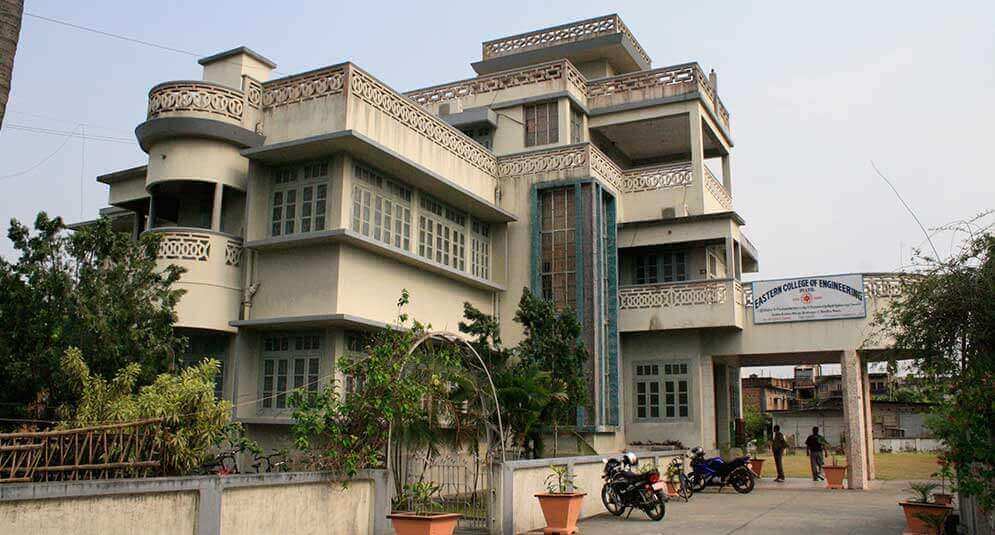
Course: Bachelor of Civil Engineering (BE Civil)
Level: Bachelor’s Degree
Duration: 4 Years
Academic Structure: 8 Semesters
Affiliation: Purbanchal University
Faculty: Faculty of Engineering
College: Eastern College of Engineering
Location: Biratnagar, Morang, Nepal
Seats: 96
Curriculum: Course Structure of Bachelor in Civil Engineering, effective from 2021 batch
Entrance: Purbanchal University entrance examination
Survey Camp: Minimum 12 days
Project: Civil Engineering Project I and II
Internship: 30 working days
Institutional Recognition: Eastern College of Engineering is recognized by Nepal Engineering Council (NEC)
BE Civil at Eastern College of Engineering is structured around the study of buildings, structural systems, construction materials, surveying, transportation systems, water-related infrastructure, geotechnical engineering, and construction management.
The opening semesters establish the mathematical, scientific, mechanical, drawing, and materials background required for later civil engineering subjects. Students then move into surveying, fluid mechanics, structural analysis, hydraulics, concrete technology, soil mechanics, water supply, transportation, foundation engineering, irrigation, sanitary engineering, hydropower, estimation, and construction project management.
The final stages add project work, professional practice, elective study, and an internship.
The Bachelor of Civil Engineering follows a four-year engineering study period divided into eight semesters.
The Purbanchal University Faculty of Engineering curriculum is marked effective from the 2021 batch. Its semester structure combines lectures, tutorials, practical work, drawing, field activities, projects, and internal and final assessment components.
Credit-hour distribution by semester is:
| Semester | Credit Hours | Academic Emphasis |
|---|---|---|
| First | 19 | Mathematics, mechanics, materials, electrical engineering, drawing, workshop |
| Second | 18 | Mathematics, physics, dynamics, building technology, thermodynamics, drawing |
| Third | 20 | Strength of materials, fluid mechanics, surveying, geology, programming |
| Fourth | 20 | Surveying, hydraulics, structures, concrete technology, civil drawing |
| Fifth | 20 | Soil mechanics, survey camp, structures, water supply, transportation, hydrology |
| Sixth | 18 | Foundation, irrigation, sanitary and transportation engineering |
| Seventh | 18 | RCC design, hydropower, estimation, project, safety, construction management |
| Eighth | 11 | Project, professional practice, elective, internship |
The first semester establishes foundations in mathematics, mechanics, engineering materials, drawing, electrical engineering, and workshop practice.
Subjects are:
Mathematics - I
Chemistry
Applied Mechanics - I (Statics)
Civil Engineering Materials
Basic Electrical Engineering
Engineering Drawing - I
Workshop Technology
The semester carries 19 credit hours.
The second semester continues the science and mechanics foundation while introducing building technology and heat-related engineering concepts.
Subjects include:
Mathematics-II
Physics
Applied Mechanics-II (Dynamics)
Building Technology
Fundamental of Thermodynamics and Heat Transfer
Engineering Drawing II
The semester carries 18 credit hours.
Civil engineering subjects become more prominent from the third semester. Surveying, materials behavior, fluids, geology, electronics, and programming are introduced together.
Subjects are:
Mathematics-III
Strength of Materials
Fluid Mechanics
Survey I
Engineering Geology
Basic Electronics Engineering
Computer Programming
The semester carries 20 credit hours.
The fourth semester develops the structural, hydraulic, surveying, concrete, and technical communication components of the degree.
Subjects include:
Probability & Statistics
Survey-II
Hydraulics
Theory of Structure-I
Concrete Technology and Masonry Structures
Civil Engineering Drawing
English for Technical Communication
The semester carries 20 credit hours.
The fifth semester moves into soil, structural, water, transportation, and hydrology subjects while adding a dedicated field-based survey camp.
Subjects are:
Soil Mechanics
Survey Camp
Theory of Structure-II
Water Supply Engineering
Transportation Engineering-I
Engineering Hydrology
Design of Steel and Timber Structure
The Survey Camp has a minimum duration of 12 days. The semester carries 20 credit hours.
The sixth semester covers foundation systems, irrigation, sanitation, transportation, numerical methods, and engineering economics.
Subjects include:
Foundation Engineering
Irrigation Engineering
Sanitary Engineering
Transportation Engineering-II
Numerical Methods
Engineering Economics
The semester carries 18 credit hours.
The seventh semester brings together structural design, hydropower, estimation, project work, safety, and construction management.
Subjects are:
Design of Reinforced Concrete Structure
Hydropower Engineering
Estimation and Valuation
Civil Engineering Project I
Safety Engineering
Construction Project Management
Elective-I
The semester carries 18 credit hours.
The final semester is more concentrated around project work, professional practice, elective study, and industry exposure.
Subjects and academic components are:
Civil Engineering Project II
Engineering Professional Practice
Elective-II
Internship
The internship is specified as 30 working days. The semester carries 11 credit hours.
Practical learning appears throughout the BE Civil curriculum rather than being limited to the final semester.
Engineering Drawing I and II introduce technical drawing work in the early semesters. Civil Engineering Materials, Physics, surveying, fluid mechanics, geology, hydraulics, concrete technology, soil mechanics, water supply, transportation, hydrology, sanitary engineering, and other subjects contain practical components within their academic structure.
Survey I and Survey II are followed by a dedicated Survey Camp in the fifth semester. The camp has a minimum duration of 12 days and forms a separate credited component of the curriculum.
The seventh and eighth semesters include Civil Engineering Project I and Civil Engineering Project II. The final semester also includes a 30-working-day internship, placing project and workplace exposure near the end of the degree.
The curriculum brings several branches of civil engineering into one degree.
Structural study develops through Applied Mechanics, Strength of Materials, Theory of Structure I and II, Design of Steel and Timber Structure, and Design of Reinforced Concrete Structure.
Concrete Technology and Masonry Structures adds study of materials and construction systems used alongside structural analysis and design.
Surveying appears in multiple stages through Survey I, Survey II, and the Survey Camp.
This sequence combines classroom study, practical work, field measurement, and a dedicated camp component.
Water-related subjects include Fluid Mechanics, Hydraulics, Water Supply Engineering, Engineering Hydrology, Irrigation Engineering, Sanitary Engineering, and Hydropower Engineering.
The sequence moves from fluid behavior and hydraulic principles into water supply, hydrological study, irrigation, sanitation, and hydropower.
Transportation Engineering-I and Transportation Engineering-II form the main transportation sequence in the fifth and sixth semesters.
Engineering Geology appears in the third semester, followed later by Soil Mechanics and Foundation Engineering.
These subjects connect geological conditions, soil behavior, and foundation study within the civil engineering curriculum.
Building Technology appears early in the degree, while later semesters add Estimation and Valuation, Safety Engineering, Construction Project Management, Engineering Economics, and Engineering Professional Practice.
This part of the curriculum connects technical engineering study with estimation, project organization, safety, economics, and professional practice.
Applicants with a minimum GPA of 2.0, including a minimum “C” grade in all subjects, or 45% marks in Intermediate of Science, 10+2 Science, Diploma in Engineering, or an equivalent qualification are eligible to apply.
Students from the 10+2 Bio Group can also apply.
Admission requires applicants to pass the entrance examination conducted by Purbanchal University, Biratnagar. Entrance forms, the information brochure, and related admission information can be collected from the College Reception.
Eastern College of Engineering has 96 seats for BE Civil.
The same engineering seat allocation identifies 48 seats for BE Computer and 30 seats for BE EC & Automation at the college.
Eastern College of Engineering was established in 2000 AD and is located in Biratnagar, Morang. The institution is affiliated with Purbanchal University and recognized by the Nepal Engineering Council.
For engineering students, the college has laboratory facilities, a library, internet access, industrial and technical visits, group presentations, guest lectures, and project-related academic activities. Civil engineering students also have access to discipline-related laboratory work as part of the wider engineering academic setting.
The BE Civil curriculum itself adds structured practical requirements through surveying, drawing, laboratory components, the Survey Camp, Civil Engineering Project I and II, and the final-semester internship.
The Bachelor of Civil Engineering follows a four-year academic period divided into eight semesters.
The program is offered by Eastern College of Engineering under its affiliation with Purbanchal University.
Eastern College of Engineering has 96 seats for BE Civil.
Applicants need a minimum GPA of 2.0 with at least a “C” grade in all subjects, or 45% marks in Intermediate of Science, 10+2 Science, Diploma in Engineering, or an equivalent qualification. Students from the 10+2 Bio Group can also apply.
Yes. Applicants are required to pass the entrance examination conducted by Purbanchal University, Biratnagar.
Yes. Survey Camp is included in the fifth semester and carries 2 credit hours. Its minimum duration is 12 days.
Yes. Civil Engineering Project I is included in the seventh semester, followed by Civil Engineering Project II in the eighth semester.
Yes. Internship is part of the eighth-semester curriculum and is specified as 30 working days.
Later semesters include Soil Mechanics, Water Supply Engineering, Transportation Engineering, Foundation Engineering, Irrigation Engineering, Sanitary Engineering, Hydropower Engineering, Estimation and Valuation, Safety Engineering, Construction Project Management, engineering projects, electives, and professional practice.
Eastern College of Engineering is located at Radhakrishna Marga, Bhupalgram, Tinpaini Chowk, Biratnagar, Morang, Nepal.







