Purwanchal Campus, formerly known as Eastern Region Campus (ERC), is a constituent engineering campus of Tribhuvan University under the Institute of Engineering (IOE). The campus is located at Gangalal Marg, Dharan-8, Sunsari, Koshi Province, Nepal.
Established in Poush 2034 B.S. / 1977 A.D., the campus developed from technical engineering education into an institution offering bachelor’s and postgraduate engineering programs. Its academic areas now cover civil, agricultural, computer, electronics and communication, mechanical, electrical, architecture, land and water, sanitation, and information system engineering.
Purwanchal Campus follows the academic framework of Tribhuvan University and IOE. Entrance, curriculum, examinations, academic progression, and degree requirements are governed through the university and institute structure rather than through an independent campus-level degree system.
| Field | Details |
|---|---|
| Official Name: | Purwanchal Campus (पूर्वाञ्चल क्याम्पस) |
| Former Name: | Eastern Region Campus (ERC) |
| Institution Type: | Constituent engineering campus |
| Established: | Poush 2034 B.S. / 1977 A.D. |
| Location: | Gangalal Marg, Dharan-8, Sunsari, Koshi Province, Nepal |
| University: | Tribhuvan University |
| Institute: | Institute of Engineering (IOE) |
| Academic Levels: | Bachelor and Master |
| Bachelor Programs: | 7 |
| MSc Programs: | 3 |
| Examination Administration: | IOE Examination Control Division |
| Degree Award: | Tribhuvan University |
| Professional Regulator: | Nepal Engineering Council |
Purwanchal Campus began in Dharan in 1977 with financial assistance linked to the Asian Development Bank. Technical assistance from the United Kingdom also formed part of its early institutional development. Academic programs began in 1984.
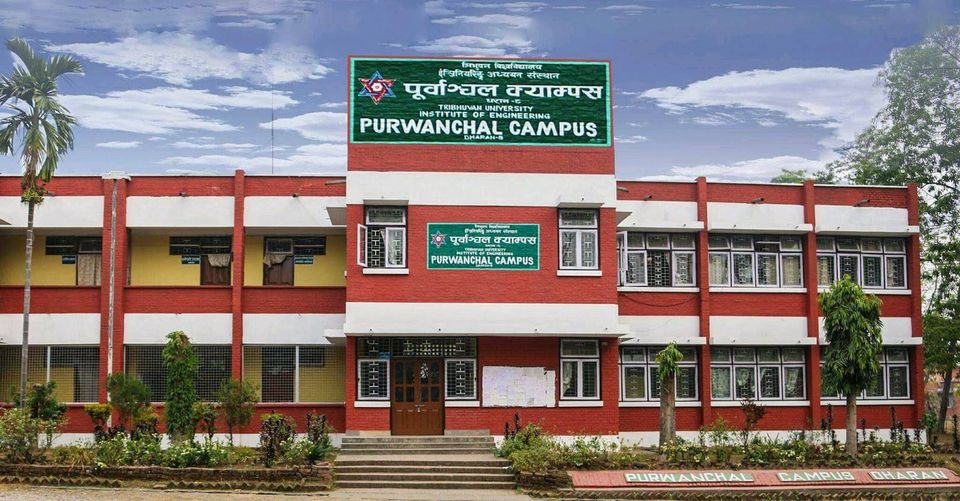
The early phase of the campus centered on technical education in Mechanical, Electrical, and Civil Engineering. These disciplines established the academic base from which the institution later expanded into bachelor-level engineering education.
Bachelor-level development began with Agricultural Engineering in 2057 B.S. (2000 A.D.). Civil Engineering followed in 2061 B.S. (2004 A.D.). Additional engineering and architecture programs were introduced later, broadening the range of undergraduate study available at the campus.
Postgraduate engineering study began in 2074 B.S. (2017 A.D.). The addition of MSc programs extended the academic structure beyond undergraduate engineering and created opportunities for specialized postgraduate study.
The institution was historically known as Eastern Region Campus, commonly abbreviated as ERC. Purwanchal Campus is the name used for present institutional reference, while Eastern Region Campus remains useful when discussing its history.
The campus's academic development reflects a gradual transition from technical and diploma-oriented engineering education to undergraduate and postgraduate degree study within Tribhuvan University.
Purwanchal Campus is a constituent campus of Tribhuvan University operating through the Institute of Engineering.
This structure is important for understanding how academic responsibility is divided.
Purwanchal Campus manages teaching, departmental activities, laboratories, student services, local academic administration, and campus-level enrollment procedures. The Institute of Engineering provides the wider engineering academic framework, including curriculum structure, entrance arrangements, and centralized examination administration.
Tribhuvan University remains the degree-awarding university.
The relationship can be summarized as follows:
Purwanchal Campus organizes its academic work through seven departments:
The departmental structure supports both specialized engineering education and the scientific foundation required across engineering programs.
Agricultural, Civil, Electrical, Mechanical, and Architecture studies operate through dedicated departments. Computer Engineering and Electronics, Communication and Information Engineering are organized within the Department of Electronics and Computer Engineering.
The Department of Applied Sciences supports foundational areas used across engineering education. Mathematics, physics, chemistry, communication, computing, and other basic subjects appear within engineering curricula before students move further into discipline-specific courses.
Purwanchal Campus offers seven bachelor-level programs and three MSc programs under Tribhuvan University and the Institute of Engineering.
| Level | Program | Seats |
|---|---|---|
| Bachelor | Bachelor of Civil Engineering | 144 |
| Bachelor | Bachelor of Agriculture Engineering | 48 |
| Bachelor | Bachelor of Computer Engineering | 96 |
| Bachelor | Bachelor of Electronics, Communication and Information Engineering | 48 |
| Bachelor | Bachelor of Mechanical Engineering | 48 |
| Bachelor | Bachelor of Electrical Engineering | 48 |
| Bachelor | Bachelor of Architecture (B.Arch.) | 48 |
| Master | MSc in Land and Water Engineering | 20 |
| Master | MSc in Sanitation Engineering | 20 |
| Master | MSc in Information System Engineering | 20 |
Each program follows its own curriculum, practical requirements, laboratory work, academic progression, and assessment structure within the IOE system.
Civil Engineering is the largest undergraduate program at Purwanchal Campus by the stated seat allocation.
The curriculum begins with foundation and introductory engineering subjects such as Engineering Mathematics, Engineering Chemistry, Computer Programming, Basic Electrical and Electronics Engineering, Engineering Mechanics, Engineering Geology, and Civil Engineering Materials.
As students progress, the curriculum moves into areas including:
The program combines classroom study with laboratory, survey, design, and other applied academic components prescribed within the IOE curriculum.
Agricultural Engineering has been part of the campus's bachelor-level development since 2057 B.S. (2000 A.D.).
The program represents the application of engineering study to agricultural systems and associated technical areas. It also forms an academic connection with postgraduate study in Land and Water Engineering offered at the same campus.
The degree remains a separate undergraduate engineering program with its own curriculum and academic requirements under TU and IOE.
Computer Engineering is offered through the Department of Electronics and Computer Engineering.
The program follows an eight-semester academic structure. Its study combines engineering foundations with computer-related technical subjects and progresses toward more advanced discipline-specific coursework.
Project work appears in the later part of the program, along with internship-related academic requirements under the IOE curriculum.
The program operates within the same TU and IOE examination and degree framework as the campus's other bachelor engineering programs.
The Bachelor of Electronics, Communication and Information Engineering is also housed within the Department of Electronics and Computer Engineering.
The program is distinct from Computer Engineering even though the two are administered through the same department. Each has its own curriculum and discipline-specific academic requirements.
Students enrolled in this program follow the applicable IOE curriculum covering the relevant electronics, communication, information, engineering foundation, laboratory, project, and other prescribed academic components.
Mechanical Engineering is one of the engineering disciplines connected to the campus's earliest academic history.
Its academic environment includes study and laboratory work related to areas such as thermodynamics, materials, heating and cooling, internal-combustion engines, turbomachinery, robotics, and related mechanical engineering applications.
Practical and laboratory work forms part of the academic structure alongside theoretical subjects.
Electrical Engineering is offered through the Department of Electrical Engineering.
The program follows the curriculum and academic structure prescribed through the Institute of Engineering. Students study the required foundation, technical, laboratory, design, and engineering subjects associated with the electrical engineering discipline.
The program should be distinguished from Electronics, Communication and Information Engineering, which is offered through a separate departmental arrangement.
The Bachelor of Architecture follows a different academic structure from the BE programs.
The IOE architecture curriculum extends through five academic years and incorporates architectural design, technical study, professional subjects, research, and thesis-related academic work.
Architecture admission also includes an aptitude component within the applicable entrance and admission process.
The design-oriented nature of architecture means that its teaching and evaluation structure is not identical to conventional bachelor engineering programs.
Purwanchal Campus offers postgraduate engineering study in three areas:
These programs operate under the postgraduate academic framework of Tribhuvan University and the Institute of Engineering.
MSc in Land and Water Engineering is a two-year postgraduate engineering program.
Eligibility includes a four-year bachelor's degree in Agricultural Engineering or Civil Engineering from a recognized university, together with the entrance requirements prescribed by the Faculty Board of the Institute of Engineering.
The program provides postgraduate study in the land and water engineering field and has an academic relationship with the campus's undergraduate Agricultural Engineering and Civil Engineering disciplines.
Admission, academic progression, examination, and degree completion remain governed by the applicable TU and IOE regulations.
MSc in Sanitation Engineering is one of the three postgraduate programs offered at Purwanchal Campus.
It is organized as a separate postgraduate engineering program with its own academic requirements under the TU and IOE framework.
Its admission, curriculum, examinations, and degree requirements follow the regulations applicable to the program.
MSc in Information System Engineering forms the information systems-related postgraduate engineering option at Purwanchal Campus.
The program is separate from undergraduate Computer Engineering and Electronics, Communication and Information Engineering, even though these academic areas share a broader connection with computing, information, and electronics.
Its academic administration remains subject to the applicable postgraduate rules of Tribhuvan University and the Institute of Engineering.
Admission to Purwanchal Campus follows the academic rules and procedures of Tribhuvan University and the Institute of Engineering.
For bachelor-level engineering and architecture programs, the IOE entrance system serves as the main entry route. Applicants must satisfy the applicable academic eligibility requirements and complete the prescribed entrance process.
After the entrance examination and merit process, applicants seeking a place at Purwanchal Campus participate in the campus-level admission procedure according to the relevant program and seat arrangement.
The broad admission sequence is:
Architecture has an additional aptitude component within the admission process.
MSc admission follows the postgraduate eligibility and entrance rules applicable to the selected program. Requirements are not identical across all bachelor, architecture, and postgraduate programs.
The IOE entrance examination forms an important part of admission to engineering and architecture education under the Institute of Engineering.
Entrance performance is used within the merit and admission process. Students seeking admission to Purwanchal Campus must follow the applicable IOE entrance framework before completing the campus-level admission procedure.
The entrance system should not be treated as a separate degree requirement. It functions as the admission gateway, while curriculum completion, examinations, projects, practical work, and other academic requirements apply after enrollment.
Purwanchal Campus teaches programs according to the academic framework of Tribhuvan University and the Institute of Engineering.
The undergraduate engineering curriculum generally moves from mathematics, science, communication, computing, engineering drawing, and basic engineering subjects toward increasingly specialized professional courses.
The exact sequence differs by program.
Civil Engineering includes survey, structural, water, transportation, geotechnical, construction, and design subjects. Computer Engineering follows an eight-semester curriculum with project and internship-related work. Architecture extends across five academic years with substantial design and thesis-related study.
Laboratory and practical components appear where required by the individual curriculum.
Other academic components may include:
These components depend on the particular program rather than applying identically to every student.
Engineering examinations operate through the Examination Control Division of the Institute of Engineering.
This centralized structure separates examination administration from day-to-day campus teaching. Purwanchal Campus conducts classes, laboratory work, practical activities, projects, departmental academic work, and local administration, while the IOE Examination Control Division manages the wider engineering examination system.
The arrangement applies across undergraduate and postgraduate engineering study according to the regulations governing the respective programs.
| Academic Area | Responsible Structure | Main Role |
|---|---|---|
| Entrance and Admission: | IOE and Purwanchal Campus | Entrance, merit, and enrollment process |
| Curriculum: | Institute of Engineering | Academic and engineering curriculum framework |
| Examinations: | IOE Examination Control Division | Central engineering examination administration |
| Degree Award: | Tribhuvan University | Academic degree after successful completion |
| Professional Registration: | Nepal Engineering Council | Separate engineering registration process |
Students must complete the academic and examination requirements prescribed for their program before receiving the relevant academic award.
Purwanchal Campus does not function as an independent degree-awarding university.
Students who successfully complete the prescribed curriculum, examinations, practical work, projects, thesis requirements, or other applicable academic components receive their academic degree through Tribhuvan University.
This distinction is important when reading the name of the campus on admission or program information. The student studies at Purwanchal Campus under IOE, but the university-level academic award comes from Tribhuvan University.
University graduation and professional engineering registration are separate processes.
The Nepal Engineering Council is the professional regulatory body connected with engineering registration in Nepal.
Completing an engineering degree at Purwanchal Campus does not by itself mean that professional registration has automatically been completed.
Graduates seeking registration must follow the applicable Nepal Engineering Council requirements for their engineering discipline.
The distinction can be understood simply:
Engineering teaching at Purwanchal Campus includes laboratory and workshop-based academic activity alongside classroom study.
The technical requirements differ significantly by department. Civil Engineering requires a different laboratory environment from Electrical, Mechanical, Agricultural, Computer, or Electronics Engineering.
Mechanical Engineering includes laboratory and research-related areas such as:
Practical facilities support curriculum-based exercises, testing, experiments, demonstrations, projects, and technical learning.
Workshops form another part of the engineering learning environment, particularly where students need practical exposure connected with tools, machines, fabrication, mechanical processes, or related technical work.
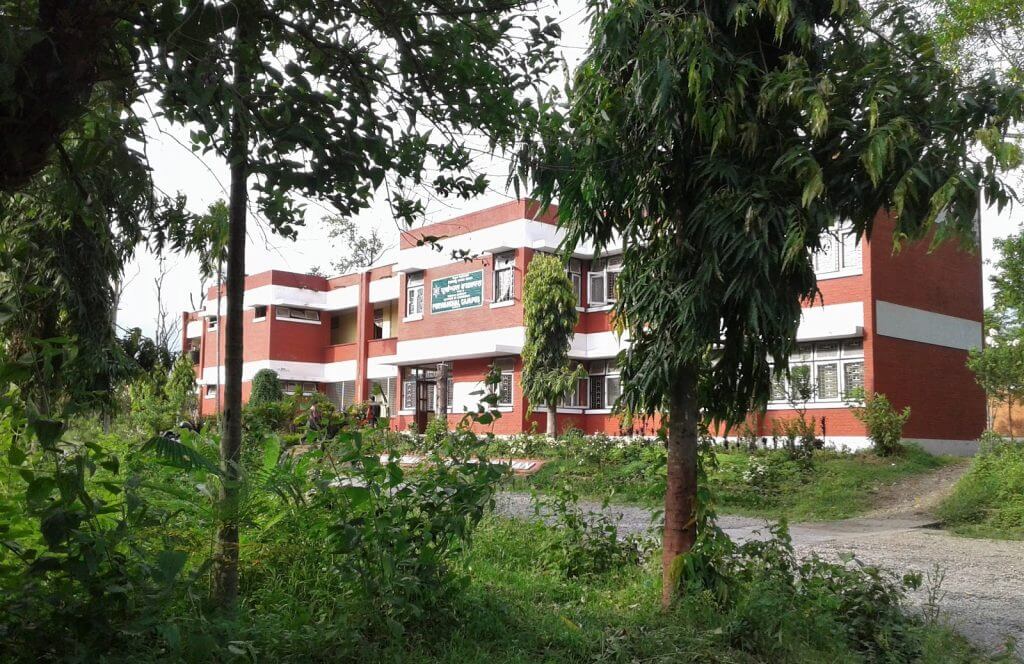
Purwanchal Campus maintains a physical library alongside electronic academic resources.
The physical library supports reading and borrowing activities. Electronic resources extend access to academic materials beyond printed books.
The eLibrary includes categories such as:
These resources are relevant throughout engineering study, particularly when students move into project work, design assignments, research, report preparation, and postgraduate thesis work.
The combination of physical and electronic resources supports both regular coursework and more independent academic study.
Research-related academic work is supported through the Research Management Cell.
Its functions include areas such as faculty research grants, research workshops and training, research resources, and coordination of research activity.
Research also appears through individual program curricula.
Engineering study may involve projects, design assignments, practical investigation, field-based work, internships, reports, research exercises, or thesis preparation depending on the academic level and discipline.
A Computer Engineering project, an Architecture thesis, and postgraduate engineering research are different academic activities, but each requires students to work beyond conventional classroom lectures and written examinations.
The addition of postgraduate programs has also expanded the campus's academic scope into specialized engineering research and thesis-based study.
Purwanchal Campus has student-welfare arrangements and hostel facilities for male and female students.
Hostel accommodation forms part of the campus support structure, though available capacity is limited.
Student organizations connected with academic departments also operate within the campus environment. Examples include:
Activities associated with these organizations include seminars, workshops, exhibitions, technical events, and academic collaboration.
These societies provide a department-linked space for activities outside the formal classroom while remaining connected to students' academic disciplines.
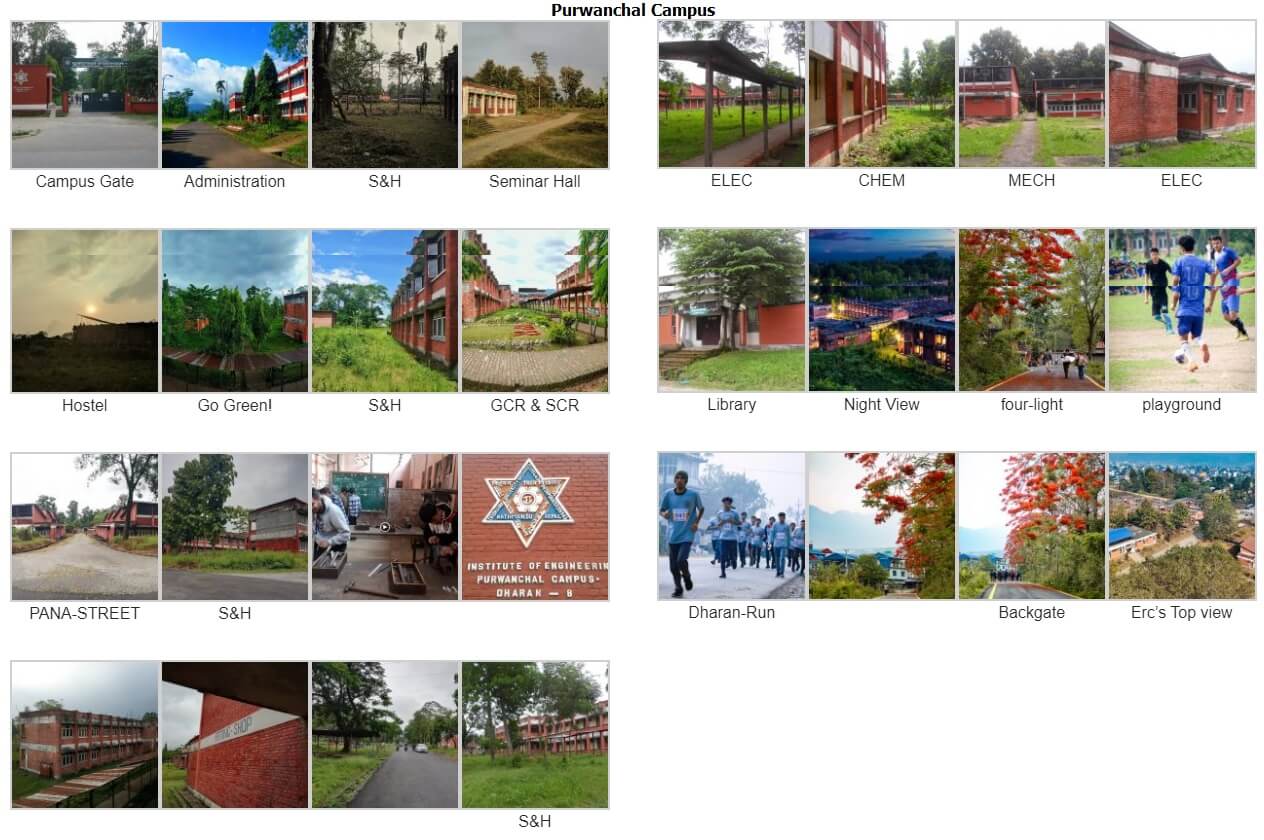
The academic environment combines classrooms, engineering laboratories, workshops, computer and internet facilities, library services, electronic learning resources, research activity, and student organizations.
The importance of each facility depends on the student's discipline.
Architecture students require design-oriented academic spaces and resources. Mechanical Engineering students work with mechanical laboratories and workshops. Civil Engineering involves survey, structural, construction, water, and related practical work. Computer and Electronics students depend on computing and electronics-oriented laboratory activity.
The campus also includes recreational and sports facilities alongside its academic infrastructure.
The resulting academic setting reflects the needs of several engineering disciplines rather than a single standardized mode of study.
Purwanchal Campus is situated at Gangalal Marg, Dharan-8, Sunsari, Koshi Province, Nepal.
Dharan has been the campus's institutional base since its establishment. Its historical name, Eastern Region Campus, also reflects the regional context in which the institution was developed.
Students admitted to Purwanchal Campus complete their campus-based academic work through the departments and facilities located in Dharan, even though the broader academic system is administered through IOE and Tribhuvan University.
Students considering Purwanchal Campus should distinguish between the institution and the individual program they plan to study.
The campus offers several engineering and architecture disciplines, but each has its own curriculum and academic demands.
Civil Engineering, for example, includes structural, survey, water, geotechnical, transportation, and construction-related study. Computer Engineering follows a computing-oriented engineering curriculum. Mechanical Engineering centers on mechanical systems and related laboratory work. Architecture follows a five-year design-oriented structure.
The MSc programs are postgraduate degrees with separate eligibility and academic requirements.
A student's academic path can therefore be viewed in four stages:
Understanding these stages helps distinguish the roles played by Purwanchal Campus, IOE, Tribhuvan University, and the Nepal Engineering Council.
Purwanchal Campus is a constituent campus of Tribhuvan University operating through the Institute of Engineering. It is not an independent university.
The institution was formerly known as Eastern Region Campus (ERC). The former name remains relevant to its institutional history.
Purwanchal Campus was established in Poush 2034 B.S. / 1977 A.D. Academic programs began in 1984.
The campus offers seven bachelor-level programs and three MSc programs.
The bachelor programs are Civil Engineering, Agriculture Engineering, Computer Engineering, Electronics, Communication and Information Engineering, Mechanical Engineering, Electrical Engineering, and Architecture.
The postgraduate programs are Land and Water Engineering, Sanitation Engineering, and Information System Engineering.
Bachelor-level engineering and architecture admission follows the IOE entrance framework, followed by the campus-level admission procedure. MSc admission follows the eligibility and entrance requirements prescribed for the respective postgraduate program.
Engineering and architecture admission operates through the applicable IOE entrance process. Applicants must also meet the academic eligibility requirements for the program they intend to study.
Architecture includes an aptitude component within the applicable admission process in addition to the wider IOE entrance framework.
The academic programs operate under the curriculum and academic framework of the Institute of Engineering within Tribhuvan University.
Engineering examination administration is handled through the IOE Examination Control Division. Purwanchal Campus manages teaching and local academic activities, while the central examination structure operates through IOE.
Tribhuvan University awards the academic degree after successful completion of the prescribed requirements of the relevant program.
No. Academic graduation and professional engineering registration are separate processes. Graduates seeking professional registration must follow the applicable requirements of the Nepal Engineering Council.
The academic environment includes classrooms, engineering laboratories, workshops, computer and internet facilities, a physical library, eLibrary resources, research support, and department-based technical facilities.
The campus has hostel facilities for male and female students. Hostel capacity is limited.
Purwanchal Campus is located at Gangalal Marg, Dharan-8, Sunsari, Koshi Province, Nepal.