Jana Bhawana Campus (JBC) is a community-based institution located at Godawari-11, Chapagaun in Lalitpur. It was established in 1991 by a group of academicians, educationists, social workers, and professionals who wanted to expand access to organised higher education for the local community and nearby districts. Over three decades, the campus has developed into a multi-disciplinary centre that serves students from different parts of Nepal seeking affordable and reliable higher education.
The campus is affiliated with Tribhuvan University (TU) for bachelor’s and master’s programs and with the National Examinations Board (NEB) for Ten Plus Two programs. It received Quality Assurance and Accreditation (QAA) certification from the University Grants Commission (UGC) in 2019, which confirms that its academic standards, management practices, and student support services meet nationally defined indicators of quality.
Jana Bhawana Campus operates as a community campus where a campus assembly, including teachers, local representatives, alumni, guardians, and professionals, guides major decisions. This governance model keeps the institution accountable to its stakeholders and links academic programs with community needs. The motto “Be a Jbian, Be a Good Citizen” reflects its focus on social responsibility together with academic achievement.
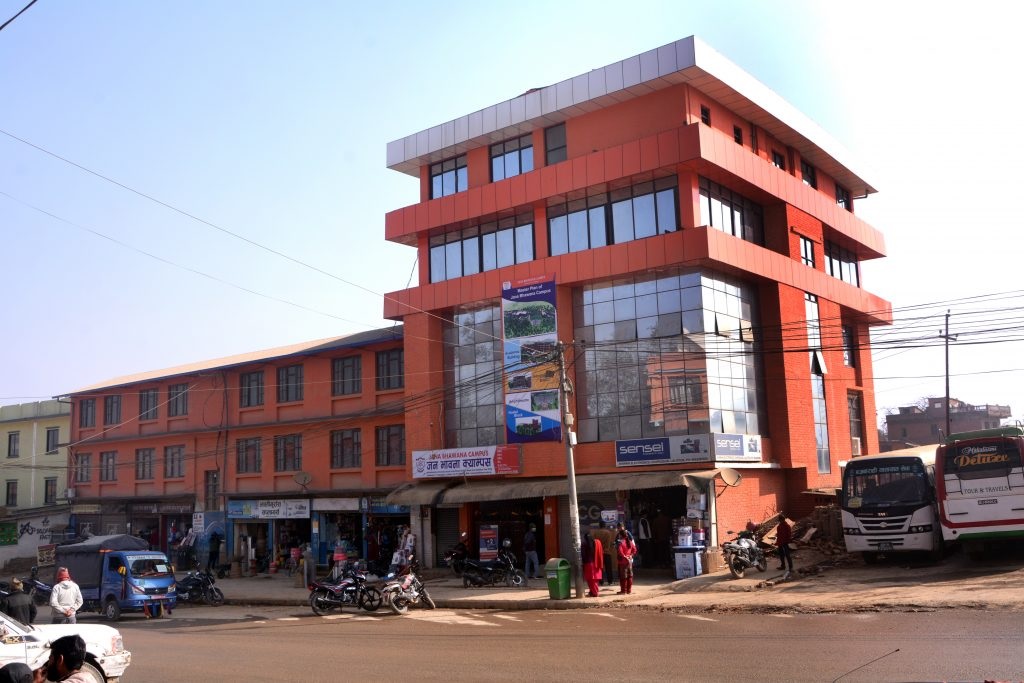
Community campus located at Godawari-11, Chapagaun, Lalitpur
Established in 1991 under community initiative
Affiliated with Tribhuvan University and NEB
QAA certified by UGC in 2019
Recipient of “Best Campus Award 2081” among community campuses of Nepal from the Ministry of Education, Science and Technology
Programs from Ten Plus Two to master’s level in management, education, humanities, social work, ICT, and computer applications
Specialised units: Research Management Cell, Professional Skill Development Unit, Employment Support Cell, Career Service Center, Public Information Cell, and Grievance Redressal Cell
Jana Bhawana Campus (जन भावना क्याम्पस, ललितपुर) offers a cluster of programs that cover management, social sciences, education, and information technology. All programs follow the curricula and examination rules of Tribhuvan University or NEB, which supports academic recognition across Nepal and abroad.
Under Tribhuvan University, the campus runs both yearly and semester-based programs:
Bachelor of Business Studies (BBS)
Bachelor of Arts (BA)
Bachelor of Social Work (BSW)
Bachelor of Education (B.Ed)
Bachelor of Arts in Computer Application (BCA)
Bachelor of Information Communication Technology Education (BICTE)
Master of Business Studies (MBS)
The BBS program is a four-year course with specialisations in areas such as accounting, finance, and marketing. Students study management, economics, statistics, business law, taxation, auditing, business environment, research methods, and entrepreneurship, which prepares them for roles in banking, corporate organisations, co-operatives, and public agencies.
BA and BSW focus on humanities and social sciences. Classroom learning in subjects like sociology, psychology, rural development, and social work is linked with community visits and field projects, giving students practical exposure to social issues, community dynamics, and grassroots development work.
The B.Ed program prepares secondary-level teachers in English, Nepali, mathematics, population education, and related areas. Courses cover language development, educational psychology, curriculum and evaluation, teaching methods, and research. Practice teaching and seminars strengthen classroom management and lesson planning skills suited to school contexts.
The MBS semester program builds higher-level knowledge in management. Major subjects include marketing management, managerial economics, organisational behaviour, financial management, human resource management, business environment, research methodology, international business, entrepreneurship, strategic management, financial markets, and investment. A dissertation component allows students to complete independent research on contemporary management issues.
The Bachelor of Arts in Computer Application (BCA) is a four-year, eight-semester program under the Faculty of Humanities and Social Sciences of Tribhuvan University. With 126 credit hours, it covers core computer application courses, mathematics and statistics, language courses, social sciences and management, electives, and a project with internship.
Key subject areas include computer fundamentals, programming, data structures and algorithms, operating systems, software engineering, web technology, database management systems, computer networks, mobile and distributed systems, cloud computing, cyber law and professional ethics, and operations research. Elective options such as IT in banking, hotel information systems, advanced .NET technology, database programming, and network administration allow focused study in selected application domains.
Graduates can work as software developers, web developers, system analysts, database administrators, network administrators, and IT officers, or continue to advanced study in computer science and information technology.
The Bachelor of Information Communication Technology Education (BICTE) is a four-year, eight-semester program under the Faculty of Education of Tribhuvan University. It carries 132 credit hours that combine communication skills, educational core courses, ICT core courses, mathematics and analytical skills, life skills, electives, and teaching practicum.
Students progress from introductory ICT and programming to more advanced topics such as database management systems, web technology, networking, software engineering and project management, computer graphics, network and information security, artificial intelligence in education, digital pedagogy, cloud computing, Python programming, and specialised electives like geographical information systems and big data analysis. These ICT courses run alongside learning psychology, curriculum studies, research methods in education, teaching methods for ICT, and classroom pedagogy.
BICTE graduates are prepared for careers as ICT teachers, educational technologists, e-learning coordinators, and ICT professionals in schools and training institutions.
Under the National Examinations Board, Jana Bhawana Campus offers Ten Plus Two (+2) programs in Management and Humanities. The +2 Management stream covers accounting, economics, business studies, and computer-related subjects, which provides a base for BBS, BCA, BICTE, or other business and IT degrees. The +2 Humanities stream builds skills in language and social science subjects that link directly with BA, BSW, and B.Ed programs at the campus.
Admission procedures follow regulations of Tribhuvan University and NEB. For Ten Plus Two programs, applicants submit SEE or equivalent results, attend counselling sessions, and select their preferred stream based on interests and academic records.
For bachelor’s and master’s programs, candidates must complete Ten Plus Two or bachelor’s level with minimum grades required by TU in the relevant stream. Applicants for competitive programs such as BCA and BICTE sit for entrance examinations conducted according to Tribhuvan University guidelines. The campus processes application forms, organises entrance exams, and prepares merit lists; seats are filled on the basis of merit with consideration for scholarship categories and community quotas.
Jana Bhawana Campus has also introduced an Enrollment Eligibility Test (EET) for some programs. The EET assesses verbal ability in Nepali and English, quantitative ability, general awareness, and writing skills through multiple-choice questions and a short writing section, and serves both as an admission tool and as a criterion for internal scholarships.
JBC works with a mix of permanent and visiting faculty members with backgrounds in management, education, ICT, social sciences, and related fields. Faculty lists in the BCA and BICTE brochures show subject experts in computer application, ICT, mathematics, English, economics, and finance, along with visiting professors from national universities and professional institutions.
Teaching–learning activities combine lectures, tutorials, practical sessions, lab work, group assignments, and project-based tasks. IT and ICT students spend substantial time in computer laboratories, while management and social science students engage in presentations, case discussions, report writing, and field visits. Regular internal assessments and presentations keep students involved throughout the semester or academic year.
Units such as the Research Management Cell, Professional Skill Development Unit, Employment Support Cell, and Career Service Center organise workshops on research methods, report writing, accounting, taxation, communication skills, and interview preparation. These activities support classroom learning and strengthen graduate readiness for further study and employment.
The campus has a multi-storey academic building with classrooms, administrative offices, laboratories, and meeting spaces. Computer laboratories provide the software and hardware required for BCA, BICTE, and other ICT-related courses. The campus also offers internet access, an online learning portal, and online labs so that students can access learning materials and practice tasks beyond class hours.
Library services include textbooks, reference books, journals, magazines, and newspapers covering management, education, social sciences, and technology. A radio studio with online broadcasting facilities, a digital Zoom studio, and a furnished seminar hall support communication-related activities, conferences, and workshops. QAA processes encourage periodic review and improvement of these facilities.
Student life at Jana Bhawana Campus combines academic engagement with counselling, extracurricular activities, and community involvement. The Students’ Counseling and Support Cell offers psychosocial and career counselling, helps learners choose suitable courses, and provides advisory support for academic and personal difficulties.
The Employment Support Cell and Career Service Center act as bridges between the campus and the job market. They organise career counselling sessions, job-readiness workshops, and role-based training in areas such as customer service, banking, digital marketing, research, accounting, and ICT tools, and they facilitate internships and job placements through links with industries, organisations, and alumni.
Student-friendly policies include structured mechanisms for feedback and grievance handling. The Public Information Cell publishes calendars, prospectuses, brochures, and souvenirs, and gathers feedback from students, alumni, guardians, and community members. The Grievance Redressal Cell, operating under approved guidelines, receives complaints, investigates them with relevant departments, and recommends fair solutions while keeping confidentiality.
The campus promotes extracurricular activities as part of overall student development. Students participate in sports, cultural programs, literary events, ICT clubs, and social campaigns. Programs such as social work field visits, educational awareness activities, and project work in local communities allow students to observe real issues and contribute to local development initiatives.
Radio programmes, seminars, guest lectures, and interaction sessions with practitioners expose students to current debates in education, management, technology, and social development, and encourage public speaking, teamwork, and critical thinking.
Jana Bhawana Campus offers several scholarship schemes so that capable students from diverse economic backgrounds can continue their education. Scholarships are mainly of two types: purely merit-based awards and scholarships that combine merit with financial need. A five-member scholarship committee reviews applications, verifies documents, and decides awards.
For BBS, BA, B.Ed, and BSW, the campus provides full admission discounts for the first ten students in each program. Named scholarships include the Dr. Mukunda Bahadur Shrestha Higher Education Scholarship, RHEST in Honor of Amar, Nepal Engineers’ Wives Society Scholarship, and the Madhav Prashad Neupane & Bhoj Kumari Neupane Higher Education Scholarship, which support meritorious, deprived, and marginalised students. Additional partial waivers are available for students who demonstrate financial hardship and consistent academic progress.
The Research Management Cell (RMC) coordinates research activities and encourages both faculty and students to engage in enquiry-based learning. It prepares research plans, supports proposal development, organises training on research methodology, and provides small grants for mini-research projects. RMC publishes the peer-reviewed “Janabhawana Research Journal,” which documents studies in areas such as migration, microfinance and women’s empowerment, ICT use in schools, and solid waste management in Godawari Municipality.
The Professional Skill Development Unit (PSDU) runs non-credit short courses that strengthen practical skills not fully covered in the regular curriculum. Examples include dynamic web application development with ASP.NET and React, professional accounting and taxation, business communication, general ICT, and pedagogical practices; students receive certificates after completing these courses and assessments.
The Employment Support Cell and Career Service Center extend this support by providing self-assessment tools, online and offline training modules, and curated internship and job opportunities in sectors such as banking, IT, customer service, and marketing. These services help students link their academic profile with labour market needs and plan their careers in a structured way.
The Public Information Cell and the Grievance Redressal Cell promote transparency and accountability within the institution. The Public Information Cell collects data from stakeholders and publishes documents like calendars, brochures, and souvenirs, while the Grievance Redressal Cell works under formal guidelines to resolve academic and administrative complaints. Together they help maintain trust between management, staff, students, and the wider community.
Jana Bhawana Campus has achieved several institutional milestones. QAA certification from UGC in 2019 confirms that the campus satisfies criteria related to academic programs, infrastructure, student services, and internal quality assurance.
The Ministry of Education, Science and Technology has recognised JBC with the “Best Campus Award 2081” among community campuses of Nepal. Consistently strong results in NEB and TU examinations, publication of research journals, expansion of ICT-based programs such as BCA and BICTE, and collaboration with local organisations further indicate steady academic and institutional development.
Prospective students and guardians often seek campuses that provide relevant programs, stable governance, and accessible fees. Jana Bhawana Campus offers academic pathways from Ten Plus Two to master’s level in both traditional fields and technology-oriented disciplines. QAA status, a national award, and experience of more than three decades show that the campus has gradually improved its systems and outcomes.
The institution combines classroom teaching with research, skill development, counselling, scholarships, and organised career support. Specialised units work together so that students receive guidance in academic, personal, and professional spheres, while community-based governance keeps programs aligned with local needs and national higher education policies.
Jana Bhawana Campus, Chapagaun, Lalitpur illustrates how a community campus can connect higher education with social responsibility. Through affiliations with Tribhuvan University and NEB, QAA certification, recognition as “Best Campus Award 2081,” and a wide set of academic and support services, it contributes to human resource development in management, education, social sciences, and information technology.
Its research activities, professional skill courses, counselling services, employment support, and scholarship schemes show a sustained commitment to students from diverse backgrounds.
Jana Bhawana Campus is located at Godawari Municipality-11, Chapagaun, in Lalitpur district. The campus is accessible from different parts of the Kathmandu Valley while remaining closely linked with its local community.
The campus is affiliated with Tribhuvan University for bachelor’s and master’s programs and with the National Examinations Board (NEB) for Ten Plus Two programs in Management and Humanities.
Programs include BBS, BA, BSW, B.Ed, BCA, BICTE, and MBS under Tribhuvan University, along with Ten Plus Two programs in Management and Humanities under NEB. These cover management, education, social sciences, information technology, and computer applications.
Yes. Jana Bhawana Campus offers merit-based and need-based scholarships, including full admission discounts for the first ten students in selected programs and named scholarships such as the Dr. Mukunda Bahadur Shrestha Higher Education Scholarship, RHEST in Honor of Amar, Nepal Engineers’ Wives Society Scholarship, and Madhav Prashad Neupane & Bhoj Kumari Neupane Higher Education Scholarship.
The Employment Support Cell and Career Service Center organise career counselling, job-readiness training, and role-based short courses, and maintain links with industries, organisations, and alumni to create internship and job opportunities for students.
The Research Management Cell coordinates faculty and student research projects and publishes the Janabhawana Research Journal. QAA certification by UGC and recognition from the Ministry of Education show that the campus follows structured processes for quality assurance and continuous improvement.
JBC is governed by a campus assembly that includes academicians, educationists, social workers, and professionals, along with representation from alumni and guardians. This community-based structure keeps the campus accountable to stakeholders and promotes transparency in academic and administrative decisions.
Contact Jana Bhawana Campus's administrative office for detailed information on the course, admissions, location, fees, scholarships, facilities, counseling, or eligibility.
Jana Bhawana Campus
Email Address: Janabhawanacampus@gmail.com
Phone Number: +977-1-5265512, +977-1-5265294
Website: http://janabhawana.edu.np
Location: Godawori-11, Chapagaun, Lalitpur, Nepal

.png)