



BICTE at Jana Bhawana Campus in Chapagaun, Lalitpur is a four-year undergraduate program under Tribhuvan University’s Faculty of Education. The campus runs this program in the semester system alongside other TU offerings, within a community-based academic setting that has a long local presence and a clear focus on quality improvement.
Jana Bhawana Campus is located at Godawari-11, Chapagaun and was established in 1991. The campus received QAA certification from the University Grants Commission in 2019. The Ministry of Education, Science and Technology granted the campus the “Best Campus Award 2081” among community campuses. These milestones matter to you because they signal steady institutional growth, stronger systems, and a learning environment that aims to meet nationally recognized quality benchmarks.
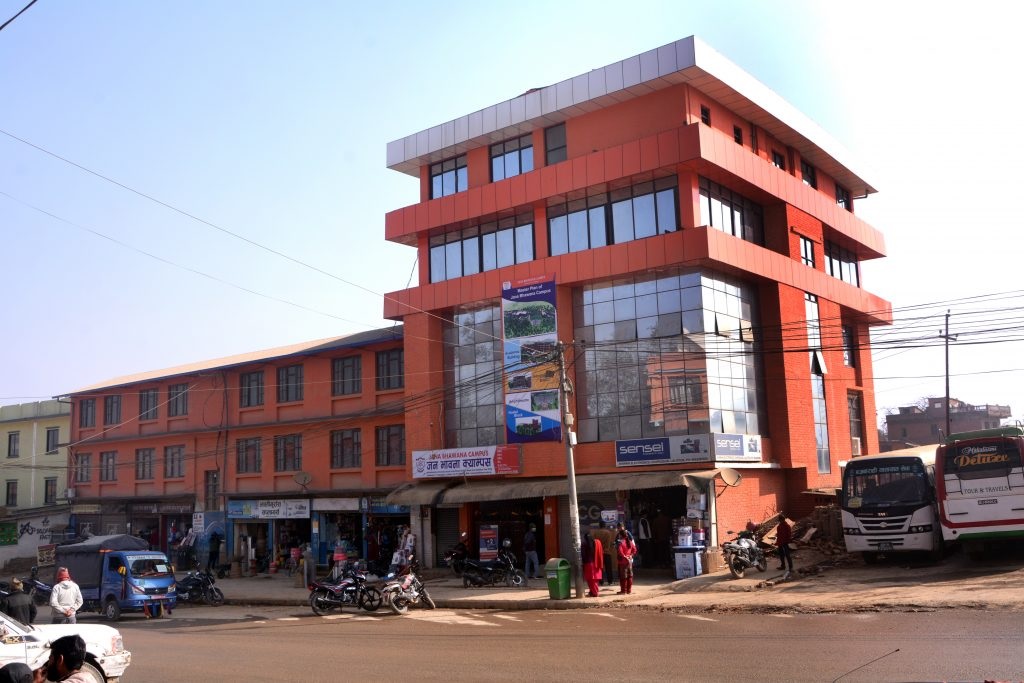
Jana Bhawana Campus operates as a community college governed by a campus assembly that includes academicians, educationists, social workers, and professionals. This structure shapes academic decisions through shared accountability rather than a purely private model.
The campus reports strong board results in NEB and TU. The learning setting includes computer labs, internet support, an online learning portal, a library, seminar facilities, and spaces that support student activities. These features are relevant to BICTE students who need regular access to ICT tools and a stable academic routine.
BICTE is a TU program that combines education foundations with ICT and pedagogy. The course content covers topics such as information technology, programming, psychology, education technology, Java, database systems, data communication, and related areas.
The program follows a four-year, eight-semester format with a total of 132 credit hours. The credit distribution includes:
Communication skills courses
Educational core courses
ICT core courses
Electives
Mathematics and analytical courses
Life skills
Teaching internship or practicum
This structure supports both technical ability and classroom readiness, which is the core identity of BICTE.
The semester-wise outline in the campus reference shows a progression from language, education foundations, math, and introductory IT in the first year to data structures, OS, web technology, curriculum, assessment, networking, security, digital pedagogy, and advanced topics such as AI in education, Linux administration, Python, and capstone and teaching practicum in the final year.
BICTE at Jana Bhawana Campus aims to help you become a competent ICT-education graduate who can:
Understand learning and development concepts relevant to classroom practice
Use programming and system knowledge for educational needs
Apply ICT tools in lesson planning, teaching, and assessment
Handle basic research tasks in education settings
These goals connect with the campus-wide objective of improving employability and strengthening research-oriented learning.
BICTE supports two clear directions.
The first direction is school-level ICT teaching and academic support roles. Students who want to work in secondary schools, plus-two institutions, or training centers often value this blend of education and ICT.
The second direction is ICT support and content roles in education-focused organizations. This can include e-learning support, school digital transformation support, and curriculum-related tech assistance, depending on your personal skills and local job demand.
After completing the program, you should be able to:
Use foundational programming and database concepts
Understand networks, security basics, and system administration at an applied level
Connect learning psychology and curriculum principles with ICT-based lesson delivery
Plan and deliver ICT teaching practicum tasks with confidence
The final-year practicum and capstone components serve as a structured bridge from theory to classroom work.
Jana Bhawana Campus has a Professional Skill Development Unit that offers non-credit courses to strengthen skills that may not be fully covered in the university syllabus. The listed modules include a 70-hour course on building web applications using ASP.NET and React, and a professional course that combines accounting, taxation, business communication, and general ICT. This unit evaluates skills and provides certifications. These options can be valuable if you want extra practice beyond regular semester classes.
The campus notes a commitment to both theoretical and practical education. In BICTE, this approach typically shows up through lab work, programming exercises, micro-teaching preparation, and class-based projects tied to education technology.
The Research Management Cell also encourages student research activities such as paper writing and field-linked studies. This support can help you build a stronger academic profile for future teaching or higher education routes.
The campus reference confirms BICTE as a TU-affiliated program but does not list detailed admission steps for BICTE specifically. In practice, you should expect standard TU eligibility rules for bachelor-level entry and campus-level document submission requirements.
The campus also runs an Enrollment Eligibility Test (EET) for students seeking admission and scholarships in its offered courses. The EET assesses verbal ability, quantitative ability, general awareness, and writing ability. You may need to sit for this test if the campus applies it to BICTE intake cycles.
BICTE can open pathways such as:
ICT teacher at secondary and higher secondary levels
Computer instructor in training centers
Education technology support staff in schools
Content and learning support roles in educational projects
Entry-level roles that value programming, web basics, databases, and networking, especially if you add extra portfolio work
The campus Employment Support Cell focuses on internships, job-readiness support, resume help, and links with alumni and employers. This structure can ease your shift from campus life into work.
The file lists scholarship schemes for several programs and mentions named scholarships for meritorious and economically deprived students. The scholarship committee evaluates students under merit and merit-cum-means categories. You should confirm current BICTE-specific availability directly with the campus, but the institutional framework for financial support is clearly present.
The campus also links EET performance with scholarship decisions. This suggests that your preparation for aptitude and writing can directly influence financial support outcomes.
BICTE suits you if you want an education degree that keeps you close to technology rather than separating the two.
Students often struggle to choose between pure IT and pure education. BICTE offers a middle path where your classroom identity and technical skills grow together. This matters in Nepal’s evolving school environment, where ICT labs, digital content, and online assessment practices increasingly require teachers who feel comfortable with both teaching theory and real tools.
Jana Bhawana Campus adds support units such as research, counseling, skill-development, and career services that can strengthen your progress if you use them actively.
BICTE at Jana Bhawana Campus offers a TU-recognized pathway that connects ICT knowledge with real classroom practice. The campus history, QAA status, community governance, and student-support cells create a stable academic setting for students who want credible, career-linked education in a local and accessible environment.
Yes. The campus runs BICTE under Tribhuvan University.
BICTE is a four-year, eight-semester program with 132 credit hours.
The program covers education foundations, psychology, programming, databases, networking, web technology, digital pedagogy, and final-year practicum and capstone work.
Yes. The Professional Skill Development Unit provides non-credit courses such as web application development and professional ICT-related training.
Students can access research support, career and employability services, and counseling and support mechanisms through campus cells.






