Janajyoti Campus, established in 2007 (2064 BS), is a community-supported institution located in Bhimad, Tanahun district, Nepal. It operates under the affiliation of Tribhuvan University (TU), offering undergraduate degree programs in Bachelor of Business Studies (BBS) and Bachelor of Education (B.Ed).
The campus was established through the collaborative efforts of educators, local leaders, social workers, and the broader community. Its location—set apart from urban noise and environmental stress—provides a peaceful learning atmosphere suitable for focused academic engagement.
Name: Janajyoti Campus
Year Established: 2007 (2064 BS)
Location: Bhimad, Tanahun, Nepal
Affiliation: Tribhuvan University
Programs: B.Ed. and BBS (Annual System)
Total Land Area: 113 Ropanis
Total Students: Over 320
Faculty: 15 academic staff
Administrative Staff: 3
Library Holdings: Over 3,000 publications, including journals and textbooks
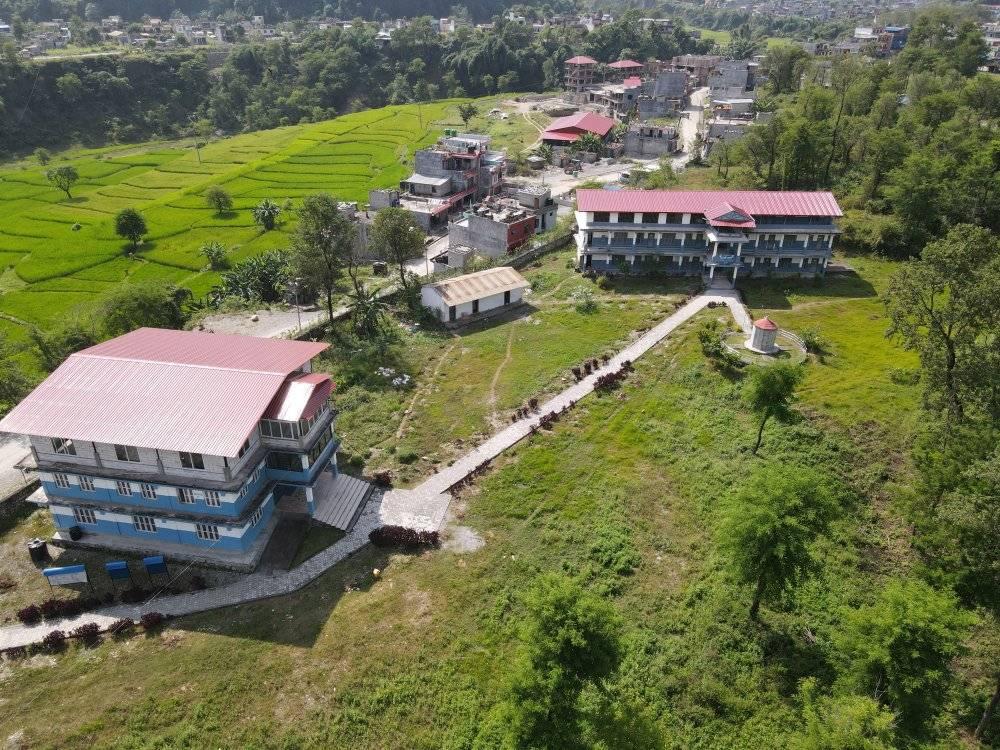
Following the political changes in the 1990s, there was a growing need for higher education institutions outside major urban centers in Nepal.
Janajyoti Campus was established to meet this demand, with a particular focus on providing educational access to rural students. The institution started with logistical support from Janajyoti Higher Secondary School, which initially provided buildings and later donated 113 ropanis of land.
The campus operates with full community participation. It follows TU’s academic guidelines but manages its own affairs through a democratically elected Campus Management Committee.
The institution’s primary focus is to extend higher education opportunities to students from marginalized and economically challenged backgrounds.
The campus runs the following bachelor-level programs under the annual examination system:
Each program operates under its respective department: Management and Education. Courses are conducted in the morning shift to accommodate students with additional responsibilities.
Applicants who have completed 10+2 or equivalent from a recognized board are eligible to apply. The admission process includes:
Submission of application forms
Copies of academic transcripts and character certificates
Interview and counseling (where required)
The campus prioritizes inclusivity by offering opportunities to students from all academic streams and social backgrounds.
Currently, the campus employs 15 teaching staff (8 full-time and 7 part-time). Among the full-time staff, four hold the position of lecturer.
Teaching methods incorporate traditional lectures, group discussions, presentations, and project-based activities. Internal evaluations are conducted periodically to track student performance.
The faculty maintains a student-centered approach while following Tribhuvan University’s academic framework.
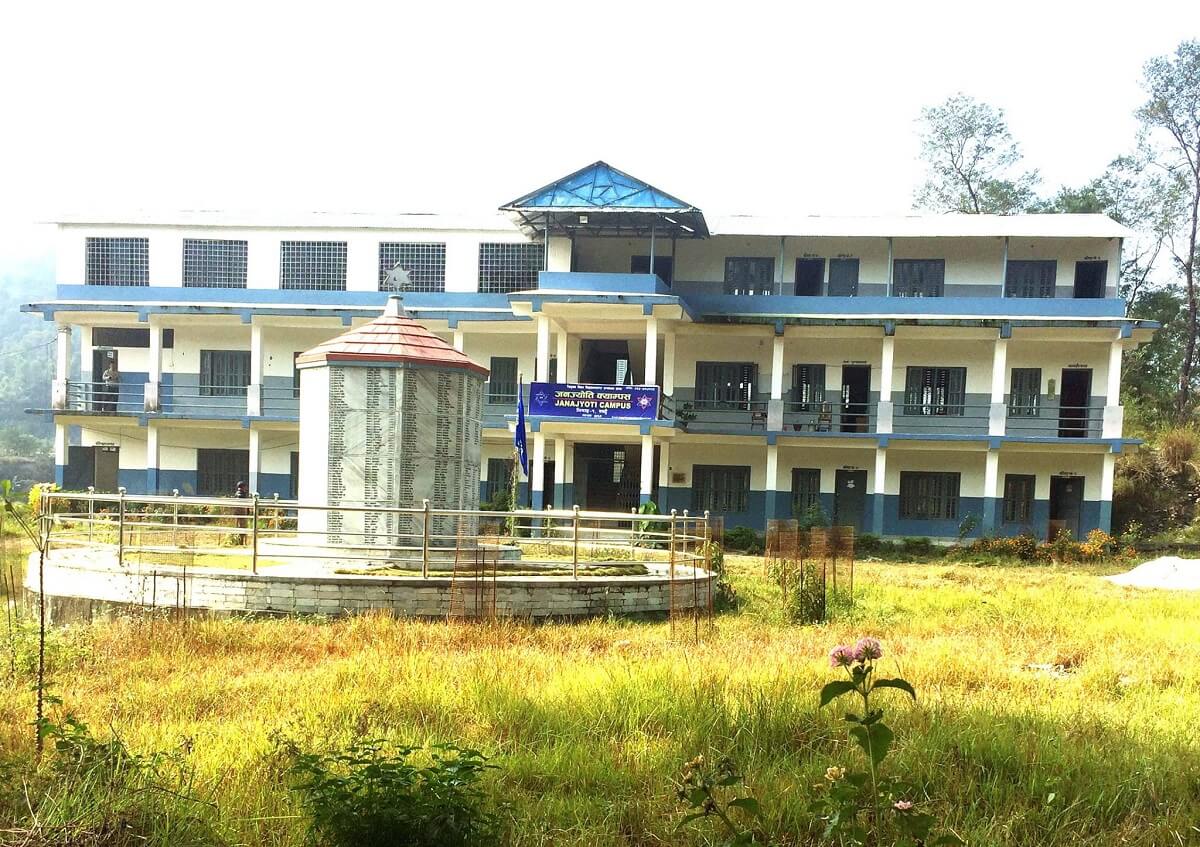
Janajyoti Campus is spread across 113 ropanis of land. It includes:
Academic buildings with 11 classrooms
A library with a collection of over 3,000 texts, references, and journals
An administrative block
A canteen
Drinking water and restroom facilities
A seminar and meeting space
The classroom space is sufficient to accommodate current students, but further expansion is needed for future growth and to launch master-level and technical programs.
The library operates during the morning and day shifts and offers:
Seating capacity for 35 students
Separate space for e-resources (6 users at a time)
Textbooks: 1,000+
Reference Books: 2,100
Journals: 20
Magazines: 4
The campus also has a growing collection of research reports and academic publications. Additional support is required to expand digital access and e-library resources.
The student body is composed of learners from diverse backgrounds. Enrollment has been increasing over the years, particularly among female students. However, the campus faces a high dropout rate, particularly in later years of study.
Enrollment statistics across four academic years show a consistent total student count exceeding 300. Gender inclusion is notable, with nearly equal participation from both male and female students.
Janajyoti Campus follows a self-sustaining financial model. Most of its operational funds come from student fees, development charges, and other local sources such as:
Rental income
Water boring service
Donations from municipalities and UGC
On average, over 70% of its budget is generated internally. While this ensures some degree of financial independence, the institution still requires support for capital development and infrastructure maintenance.
Several challenges are currently being addressed:
Limited number of academic programs
High dropout and absenteeism
Inadequate digital infrastructure (e-library, ICT tools)
Incomplete administrative and library buildings
Lack of sports and recreational facilities
The institution is working toward solving these through community partnerships, local government support, and five-year action plans.
The campus has set clear goals for development:
Improve academic quality and outcomes
Provide better support for underrepresented students
Expand infrastructure, including library, labs, and playgrounds
Strengthen internal governance and staff capacity
Introduce master-level and technical programs
Develop a research and innovation center
Enhance local and international partnerships
The five-year plan includes:
Completion of the library and administrative buildings
Upgrading ICT and teaching tools
Construction of the garden and waiting room
Canteen improvement
Establishment of a sports ground
Teacher training and study leave policies
Ongoing publication of academic journals
The campus offers scholarships to students from economically disadvantaged groups, including:
Students from Dalit, Janajati, and minority communities
Students with high academic performance
Female students from rural backgrounds
It also organizes orientation sessions, extracurricular events, and regular student counseling to enhance the learning experience.
The governance model is rooted in local participation. A 200-member campus assembly oversees the institution’s direction. Community feedback is regularly sought and used for institutional improvement. The management committee includes representatives from faculty, administration, parents, local government, and students.
Institutional Values and Future Aspirations
Janajyoti Campus promotes academic honesty, transparency, and inclusive learning. Its future goals include:
Launching postgraduate programs
Strengthening research and publication culture
Building partnerships with national and international institutions
Upgrading existing infrastructure for better accessibility and use
Janajyoti Campus is more than a place of learning; it is a reflection of the community's aspirations, which value education. Built on the collective contributions of many, it remains committed to broadening access to higher education while improving quality, transparency, and institutional accountability. With continued support and a clear roadmap, the campus is positioned to evolve as an academically credible and socially relevant institution in the region.
Contact Janjyoti Campus's administrative office for detailed information on the course, admissions, location, fees, scholarships, facilities, counseling, or eligibility.
Janajyoti Campus
Email Address: janajyoticampusbhimad@gmail.com
Phone Number: +977-65-572455, +977-9856001455
Website: https://janajyoticampus.edu.np
Location: Bhimad Municipality-6, Tanahun, Gandaki Province, Nepal