Lalitpur Valley College (LVC) is a Tribhuvan University (TU) affiliated college located in Jawalakhel, Lalitpur, Nepal. It was established in 2002 and is associated with Food Technology programs, along with bachelor’s study in Microbiology and Business Studies.
The institution’s stated academic direction links classroom learning with practical work. Students are expected to learn through lectures supported by presentations, group discussion, experiments, project work, seminars, guest sessions, and field visits, depending on the program.
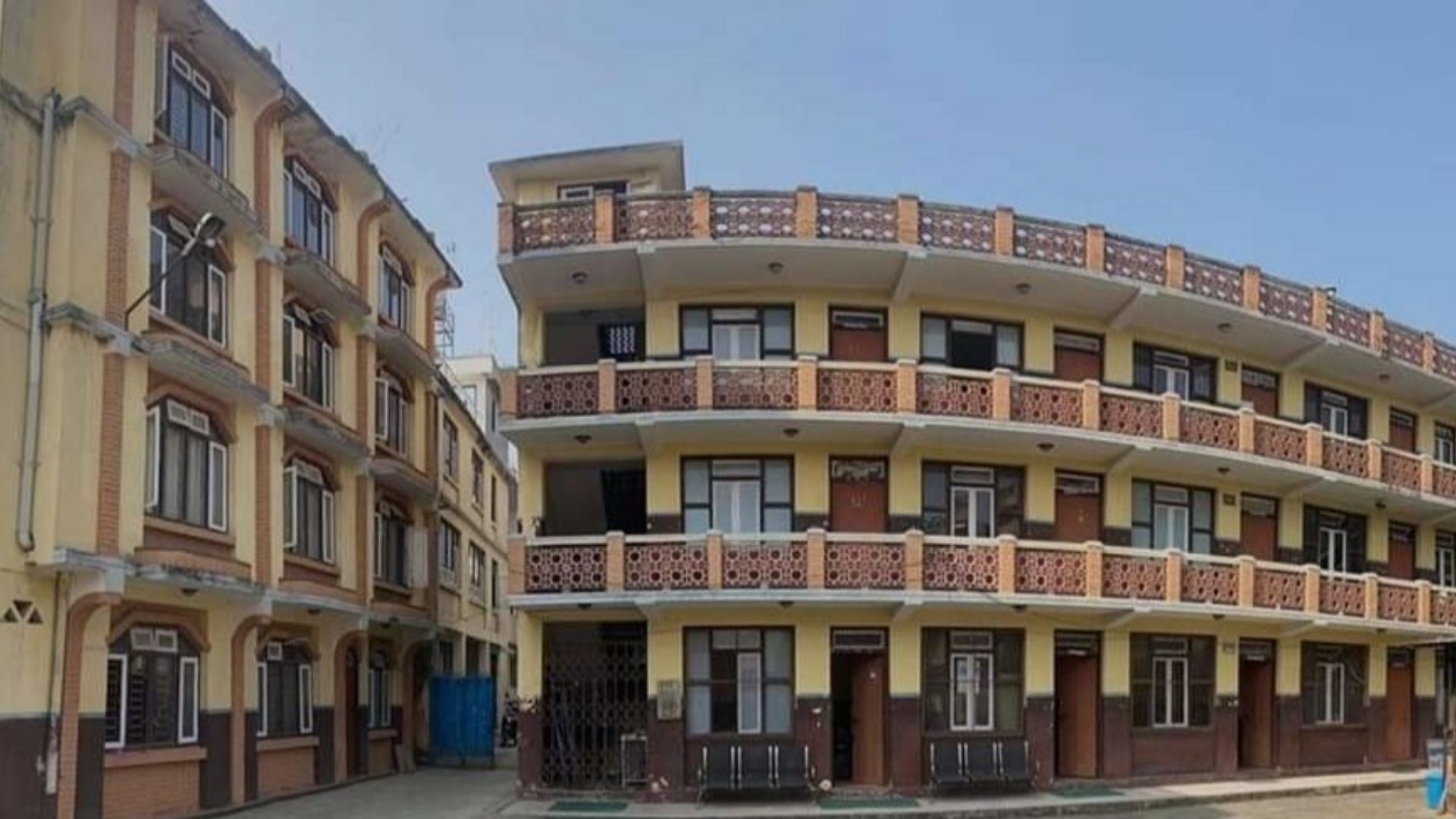
Established: 2002
Location: Jawalakhel, Lalitpur, Nepal
Affiliation: Tribhuvan University (TU)
Bachelor’s programs (4 years): B.Tech Food Technology, B.Sc Microbiology, BBS
Additional listing: BCA (listed as proposed)
Special feature: two-month training after graduation on selected lab instruments and laboratory quality topics, including ISO 17025:2005 and laboratory accreditation
Key academic elements: 45 days in-plant training for Food Technology, fourth-year project work and dissertation
LVC was established with the stated purpose of meeting Nepal’s need for capable human resources in applied science and technology.
Its aims include supporting student capability and personality development through quality education, producing scientific manpower suited to employment needs, and building human capital in applied sciences and technology with integrity and confidence.
The campus is situated in Jawalakhel, described as centrally located in Lalitpur with access from different parts of the city and nearby rural areas.
LVC runs four-year, full-time undergraduate degree programs in Food Technology, Microbiology, and Business Studies.
B.Tech Food Technology has been part of the college’s identity, and the program is described as introduced in the Kathmandu Valley at LVC in 2005.
The program connects core food science with the practical handling and treatment of food materials so they can be processed into products with required quality and stability, including packaging and distribution.
The course description connects Food Technology with several contributing sciences and applied areas, including chemistry and composition of food materials, microbiology of foods, enzymes, nutrition, quality control, food analysis, plant management, statistics for experiments, and the effects of processing and storage conditions.
A structured set of program aims is also included:
Knowledge in food science and the principles behind food processing
Wider knowledge in advanced food engineering
Familiarity with industrial management practices
Training in product-specific specialization areas
The program includes named courses across four years. A simplified view helps students understand the academic direction and workload.
Year 1 focus areas:
Physics, Chemistry, Mathematics & Statistics
Instrumental Techniques of Analysis, Basics of Food Microbiology
Basic Principles of Engineering
Year 2 focus areas:
Food Chemistry, Principles of Food Processing
Food Engineering, Biochemistry & Human Nutrition
Technology of Food Processing (TFP I: cereals, legumes, oilseed, protein foods)
Year 3 focus areas:
TFP-II (fruits & vegetables; chocolates & sugar confectionary; tea, coffee & spices)
TFP-III (meat, fish & poultry)
Biochemical Engineering, Industrial Microbiology
Food Quality Control & Analysis
Year 4 focus areas:
Storage & Packaging Technology
Operation Research & Food Plant Management
Dairy Technology
Dissertation, In-Plant Training & Class Seminar
This structure indicates a progression from foundational science and analysis tools to processing systems, quality control, packaging, and plant-level management.
B.Sc Microbiology is a four-year program focused on building knowledge and practical skills in microbiology.
The academic scope includes agriculture, food, industrial, environmental, and medical microbiology, with an aim of producing capable manpower and supporting future experts and researchers.
Microbiology is a lab-based discipline. Students should be prepared for routine experiments, observation, record-keeping, and practical assessments, along with project work that connects course learning with field and laboratory activities.
BBS is a four-year program intended to build business management knowledge and skills, using examples and cases as part of teaching and learning.
It is also positioned as a foundation for study and work pathways connected with marketing, finance, human resource management, and accounts.
The program includes a year-wise structure. A brief list helps applicants understand the academic blend of language, economics, statistics, management, accounting, law, and research work.
Year 1 includes Business English, Micro-Economics, Principles of Management, Business Statistics, and Accounting for Financial Analysis.
Year 2 includes Business Communication, Macro-Economics, Cost & Management Accounting, Foundation of Human Resource Management, and Fundamentals of Marketing.
Year 3 includes Business Environment & Strategy, Business Financial Management, Business Law, Taxation & Auditing, and Organizational Behavior.
Year 4 includes Entrepreneurship & Enterprise Development, concentration subjects, Business Research Method, and a final project.
Admission requirements and entry tests may vary by program. The listed eligibility criteria provide a clear starting point for students preparing their application.
Applicants who passed I.Sc in second division or have certificate level Food Technology from CTEVT, along with +2 Science with grade “C” in English, Math, Physics, and Chemistry, are listed as eligible for admission.
Selection is based on merit in the entrance examination.
A second eligibility line also appears, including candidates who passed I.Sc or +2 Science and certificate level Food Technology or Laboratory Technology from TU or a TU-recognized institution.
Applicants who passed I.Sc or +2 Science (Biological stream) from TU or a TU-recognized institution are listed as eligible.
Selection is based on merit (I.Sc/+2) and entrance examination performance. Entrance is indicated as conducted by LVC or ISOT.
Applicants who passed PCL or +2 in Management (Commerce) or equivalent from TU or a TU-recognized institution are listed as eligible, with at least 50% at PCL or +2 equivalent level.
Applicants are expected to apply for the admission test (CMAT) within the announced time, along with the required fees.
Teaching is described as guided by experienced academic professionals and committed faculty, with learning supported through both classroom teaching and practical activities.
Across programs, learning methods include:
Lecture-based classes
Presentations, case studies, and group discussions
Seminars and guest sessions for interaction with working professionals
Site visits and exposure activities
Project work and field-based learning
For students, the practical value of this approach is clear: presentations strengthen communication skills, lab sessions build accuracy and procedural discipline, and project work improves research habits and report writing.
Food Technology students are sent for a 45-day in-plant training program in companies related to food industries.
Project work is included in the fourth year, and students submit a dissertation at the end of the program.
Microbiology students also take part in project work with a mix of field activity and laboratory work, supported by teaching tools and site visits to industrial and institutional locations.
A special feature listed for graduates is a two-month training program (free of cost) on selected lab instrument principles and laboratory quality topics:
Principles and operation of UV/HPLC/FTIR
Principles and instrumentation of GC/GCMS
ISO 17025:2005
Laboratory accreditation
These topics matter for students planning careers in testing laboratories, quality systems, and compliance-based work where documented procedures and standards are required.
LVC lists a set of facilities and learning supports that relate directly to student academic needs.
The library is described as holding books across offered subject areas, along with references beyond prescribed textbooks. Reading of newspapers, magazines, reports, and journals is encouraged for wider academic exposure.
Laboratory work is part of course requirements, and the college lists well-equipped laboratories for experiments and practical classes.
A computer lab is listed for student assignments and internet access for e-resources and services.
Counseling support is listed for guiding prospective students on subject choice and career planning.
Scholarships are listed for college toppers and intelligent students from socially marginalized and economically deprived families.
The college also lists awards and incentives for deserving students, along with regular supervision of student improvement.
College life is shaped by class routines, lab schedules, project deadlines, group work, and participation in academic events. LVC lists excursions and field visits as part of student learning, along with extra-curricular activities.
The college also lists leisure tours, fairs, sports events, and social gatherings as supported activities.
For many students, these activities are most useful when they are connected with learning goals. Site visits help students see how laboratories, industries, and institutions work in real settings. Sports and social events can support teamwork and peer connection, which often improves day-to-day academic motivation.
Named committees are listed, including a Management Committee and an Advisory Committee.
Management Committee:
Prof. Dr. Kedar Lal Shrestha (Chairman)
Prof. Dr. Balkrishna Sapkota (Member)
Ar. Rashmi Bahadur Shrestha (Member Secretary)
Advisory Committee listing includes:
Dr. Dev Bhakta Shakya
Dr. Sita Ram Joshi
Dr. Kanti Shrestha (Chief Scientific Officer, NAST)
Ms. Santa Karmacharya (Senior Chemist)
Career roles listed include:
Production Supervisor
Food Safety Inspector
Public Health Officer
Operation Manager
Quality Safety Scientist
Students can connect these roles with practical skill needs:
Food Technology often leads toward processing, quality control, packaging, and food safety-related work, where lab testing and compliance practices matter.
Microbiology supports laboratory-based roles across food, environment, industrial processes, and health-related testing, with a strong focus on accurate experiments and documentation.
BBS supports management and administrative pathways where communication, accounting, analysis, and project work are used regularly.
Students commonly compare colleges using practical criteria: program availability, TU affiliation, teaching approach, lab access, project work, exposure activities, scholarship options, and the daily cost and convenience of location.
Key points connected with LVC include:
TU affiliation and bachelor’s study in Food Technology, Microbiology, and Business Studies
Learning methods that include experiments, presentations, discussion, seminars, guest sessions, and site visits
Food Technology in-plant training, project work, and dissertation in the final year
Library, laboratories, computer lab, counseling, and scholarship support
Location in Jawalakhel with access from different parts of Lalitpur and nearby areas
Lalitpur Valley College (LVC), Jawalakhel, is a TU-affiliated college established in 2002, offering four-year bachelor’s programs in B.Tech Food Technology, B.Sc Microbiology, and BBS, with BCA listed as proposed.
The academic structure emphasizes learning through lectures supported by presentations, discussion, experiments, project work, seminars, guest sessions, and exposure visits. In Food Technology, the program includes in-plant training and a final-year dissertation, and a two-month graduate training option is listed for selected lab instruments and quality standards such as ISO 17025:2005.
LVC is located in Jawalakhel, Lalitpur, Nepal.
Yes. LVC is affiliated with Tribhuvan University (TU).
B.Tech Food Technology, B.Sc Microbiology, and Bachelor of Business Studies (BBS).
Eligibility includes second division I.Sc or certificate level Food Technology from CTEVT with +2 Science grade “C” in English, Math, Physics, and Chemistry, with selection based on entrance merit.
Selection is based on I.Sc/+2 merit and entrance examination performance, with entrance conducted by LVC or ISOT.
Listed facilities include a library, laboratories, a computer lab, counseling support, and scholarships.
Contact Lalitpur Valley College's administrative office for detailed information on the course, admissions, location, fees, scholarships, facilities, counseling, or eligibility.
Lalitpur Valley College
Email Address: info@lvc.edu.np
Phone Number: +977-1-5545852, +977-9862995078
Website: https://www.lvc.edu.np
Location: Jawlakhel, Lalitpur, Nepal