Lumbini Medical College is a private medical education institution located at Pravas in Tansen Municipality, Palpa District, Lumbini Province, Nepal. The college is affiliated with Kathmandu University (KU) and conducts undergraduate and postgraduate education in medicine and nursing.
Academic activities are closely connected with Lumbini Medical College Teaching Hospital (LMCTH). The hospital serves as the principal clinical setting for medical education, allowing students and postgraduate residents to move from classroom and laboratory learning into supervised clinical work within hospital departments.
The institution offers the Bachelor of Medicine, Bachelor of Surgery (MBBS) and Bachelor of Science in Nursing (BSc Nursing) at bachelor level. Its postgraduate portfolio includes MD and MS programs in medical and surgical specialties. Admission to these programs operates within the national medical education framework administered by the Medical Education Commission (MEC), while Kathmandu University governs university-level academic requirements, examinations, and degree awards.
The academic setting includes basic medical science departments, clinical departments, lecture facilities, laboratories, library resources, hostel accommodation, recreational facilities, and hospital-based training areas. Medical students, nursing students, interns, and postgraduate residents therefore study within an environment where academic instruction and clinical practice are connected at the same institutional site.
| Particular | Details |
|---|---|
| Institution | Lumbini Medical College |
| Institution Type | Private medical institution |
| Location | Pravas, Tansen Municipality, Palpa District, Lumbini Province, Nepal |
| University Affiliation | Kathmandu University |
| Teaching Hospital | Lumbini Medical College Teaching Hospital |
| Academic Areas | Medicine, nursing, and postgraduate medical specialties |
| Medical Education Admission Authority | Medical Education Commission, Nepal |
| Medical Professional Council | Nepal Medical Council |
| Nursing Professional Council | Nepal Nursing Council |
| Website | www.lmc.edu.np |
The college and its teaching hospital function within the same broader institutional setting but perform different roles. The college is responsible for academic delivery, classroom instruction, practical teaching, internal academic activities, and student support. The teaching hospital provides the clinical environment required for medical education, internship, postgraduate residency, and supervised patient-oriented training.
This arrangement is especially important in medical education because hospital exposure is not separate from the academic program. Students progress from foundational medical sciences into clinical subjects that require interaction with departments, wards, diagnostic services, operating areas, emergency services, and other hospital units.
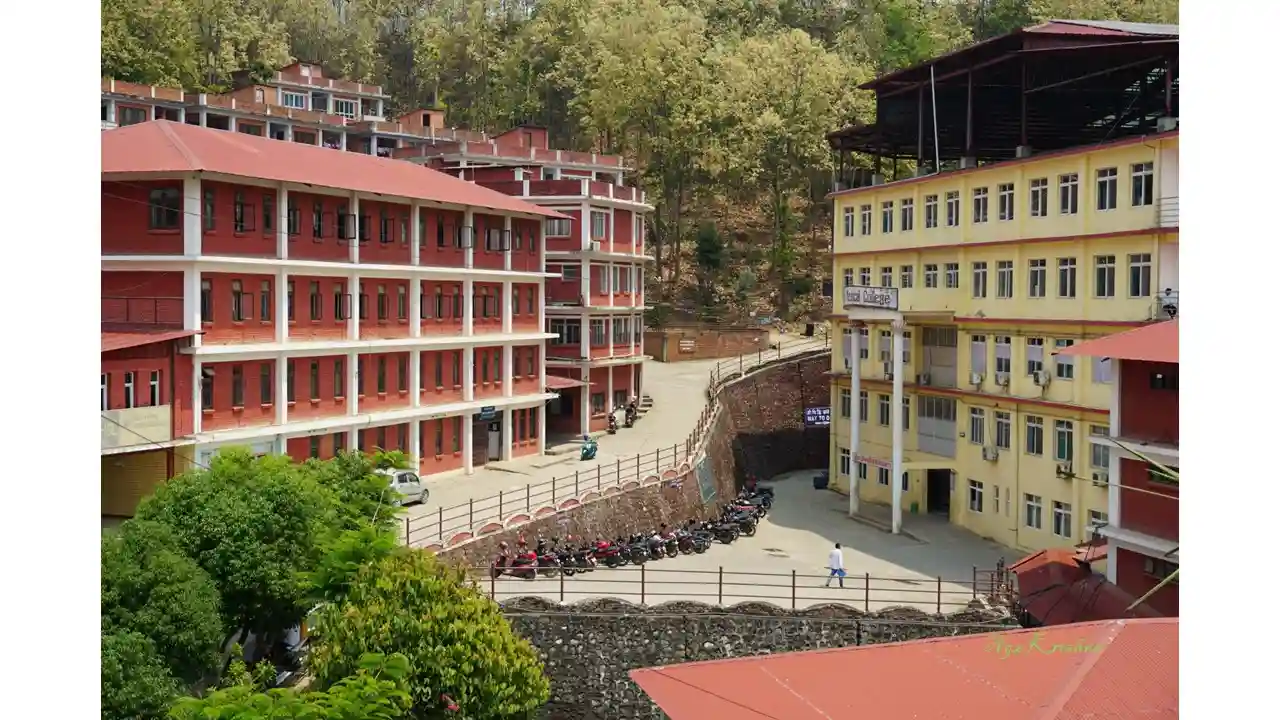
Lumbini Medical College is situated at Pravas in Tansen Municipality, Palpa District. Its principal academic and clinical facilities are connected within the same institutional environment, giving students access to classroom teaching, laboratories, library resources, hospital departments, and clinical training facilities.
The location places the college in a hill district of Lumbini Province rather than within Nepal's largest metropolitan education centers. For students studying medicine or nursing, the more important institutional feature is the direct relationship between the academic college and its teaching hospital.
Medical education requires repeated movement between theory and practice. Basic science learning establishes the scientific foundation, while clinical training introduces students to supervised patient assessment, departmental practice, diagnostic processes, treatment-related learning, and professional responsibilities appropriate to their level of study.
Postgraduate medical education is even more closely linked with hospital departments because residents train within their respective specialties while following the academic and examination requirements of Kathmandu University.
Kathmandu University provides the university affiliation for the medical and nursing programs covered by this profile. The affiliation defines the university framework under which students study, progress through their programs, sit examinations, and receive their degrees.
Lumbini Medical College functions as the teaching institution. Kathmandu University retains responsibility for the university-level academic framework, including curriculum requirements, examination arrangements, and degree awards.
The responsibilities can be understood through three connected areas:
| Area | Main Responsibility |
|---|---|
| Teaching and institutional academic activities | Lumbini Medical College |
| Curriculum, university examinations, and degree award | Kathmandu University |
| Entrance, matching, admission framework, and seat determination | Medical Education Commission |
Students therefore enter an academic system involving several institutions with separate responsibilities. Lumbini Medical College provides the learning and clinical environment. Kathmandu University provides the academic framework of the affiliated degree. The Medical Education Commission regulates major parts of the admission and seat-allocation process for medical education.
This distinction matters when students consider admission requirements, examinations, course completion, and professional progression. Admission to the college does not replace Kathmandu University academic rules, and the college does not independently determine the entire medical education admission process.
Admission to bachelor-level medical and nursing programs and postgraduate medical programs follows the applicable framework of the Medical Education Commission, Nepal.
For bachelor-level medical and nursing education, admission is linked with the Medical Education Common Entrance Examination for Bachelor Level, commonly known as MECEE-BL. Candidates applying for postgraduate medical education follow the postgraduate entrance system, including MECEE-PG.
Applicants must satisfy the eligibility criteria applicable to the program they intend to study and complete the admission procedure prescribed through the relevant MEC process.
The admission framework covers matters such as:
Entrance examination requirements.
Merit and matching procedures.
Applicable admission categories.
Scholarship provisions.
Seat distribution.
Admission procedures established for medical education.
Annual seat determination for participating institutions.
Lumbini Medical College does not operate outside this national framework for the programs covered here. Students seeking admission should therefore distinguish between the role of the college as the teaching institution and the role of MEC in the national entrance and admission system.
Seat numbers also require careful interpretation. MEC determines approved intake through its seat-allocation process, so a seat figure associated with an academic program should not automatically be treated as a permanent capacity for every future admission cycle.
The seat figures presented in this profile reflect the stated allocation reference for the listed programs.
Lumbini Medical College offers two bachelor-level programs covered here: MBBS and BSc Nursing.
| Program | Level | Seat Reference |
|---|---|---|
| Bachelor of Medicine, Bachelor of Surgery (MBBS) | Bachelor | 100 |
| BSc in Nursing | Bachelor | 50 |
The MBBS program is the principal undergraduate medical degree offered at Lumbini Medical College under Kathmandu University affiliation.
The program has a total duration of five and a half years, including academic study followed by one year of compulsory rotating internship. Students begin with foundational medical sciences before progressing into clinical education and hospital-based learning.
The program brings together pre-clinical and clinical education. Basic medical sciences support an understanding of the human body, disease processes, medicines, laboratory sciences, and community health. Clinical education then moves students into supervised hospital settings where those foundations are applied to medical practice.
Clinical exposure is connected with departments within Lumbini Medical College Teaching Hospital. Students encounter areas such as medicine, surgery, paediatrics, obstetrics and gynaecology, orthopedics, psychiatry, emergency care, ENT, and other hospital services relevant to their training.
The compulsory internship follows completion of the academic phase and is part of the medical training pathway. During internship, graduates rotate through clinical areas under the applicable academic and professional requirements.
Successful completion of MBBS academic requirements and internship forms part of the route toward the medical degree and subsequent professional registration process.
The BSc Nursing program is offered within the nursing education structure of Lumbini Medical College under Kathmandu University affiliation.
The program has a four-year academic duration. Its educational scope includes nursing care across preventive, promotive, curative, and rehabilitative areas of health services.
Students receive academic and practical preparation for nursing work involving individuals, families, groups, and communities. Clinical exposure forms an important part of this education because nursing study requires students to connect theoretical knowledge with supervised patient care and health-service settings.
Admission follows the applicable bachelor-level medical education entrance framework. Students are also subject to Kathmandu University academic requirements and, after completing the degree, the professional requirements applicable to nursing practice.
Lumbini Medical College offers postgraduate medical education through MD and MS programs under Kathmandu University affiliation.
These programs involve specialty-based education within the college and teaching hospital. Postgraduate residents combine academic requirements with departmental clinical work relevant to their field.
The listed programs are grouped according to the admission categories supplied for programs without experience and programs with experience.
| Program | Degree | Seat Reference |
|---|---|---|
| MD Community Medicine | MD | 1 |
| MD General Practice & Emergency Medicine (MDGP) | MD | 1 |
| MD Pathology/Clinical Pathology | MD | 4 |
| MD Pharmacology/Clinical Pharmacology | MD | 1 |
MD Community Medicine focuses on population health, preventive medicine, community-oriented health work, and related areas of medical practice.
MD General Practice & Emergency Medicine combines broad medical practice with emergency medicine. Training in this field requires exposure to different clinical situations rather than concentration on one organ system or narrowly defined specialty.
MD Pathology/Clinical Pathology deals with disease processes and laboratory-supported diagnosis. The discipline connects scientific understanding of disease with the diagnostic requirements of clinical medicine.
MD Pharmacology/Clinical Pharmacology concentrates on medicines, their actions, their use in clinical care, and the scientific basis of drug therapy.
| Program | Degree | Seat Reference |
|---|---|---|
| MD Anaesthesiology | MD | 2 |
| MD Internal Medicine | MD | 2 |
| MD Obstetrics and Gynaecology | MD | 3 |
| MD Paediatrics | MD | 3 |
| MD Psychiatry | MD | 1 |
| MD Radiodiagnosis/Radiology | MD | 2 |
MD Anaesthesiology is associated with anesthesia services, perioperative patient care, operating theatre responsibilities, and related clinical work.
MD Internal Medicine involves the diagnosis and non-surgical management of adult medical conditions. Residents train through medicine departments and related clinical services.
MD Obstetrics and Gynaecology covers medical and surgical care connected with pregnancy, childbirth, and the female reproductive system. Kathmandu University awards the MD qualification for the Obstetrics and Gynaecology program at the college.
MD Paediatrics concentrates on the medical care of infants, children, and adolescents and is supported by hospital-based pediatric training.
MD Psychiatry addresses the assessment and medical management of mental health conditions.
MD Radiodiagnosis/Radiology centers on diagnostic imaging and its use in clinical assessment, diagnosis, and patient management.
| Program | Degree | Seat Reference |
|---|---|---|
| MS General Surgery | MS | 4 |
| MS Orthopedics/Orthopedics and Trauma Surgery | MS | 3 |
| MS Otorhinolaryngology (ENT) | MS | 3 |
The four-seat reference for MS General Surgery includes one seat allocated under the foreign category.
MS General Surgery involves supervised postgraduate surgical education across the clinical and operative areas relevant to general surgery.
MS Orthopedics/Orthopedics and Trauma Surgery focuses on musculoskeletal conditions, injuries, trauma care, and orthopedic surgical practice.
MS Otorhinolaryngology, commonly referred to as ENT, covers conditions affecting the ear, nose, throat, and associated structures.
Postgraduate candidates follow the applicable MECEE-PG admission framework together with Kathmandu University eligibility and academic requirements.
Academic programs at Lumbini Medical College follow the curriculum and academic regulations applicable through Kathmandu University.
Teaching takes place across several settings rather than through classroom instruction alone. Students use lecture rooms, laboratories, departmental teaching areas, clinical skills facilities, and hospital departments as they progress through their studies.
The basic medical science structure includes areas such as:
Anatomy.
Physiology.
Biochemistry.
Pathology.
Pharmacology.
Microbiology.
Community Medicine.
These subjects establish the scientific basis required for later clinical education.
Clinical learning is connected with the teaching hospital. As medical students advance through the program, they enter supervised clinical environments where they learn through departmental instruction, patient examination, diagnostic processes, clinical discussions, procedures appropriate to their stage of training, and observation of patient management.
Postgraduate residents receive specialty-focused training within their respective departments. Their academic responsibilities and clinical duties operate together within the structure of postgraduate medical education.
Academic assessment operates within the Kathmandu University framework.
Lumbini Medical College conducts internal academic assessments as part of teaching and student evaluation. University-level final or summative examinations are conducted according to Kathmandu University requirements.
Students must complete the academic, clinical, practical, and examination requirements attached to their respective program.
For MBBS students, the one-year compulsory rotating internship also forms part of the completion pathway. Successful completion of classroom study alone is therefore not the entire MBBS academic process.
Kathmandu University awards the degree after the student fulfills the academic requirements prescribed for the relevant affiliated program. Lumbini Medical College provides the education and institutional training environment, while the final university degree belongs to the Kathmandu University academic system.
Lumbini Medical College Teaching Hospital is the primary clinical training site associated with the college.
Its role in education extends beyond providing hospital services. The hospital supplies the clinical environment in which medical students, interns, and postgraduate residents encounter the practical side of medical education.
Hospital-based learning may involve wards, outpatient settings, emergency services, diagnostic areas, operating facilities, and specialty departments according to the student's program and level of training.
Clinical departments connected with the teaching environment include:
Internal Medicine.
General Surgery.
Paediatrics.
Obstetrics and Gynaecology.
Orthopedics.
ENT.
Psychiatry.
Emergency Medicine.
Other clinical services used within medical training.
Hospital facilities and services identified within the college context include CT scanning, fluoroscopy, laparoscopy and minimally invasive surgery, ureterorenoscopy, operating theatres, and specialty services.
These facilities support a hospital environment in which academic medicine and patient care operate together. The teaching hospital is therefore a functional part of the college's educational structure rather than an unrelated clinical facility.
Hospital capacity can change as clinical services and facilities are reorganized or expanded, so no fixed bed-capacity figure is assigned here.
The academic structure combines basic medical sciences with clinical sciences.
Basic science departments support early medical education and provide the scientific foundation for understanding normal body function, disease, medicines, laboratory investigation, and community health.
Clinical departments connect academic teaching with hospital practice. Students progress from studying medical concepts to applying them within supervised clinical settings.
This transition is central to medical training. It allows learners to connect scientific concepts with patient history, examination, diagnosis, investigation, clinical decision-making, treatment-related learning, and communication within health-care teams.
For postgraduate residents, the department itself becomes a major training environment. Residents work within the specialty in which they are enrolled while completing the academic requirements associated with their MD or MS program.
Lumbini Medical College has academic, residential, and recreational facilities supporting students during medical and nursing education.
Facilities identified within the institutional setting include:
Lecture halls with audio-visual and multimedia teaching arrangements.
A central library and e-library resources.
Basic medical science laboratories.
Anatomy practical facilities and a dissection hall.
Clinical skills and simulation-related facilities.
Hostel accommodation for students.
Mess and canteen facilities.
Sports ground and sports complex.
Indoor and outdoor recreational opportunities.
Gymnasium and fitness facilities.
Teaching-hospital departments and clinical areas.
Diagnostic and operating facilities used in hospital-based education.
Lecture halls and laboratories support the academic part of medical and nursing education. The library provides a setting for independent reading and reference work, while clinical areas allow students to connect academic subjects with supervised practice.
Hostel and dining arrangements support students whose programs involve demanding classroom, laboratory, and clinical schedules.
Sports and fitness facilities provide students with spaces for physical activity outside their academic and clinical responsibilities.
Research is part of the academic environment at Lumbini Medical College.
The institution has an Institutional Review Committee associated with ethical review of research involving faculty members, postgraduate residents, and students.
Ethical review is particularly relevant in medical education because research may involve patients, clinical records, health information, biological material, community health issues, or health-service settings.
The research structure therefore provides an institutional mechanism for considering ethical aspects of proposed academic and clinical studies.
For postgraduate residents, academic training may bring together clinical observation, case-based learning, departmental discussion, and research-related work within their field of study.
Graduation from a medical or nursing program and permission to practise a regulated health profession are separate stages.
Medical graduates come under the professional regulatory framework of the Nepal Medical Council. Completion of an MBBS or postgraduate medical degree does not by itself replace the professional licensing and registration requirements applicable to medical practice.
Nursing graduates come under the Nepal Nursing Council. After completing the academic requirements of their nursing degree, graduates must satisfy the applicable professional requirements for nursing practice.
Nepal's broader health-profession regulatory system also includes the Nepal Health Professional Council (NHPC), which regulates health professions that fall within its jurisdiction.
Students should therefore distinguish among university education, degree completion, and professional registration. Kathmandu University awards the academic qualification, while the relevant professional council governs the licensing or registration requirements attached to professional practice.
A student considering Lumbini Medical College enters a system involving three principal institutional roles.
Lumbini Medical College is the teaching institution. Students attend classes, laboratories, practical sessions, clinical postings, departmental activities, and hospital-based training through the college.
Kathmandu University provides the university academic framework. Curriculum requirements, university examinations, academic progression, and degree awards operate according to KU rules and regulations.
The Medical Education Commission governs the national medical education entrance and admission framework. Bachelor-level applicants follow the relevant MECEE-BL process, while postgraduate medical applicants follow MECEE-PG and the corresponding admission procedure.
The sequence can be viewed as:
Meet the applicable academic eligibility requirements.
Follow the relevant MEC entrance process.
Participate in the applicable admission and matching procedure.
Enroll in the allocated program and institution.
Complete Kathmandu University academic and examination requirements.
Complete clinical, practical, internship, or residency requirements attached to the program.
Receive the applicable university degree after successful completion.
Fulfill the licensing or registration requirements of the relevant professional council before entering regulated professional practice.
This structure helps separate several processes that students sometimes treat as one. Entrance, college enrollment, university examinations, degree completion, and professional registration each have their own role within medical or nursing education.
The stated seat references for Lumbini Medical College are:
MBBS: 100 seats.
BSc Nursing: 50 seats.
MD Community Medicine: 1 seat.
MD General Practice & Emergency Medicine (MDGP): 1 seat.
MD Pathology/Clinical Pathology: 4 seats.
MD Pharmacology/Clinical Pharmacology: 1 seat.
MD Anaesthesiology: 2 seats.
MD Internal Medicine: 2 seats.
MD Obstetrics and Gynaecology: 3 seats.
MD Paediatrics: 3 seats.
MD Psychiatry: 1 seat.
MD Radiodiagnosis/Radiology: 2 seats.
MS General Surgery: 4 seats, including one seat allocated under the foreign category.
MS Orthopedics/Orthopedics and Trauma Surgery: 3 seats.
MS Otorhinolaryngology (ENT): 3 seats.
These figures should be understood within the MEC seat-determination system. Medical education intake is governed through the applicable MEC allocation process rather than treated as an unchanging institutional number.
Lumbini Medical College brings together undergraduate medical education, undergraduate nursing education, postgraduate specialty training, and a teaching hospital at its Palpa site.
Its academic identity is defined by Kathmandu University affiliation and by participation in Nepal's national medical education admission system.
For prospective students, the main academic considerations are straightforward: the program they intend to study, the relevant entrance route, applicable eligibility conditions, MEC admission procedures, Kathmandu University academic requirements, the teaching-hospital environment, and the professional licensing requirements that follow graduation.
MBBS students study through a combination of foundational medical sciences, clinical education, and compulsory internship. BSc Nursing students combine nursing theory with practical and clinical learning. MD and MS residents train within specialist departments while completing postgraduate academic requirements.
The teaching hospital provides the central clinical setting for this work, while laboratories, lecture rooms, library resources, clinical skills facilities, hostels, dining facilities, and recreational spaces support the wider student environment.
Lumbini Medical College therefore operates as a medical education institution in which university-affiliated academic study and hospital-based clinical training are directly connected.
Lumbini Medical College is located at Pravas in Tansen Municipality, Palpa District, Lumbini Province, Nepal. Its academic facilities and Lumbini Medical College Teaching Hospital operate within the same institutional setting.
Lumbini Medical College is affiliated with Kathmandu University. The academic curriculum, university examinations, progression requirements, and degree awards for its affiliated programs follow Kathmandu University rules and regulations.
The college offers the Bachelor of Medicine, Bachelor of Surgery (MBBS) and Bachelor of Science in Nursing (BSc Nursing) under Kathmandu University affiliation.
The college offers MD and MS programs in specialties including Community Medicine, General Practice & Emergency Medicine, Pathology, Pharmacology, Anaesthesiology, Internal Medicine, Obstetrics and Gynaecology, Paediatrics, Psychiatry, Radiodiagnosis/Radiology, General Surgery, Orthopedics/Orthopedics and Trauma Surgery, and Otorhinolaryngology (ENT).
Admission follows the medical education system administered by the Medical Education Commission, Nepal. Bachelor-level applicants follow the applicable MECEE-BL process, while postgraduate medical applicants follow MECEE-PG and the corresponding MEC admission and matching procedures.
Admission to the medical and nursing programs covered here is based on the applicable Medical Education Commission entrance and admission framework rather than a separate college-level entrance examination.
The MBBS program has a total duration of five and a half years, including academic study and one year of compulsory rotating internship.
The BSc Nursing program has a four-year academic duration and combines nursing education with practical and clinical learning.
Clinical training is primarily connected with Lumbini Medical College Teaching Hospital. Medical students, nursing students, interns, and postgraduate residents use the hospital's departments and clinical services according to the requirements of their respective programs.
Medical education seat allocation is determined through the Medical Education Commission framework. Approved intake can therefore vary according to the applicable MEC seat-determination process.
Kathmandu University awards the degrees for the KU-affiliated programs conducted at Lumbini Medical College after students successfully complete the applicable academic, clinical, examination, and other program requirements.
The institutional setting includes lecture halls, a central library and e-library resources, basic medical science laboratories, anatomy practical facilities, clinical skills facilities, hostel accommodation, mess and canteen services, sports facilities, a gymnasium, and teaching-hospital clinical areas.
Yes. Lumbini Medical College Teaching Hospital serves as the principal clinical training site associated with the college and supports undergraduate medical education, internship, and postgraduate specialty training.
Yes. Completion of the MBBS degree is separate from professional registration. Medical graduates must fulfill the applicable licensing and registration requirements of the Nepal Medical Council before entering regulated medical practice.
Yes. Nursing graduates must meet the applicable professional registration and licensing requirements of the Nepal Nursing Council before entering regulated nursing practice.
The Medical Education Commission governs major parts of the medical education admission system, including entrance examinations, matching, scholarship provisions, seat allocation, and admission procedures applicable to the programs covered here.
Lumbini Medical College provides teaching, practical education, and clinical training. Kathmandu University governs the university academic framework and awards the degree. The Medical Education Commission administers the national entrance, matching, admission, and seat-allocation framework for medical education.