Namuna Machhindra Campus, located in Lagankhel, Lalitpur, is a community-based higher secondary and bachelor-level institution with a long record of serving local learners. Established in 2037 BS (1980 AD), the campus has maintained a clear public mission: to expand access to higher education for students from low- and middle-income families through affordable fees and stable academic delivery.
Its history is closely connected with Namuna Machhindra Secondary School, a well-known community school in the same education network.
Over the years, the campus has improved its learning environment and rebuilt key infrastructure after the 2072 BS earthquake, with support from the Government of Japan through JICA and related reconstruction initiatives.
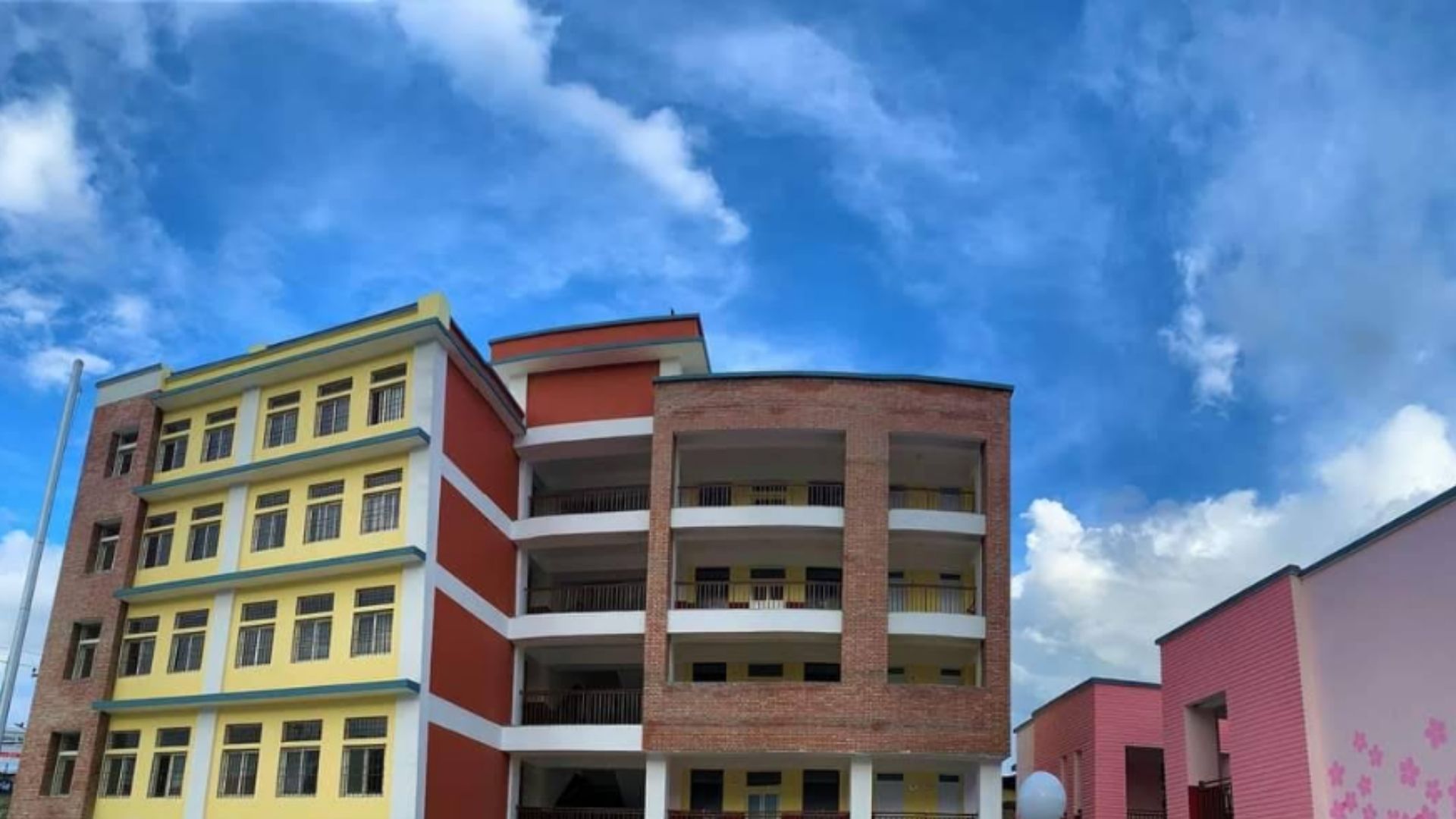
Institution Name: Namuna Machhindra Campus
Location: Lagankhel, Lalitpur Metropolitan City, Nepal
Establishment: 2037 BS (1980 AD)
Type: Community-based campus
Affiliations: National Examination Board (NEB) and Tribhuvan University (TU)
Level Offered: Grade 11–12 and Bachelor level
Key Programs: +2 Management, +2 Humanities, +2 Education, BBS, BA
Access Point: Near Lagankhel Bus Park
Core Strengths: Affordable education, inclusive learning space, disability-friendly infrastructure
Namuna Machhindra Campus runs academic programs from Grade 11 to the bachelor level under NEB and TU affiliation. This dual-level model helps students continue their education in a familiar academic setting, while also supporting smooth transition from +2 to undergraduate study.
The campus offers three streams under NEB:
Students study core subjects such as accounting, economics, and business studies. This stream supports pathways to business, banking, accounting, and public or private sector administration.
The curriculum includes subjects such as sociology, mass communication, and rural development. It is suitable for students interested in social sciences, media, public service, and community-based work.
This stream is intended for students who aim to enter the teaching profession and related education services.
The undergraduate offerings currently include:
A four-year program focused on management and business foundations. It is relevant for students planning careers in business management, finance, entrepreneurship, and organizational administration.
The BA has historically been a three-year program, with TU’s newer structure moving toward a four-year model. Students can study areas such as sociology, English, and Nepali, with options for subject-based specialization as available in the campus framework.
The provided document also notes that some sources have mentioned possible plans for MBS/MA. At present, the main teaching delivery appears to be stable up to the bachelor level.
Admissions follow the academic calendar and entry rules of NEB and TU.
Students who have completed SEE or an equivalent level can apply. Standard processes generally include:
Submission of application form
Academic document verification
Orientation or counseling where applicable
Enrollment based on program capacity and NEB requirements
Students who have completed +2 or equivalent can apply for BA and BBS. The process commonly includes:
Application submission with required academic transcripts
Eligibility verification under TU rules
Enrollment based on seat availability and campus schedule
Because the campus is located at a major transport hub, many students from different parts of the Kathmandu Valley can access admission services without major travel barriers.
As a community campus with decades of service, Namuna Machhindra Campus maintains a faculty profile aligned with TU standards. The teaching approach is expected to follow the prescribed curricula and evaluation frameworks of NEB and TU. Classroom learning is supported by basic academic resources such as a library and computer facilities.
For management and humanities subjects, the academic environment supports conceptual understanding, writing and presentation skills, and subject-based discussion. The education stream provides a foundation for students who want to pursue teacher education and related professional training.
A key institutional milestone has been the reconstruction and modernization of the campus buildings after the 2072 BS earthquake. The present physical structure was developed with Japanese support through JICA and the Emergency School Reconstruction Project. The building is guided by the “Omoiyari” concept, which reflects care and consideration for others, and this idea is visible in the inclusive physical layout.
The campus maintains disability-friendly features, including:
Ramps for mobility access
Braille blocks
Easier stairways and safe movement spaces
The campus facilities listed in the document include:
Library
Computer lab
Conference hall
Playground
Safe drinking water
Cafeteria services
Additional features mentioned in the campus information include learning support spaces and student services such as counseling and multimedia-based resources, depending on operational availability.
Despite being a community institution, the campus supports an active student environment that balances academic study with social and cultural engagement. Its location near Lagankhel Bus Park and close to Patan Hospital and the main market area makes daily commuting realistic for many learners, while the internal campus setting remains suitable for study.
Students benefit from the stability of a long-established community institution, where many families have maintained educational ties over generations through the sister school and the campus network.
The campus encourages participation in activities that support confidence, teamwork, and campus identity. The document highlights regular programs such as:
Welcome and farewell events
Saraswati Puja-related academic and cultural programs
Sports Week
Quiz competitions
These activities contribute to a balanced learning experience and create space for student interaction beyond classroom routines.
Scholarship support remains an important part of the campus’s community role. The institution provides assistance for students who are academically strong but financially constrained. The stated goal is to ensure that access to education does not remain limited to families with higher economic capacity.
While scholarship categories and quotas may vary by academic year, the campus’s commitment to supporting deserving students aligns with the community-campus model and public education values.
Key milestones reflected in the provided document include:
Establishment in 2037 BS (1980 AD) as one of the early community campuses of Lalitpur
Long-term service in +2 and bachelor-level education under NEB and TU
Post-earthquake rebuilding with Japanese support, resulting in a modern and inclusive campus building
Development of disability-friendly learning infrastructure as a model for inclusive education practices
The relationship with Namuna Machhindra Secondary School, established in 2008 BS (1952 AD), also reflects the wider institutional legacy of community education in the area.
Students and families often consider this campus for practical and academic reasons:
Community-based fee structure that is generally lower than many private institutions
Easy access from across the Kathmandu Valley due to the Lagankhel transport corridor
Continuity of study from +2 to bachelor level in a familiar environment
Inclusive campus structure that supports students with visual impairment and physical disabilities
Core programs under nationally recognized academic frameworks of NEB and TU
These factors position the campus as a dependable choice for students looking for affordable, structured education in Lalitpur.
Namuna Machhindra Campus represents a sustained commitment to community education in Lagankhel, Lalitpur. Its long history, NEB and TU affiliations, and post-earthquake rebuilding with inclusive infrastructure reflect a grounded institutional role in Nepal’s public education landscape.
It is located in Lagankhel, Lalitpur, near the Lagankhel Bus Park, with easy access from different parts of the Kathmandu Valley.
The campus was established in 2037 BS (1980 AD) as a community-based higher education institution.
It runs +2 programs under the National Examination Board (NEB) and bachelor programs under Tribhuvan University (TU).
The campus offers +2 Management, +2 Humanities, and +2 Education streams under NEB affiliation.
It offers BBS and BA under TU affiliation, with BA aligned with TU’s newer structural shift toward a four-year model.
Yes. The rebuilt infrastructure includes ramps, braille blocks, and accessible movement features intended for visually impaired and physically disabled students.
Contact Namuna Machhindra Campus's administrative office for detailed information on the course, admissions, location, fees, scholarships, facilities, counseling or eligibility.
Namuna Machhindra Campus
Location: Lagankhel, Lalitpur, Nepal
Email Address: info@mmhss.edu.np
Phone Number: +977-1-5004104, +977-1-5004064, +977-1-5427909, +977-9841359859, +977-9851120224


.png)