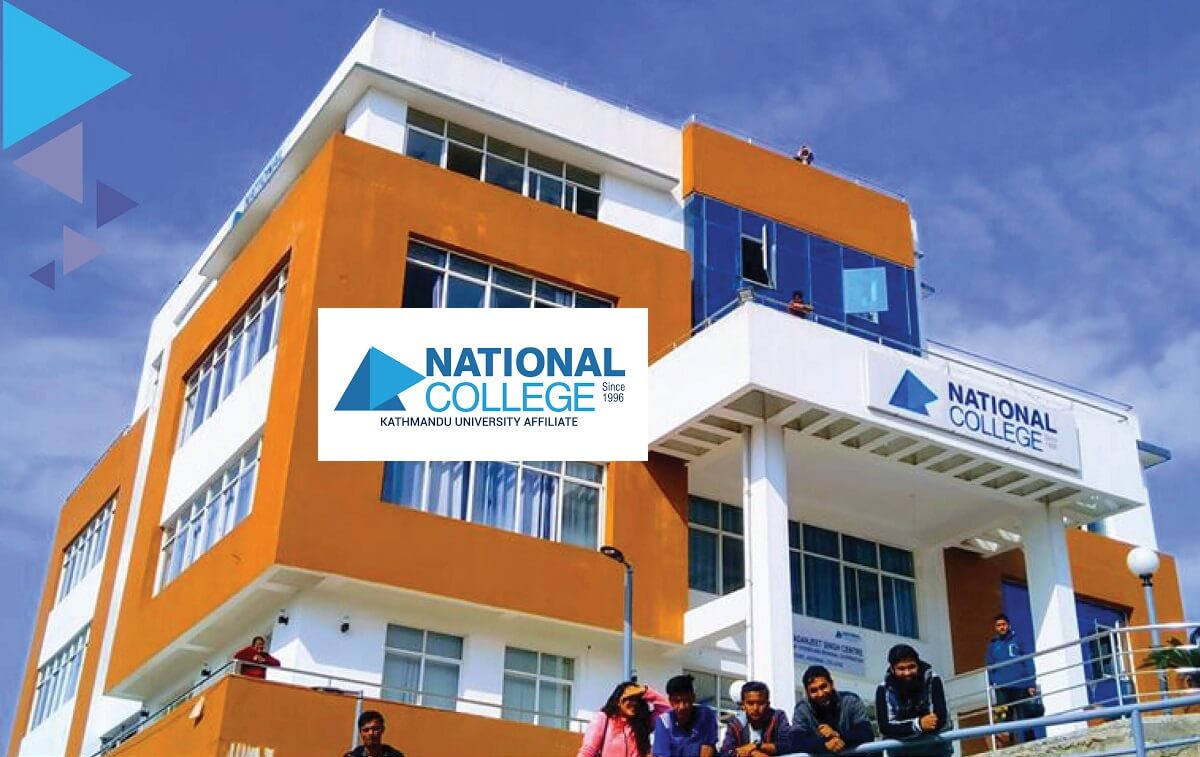
National College is an undergraduate institution in Dhumbarahi, Kathmandu. Established in 1996 by a group of academicians, the college has been associated with Kathmandu University since its establishment. Its academic direction has developed around development studies, social sciences, development finance, psychology, and international relations and diplomacy.
The college’s undergraduate environment combines classroom learning with research, field engagement, project work, internships, workshops, guest lectures, and student activities. Its programs are connected by recurring academic themes such as society, development, institutions, public policy, finance, human behaviour, research, and international affairs.
National College is also associated with the UNESCO Madanjeet Singh Center for Development Studies and Regional Cooperation. This association fits closely with the institution’s long-standing focus on development, regional issues, social inquiry, and research-oriented undergraduate education.
| Area | Details |
|---|---|
| Institution | National College |
| Established | 1996 |
| Location | Dhumbarahi, Kathmandu |
| Academic Level | Undergraduate |
| University Affiliation | Kathmandu University |
| Association with KU | Since 1996 |
| Academic Areas | International relations and diplomacy, psychology, social sciences, development studies, development finance |
| Centre Association | UNESCO Madanjeet Singh Center for Development Studies and Regional Cooperation |
| Learning Approach | Classroom study, field engagement, research, projects, internships, workshops, and guest lectures |
| Student Participation | National College Student Society and activity-based clubs |
| Research Support | Research grants, supervised project work, Research Committee, and academic publication support |
National College began in 1996 with an undergraduate academic orientation connected to development and social questions. Its association with Kathmandu University has remained central to the institutional structure through which its degree programs are delivered.
Bachelor in Development Studies became part of the college’s academic direction in 1999. Bachelor in Development Finance followed in 2006, while Bachelor of Social Sciences was introduced in 2013. The academic portfolio later expanded to include Psychology and International Relations and Diplomacy.
The relationship among these fields gives National College a distinct academic identity. Development Studies examines social and economic change through several disciplines. Development Finance brings financial analysis into questions of development, institutions, and policy. Social Sciences studies communities, culture, politics, behaviour, institutions, and public issues. Psychology provides a dedicated focus on human behaviour and mental processes. International Relations and Diplomacy extends the academic scope to foreign policy, international law, political economy, security, diplomacy, geopolitics, and global governance.
These programs are different in disciplinary focus, but they share common academic concerns. Students repeatedly encounter questions about how societies function, how institutions influence people, how policy is formed, how development is financed, how behaviour is understood, how evidence is collected, and how national issues connect with regional and global systems.
The UNESCO Madanjeet Singh Center for Development Studies and Regional Cooperation further reflects this orientation. Development and regional cooperation therefore sit within the college’s wider academic environment rather than appearing as separate or occasional themes.
National College frames its mission around preparing professionals who can contribute to social and economic transformation in different settings. Its vision connects knowledge, skills, behaviour, self-reliance, and social development. Its objectives include the preparation of scholars, researchers, planners, and development managers who can work with changing social and economic conditions.
These institutional aims are reflected more clearly through the way learning is organised. Undergraduate study is not limited to scheduled classroom instruction. Students also encounter research assignments, field activities, projects, internships, guest lectures, workshops, and student-led initiatives.
This approach is particularly relevant to the subjects taught at the college. Development studies, social sciences, psychology, development finance, and international relations all require students to work with evidence, arguments, institutions, communities, policies, data, or human behaviour. Research and applied academic work therefore form a practical part of the educational environment.
Project work is another important component. Students move from structured coursework toward more independent academic activity in which they may need to identify a question, examine evidence, use appropriate methods, and present findings in an organised form.
The wider educational purpose is therefore built around the relationship between conceptual learning and practical academic engagement. Classroom study establishes disciplinary knowledge, while research, field activities, projects, internships, and discussions create opportunities to apply or examine that knowledge in broader settings.
National College has been associated with Kathmandu University since 1996. The undergraduate degrees offered through the college operate within the academic framework of Kathmandu University.
The relationship is significant because National College functions as the teaching institution, while Kathmandu University provides the governing academic framework for the affiliated programs.
For the programs offered by National College:
| Academic Area | Governing Basis |
|---|---|
| Eligibility | Kathmandu University rules for the relevant undergraduate program |
| Admission and Entrance | KU-prescribed admission and entrance requirements |
| Curriculum | Kathmandu University curriculum for the respective degree |
| Examinations and Results | Conducted and administered under KU rules |
| Academic Evaluation | KU academic and examination regulations |
| Degree Award | Kathmandu University |
Eligibility, admission process, entrance requirements, curriculum, examinations, results, and degree awards therefore follow Kathmandu University rules and regulations for the respective program.
This distinction is important for students reviewing older academic information. Admission criteria, entrance arrangements, curriculum structures, and related requirements belong to the university’s academic system and should be understood within the regulations applicable to the relevant degree.
The same principle applies to examinations and degree completion. National College provides the institutional setting for teaching, learning, field engagement, research, projects, and related academic activities, while the formal academic framework remains governed by Kathmandu University.
National College offers five Kathmandu University undergraduate programs.
| Program | Academic Orientation | Program Character |
|---|---|---|
| Bachelor in International Relations and Diplomacy (BIRD) | International relations, diplomacy, foreign policy, law, geopolitics | Interdisciplinary |
| Bachelor in Psychology (BPsych) | Human behaviour, mental processes, research | Psychology-focused |
| Bachelor of Social Sciences (BoSS) | Sociology, anthropology, politics, psychology, public policy | Multidisciplinary |
| Bachelor in Development Studies (BDevS) | Development, economics, society, environment, policy, research | Interdisciplinary |
| Bachelor in Development Finance (BDFin) | Finance, economics, management, development, research | Interdisciplinary |
Bachelor in International Relations and Diplomacy is a four-year interdisciplinary undergraduate program comprising 120 credits. It gives students a structured study of international relations while connecting the field with diplomacy, global governance, international law, international political economy, foreign policy, security, and contemporary transnational issues.
The program begins with foundational study in areas such as international relations, political institutions, geography, economics, academic writing, public policy, Nepal’s political history, and international law. The curriculum then moves toward more specialised areas of international affairs.
Students encounter subjects related to diplomacy, foreign policy analysis, international economics, South Asian politics, diplomatic practices and protocol, Nepal’s foreign relations, international and regional organisations, and research methodology.
Foreign-language study is also built into the academic structure, with Foreign Language I and Foreign Language II included during the second year. Language learning therefore forms part of the formal program rather than being treated only as an optional extracurricular activity.
Research training continues through quantitative and qualitative methodology. Students are expected to develop the ability to read critically, organise arguments, work with evidence, and communicate policy-related ideas in structured academic formats.
At the advanced level, study extends to areas such as:
Economic diplomacy
Security studies
Human rights and humanitarian law
International political economy
Climate change and environmental politics
Migration and refugee studies
Digital diplomacy and cyber security
Negotiations and conflict resolution
Nepal-related strategic and foreign-policy issues
The later stages of the program include an internship, diplomatic skills and training practicum, proposal and project preparation, electives, comparative foreign policy, and a six-credit project.
BIRD therefore combines conceptual study with research, policy analysis, language learning, writing, communication, internship exposure, and project work.
Its Nepal and South Asia orientation is also an important part of the academic structure. Students examine Nepal’s geopolitical position, regional diplomacy, foreign relations, Himalayan and transboundary questions, and the relationship between domestic concerns and wider international developments.
Bachelor in Psychology gives National College a dedicated academic pathway focused on psychology. The program introduces students to the study of human behaviour and mental processes and includes research-oriented academic work.
Within the college’s wider academic environment, Psychology complements the institution’s work in social sciences, development, finance, and international affairs by adding a focused study of behaviour and related research.
The program also operates within an institutional environment where project work, field engagement, workshops, guest sessions, research supervision, and student participation are established parts of undergraduate learning.
Eligibility, admission, entrance, curriculum, examinations, results, and degree requirements for the program follow the applicable rules and regulations of Kathmandu University.
Bachelor of Social Sciences is a multidisciplinary undergraduate program that brings together Sociology, Anthropology, Cultural Studies, Political Science, Psychology, Public Policy, and research.
The program examines how individuals, communities, institutions, and states interact. Students engage with questions related to culture, identity, power, resources, governance, citizenship, development, inequality, and social change.
One of the defining characteristics of BoSS is its multidisciplinary structure. Social issues rarely belong to a single field. Questions about migration, for example, may involve economics, family relationships, community structures, labour, politics, identity, policy, and cultural change. The program therefore allows students to approach complex issues from more than one disciplinary perspective.
Research also occupies an important place within the program. Students work with social theory, qualitative and quantitative methods, policy analysis, research design, data collection, and interpretation.
The academic scope includes themes such as:
Gender and inclusion
Ethnicity and caste
Migration and diaspora
Media and digital society
Conflict and peacebuilding
Environmental change
Livelihoods
Governance and citizenship
Public policy
Political and social change
Applied learning includes case-based study, fieldwork, community engagement, and project-based academic work. These components connect theoretical concepts with social and policy questions outside the classroom.
The program is intended to strengthen critical reasoning, research ability, communication, and the capacity to examine social, political, and cultural issues through interconnected perspectives.
Bachelor in Development Studies is a four-year interdisciplinary undergraduate program centred on sustainable development in theory and practice.
Its academic foundation combines areas including Economics, Sociology, Environmental Studies, Development Management, and Research Methods. Students examine development as a broad social, economic, political, and environmental process rather than treating it only as a question of economic growth.
The program considers how governance, public policy, markets, civil society, institutions, communities, and ecological systems interact. Students encounter development questions related to poverty, inequality, livelihoods, social protection, gender and inclusion, climate resilience, migration, urbanisation, and reform.
Research and evidence play an important role in the degree. Students learn to examine development programs and policies, interpret information, conduct field-based inquiry, and connect academic findings with practical development questions.
The program also includes academic areas connected with:
Natural resource management
Environmental assessment
Project management and evaluation
Community development
Development research
Field-based learning
GIS-related work
These components connect social and economic analysis with environmental and management questions.
Applied academic work includes case studies, projects, research assignments, and field engagement. Students therefore encounter both conceptual study and opportunities to examine development issues in real institutional or community settings.
BDevS remains closely connected to National College’s long-standing academic focus. Its combination of development theory, economics, society, environment, research, and management reflects the institution’s wider emphasis on interdisciplinary undergraduate study.
Bachelor in Development Finance is a four-year, 126-credit undergraduate program combining finance with economics, management, development, and research.
The program approaches financial study within a broader development context. Students examine how finance, institutions, markets, policy, investment, and development priorities interact.
The curriculum begins with academic areas such as mathematics for development, economics, development concepts, finance, accounting, statistics, and academic writing. It then progresses into more specialised financial and development subjects.
Students encounter areas including:
Financial institutions and markets
Investment
Microfinance and credit
Development economics
Taxation
Organisational and human behaviour
Nepal’s economic development and policy
Digital finance
Development finance institutions
Public finance and fiscal governance
Social entrepreneurship
International trade and finance
Risk and insurance
Globalisation and development
Project management
Research methodology
Financial modelling
Green financing
The program also includes emerging areas such as digital finance and fintech, climate finance, data science, blockchain-related applications, and financial services.
These subjects are taught within a development-finance framework rather than as a separate technology program. Their role is connected to the wider study of finance, institutions, development, policy, and financial systems.
The later stages include internship and project work. This structure connects classroom learning with research and exposure to organisational or professional settings.
National College’s teaching environment extends beyond lecture-based instruction. Faculty support is combined with field engagement, project work, internships, research supervision, guest lectures, and workshops.
This approach is particularly relevant to the college’s academic fields. Students in development studies, social sciences, psychology, development finance, and international relations need to work with more than textbook definitions. They are required to examine evidence, institutions, social settings, financial systems, public issues, policies, or human behaviour.
Field-based learning gives students an opportunity to observe or examine subjects in a broader setting. In areas such as Development Studies and Social Sciences, field engagement can support academic work involving observation, social inquiry, data collection, and research methods.
Project work adds another dimension. Students move from guided classroom assignments toward more independent academic tasks. This may involve defining a research problem, examining evidence, applying a methodology, preparing written work, and presenting findings.
BIRD reflects this wider academic model through research methodology, foreign-language study, internship, diplomatic training, seminars, proposal writing, and project work.
BDFin combines financial and development subjects with research methodology, internship, and project activity.
Guest lectures and workshops further extend academic discussion beyond normal classroom delivery. They provide additional settings for students to engage with subject-related ideas, professional experiences, and specialised discussions.
Student initiatives, field visits, organised events, and extracurricular participation also form part of the wider undergraduate environment.
Applied learning is a recurring part of the National College academic environment.
Field visits and field studies allow students to engage with organisations, communities, institutions, social settings, or other environments connected with their academic subjects. Their role is educational: they connect classroom concepts with observation and structured academic inquiry.
Internships provide a different form of exposure. They place students in organisational or professional settings where they can observe work practices related to their field of study.
National College has had internship opportunities within Nepal and in countries including Bangladesh, India, Thailand, and the Philippines.
The role of internships differs by program. BIRD includes an internship within its academic structure, while BDFin also includes internship work in the later stage of the degree.
Other programs combine field study, research, projects, and applied academic engagement in ways suited to their respective disciplines.
These activities should be understood as academic and professional exposure rather than employment guarantees. Their purpose is to help students develop experience with observation, communication, research, organisational environments, and the application of academic concepts.
Research has a visible place within National College.
Student research is connected with:
Research methodology
Field study
Project work
Supervision
Research grants
The National College Research Committee
Academic publication activity
The Samriddhi Journal of Development Studies
Several named research grants are associated with student research activity, including:
Himalaya Shamsher JB Rana Research Grant
MahendraManorama Mishra Research Grant
Kaushila Foundation Research Grant
Dr. Shyam Krishna Poudel Memorial Research Grant
Akshobhya Khushi Pandey Research Grant
National College Chairman’s Grant
Shantabati Chalise Memorial Research Grant
These mechanisms support the wider academic process surrounding independent research. Students progressing from regular coursework to research need to formulate questions, develop proposals, work with evidence or data, organise findings, and complete written academic work.
Research also appears within the curricula of the college’s degree programs.
BoSS includes qualitative and quantitative research approaches. BDevS combines development research with field-based and analytical methods. BDFin incorporates research methodology and analytical study. BIRD includes quantitative and qualitative research methodology, proposal preparation, and a final project.
Research therefore functions as a common academic element across programs that otherwise differ considerably in subject matter.
National College has scholarship and academic-support categories linked with merit, financial need, extracurricular participation, regional initiatives, and student research.
The scholarship and support categories include:
Topper scholarship support
Scholarship recognition connected with a 4.0 GPA or CGPA
Needy and Diligent Scholarship
Merit-Based Scholarship
ECA Scholarship
SAF Madanjeet Singh Scholarship connected with SAARC participation in BDevS
KAS Scholarship
Research grants for student project work and independent research
Scholarship eligibility, selection, coverage, and other conditions depend on the applicable scholarship arrangement and academic procedure.
Research grants should be distinguished from tuition-related scholarships. Research grants support academic inquiry and student research activity, while other scholarship categories are connected with academic performance, financial need, extracurricular participation, or specific institutional arrangements.
International academic exposure at National College has developed through exchange activities, visiting academics, internships, and institutional links.
Exchange activity with Japan has an established history. Other academic connections have included China-related exchange, collaboration with NIAS Bengaluru, and an Erasmus+ semester exchange connection with Palacky University in Olomouc.
The college has also hosted students from several countries and visiting faculty or guests from different national backgrounds.
Countries represented in the broader academic interaction have included:
Germany
Switzerland
Finland
Bangladesh
Bhutan
India
Sri Lanka
Pakistan
Australia
China
Canada
Japan
For an institution offering programs in development, society, psychology, finance, and international relations, such academic contact is relevant to the subjects students study.
Cross-border interaction can place discussions about development, culture, regional cooperation, economics, diplomacy, social change, or international affairs alongside contact with people from different academic and cultural backgrounds.
International exposure remains one part of the broader learning environment. It sits alongside local fieldwork, research, internships, student activities, and formal degree requirements.
Student involvement at National College extends beyond scheduled academic classes.
The National College Student Society provides an organised setting for student participation, while several clubs offer additional activity-based platforms.
Student clubs include:
Book & Media Club
Startup Club
Sports Club
Environment Club
Campus participation also includes workshops, sports activities, field events, academic programs, and student initiatives.
These activities complement an academic environment in which students already engage with discussion, writing, presentations, research, teamwork, and field learning.
The National College Student Society provides a broader platform for student participation, while individual clubs offer spaces built around particular interests such as reading and media, entrepreneurship, sports, and environmental concerns.
Career-related support at National College includes activities intended to help students prepare for further academic or professional transitions.
Support activities include:
Internships
Final-year project work
Career planning and development workshops
Mock interviews
Interview preparation
Soft-skills sessions
CV and cover-letter preparation
Career fairs
Individual counselling
These activities are forms of preparation and guidance rather than employment guarantees.
The relevance of career preparation differs across the five programs.
Development Studies and Social Sciences provide academic foundations connected with research, policy, development organisations, social inquiry, community work, and further study.
Development Finance combines finance, economics, policy, development, and research.
BIRD develops academic knowledge in international affairs, diplomacy, foreign policy, law, political economy, research, and communication.
Psychology provides an undergraduate foundation focused on behaviour, mental processes, and research.
Students’ eventual pathways depend on the degree completed, individual academic performance, experience, skills, later qualifications where required, and available opportunities.
National College is best understood through the relationship among its academic programs rather than through the number of programs it offers.
The institution’s undergraduate portfolio is concentrated in connected areas of study:
Society
Development
Policy
Institutions
Finance
Human behaviour
Research
International affairs
Development Studies asks how societies respond to development challenges and how economic, environmental, institutional, and social factors interact.
Development Finance examines how finance, financial institutions, policy, investment, and resources connect with economic and social development.
Social Sciences studies people, communities, culture, politics, institutions, public policy, and social change.
Psychology concentrates on behaviour, mental processes, and research.
International Relations and Diplomacy extends the academic scope to states, diplomacy, foreign policy, law, international political economy, security, geopolitics, and global governance.
Research is another common thread across these programs. Students encounter research methods, field engagement, project work, evidence-based analysis, or independent academic inquiry within their respective degree structures.
The college supports this work through supervision, research grants, the Research Committee, and publication activity.
For students comparing undergraduate institutions, this academic concentration is an important feature of National College. Its programs are most relevant to students whose interests fall within the connected areas of development, society, finance, psychology, public policy, research, and international affairs and who want an undergraduate setting that includes academic activity beyond classroom lectures.



National College is located in Dhumbarahi, Kathmandu.
National College was established in 1996 by a group of academicians. Its association with Kathmandu University also dates from 1996.
National College is affiliated with Kathmandu University. Eligibility, admission, entrance requirements, curriculum, examinations, results, and degree awards for its KU programs follow Kathmandu University rules and regulations.
The college offers:
Bachelor in International Relations and Diplomacy (BIRD)
Bachelor in Psychology (BPsych)
Bachelor of Social Sciences (BoSS)
Bachelor in Development Studies (BDevS)
Bachelor in Development Finance (BDFin)
Its undergraduate portfolio covers international relations and diplomacy, psychology, social sciences, development studies, and development finance. Common academic themes include research, society, development, institutions, policy, behaviour, finance, and applied learning.
Yes. Research is connected with field study, research methodology, project work, supervision, research grants, the National College Research Committee, and the Samriddhi Journal of Development Studies. Several programs also include formal research-methodology and final-project components.
Yes. Field studies, field visits, internships, project work, guest lectures, and workshops form part of the college’s broader academic environment. Internship and project components are also included directly in programs such as BIRD and BDFin.
The college has scholarship categories connected with academic performance, financial need, extracurricular participation, regional scholarship arrangements, and research support. These include Topper, 4.0 GPA or CGPA, Needy and Diligent, Merit-Based, ECA, SAF Madanjeet Singh, KAS, and research-grant categories.
Student participation includes the National College Student Society, Book & Media Club, Startup Club, Sports Club, and Environment Club.
Yes. National College is associated with the UNESCO Madanjeet Singh Center for Development Studies and Regional Cooperation.