Nepal Film Campus (often referred to as Nepal Film College or NFC) is a specialized film studies institution situated at Pingalasthan, Baneshwor, Kathmandu. It focuses on higher education in cinema and visual storytelling, with a clear link to the Nepali and international film industry. The campus runs a four-year Bachelor in Film Studies (BFS) program affiliated with Tribhuvan University and was established in 2076 B.S. (2019 A.D.) by a team of academicians, filmmakers, and media professionals.
The institution aims to prepare students for work in film, television, theatre, advertising, and digital media. Alongside formal theory courses, the campus places strong weight on practice-based learning, collaborative productions, and mentorship from national and international professionals.
Location: Pingalasthan, Baneshwor, Kathmandu, Nepal
Type: Private film college
Affiliation: Tribhuvan University (TU)
Academic program: Bachelor in Film Studies (BFS), four-year undergraduate degree
Establishment year: 2076 B.S. (2019 A.D.)
Focus areas: Direction and screenwriting, cinematography, acting, editing, sound production, and design
Credit transfer: Pathway for credit transfer to New York Film Academy and Toronto Film School
Scholarships: Need-based and merit-based support, including scholarships from the Film Development Board, Nepal
Founding team: Academicians, filmmakers, producers, and media workers with festival and award recognition, including an Emmy-winning producer
Nepal Film Campus is guided by a combination of academic leadership and experienced film practitioners. This structure ensures that institutional decisions consider both educational quality and the current realities of the film industry.
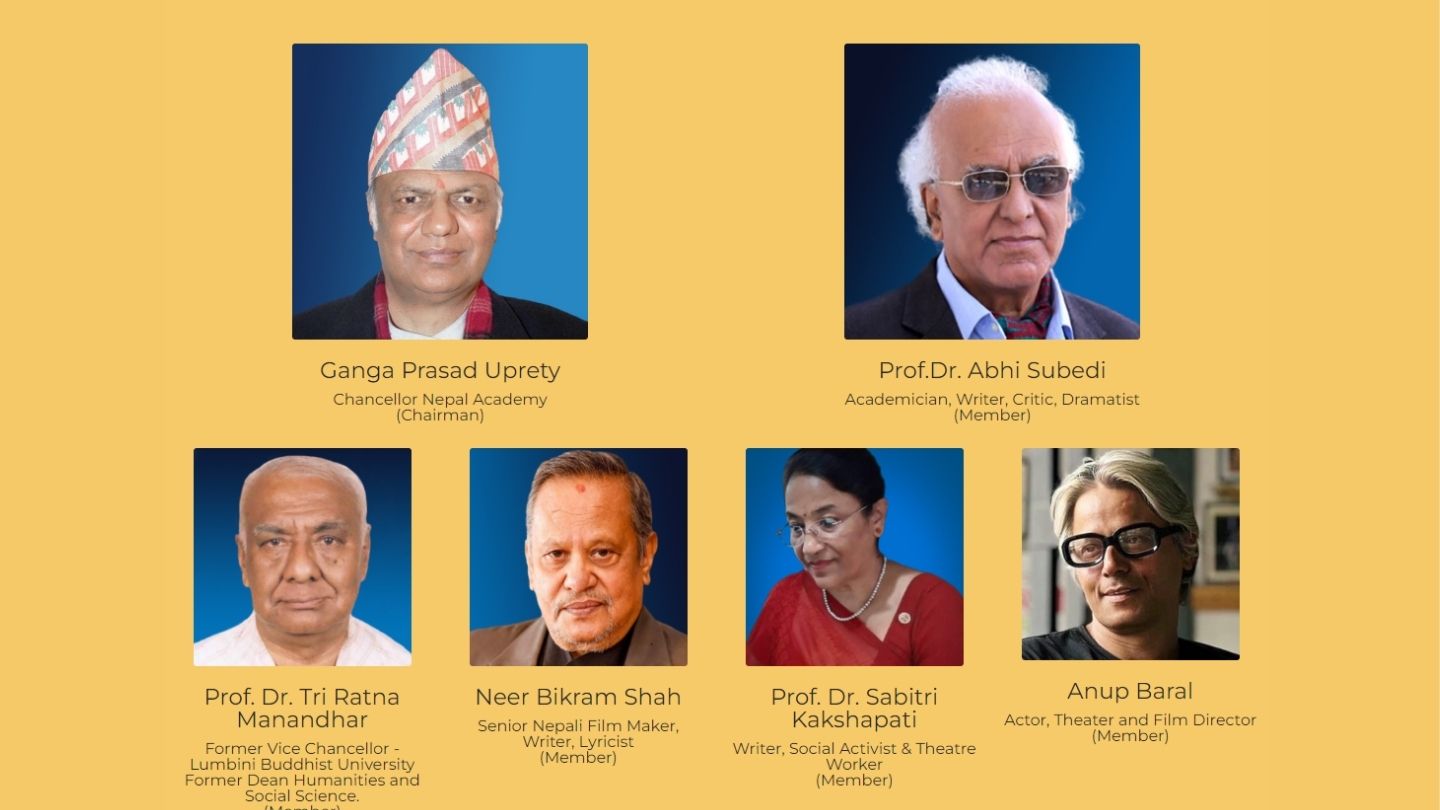
The advisory board includes leading figures from literature, theatre, film, and academia. Members include:
Ganga Prasad Uprety – Chancellor, Nepal Academy (Chairman of the advisory board)
Prof. Dr. Abhi Subedi – Academic, writer, critic, and dramatist
Prof. Dr. Tri Ratna Manandhar – Former Vice Chancellor of Lumbini Buddhist University and former Dean of Humanities and Social Sciences
Neer Bikram Shah – Senior Nepali filmmaker, writer, and lyricist
Prof. Dr. Sabitri Kakshapati – Writer, social activist, and theatre worker
Anup Baral – Actor, theatre and film director
Their presence connects the campus to the larger cultural and academic community in Nepal.
The management team combines academic administration and active film practice:
Shishir Uprety – Campus Chief / Founder: academician, writer, and long-serving campus leader with experience in several colleges.
Subash Koirala – Vice Principal / Founder: film writer and director with multiple feature credits.
Dr. Fidel Devkota – Academic Director / Founder: filmmaker and visual anthropologist with a PhD and international research experience.
Sushan Prajapati – Founder: producer and director of photography with a notable list of films and festival screenings.
Ram Krishna Pokharel – Founder: film producer and the first Nepali to receive an Emmy award.
Khagendra Khadka – Founder: academician and sociologist with experience in institutional leadership.
Medani Sitaula – Founder.
This leadership group shapes academic policy, external partnerships, and the long-term growth of the campus.
The teaching team includes specialists in language, psychology, visual arts, and the core film disciplines:
English: Jivesh Rayamajhi, Manju Dahal
Nepali: Dr. Karnakhar Khatiwada, Jaya Ojha
Counselling and Psychology: Manoj Dahal, Narmada Devkota
Direction and Screen Writing: Saroj Shrestha, Kiran Pokherel, Pravin Raut
Art and Painting: Kailash Shrestha
Sound Production and Design: Shrawal R. P.
Editing: Animesh Sapkota
Acting: Narendra Baral, Bimal Subedi
This mix of general education and specialized film faculty supports both critical thinking and technical skill.

Nepal Film Campus offers a four-year Bachelor in Film Studies program affiliated with Tribhuvan University. The BFS curriculum focuses on film theory, history, criticism, and practical production work. Students study film language, narrative structures, national and world cinema, and research methods, along with applied modules in directing, writing, cinematography, editing, acting, and sound.
The degree targets Nepali and international students who wish to build long-term careers in cinema and media. It links academic learning with practice through short films, exercises, workshops, and project-based courses that encourage teamwork and reflection.
Within the BFS framework, students can develop strong grounding in specific areas of film practice.
The acting stream looks at performance for film, television, theatre, and other media. The course covers character development, body language, voice, audition practice, and set discipline. It also addresses the realities of the profession, including competition, frequent auditions, and emotional resilience. The campus supports students as they learn to interpret scripts, work with directors, and respond to the camera.
The cinematography stream introduces camera movement, framing, lens choices, lighting, and composition. Students work with industry-standard equipment and are exposed to visual styles from Nepali and international cinema. The program explains the responsibilities of a director of photography, from planning a shot list to collaborating with lighting and grip teams. Students practice on set and in editing suites to see how image choices shape the final film.
The direction and screen writing stream looks at how image, setting, blocking, acting, and editing come together under the director’s guidance. Students learn to interpret scripts, guide actors, decide on camera setups, and maintain a coherent point of view for the audience. Screen writing modules cover story structure, character arcs, dialogue, and script formatting. By the end of the program, students gain experience in leading short projects from script to final cut.
The sound stream addresses recording, editing, and mixing of dialogue, ambient sound, effects, and music. Students study how sound shapes mood, clarifies narrative information, and supports character development. They learn recording techniques on set, as well as studio-based sound design and synchronization for film.
The editing stream focuses on story construction in post-production. Students learn to select shots, manage continuity, control rhythm, and build emotional impact through cuts, transitions, and sound-image relationships. The course also introduces workflow, file management, and collaboration with directors and sound designers.
Candidates seeking admission to the BFS program at Nepal Film Campus must have completed Grade 11 and Grade 12 with at least a D+ in all subjects. The campus looks for applicants who show genuine interest in visual storytelling, are ready to work in collaborative environments, and can communicate clearly in classroom and production settings.
Prospective students visit the campus, fill in the application form, and attend an interview. The interview helps the team understand the applicant’s motivation, previous creative exposure, and readiness for intensive film study.
Teaching at Nepal Film Campus combines classroom lectures, screenings, discussions, workshops, and production work. Faculty members draw on their own practice as writers, directors, producers, cinematographers, actors, and researchers. International experts from Hollywood, Bollywood, Sri Lanka, Bhutan, and Nepal conduct sessions in areas such as script writing, direction, sound production and design, cinematography, acting, editing, and film analysis.
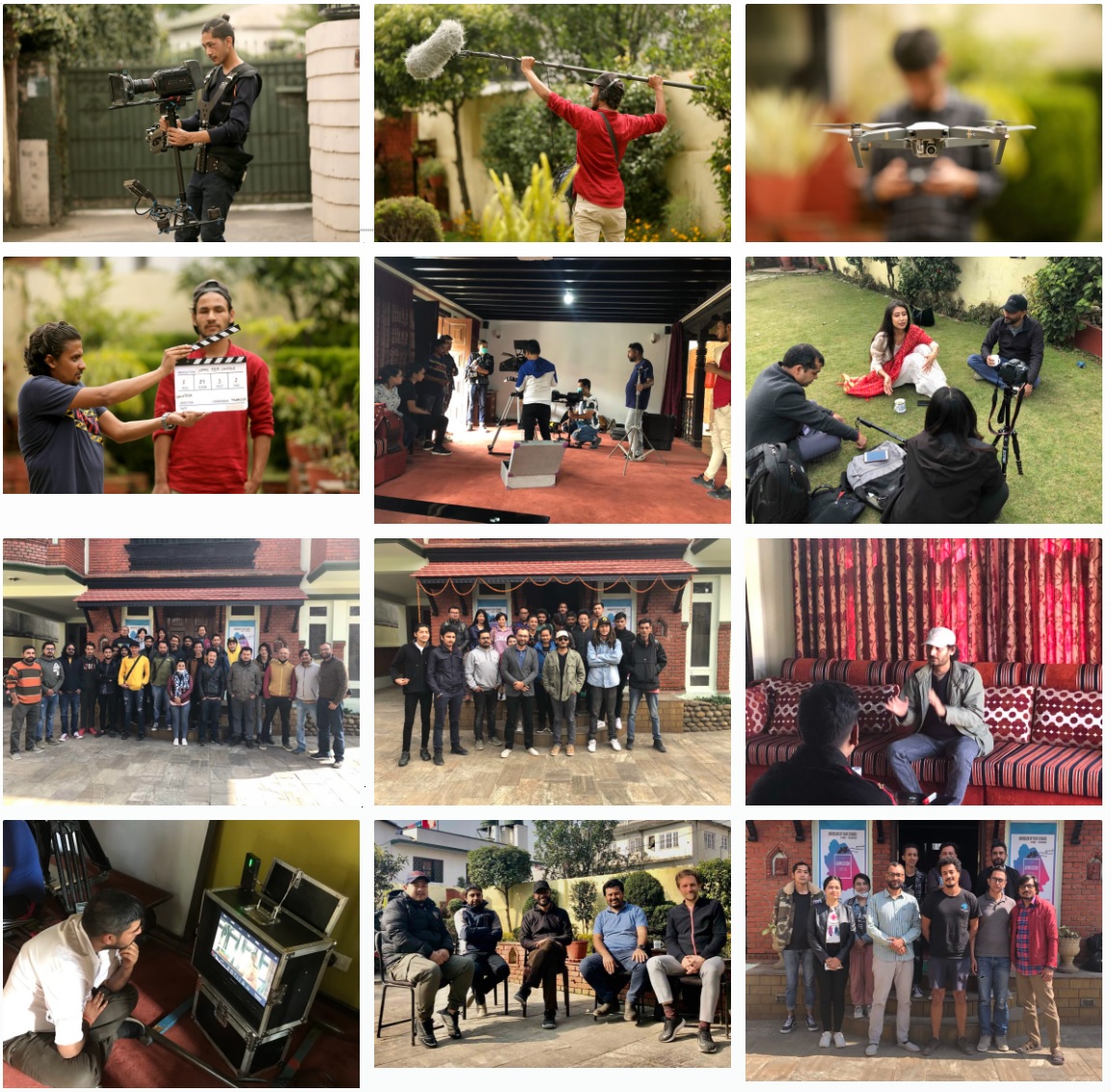
Students engage in hands-on exercises from the early semesters. They work on short projects, crew roles, and joint productions that simulate professional film sets. This process builds not only technical skills, but also teamwork, planning, and critical reflection on their own work and that of others.
The campus highlights the learning environment as a key element of film education. Students have access to teaching spaces, shooting areas, and editing facilities equipped with industry-standard hardware and software. Workshops run with modern cameras, lighting units, and sound equipment, helping students gain confidence with current tools.
The atmosphere is shaped to support creativity and discussion. Screenings, critiques, and group work sessions turn classrooms into active spaces where theory and practice intersect.
Beyond formal coursework, Nepal Film Campus encourages involvement in film-related activities. Project-based work already blurs the line between curricular and co-curricular production. Students collaborate on short films, experimental works, and portfolio pieces that may later be submitted to festivals or online platforms.
Guest lectures, panel discussions, and informal interactions with visiting filmmakers give students wider industry exposure. Internship opportunities with production houses and related organizations help students experience professional routines and networks.
Nepal Film Campus provides both need-based and merit-based scholarships for eligible students. Learners who maintain strong academic performance or face financial challenges can seek fee support under these schemes. The Film Development Board, Nepal, also awards a limited number of scholarships to students enrolled at this campus, which helps reduce the financial burden for aspiring filmmakers.
Outside Nepal, partner institutions such as New York Film Academy and Toronto Film School offer scholarship options along with credit transfer arrangements. Through these partnerships, students can continue their studies abroad and take part in joint projects that connect Nepali learners with the wider international film community.
Since its establishment in 2019, Nepal Film Campus has drawn together filmmakers and scholars whose work appears in leading national and international film festivals. Faculty member Ram Krishna Pokharel, for example, is the first Nepali recipient of an Emmy award, with credits on a range of short and feature films.
Founders and advisors have contributed to films such as Apabad, Bulbul, The Red Phallus, Ainaa Jhyaal Ko Putali, and many more. Their involvement connects students directly to ongoing projects, festival circuits, and international training programs.
Prospective students may consider Nepal Film Campus for several academic and professional reasons:
TU-affiliated Bachelor in Film Studies with a clear link to higher education standards in Nepal
Strong combination of scholars, filmmakers, producers, and actors as core faculty and mentors
Structured exposure to multiple film disciplines: direction, writing, cinematography, acting, editing, and sound
Pathway for credit transfer to film schools in the USA and Canada
Scholarship schemes, including support from the Film Development Board, Nepal
Opportunities to learn from professionals whose films circulate in major festivals
Nepal Film Campus (Nepal Film College) is a focused institution for film education in Kathmandu. It serves students from Nepal and abroad who want to study cinema in a structured university setting. With its affiliation to Tribhuvan University, the Bachelor in Film Studies (BFS) program links creative practice with academic standards in the humanities and social sciences.
Where is Nepal Film Campus located?
Nepal Film Campus is located at Pingalasthan, Baneshwor, in Kathmandu, Nepal.
Which university is Nepal Film Campus affiliated with?
The campus is affiliated with Tribhuvan University and offers a four-year Bachelor in Film Studies (BFS) under TU.
What is the main academic program offered?
The main academic program at Nepal Film Campus is the Bachelor in Film Studies (BFS). This four-year undergraduate degree combines film theory, history, criticism, and practical work in areas such as direction, acting, cinematography, sound, and editing.
What are the basic eligibility criteria for admission?
Applicants must have completed Class 11 and Class 12 with at least a D+ in all subjects. They are expected to show a strong interest in film and visual storytelling and be ready to take part in group-based creative work and an interview at the campus.
Does Nepal Film Campus offer scholarships?
Yes. Nepal Film Campus provides need-based and merit-based scholarships. The Film Development Board, Nepal, also awards scholarships to some students enrolled at this campus. Partner institutions abroad offer additional scholarship options and credit transfer pathways.
Are there international learning opportunities?
Yes. The campus has credit transfer arrangements with New York Film Academy and Toronto Film School. International experts from different film industries visit to conduct classes and workshops, which gives students exposure to global practices in cinema.
What career paths does the BFS program support?
Graduates can work in areas such as directing, screen writing, acting, cinematography, editing, and sound production. They may also move into criticism, festival programming, teaching, and other creative or technical roles in film, television, theatre, advertising, and digital platforms.