Bachelor in Film Studies (BFS) at Nepal Film Campus, Pingalasthan, Kathmandu, is a four-year undergraduate program affiliated with Tribhuvan University. The course focuses on film as an academic and creative field, connecting theory, history, criticism, and practical filmmaking.
Nepal Film Campus was established in 2076 B.S. (2019 A.D.) by academicians, filmmakers, and media professionals to address the growing need for trained personnel in Nepal’s film and media sectors. The BFS course reflects that founding objective. Students learn how cinema works as an art form, how moving images shape public conversation, and how stories travel from script to screen.
If you are a student who watches films closely, questions how scenes are put together, and wants to link that curiosity with structured study, this course offers a clear academic route. The program welcomes learners who are ready for creative work, critical reading, and long-term engagement with film practice.
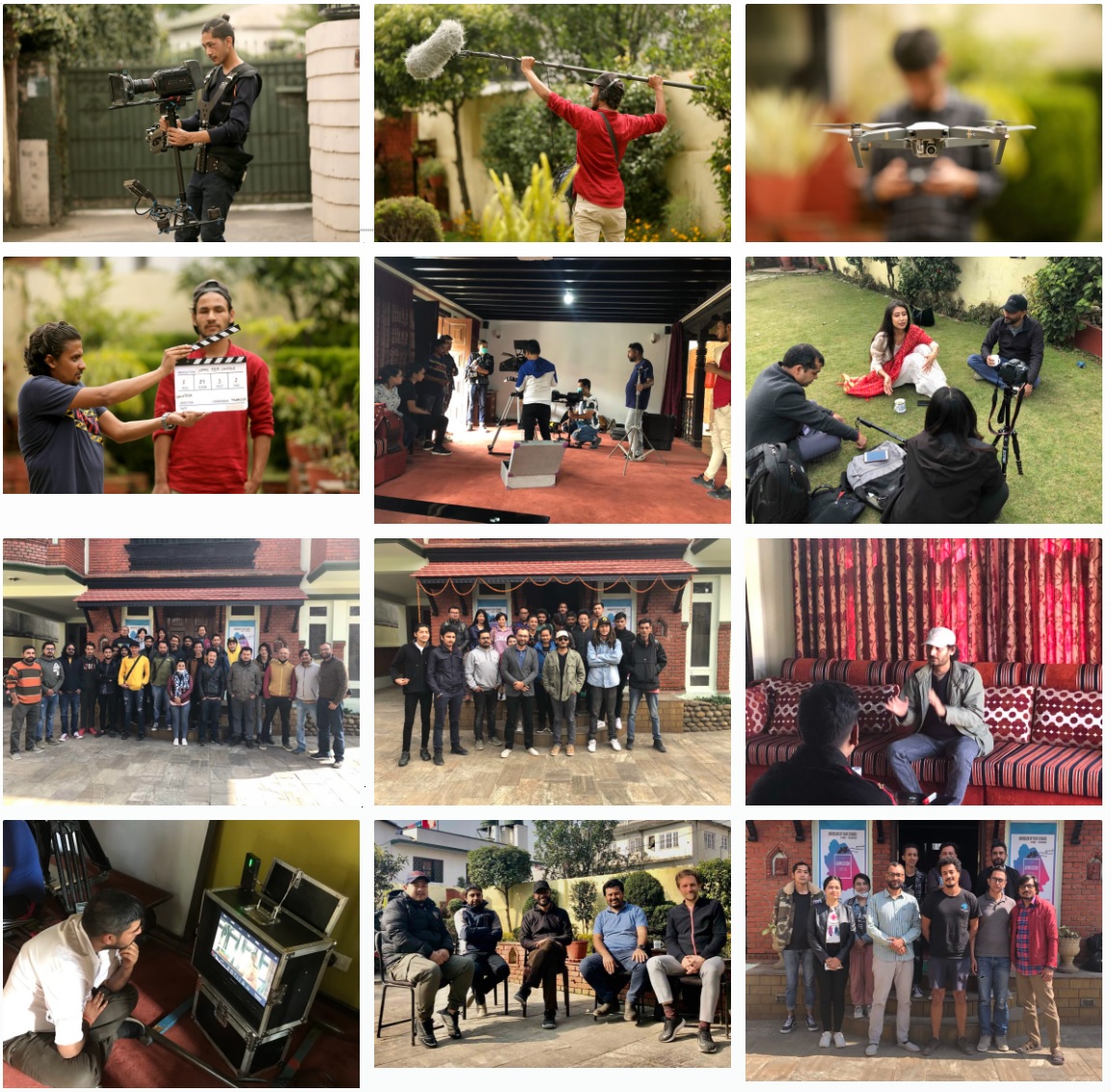
Course title: Bachelor in Film Studies (BFS)
Duration: 4 years (8 semesters)
Affiliation: Tribhuvan University
Location: Nepal Film Campus, Pingalasthan, Baneshwor, Kathmandu
Specializations: Acting, Cinematography, Direction and Screen Writing, Sound, Editing
Academic nature: University degree in film studies with practical production components
Medium: Primarily English and Nepali (depending on course unit)
Target learners: Students from Nepal and abroad interested in film, media, and visual storytelling
Bachelor in Film Studies at Nepal Film Campus follows the Tribhuvan University four-year curriculum. The program introduces film from multiple angles: as an art form, as a cultural document, and as a technical field. (portal.tu.edu.np)
Students study:
Film history (national and international cinema)
Film theory, film language, and visual aesthetics
Psychology and film, spectatorship, and audience response
Script analysis, narrative structure, and character development
Research methods and writing for academic work
Practical modules in filmmaking fundamentals, short film production, and project work
Higher-year study builds toward specialization areas. Learners choose a concentration in Acting, Cinematography, Direction and Screen Writing, Sound, or Editing and complete advanced units, exercises, and projects in that track.
Bachelor in Film Studies at Nepal Film Campus has clear objectives:
Prepare students for professional roles in film, television, theatre, advertising, and digital media.
Build a strong base in film theory, criticism, and research so graduates can read and discuss cinema with confidence.
Develop disciplined visual storytellers who understand image, sound, performance, and editing as connected elements.
Encourage students to reflect on Nepali society, culture, and global trends through film.
Support students who wish to move toward postgraduate study, teaching, or film criticism.
The BFS degree has growing relevance in Nepal, where cinema and digital content now reach wider audiences through theatres, television, OTT platforms, and social media. Film crews need trained writers, directors, cinematographers, editors, and sound professionals rather than only self-taught workers.
Graduates from a TU-affiliated BFS program can work in mainstream film, independent cinema, television drama, documentary, advertising, music videos, and emerging digital formats. Some move into festival programming, cultural organizations, and research-focused roles. Others combine film practice with related areas such as media studies, sociology, literature, or anthropology.
By the end of the four-year Bachelor in Film Studies at Nepal Film Campus, students are expected to:
Read films critically, linking image, sound, narrative, and context.
Discuss major movements in world cinema and Nepali cinema.
Prepare and revise scripts, treatments, and visual plans for film projects.
Take part in productions using professional roles and protocols.
Handle camera, sound, and editing workflows according to industry norms.
Present research-based writing on film topics using accepted academic methods.
These outcomes support both creative and analytical growth, which is important if you want a career that moves between sets, studios, classrooms, or festival spaces.
Acting within the BFS course looks beyond fame and focuses on craft. Students work on body awareness, voice, gesture, and listening skills, learning how to respond to direction and camera framing. They rehearse scenes, explore different performance styles, and study the emotional demands of auditions and repeated takes.
You see how acting works across film, television, theatre, and commercials, and how actors manage rejection, long hours, and public scrutiny. Training helps you understand both the creative side and the discipline that keeps a performance consistent from shot to shot.
Cinematography modules train students to think in images. Learners practice camera placement, movement, framing, focus, and lighting while working with professional camera and lighting equipment.
The role of the cinematographer (director of photography) is discussed in depth: planning visual style with the director, managing the camera and lighting crew, and maintaining continuity across scenes. Students see how choices in lens, composition, and light shape mood and meaning, and they experience the full cycle from set to editing room.
Direction and screen writing modules link writing, planning, performance, camera work, and editing. The course shows how directing involves managing cinematography, setting, blocking, acting, and editing as one process.
Students learn to:
Translate written scripts into shot lists and storyboards
Guide actors and technical teams on set
Keep a clear point of view so the audience follows the story
Take responsibility for the overall feel and rhythm of a film
Screen writing sessions focus on story structure, character arcs, dialogue, and script formatting, helping you shape ideas into shootable scripts.
Sound modules address an area that many beginners overlook. Students study dialogue, ambience, sound effects, music, and soundtracks as interlinked layers.
You learn how recording on set connects with studio work, sound editing, and final mixing. The course explains how sound can guide emotion, clarify space, and support or contrast with the image. Exercises in recording, sound design, and synchronization train students to raise the overall quality of a film’s audio track.
Editing modules show how a film truly takes shape in post-production. Students practice cutting footage, choosing takes, controlling rhythm, and building narrative flow.
You understand how editors work with directors and sound designers, how they use transitions and timing, and how they correct continuity issues. The course also introduces practical concerns such as file management, project organization, and delivery formats for cinema, television, and online release.
Bachelor in Film Studies at Nepal Film Campus uses a mix of lectures, seminars, screenings, workshops, and production projects. Teachers bring their own experience as directors, writers, cinematographers, actors, editors, producers, and researchers.
Film experts from Hollywood, Bollywood, Sri Lanka, Bhutan, and Nepal conduct sessions on script writing, direction, sound, editing, cinematography, acting, and film analysis. In many classes you move directly from discussion to practical work, which helps you connect concepts with on-set decisions. Group projects encourage students to learn collaboration, scheduling, and shared responsibility for outcomes.
Admission to the BFS program at Nepal Film Campus follows Tribhuvan University guidelines. Applicants must:
Have completed Class 11 and Class 12 (or equivalent) with a minimum of D+ in all subjects
Show a strong interest in film and visual storytelling
Be ready to work collaboratively and communicate clearly in group settings
Students need to visit the campus, fill out the admission form, and attend an interview. The interview stage allows the academic team to review your motivation, previous creative exposure (if any), and readiness for intensive, project-based learning. Additional entrance tests may apply as per Tribhuvan University rules for BFS. (portal.tu.edu.np)
Graduates of Bachelor in Film Studies from Nepal Film Campus move into multiple areas of film and media work. Possible roles include:
Film director, assistant director, or script supervisor
Screen writer for film, television, or web series
Actor for film, television, theatre, or advertising
Cinematographer, camera operator, or gaffer
Video editor or post-production specialist
Sound recordist, sound designer, or mixer
Film critic, researcher, or lecturer in film-related subjects
Programmer or coordinator for film festivals and cultural events
Some graduates continue to postgraduate programs in film studies, media studies, or related humanities and social sciences. Others build independent film projects or join production houses, advertising agencies, and digital content studios.
Nepal Film Campus provides both need-based and merit-based scholarships for students who meet academic standards or face financial constraints. The college also receives scholarship support from the Film Development Board, Nepal, which allocates seats for film students at this campus.
Partner institutions such as New York Film Academy and Toronto Film School offer scholarship options and credit transfer arrangements. These links create pathways for students who wish to extend their study abroad or take part in international workshops and projects after starting their BFS journey in Kathmandu.
Bachelor in Film Studies at Nepal Film Campus appeals to students who want both an academic degree and sustained practical exposure. The course sits inside a dedicated film campus where everyday conversation, visiting faculty, and ongoing projects revolve around cinema.
You study under filmmakers, producers, cinematographers, and scholars whose works have reached key festivals and platforms. The Film Development Board lists Nepal Film Campus as a BFS provider with recognized specializations in Acting, Cinematography, Direction and Screen Writing, Sound, and Editing, which adds policy-level recognition to the program.
For students and parents seeking a structured, university-linked way into film studies in Nepal, this course offers a clear framework: TU affiliation, defined curriculum, formal assessment, and documented learning outcomes.
Bachelor in Film Studies (BFS) at Nepal Film Campus, Pingalasthan, Kathmandu, offers a focused path into film education under Tribhuvan University. The course links theory, criticism, and hands-on production work while giving room for specializations in core film crafts.
If you want to move from watching films to making and studying them in a systematic way, this program provides a grounded setting to build that journey, supported by experienced teachers, recognized curriculum, and a learning environment shaped around cinema.
Bachelor in Film Studies (BFS) at Nepal Film Campus is a four-year undergraduate program affiliated with Tribhuvan University.
The BFS course at Nepal Film Campus offers specialization options in Acting, Cinematography, Direction and Screen Writing, Sound, and Editing.
Applicants must have completed Class 11 and Class 12 (or equivalent) with at least a D+ in all subjects, along with interest in film studies and readiness for collaborative work.
Yes. The BFS program at Nepal Film Campus is affiliated with Tribhuvan University and is listed by the Film Development Board, Nepal, under university Bachelor’s degree courses in Film Studies.
Nepal Film Campus provides need-based and merit-based scholarships, and the Film Development Board, Nepal, also supports several students with scholarship schemes. Partner institutions abroad offer additional scholarship and credit transfer opportunities after enrollment.