Nepalgunj Medical College (NGMC) is a medical education institution in Banke, Nepal, established in 1996 AD (2053 BS) under Lord Buddha Educational Academy Ltd. Its academic and clinical activities are organized mainly through the Basic Science Campus at Chisapani, the Clinical Science Campus and Teaching Hospital at Kohalpur, and teaching-hospital services in Nepalgunj.
The college is affiliated with Kathmandu University for its medical, dental, nursing, postgraduate, and super-specialty programs. Its academic setting brings together classroom and laboratory instruction, hospital-based clinical learning, internship, community health activities, and research. NGMC began its MBBS program in 1997 and later expanded into nursing and postgraduate medical education.
| Particular | Details |
|---|---|
| Institution | Nepalgunj Medical College (NGMC) |
| Established | 1996 AD (2053 BS) |
| Management | Lord Buddha Educational Academy Ltd. |
| University affiliation | Kathmandu University |
| District | Banke, Nepal |
| Basic Science Campus | Chisapani |
| Clinical Science Campus | Kohalpur |
| Major clinical facility | Kohalpur Teaching Hospital |
| Academic areas | Medicine, dentistry, nursing, MD/MS and DM |
| Bachelor entrance framework | MECEE-BL and applicable MEC rules |
| Postgraduate entrance framework | MECEE-PG and applicable MEC rules |
| Hostel arrangement | Separate hostels for boys and girls |
| Professional practice | Relevant professional council licensing requirements apply after course completion |
NGMC was established with a focus on developing medical education and healthcare capacity in western Nepal. Its first MBBS batch entered in December 1997, and the first batch completed the course in July 2002. Nursing education was introduced later, followed by postgraduate MD/MS education.
Nepalgunj Medical College developed through an initiative involving medical professionals, entrepreneurs, educationalists, and other members associated with Lord Buddha Educational Academy Ltd. The institution was established in 1996 after LBEA received permission to establish a medical college in the Nepalgunj region.
Dr. Suresh Kumar Kanodia and Late Mr. Mukund Bhakt Shrestha are identified as the founders. The institution was formed around the need for medical education and healthcare services in the Mid-West and Far-West regions, with attention to developing trained health professionals and extending health services beyond major urban centres.
MBBS teaching began in 1997. Nursing education followed in 2000, while postgraduate MD/MS programs were introduced in 2007. The academic range later expanded to medicine, dentistry, nursing, postgraduate clinical specialties, community medicine, and DM-level study.
NGMC is also included in the World Directory of Medical Schools. Graduates have appeared in international professional and screening examinations, including USMLE and PLAB. These examinations operate under their own eligibility and regulatory systems and remain separate from the college's university degree requirements.
NGMC's listed medical, dental, nursing, MD/MS, and DM programs operate under the academic framework of Kathmandu University (KU). Admission, curriculum, examinations, academic progression, and degree award follow the applicable rules and regulations of Kathmandu University.
Medical and nursing admissions also fall within Nepal's national medical education framework. The Medical Education Commission (MEC) governs areas including entrance procedures, merit-based admission, scholarship provisions, seat distribution, fee structure, and other admission requirements according to applicable rules and its academic calendar.
Professional education also carries registration and licensing requirements after graduation. Graduates entering regulated professional practice must satisfy the licensing requirements of the appropriate professional council. Relevant bodies include the Nepal Medical Council and the Nepal Nursing Council.
NGMC is also identified with recognition from the Government of Nepal, the Ministry of Health and Population, the Ministry of Education, Science and Technology, and the Medical Education Commission.
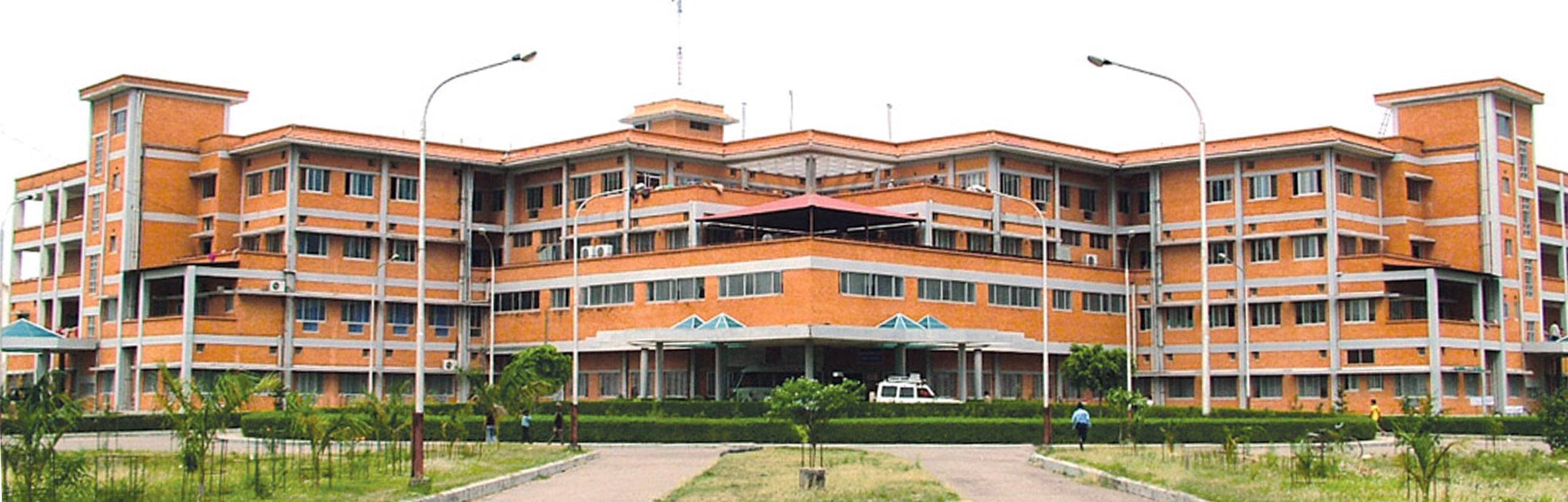
NGMC organizes its academic activities across more than one location in Banke. Chisapani serves as the Basic Science Campus, while Kohalpur accommodates the Clinical Science Campus and Teaching Hospital. Teaching-hospital activities are also associated with Nepalgunj.
The Chisapani Campus is located in Banke along the Nepalgunj-Surkhet Highway. The campus covers approximately 70 hectares and includes academic buildings, laboratories, residential areas, library facilities, teaching spaces, and student accommodation.
Basic-science teaching is supported by laboratories, a dissection hall, specimen resources, lecture halls, seminar rooms, multimedia facilities, computers, projectors, television monitors, internet access, and audio-visual teaching equipment. A recreational hall is also available within the campus.
The campus includes residential arrangements for students and accommodation for faculty and non-teaching staff. Round-the-clock security is maintained. The setting provides a dedicated environment for the foundational stages of medical education, including classroom work, laboratory study, anatomy, and related basic-science subjects.
The Clinical Science Campus is located at Kohalpur in Banke. The teaching hospital lies along the East-West Highway and provides the setting for bedside teaching, patient examination, clinical rotations, internship training, and practical work in different medical departments.
Kohalpur Teaching Hospital is identified as a 525-bed multi-specialty hospital. Students undertaking clinical study work in a hospital environment where academic instruction is connected with patient care and departmental rotations. Community outreach and health-camp participation are also part of the clinical learning environment.
Kohalpur-11 falls within Kohalpur Municipality. The college's admission and teaching-hospital offices are based at Das Bigha, Kohalpur-11, Banke.
NGMC also operates teaching-hospital services in Nepalgunj. This gives the institution a clinical presence at more than one location in Banke and connects medical education with hospital services serving the surrounding population.
NGMC offers bachelor-level medical, dental, and nursing education, postgraduate MD/MS specialties, and DM Neonatology. The following seat figures apply to the program allocation covered here. Final seat distribution remains subject to the applicable determination of the Medical Education Commission.
| Program | Level | Seats |
|---|---|---|
| Bachelor of Medicine, Bachelor of Surgery (MBBS) | Bachelor | 130 |
| Bachelor of Dental Surgery (BDS) | Bachelor | 15 |
| BSc Nursing | Bachelor | 20 |
| MD Anaesthesiology | Postgraduate | 3 |
| MD Dermatology | Postgraduate | 1 |
| MD Internal Medicine | Postgraduate | 4 |
| MD Obstetrics and Gynaecology | Postgraduate | 4 |
| MD Paediatrics | Postgraduate | 5 |
| MD in Psychiatry | Postgraduate | 2 |
| MD Radio Diagnosis | Postgraduate | 1 |
| MD Pathology | Postgraduate | 3 |
| MD Community Medicine | Postgraduate | 2 |
| MS General Surgery | Postgraduate | 6 |
| MS in Orthopedics | Postgraduate | 3 |
| MS Otorhinolaryngology | Postgraduate | 3 |
| DM Neonatology | DM | 1 |
The MBBS program consists of 4.5 years of academic study followed by a one-year compulsory rotational internship, giving an overall duration of five and a half years. BSc Nursing is identified as a four-year program.
The postgraduate clinical disciplines include anaesthesiology, dermatology, internal medicine, obstetrics and gynaecology, paediatrics, psychiatry, radio diagnosis, pathology, general surgery, orthopedics, and otorhinolaryngology. Community Medicine is also part of the postgraduate portfolio, while DM Neonatology is offered at the DM level.
Admission to medical and nursing programs at NGMC follows the national medical education framework together with the academic requirements of Kathmandu University.
Bachelor-level medical and nursing admission is based on the Medical Education Common Entrance Examination for Bachelor Level, commonly known as MECEE-BL. Admission follows MEC rules covering merit, seat distribution, scholarship arrangements, fees, and admission procedures.
For MBBS and BDS, applicants must have completed 10+2, A Level, or an equivalent qualification with Physics, Chemistry, and Biology. The academic eligibility specified for these programs requires at least 50% in each PCB subject and 50% in aggregate.
Qualification in MECEE-BL and compliance with applicable MEC and Kathmandu University provisions form part of the admission process.
Medical education seats are determined through the national regulatory framework. The seat figures shown above remain subject to the MEC determination applicable to the relevant admission cycle.
Admission to master's-level medical programs is based on MECEE-PG and follows the applicable requirements of the Medical Education Commission and Kathmandu University.
Postgraduate eligibility for MD/MS includes an MBBS or equivalent degree in modern medicine from an institution recognized by Kathmandu University, Nepal Medical Council registration, and the prescribed clinical experience requirement.
Admission to DM Neonatology follows the applicable regulatory and university provisions for that program. Eligibility, entrance procedures, academic structure, examinations, and degree award operate under the relevant Kathmandu University and MEC framework.
Curriculum, internal academic requirements, examinations, academic progression, and degree award for the Kathmandu University programs follow KU regulations. NGMC provides the academic and clinical teaching required for these programs within that framework.
MEC provisions also apply to regulated aspects of medical and nursing education, including entrance examinations, seat distribution, scholarship arrangements, fee structure, and admission procedures.
These provisions may be revised through MEC decisions and its official academic calendar. For this reason, seat allocation, fees, scholarships, and related admission conditions are not fixed institutional characteristics across all admission cycles.
Completion of a university program and award of the degree are followed by professional registration requirements applicable to the graduate's field.
Students entering regulated medical or nursing practice must pass the relevant professional council licensing examination or satisfy the applicable licensing process before entering professional practice.
Admission to the college, completion of the academic program, award of the university degree, and professional licensure are separate stages within the education and professional registration process.
NGMC uses different academic environments for different stages of professional education. Basic sciences are concentrated at Chisapani, while hospital-based education takes place mainly in the clinical setting at Kohalpur.
Academic resources at the Chisapani Campus include:
Lecture halls and seminar rooms with audio-visual teaching equipment
Basic-science laboratories
Dissection facilities and specimen resources
Library resources covering medicine, nursing, public health, and related fields
Multimedia and internet facilities
Computer-based learning resources
Recreational facilities
Residential infrastructure
The library provides books, journals, and multimedia resources across medical, nursing, public-health, and related areas. It supports classroom study, reference work, and wider academic reading.
At Kohalpur, students move into hospital-based learning. Clinical education includes bedside teaching, patient examination, departmental rotations, community activities, health camps, and internship work under doctors and consultants.
Workshops, conferences, seminars, and guest lectures are also part of the academic environment.
Separate hostels are available for male and female students at Chisapani and Kohalpur. Their combined accommodation capacity is 950 students, with 300 places associated with Chisapani and 650 with Kohalpur.
Rooms are arranged as furnished double-bedded accommodation. Student furnishings include:
Study table
Chair
Book rack
Cupboard
Common recreational arrangements include a gym and provision for indoor and outdoor sports. Wi-Fi connectivity is available within the residential setting.
Hostel rules prohibit alcohol within hostel and campus premises. Campus security operates around the clock, and residents are required to follow institutional conduct and residential regulations.
Residential facilities at both principal locations support students during the basic-science and clinical stages of professional study.
Student support at NGMC extends beyond classroom and hospital teaching. The Student Affairs office works under the principal's office and addresses academic, personal, residential, and campus-life matters.
Its areas of work include:
Counseling
Student engagement
Academic support
Career guidance
Student conduct
Student health services
Residence life
Orientation
Diversity and inclusion
The Student Welfare Committee also addresses student well-being, academic assistance, social activities, mental health and wellness, safety, gender sensitivity, and communication between students and the administration.
It is involved with the annual student magazine "Spandan" and works with student representatives and clubs.
NGMC also maintains an anti-ragging policy with zero tolerance for ragging and harassment within the institution and its associated facilities.
Clinical education at NGMC is connected with community health activities in western Nepal. These activities include outreach programs, health camps, screening activities, health education, counseling, and surgical health camps.
Students are introduced to community-based activities during their education, providing experience with health needs outside the teaching-hospital environment.
The institution has also worked with government bodies and organizations in areas including safe motherhood, dialysis, rehabilitation, and community outreach.
Its institutional collaborations have included organizations such as USAID, WHO, UN, UNICEF, GIZ, KOICA, JICA, ADRA Nepal, and Humanity & Inclusion.
NGMC has a clinical research unit involved in the conduct and support of clinical studies. Its work covers stages from feasibility assessment through research completion and archival, with attention to participant safety, ethical requirements, documentation, and regulatory compliance.
Research conducted at the site has included Phase III work related to typhoid conjugate vaccine, oral cholera vaccine, and SARS-CoV-2 vaccine studies.
NGMC has participated in multi-site studies alongside institutions including Kanti Children's Hospital, Kathmandu University School of Medical Sciences, and B.P. Koirala Institute of Health Sciences.
The research activities connect academic medicine, clinical services, participant-based research, and regulated research procedures within the institutional environment.
Scholarship provisions for medical education operate under MEC rules. NGMC's scholarship arrangements include provisions for Nepali nationals in accordance with the Medical Education Commission, Government of Nepal.
Seat allocation, scholarship provisions, fee structure, and related admission conditions are governed by applicable MEC decisions. These areas can change between admission cycles and should therefore be treated as part of the regulatory admission framework rather than permanent program characteristics.
Address: Das Bigha, Kohalpur-11, Banke, Lumbini Province, Nepal
Teaching Hospital Inquiry: +977-81-540404 / 540405 / 540406
Hospital Hotline: +977-9858025219
Admission Office: +977-81-540403
Admission WhatsApp: +977-9848030421
Chisapani Campus: +977-81-401002 / +977-9848134483
Email: info@ngmc.edu.np
Admission Email: admission@ngmc.edu.np
Website: www.ngmc.edu.np
The college also maintains a Kathmandu office at K.D. Tower, Tripureshwor, Kathmandu.
Nepalgunj Medical College was established in 1996 AD (2053 BS) under Lord Buddha Educational Academy Ltd. Its first MBBS batch entered in December 1997.
NGMC operates through locations in Banke. The Basic Science Campus is at Chisapani, while the Clinical Science Campus and Teaching Hospital are at Kohalpur. Teaching-hospital services are also associated with Nepalgunj.
The medical, dental, nursing, MD/MS, and DM programs covered by NGMC are affiliated with Kathmandu University. Curriculum, examinations, academic progression, and degree award follow the applicable Kathmandu University regulations.
The listed bachelor-level programs are MBBS, Bachelor of Dental Surgery (BDS), and BSc Nursing. The seat allocation covered here is 130 for MBBS, 15 for BDS, and 20 for BSc Nursing, subject to the applicable MEC seat determination.
The postgraduate portfolio includes MD Anaesthesiology, MD Dermatology, MD Internal Medicine, MD Obstetrics and Gynaecology, MD Paediatrics, MD in Psychiatry, MD Radio Diagnosis, MD Pathology, MD Community Medicine, MS General Surgery, MS in Orthopedics, and MS Otorhinolaryngology. DM Neonatology is offered at the DM level.
Bachelor-level medical and nursing admission follows the MECEE-BL framework and applicable Medical Education Commission rules. Merit, seat allocation, scholarships, fees, and admission procedures operate within that regulatory system.
Admission to master's-level medical programs is based on MECEE-PG and follows applicable MEC and Kathmandu University requirements. Postgraduate eligibility also includes the relevant medical degree, Nepal Medical Council registration, and the prescribed clinical experience requirement.
Yes. Separate hostels for male and female students are available across the Chisapani and Kohalpur campuses. The combined hostel capacity is 950 students, with furnished double-bedded rooms and common recreational facilities.
Much of the clinical teaching takes place at Kohalpur Teaching Hospital, a 525-bed multi-specialty hospital associated with NGMC's Clinical Science Campus. Clinical learning includes bedside teaching, patient examination, departmental rotations, community exposure, and internship work.
Graduates of regulated medical and nursing programs must also satisfy the licensing requirements of the relevant professional council before entering professional practice. Degree completion and professional licensure are separate requirements.