Pokhara University School of Business is a constituent business school of Pokhara University under the Faculty of Management Studies. Established in 1999, the school is located at Dhungepatan, Pokhara, and offers undergraduate and graduate programs in business and management.
The school combines classroom-based management education with case analysis, presentations, group work, projects, practicums, internships, research activities, seminars, and interaction with professionals. Its current academic offerings include Bachelor of Business Administration (BBA), Bachelor of Business Administration (BBA) - Finance, Master of Business Administration (MBA), and MBA Job Holders.
Pokhara University School of Business received Quality Assurance Accreditation (QAA) from the University Grants Commission (UGC), Nepal, in 2022. It was also awarded Best College of the Year 2024 (2081 BS) by the Government of Nepal, Ministry of Education, Science and Technology.
| Particular | Details |
|---|---|
| Institution | Pokhara University School of Business |
| Institution type | Constituent school of Pokhara University |
| Faculty | Faculty of Management Studies |
| Established | 1999 |
| Location | Dhungepatan, Pokhara |
| Academic levels | Undergraduate and Graduate |
| Accreditation | Quality Assurance Accreditation (QAA), UGC Nepal, 2022 |
| Academic system | Semester system for undergraduate programs; trimester system for MBA |
| Main study areas | Business, management, finance, research, project work, and professional practice |
Pokhara University School of Business began its academic activities in 1999. It operates as a constituent academic unit of Pokhara University within the Faculty of Management Studies.
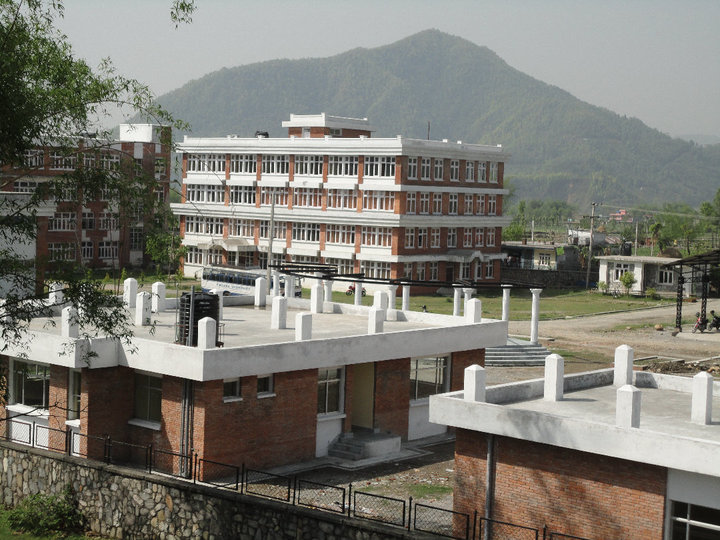
Its undergraduate management education follows the semester system, while the MBA is organized under a trimester system. The academic structure places management theory alongside practical application through projects, presentations, research work, practicums, internships, case-based learning, and field-related activities.
The school's management education covers areas such as finance, accounting, human resource management, marketing, international business, organizational management, research, entrepreneurship, project management, and analytical study.
Graduate and undergraduate curricula have also been revised with attention to internships, practicums, research work, and practical learning. These elements appear directly within the academic requirements rather than functioning only as optional activities outside regular study.
Pokhara University School of Business received Quality Assurance Accreditation from the University Grants Commission, Nepal, in 2022.
The school was also awarded Best College of the Year 2024 (2081 BS) by the Government of Nepal, Ministry of Education, Science and Technology.
Having been established in 1999, the school completed approximately 25 years of academic operation during its silver-jubilee period.
Pokhara University School of Business has four listed program options at undergraduate and graduate levels.
| Program | Level | Seats |
|---|---|---|
| Master of Business Administration (MBA) | Graduate | 30 |
| MBA Job Holders | Graduate | 30 |
| Bachelor of Business Administration (BBA) - Finance | Undergraduate | 96 |
| Bachelor of Business Administration (BBA) | Undergraduate | 96 |
The Master of Business Administration is a two-year graduate program organized across six trimesters. Under the 2024 curriculum, the MBA consists of 60 credit hours.
The academic structure includes foundation courses, analytical tool courses, core and functional-area courses, integrative courses, concentration and elective courses, practicum modules, internship, and consultancy project work.
Students may follow either an industry-practice track or a research track within the program structure. This allows the MBA to include either applied professional work or research-oriented study as part of the degree requirements.
Teaching and learning methods include:
Classroom discussions
Presentations
Group work
Case analysis
Guest lecture sessions
Simulations
Project work
Internship
Consultancy-related work
The MBA curriculum focuses on broad management fundamentals and their application in organizational settings. Areas of emphasis include analysis, decision-making, implementation, leadership, communication, and managerial capability.
The MBA is intended for graduates from different academic disciplines who meet the prescribed academic and admission requirements.
MBA Job Holders is listed as a separate graduate-level option at Pokhara University School of Business with 30 seats.
It forms part of the school's graduate management offerings alongside the regular MBA program.
The Bachelor of Business Administration is a four-year undergraduate program organized into eight semesters. Students complete 120 credit hours through coursework, practicums, concentration subjects, electives, projects, community engagement work, and internship.
The early semesters build a foundation in business and supporting disciplines. Subjects include English, Basic Mathematics, IT for Business, Behavioral Science, Principles of Management, Business Communication, Business Mathematics, Microeconomics, Organizational Behavior, and Financial Accounting.
Later semesters introduce subjects such as:
Business Statistics
Macroeconomics
Cost and Management Accounting
Essentials of Finance
Principles of Marketing
Data Analysis and Modeling
Business Research Methods
Human Resource Management
Financial Management
Entrepreneurship and Innovation
Operations Management
Management Information System
Project Management
International Business
Strategic Management
Business Law
Business Environment
The curriculum also includes practical skill components. These include Software Skills Practicum, Soft Skills Practicum, Digital Marketing Practicum, Fintech Practicum, and Academic Writing.
Project-based requirements include Project Work, Business Development Project, and Community Engagement Project. The final semester includes a six-credit internship.
The BBA structure therefore combines foundation and management subjects with practical assignments, projects, concentration study, electives, and workplace exposure.
The BBA (Finance) is a four-year undergraduate program structured across eight semesters and requiring 120 credit hours.
The program was previously named Bachelor of Business Administration in Banking and Insurance, or BBA-BI.
Its curriculum combines general business management with specialized financial study. Academic areas include corporate financial management, banking, insurance, investment, and capital markets.
The BBA (Finance) curriculum is organized into several components:
Foundation courses
Management core courses
Concentration courses
Elective courses
Project work
Internship
Practicum courses
Foundation courses support study in areas such as communication, economics, mathematics, statistics, behavioral science, information technology, and the legal environment of business.
Management core courses address the principles and functional areas of management. Concentration courses allow focused study, while elective courses include non-business subjects from areas such as the social sciences.
The program also includes field-based project work and internship. Students undertake an internship in a business organization for six to eight weeks.
Practicum courses cover areas such as academic writing, technological skills, software training, and soft-skill development.
English is the medium of instruction and examination for the BBA (Finance) program.
The School of Business uses different forms of classroom and applied learning across its programs. Students may encounter lectures alongside discussion-based and activity-based methods.
Academic activities include:
Interactive lectures
Case studies and case analysis
Group discussions
Individual and group presentations
Project assignments
Field visits
Seminars
Guest lectures
Simulations
Practicum courses
Research work
Internship
Consultancy and business-development projects
Practical components are distributed across different stages of undergraduate and graduate study. Students work with areas such as software skills, digital marketing, fintech, research methods, academic writing, project development, data analysis, and organizational work.
Internships form part of the academic curriculum. Project work also carries academic credit within undergraduate study, while the MBA includes internship and consultancy-related requirements within its program structure.
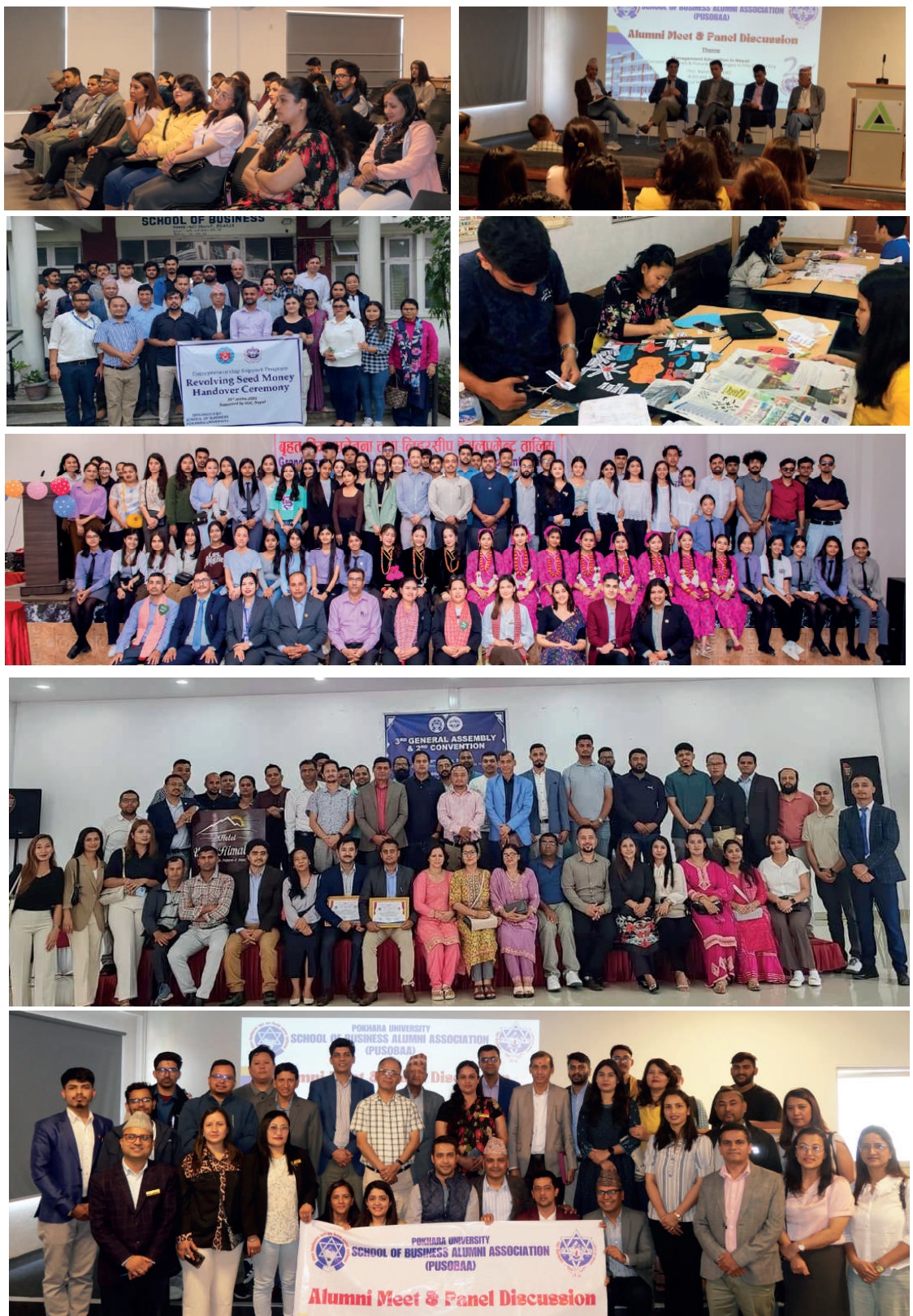
The school has full-time faculty members with academic and professional exposure at national and international levels. Most faculty members hold PhD qualifications.
Students may also interact with guest lecturers and speakers, including university scholars, corporate-sector professionals, and experienced entrepreneurs.
Research and analytical work are also integrated into the curriculum through research methods, project work, empirical study, academic writing, consultancy activities, and the research-track option available within the MBA structure.
Entrepreneurship appears within both the academic curriculum and student activities.
At undergraduate level, Entrepreneurship and Innovation forms part of the BBA course structure. Business Development Project and other project-based components also require students to apply business concepts through structured academic work.
Three students from the school received refundable startup seed-fund support ranging from NRs 1.5 million to NRs 4.0 million for innovative business plans under the University Grants Commission's entrepreneurship support program.
This activity connects business-plan development with the school's broader use of project work, presentations, research, and applied management study.
Pokhara University School of Business provides library and learning resources for coursework, projects, research, and academic assignments.
Available resources include:
Textbooks
Reference books
Dissertations
Electronic resources
Internet facilities
Audio-visual learning materials
These resources support subjects and activities that require research, information technology, software use, presentations, project development, and academic writing.
Counseling facilities are available to students during office hours.
Students can also participate in clubs and extracurricular activities. Activities associated with the school include games, music, drama, social activities, educational excursions, and other forms of student participation.
Space is also available for sports and entertainment.
These activities operate alongside formal academic requirements such as group work, presentations, field assignments, projects, and seminars.
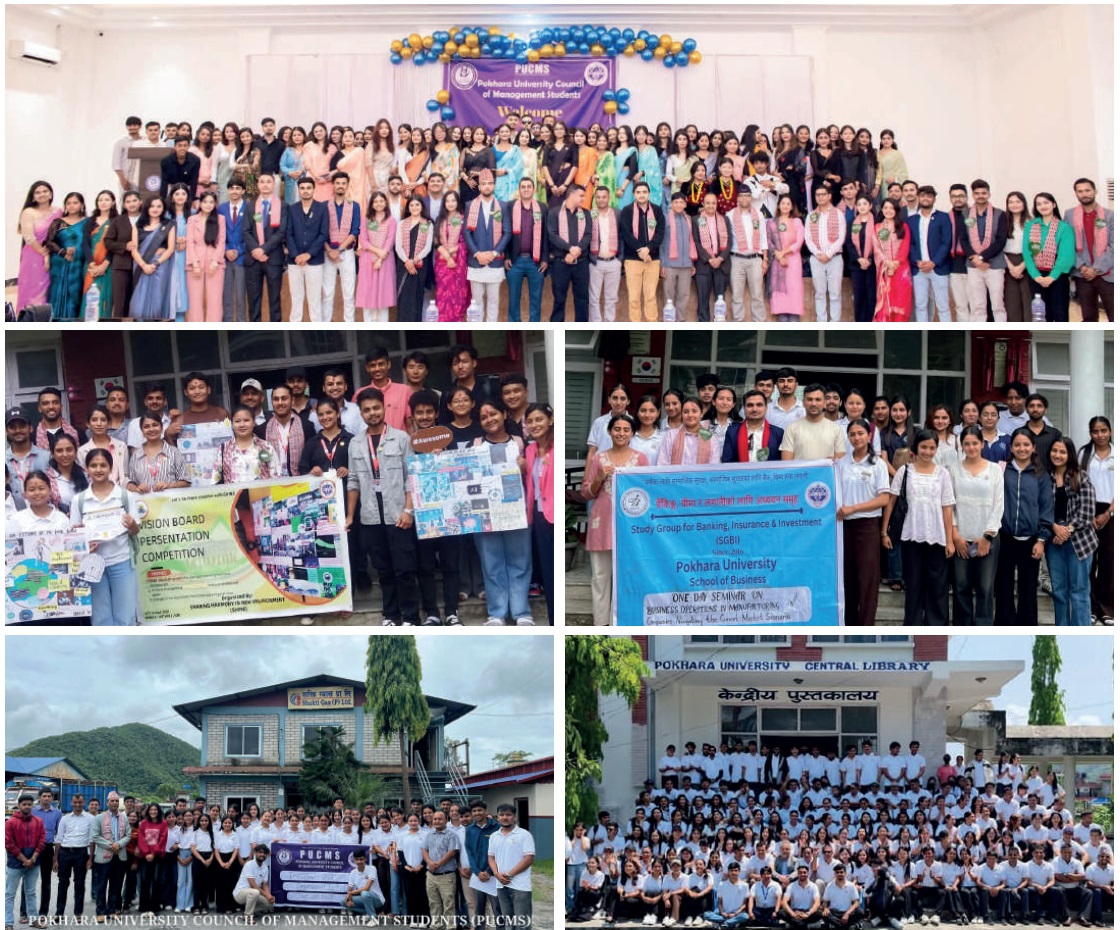
Scholarships are available to 20 percent of deserving students at the School of Business.
The scholarship arrangement forms part of the school's student-support provisions.
Admission requirements vary between undergraduate and graduate programs.
For undergraduate management programs such as BBA and BBA (Finance), applicants must have completed Intermediate or Higher Secondary Level (10+2), Grade 12, Proficiency Certificate Level, or an equivalent qualification recognized by Pokhara University. Applicants must also complete the required entrance process.
For MBA admission, applicants must have a minimum of 15 years of formal education, consisting of 12 years of schooling followed by at least three years of bachelor's-level study.
MBA applicants must have obtained at least:
CGPA 2.0 at bachelor's level, or
45 percent at bachelor's level
Final admission is based on performance in the admission test and interview.
MBA application requirements include a completed application form and official academic transcripts. Degree certificates are submitted with proper attestation as part of the enrollment process.
The MBA is organized across six trimesters with a minimum completion period of 24 months.
Undergraduate programs operate through the semester system, while the MBA follows the trimester system.
Continuous evaluation forms an important part of both academic structures. Students are assessed through activities connected with their courses and academic requirements rather than through final examination alone.
Undergraduate study combines regular courses with practicums, projects, concentration subjects, electives, community engagement, and internship.
MBA study combines foundation, analytical, functional, integrative, concentration, elective, practicum, project, internship, and research- or industry-practice components.
Pokhara University School of Business is located at Dhungepatan within Pokhara Metropolitan City.
The school operates within the academic structure of Pokhara University and maintains undergraduate and graduate management programs along with its learning resources, student activities, counseling arrangements, project work, and practical academic components.
The academic environment at the School of Business combines management coursework with practical and research-oriented requirements.
Undergraduate students progress from foundation subjects to functional management areas, research, projects, practicums, concentration courses, electives, and internship.
MBA students move through foundation and analytical study before completing functional, integrative, concentration, elective, project, internship, and practice- or research-oriented requirements.
The program structure provides separate undergraduate options in general business administration and finance-focused business study. At graduate level, the school offers the regular MBA and MBA Job Holders.
Pokhara University School of Business has operated since 1999 as a constituent school of Pokhara University under the Faculty of Management Studies.
Its current programs are MBA, MBA Job Holders, BBA (Finance), and BBA, with seat capacities of 30, 30, 96, and 96 respectively.
The school's academic structure combines management education with case work, research, projects, presentations, practicums, internships, and professional interaction. Undergraduate programs follow the semester system, while the MBA follows a six-trimester structure.
The school also provides library resources, electronic learning materials, counseling, extracurricular activities, student clubs, sports space, guest lectures, and scholarship opportunities.
Its institutional record includes Quality Assurance Accreditation from the University Grants Commission, Nepal, in 2022 and the Best College of the Year 2024 (2081 BS) award from the Government of Nepal, Ministry of Education, Science and Technology.
Pokhara University School of Business is a constituent business school of Pokhara University under the Faculty of Management Studies. It offers undergraduate and graduate programs in business, management, and finance.
Pokhara University School of Business was established in 1999.
The school is located at Dhungepatan in Pokhara Metropolitan City, Nepal.
Yes. Pokhara University School of Business received Quality Assurance Accreditation (QAA) from the University Grants Commission (UGC), Nepal, in 2022.
The school offers:
Master of Business Administration (MBA)
MBA Job Holders
Bachelor of Business Administration (BBA) - Finance
Bachelor of Business Administration (BBA)
The regular MBA and MBA Job Holders programs each have 30 seats. BBA (Finance) and BBA each have 96 seats.
The MBA program is designed for two years and is organized across six trimesters.
Both BBA and BBA (Finance) are four-year undergraduate programs structured across eight semesters.
Applicants must have at least 15 years of formal education, including 12 years of schooling and a minimum three-year bachelor's degree. They must have secured at least a CGPA of 2.0 or 45 percent at the bachelor's level. Final admission is based on the admission test and interview.
Applicants must have completed Intermediate, Higher Secondary Level (10+2), Grade 12, Proficiency Certificate Level, or an equivalent qualification recognized by Pokhara University. Applicants must also complete the required entrance process.
Yes. Depending on the program, students take part in case studies, presentations, group work, projects, practicums, research activities, field visits, internships, seminars, simulations, and consultancy or business-development work.
Yes. Scholarships are available to 20 percent of deserving students at the School of Business.
Academic resources include textbooks, reference books, dissertations, electronic resources, internet facilities, and audio-visual learning materials. Counseling, student clubs, extracurricular activities, and space for sports and entertainment are also available.
Undergraduate programs follow the semester system, while the MBA follows the trimester system. Continuous evaluation forms part of the academic structure.
Yes. In addition to receiving QAA accreditation in 2022, the school was awarded Best College of the Year 2024 (2081 BS) by the Government of Nepal, Ministry of Education, Science and Technology.