Public Campus, Gramthan, Morang is a community-based, non-profit higher education institution located in Dhanibanigaun, Ward No. 6 of Gramthan Rural Municipality, Morang. Established in 2059 BS, the campus provides bachelor-level education through the Faculties of Education and Management under Purbanchal University.
The campus was established through a local educational movement intended to make higher education available within Gramthan and its surrounding communities. It currently runs four-year B.Ed. and B.B.S. programs. Its physical resources include classrooms, administrative spaces, library rooms, a computer laboratory, internet access, and teaching equipment. The campus also serves students from nearby municipalities and rural municipalities, as well as learners from other parts of eastern Nepal.
| Particular | Details |
|---|---|
| Institution Type | Community-based, non-profit campus |
| Establishment | 2059 BS (2002 AD) |
| Location | Dhanibanigaun, Ward No. 6, Gramthan Rural Municipality, Morang |
| Affiliation | Purbanchal University |
| Academic Faculties | Education and Management |
| Programs | Four-Year B.Ed. and Four-Year B.B.S. |
| Main Service Area | Gramthan and surrounding areas of Morang |
| Physical Resources | Four buildings, classrooms, library rooms, administrative rooms, storerooms, and computer laboratory |
Public Campus was established after education advocates and community members identified the need for bachelor-level education in Gramthan Rural Municipality. The campus received approval from Purbanchal University on Shrawan 30, 2059 BS and began its academic operation with a three-year B.Ed. program.
The B.Ed. program was later restructured as a four-year degree. A three-year B.B.S. program was introduced from Falgun 30, 2065 BS and was also subsequently changed to a four-year program.
The establishment of the campus allowed students from Gramthan and nearby communities to continue higher education while remaining closer to their homes. Its development was shaped by the work of founder Mr. Ravidananda Chaudhary and the involvement of education advocates, social workers, intellectuals, political representatives, and other local supporters.
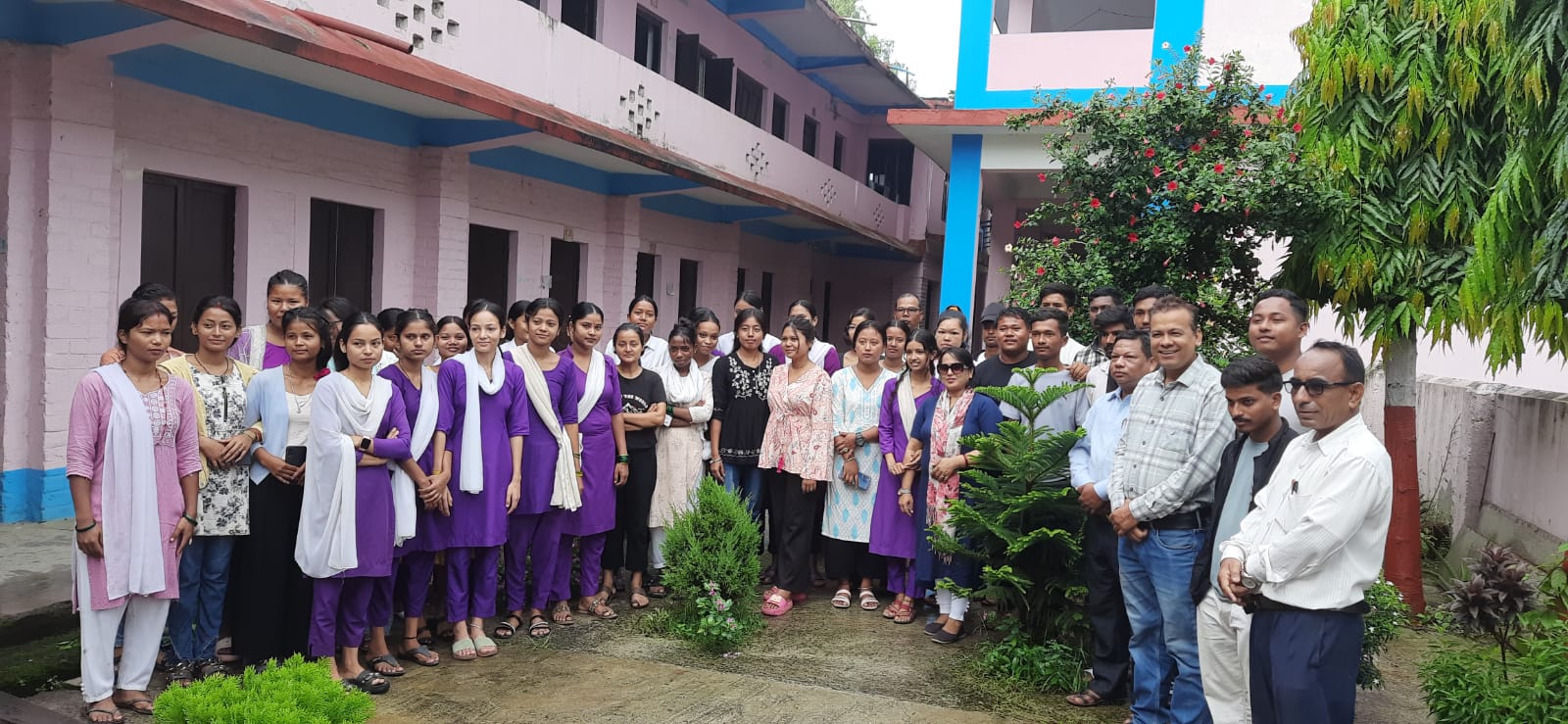
The campus operates from its own premises in Dhanibanigaun, Ward No. 6 of Gramthan Rural Municipality, Morang District.
Its main service area includes:
Gramthan Rural Municipality
Belbari
Sundarharaicha
Letang
Budhiganga Rural Municipality
Katahari Rural Municipality
Other surrounding communities
The campus also receives students from different parts of eastern Nepal and Madhesh. Learners from hill and Himalayan districts have attended the campus for bachelor-level study.
Its rural setting and community-based structure are important parts of its institutional identity. The surrounding area has a substantial Indigenous Tharu population, and female students outnumber male students at the campus.
Public Campus is affiliated with Purbanchal University. Its academic programs operate through two faculties:
Faculty of Education
Faculty of Management
The affiliation connects the campus’s academic programs, curricula, examinations, and degree structure with the university.
Public Campus currently conducts two bachelor-level programs.
| Program | Faculty | Affiliation Year |
|---|---|---|
| Four-Year B.Ed. | Education | 2059 BS |
| Four-Year B.B.S. | Management | 2065 BS |
The Bachelor of Education (B.Ed.) is conducted under the Faculty of Education. It was the first bachelor-level program introduced at the campus.
The program initially followed a three-year structure and now operates as a four-year degree. Teaching within the program combines classroom study with practical activities, discussion, project work, and direct observation according to curricular requirements.
The Bachelor of Business Studies (BBS) is conducted under the Faculty of Management. It was introduced from Falgun 30, 2065 BS.
The program began with a three-year structure and now follows a four-year format. The university’s B.B.S. curriculum covers business and management areas such as accounting, economics, finance, marketing, management, business communication, organizational behaviour, business law, entrepreneurship, and strategic management.
Teaching at Public Campus is organized according to the nature and requirements of each subject. Faculty members use a combination of classroom study, discussion, practical work, project assignments, and direct observation.
The campus seeks to connect theoretical study with practical learning where the curriculum requires it. Available educational materials and technology are used during teaching activities, while students’ interests and subject needs are considered when selecting classroom methods.
The teaching approach includes:
Classroom lectures and guided study
Group and classroom discussions
Practical assignments
Project work
Direct observation
Use of computers and projectors
Curriculum-based learning activities
The campus has also identified academic record management and student performance analysis as areas requiring continued attention. Maintaining clear academic data can support decisions related to teaching, learning, and student progress.
The campus owns four buildings. These facilities were developed with support that included grants from the Koshi Province Government and the University Grants Commission (UGC).
The available spaces include:
18 classrooms
Three administrative rooms
Two library rooms
Two storerooms
One computer laboratory
These spaces support regular classes, administrative work, library use, storage, and computer-based learning.
Public Campus uses a range of equipment for classroom teaching, academic administration, and student learning. Available resources include:
Computers
Internet service
Printers
Photocopy machines
Projectors
Laptops
Scanners
Charts and booklets
The equipment is used according to subject requirements and resource availability. Computers, projectors, and internet services support the use of digital materials alongside regular classroom instruction.
The campus maintains library rooms with textbooks, reference materials, curricula, newspapers, and other reading resources. Its collection includes around 3,500 textbooks.
The library supports classroom study and independent reading. Newspapers and supplementary materials also give students access to information beyond their prescribed textbooks.
Further library development is among the campus’s academic priorities. Planned work includes installing software for an e-library and arranging suitable rooms, furniture, computers, and related equipment.
Public Campus operates through the participation of academic, administrative, and community stakeholders. Groups connected with its development and operation include:
Students
Professors
Employees
Campus Management Committee
Council members
Parents and guardians
Community representatives
Political parties
Educational institutions
Local bodies
Supporting agencies
Donors
Industrialists and businesspeople
Social workers
Media organizations
The Campus Management Committee and other institutional bodies are involved in administration, planning, resource management, and academic development.
The campus has also conducted educational interaction programs with organizations and community stakeholders. Suggestions received through these discussions are considered during institutional planning and decision-making.
Public Campus was created to address the need for higher education within Gramthan and nearby communities. Before its establishment, students seeking bachelor-level education had fewer opportunities to continue their studies within the local area.
The campus now serves learners from several municipalities and rural municipalities in Morang. Its service area also extends to students arriving from other districts.
As a community institution, the campus depends on participation from parents, guardians, local bodies, educators, donors, and community representatives. Their involvement has contributed to the development of its academic and physical resources.
The campus has identified several areas for further academic and institutional development. These priorities include:
Recording and analysing students’ academic data
Adding necessary textbooks and reference books
Developing the library into an e-library
Arranging additional furniture and computers
Strengthening teaching and learning resources
Increasing student enrolment while maintaining academic standards
Continuing interaction with educational and community organizations
These priorities reflect the campus’s effort to address changes in student demand, surrounding educational options, and growing interest in technical education.
Public Campus represents a community effort to establish bachelor-level education within Gramthan Rural Municipality. Its academic role is centred on education and management studies, while its service area extends across several nearby local levels.
The campus’s history is closely connected with local participation. Community members, educators, social workers, public representatives, parents, and supporting organizations have contributed to its continuation.
Through the B.Ed. and B.B.S. programs, the campus provides local students with an option to study education or management at the undergraduate level within Morang.
Public Campus is located in Dhaunibagaun, Ward No. 6 of Gramthan Rural Municipality, Morang District.
The campus was established in 2059 BS after receiving approval from Purbanchal University on Shrawan 30, 2059 BS.
Public Campus is affiliated with Purbanchal University.
The campus runs the Four-Year Bachelor of Education under the Faculty of Education and the Four-Year Bachelor of Business Studies under the Faculty of Management.
The B.B.S. program was introduced from Falgun 30, 2065 BS. It originally followed a three-year structure and now runs as a four-year program.
The campus has classrooms, administrative rooms, library rooms, storerooms, and a computer laboratory. It also has computers, internet service, printers, photocopy machines, projectors, laptops, and scanners.
Yes. The campus has two library rooms and maintains textbooks, reference materials, curricula, newspapers, and other study resources. Its collection includes around 3,500 textbooks.
The main service area includes Gramthan, Belbari, Sundarharaicha, Letang, Budhiganga Rural Municipality, Katahari Rural Municipality, and nearby communities.