Salyantar Campus (सल्यानटार क्याम्पस, धादिङ) is a community-based higher education campus located in Tripurasundari Rural Municipality–1, Aarughat Road, Salyantar, Dhading District, Nepal. Established in 2064 BS (2008 AD), the campus is affiliated with Tribhuvan University (TU) and runs four-year bachelor’s programs under the annual examination system.
The campus focuses on expanding access to higher education at the local level through affordable fees, inclusive scholarship support, and student-centered services. Academic delivery is supported by internal examinations, continuous evaluation, ICT-supported teaching, and practical exposure through internship arrangements in banks and financial institutions.
College Name: Salyantar Campus (सल्यानटार क्याम्पस, धादिङ)
Established: 2064 BS (2008 AD)
Type: Community-based campus
Location: Tripurasundari Rural Municipality–1, Aarughat Road, Salyantar, Dhading, Nepal
University Affiliation: Tribhuvan University (TU)
Programs Offered (Bachelor’s Level):
Bachelor of Education (B.Ed.), 4 years, full-time, annual exam system
Bachelor of Business Studies (BBS), 4 years, full-time, annual exam system
Key Facilities: Library, computer lab, multimedia support, classrooms, conference hall, counseling, sports, journal, tours, ECA
Scholarships: Merit-based, need-based, inclusive quota-based, UGC scholarships, local government recommendations, endowment fund scholarships
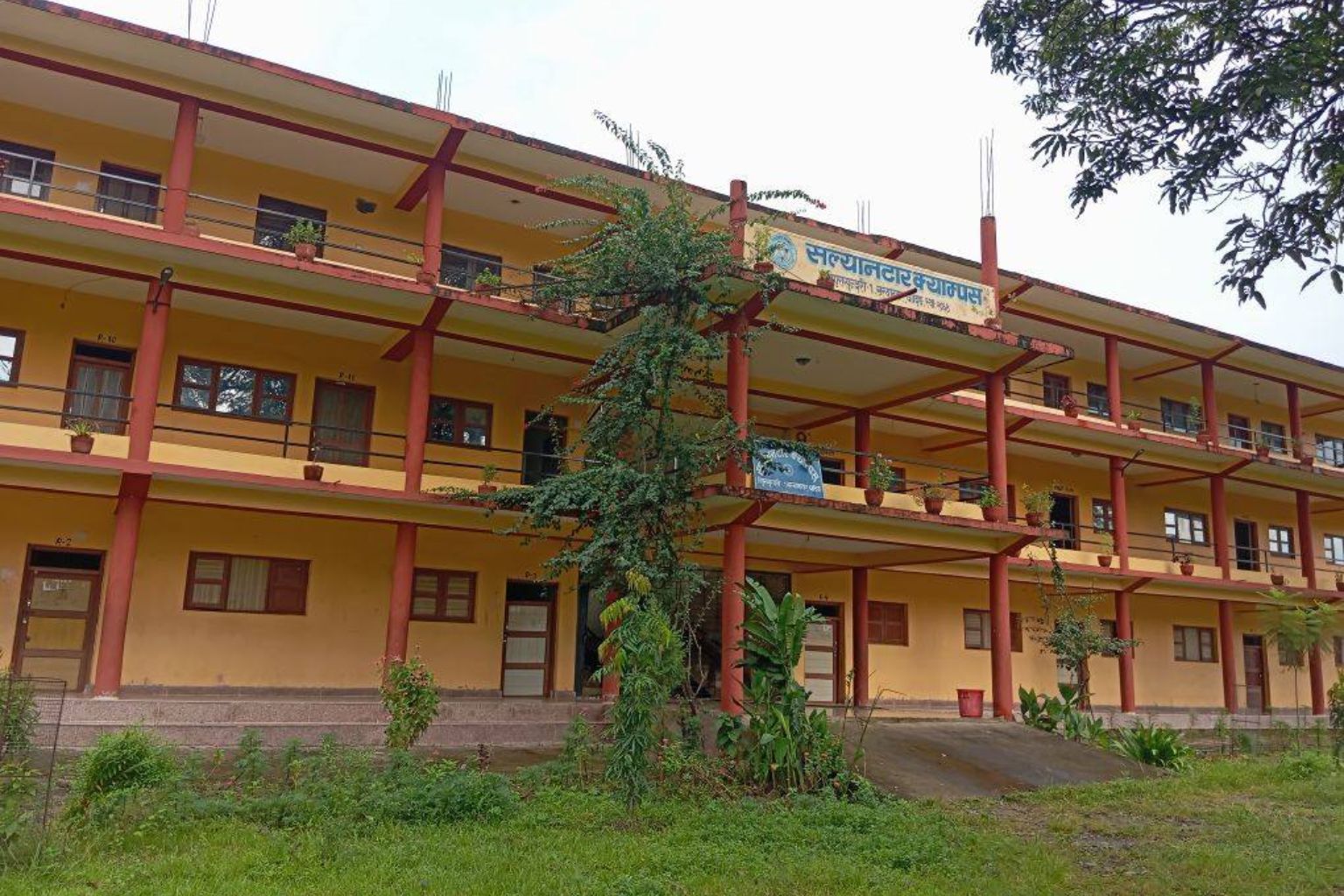
Salyantar Campus was established in 2064 BS (2008 AD) to serve the higher education needs of Dhading, with a focus on making bachelor’s study accessible within the local area. The campus operates as a community-based institution and is run by a Management Committee that includes local education enthusiasts, intellectuals, donors, and stakeholders. Fees collected from students are directed into campus development, supported by regular grants, infrastructure development budgets, and technical assistance from the Government of Nepal and the University Grants Commission (UGC Nepal).
The campus vision centers on academic quality and accessible higher education that supports socio-economic transformation. Its mission emphasizes local access for underprivileged, marginalized, and backward sections of society through skill-based and practical higher education, while preparing competent, ethical, and skilled human resources for national development and the broader employment market.
Salyantar Campus offers Tribhuvan University-affiliated bachelor’s programs delivered in a four-year, full-time format under the annual exam system. Academic administration—admissions, annual examinations, and result publication—follows TU rules, guidelines, and the TU annual calendar.
The Bachelor of Education (B.Ed.) is a four-year, full-time TU program under the annual system. The program supports students preparing for professional roles in education and related fields where pedagogical training and academic grounding are essential. Internal examinations and continuous evaluation strengthen academic tracking during the study period.
The Bachelor of Business Studies (BBS) is a four-year, full-time TU program under the annual system. The program supports academic preparation for business, management, and administrative roles through a structured bachelor’s pathway aligned with TU academic governance, examinations, and result publication.
Admissions and academic processes are conducted under Tribhuvan University rules and guidelines for the annual examination system. The campus runs internal examinations and continuous evaluation to support learning progress and academic discipline. Annual exams and result publication follow the TU annual calendar.
Teaching and learning at Salyantar Campus is led by faculty members with strong academic competence. Classroom delivery is supported by:
Internal examinations and continuous evaluation to monitor academic progress
ICT-supported teaching for improved classroom engagement
Extra classes when needed to support learning outcomes
A learning environment maintained for focused study in a peaceful setting
This approach links regular teaching, assessment, and student support services into the academic routine.
Salyantar Campus maintains facilities that support academic learning and student participation across programs. Key features include:
Library services to support reading, study, and reference needs
Computer lab access for basic computing and academic use
Multimedia support to strengthen classroom delivery
Classrooms structured for regular bachelor’s instruction
Conference hall for academic events and campus activities
Sports and student activities to support participation beyond the classroom
Campus journal as part of the academic environment
The campus also identifies infrastructure development as an ongoing priority, including modern libraries, science and IT laboratories, e-learning facilities, and sports fields.
Student support is integrated into campus life through services and structured opportunities:
Counseling services for student guidance
Scholarship support across multiple categories
Tours and activity-based learning exposure
ECA (Extracurricular Activities) for broader participation
Inclusive access for students from poor, disadvantaged, Dalit, women, and remote communities
The campus objective is clear: deliver higher education locally, reduce the compulsion to relocate for bachelor’s study, and prepare skilled manpower needed at the local level.
Salyantar Campus manages scholarship and financial support through multiple channels to ensure access and continuity of study:
Merit-based Scholarships: Fee waivers or cash awards for students with strong academic performance in entrance examinations or previous level results, including campus toppers
Need-based Scholarships: Monthly fee or admission fee waivers supported through internal campus funds for students facing severe financial hardship
Inclusive Scholarships: Quota-based scholarships targeting Dalits, tribal groups, persons with disabilities, martyr families, and students from backward areas
UGC Scholarships: Special grants and scholarships for poor and meritorious students through community campuses under UGC support
Local Government Scholarships: Recommendations and scholarship arrangements supported through the rural municipality
Endowment Fund Scholarships: Annual scholarships distributed through interest earned from donor-supported endowment funds established in individual or family names
The campus arranges internship opportunities for students in banks and financial institutions. This exposure supports practical understanding of workplace systems and professional expectations, linked to academic learning within the bachelor’s programs.
Salyantar Campus maintains a forward agenda focused on academic quality and institutional development. Core goals include:
Quality Assurance and Accreditation (QAA): Obtaining and maintaining QAA certification through UGC Nepal
Infrastructure development: Continuous improvement of libraries, laboratories, e-learning facilities, and sports fields
Program expansion: Introduction of new and technical subjects aligned with changing demand
Research and innovation: Encouraging students and professors to engage in research-based work and development activities
These priorities align with the campus objective of strengthening higher education access and contributing to good governance, sustainable development, and social harmony through awareness.
Students commonly select Salyantar Campus for clear, practical reasons:
TU affiliation and structured academic administration under the TU annual system
Local access to bachelor’s education in Dhading, reducing the need to relocate
Affordable fees within reach of the general public
Multiple scholarship routes, including merit, need-based, inclusive quotas, UGC scholarships, local government support, and endowment funds
Learning support through counseling, extra classes, ICT-based teaching, and continuous evaluation
Facilities that support academics and campus activities, including library services, computer lab, multimedia, conference hall, sports, journal, tours, and ECA
Internship arrangements in banks and financial institutions for practical exposure
Salyantar Campus is a TU-affiliated, community-based campus in Salyantar, Dhading, established in 2064 BS (2008 AD). It offers four-year bachelor’s programs in B.Ed. and BBS under the annual exam system and maintains a strong focus on accessible, affordable higher education supported by scholarships, student services, and practical exposure. The campus continues to strengthen quality assurance, infrastructure development, program expansion, and research engagement to meet local education needs.
Salyantar Campus is located in Tripurasundari Rural Municipality–1, Aarughat Road, Salyantar, Dhading District, Nepal.
Salyantar Campus is affiliated with Tribhuvan University (TU).
The campus offers Bachelor of Education (B.Ed.) and Bachelor of Business Studies (BBS), both as four-year, full-time programs under the annual examination system.
Both programs follow the annual exam system. Admissions, annual exams, and result publication follow TU rules, guidelines, and the TU annual calendar.
Scholarship support includes merit-based scholarships, need-based scholarships, inclusive quota-based scholarships, UGC scholarships through community campuses, local government-supported scholarships, and endowment fund scholarships. The campus also arranges special concessions based on excellence at the +2 level.
Facilities and services include a library, computer lab, multimedia support, classrooms, conference hall, counseling services, scholarships, sports, campus journal, tours, and ECA.
Yes. Internship arrangements are available in banks and financial institutions.
Email: info@salyantarcampus.edu.np
Phone: +977-984-3173362, +977-9851206843
Website: salyantarcampus.edu.np