Siddheswar Education Public Campus (सिद्धेश्वर शिक्षा पब्लिक क्याम्पस, रामेछाप) is a community campus established in 2006 AD (2063 BS) in Umakunda Rural Municipality, Sotarmu Bamtibhandar, Ramechhap. The campus is affiliated with Tribhuvan University and recognized by the University Grants Commission of Nepal. It runs a Bachelor of Education (B.Ed.) program and serves students from Umakunda and nearby areas that need access to higher education within a remote hill region.
Over the years, the campus has built its academic and physical base through community participation, grants, and institutional support. Its academic setting combines classroom teaching with practical work, discussion, project-based activities, and virtual classes.
The campus also provides scholarship support for deserving students and maintains basic learning resources, library holdings, ICT facilities, and a permanent campus building.
Established: 2006 AD (2063 BS)
Institution Type: Community campus (Shiksha Campus)
Location: Umakunda Rural Municipality-2, Sotarmu Bamtibhandar, Ramechhap
Affiliation: Tribhuvan University (TU)
Recognition: University Grants Commission (UGC), Nepal
Program Offered: Bachelor of Education (B.Ed.)
Study Mode: Four-year full-time bachelor’s program
Faculty Area: Faculty of Education
Scholarship: Scholarship scheme for deserving students
Phone Number: +977-48-620125
Siddheswar Education Public Campus was established as a community-run institution to expand access to higher education in a remote part of Ramechhap District. It grew through the initiative and support of local education advocates, community members, donors, and social workers. The campus is linked with the Faculty of Education under Tribhuvan University and has continued academic operations since its establishment in 2063 BS.
The campus serves students from Umakunda Rural Municipality and also draws learners from nearby local levels of Solukhumbu and Okhaldhunga. Its setting reflects the realities of hill and Himalayan settlements, where geography, transport access, and household income influence participation in higher education. The campus has had an important role in making bachelor-level study available closer to home for students who may not be able to move to larger education centers.
The institution has also been associated with the Nepal Public Campus Association. Its identity has remained rooted in community ownership and non-profit educational service.
The campus offers a Bachelor of Education (B.Ed.) program under Tribhuvan University. The program is run as a four-year full-time bachelor’s course. Entrance, admission, curriculum, annual examinations, and results follow TU rules, guidelines, and the TU annual calendar.
The major subjects taught under the B.Ed. program are:
English
Nepali
Population
Economics
Health Education has also been approved as a minor subject and is part of the teaching-learning process under the updated curriculum framework.
Since the start of academic operations, the campus has produced graduates in significant numbers. It continues to provide bachelor-level study in education for students from surrounding rural areas.
The campus has postgraduate-qualified teachers in subjects such as English, Nepali, Economics, Population, Education, and Health. Teaching methods are selected according to subject needs, lesson content, and student participation.
The teaching-learning process includes:
curriculum-based classroom instruction
discussion and speech-based activities
educational visits
practical demonstration and experiment
project work
homework and report preparation
proposal writing
role play
practice teaching
virtual classes
The campus has also started giving attention to online and offline virtual teaching in response to changing academic needs. Basic computer skills have also been introduced as a non-credit learning area.
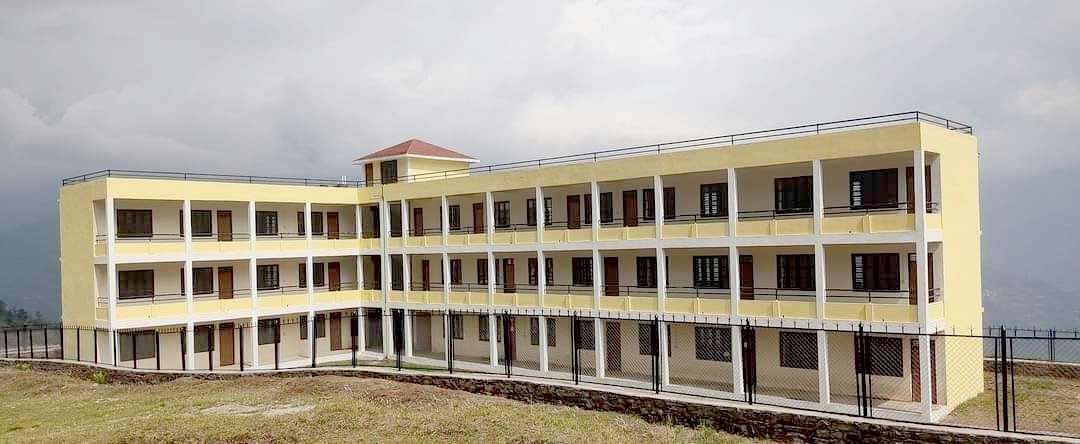
In its early phase, the campus used the classrooms, furniture, and physical base of Siddheshwar Secondary School for academic activities. After the earthquake period, it developed its own permanent campus building and shifted teaching to that structure.
The campus now has a three-storey concrete building with 20 rooms built on 10 ropani of land. The premises include a compound boundary, entrance gate, and playground. The site also has year-round road access up to the campus building.
Basic services and facilities available on campus include:
classrooms
drinking water
toilets
electricity
internet access
furniture for teaching and office use
The campus has also built a set of learning resources to support regular academic work.
Available ICT and equipment include:
1 smartboard
4 desktop computers
2 laptops
10 tablet boards
2 printers
1 photocopy machine
office and computer tables and chairs
internet service
The library and learning resources include:
3000 textbooks
600 reference books
400 other books
120 educational materials
additional furniture and classroom equipment
These facilities support course delivery, reading, preparation, and routine academic administration.
The campus serves a mixed social and geographic catchment area. Students come from different communities, including Chhetri, Bahun, Sherpa, Sunuwar, Tamang, Newar, Bhujel, Kami, and Damai backgrounds. The student body includes women, housewives, marginalized groups, and students from economically and socially disadvantaged households.
This social composition reflects the campus’s role in widening access to higher education for learners who may face financial, geographic, or social barriers. The campus has continued to function as a local academic center for students from remote settlements who need bachelor-level study within reachable distance.
As a community campus, Siddheswar Education Public Campus has grown through local participation and external institutional support. The community has remained active through assemblies, gatherings, campus events, and broader educational engagement.
The campus has also taken part in local educational and technical activities. Its involvement has extended beyond higher education into public awareness and educational discussions related to school education and local academic improvement.
Financial support for the campus has come from multiple sources, including:
student fees
regular grants from the University Grants Commission
conditional grants from the Ministry of Social Development of the Bagmati Province Government
support from Umakunda Rural Municipality
founder contributions
donor-supported scholarship endowment funds
The campus building was constructed with financial support from the Indian Embassy. Financial records are maintained in the prescribed format and are audited annually by a recognized auditor.
The campus statute identifies the institution as a community and non-profit campus. Its institutional direction includes strengthening higher education services in the region, continuing educational improvement in response to social needs, and expanding its academic base over time.
The campus has prepared short-term and long-term plans for its development. Annual work plans and budgets are part of this process. The institution has also expressed its intention to take initiatives for additional faculties and study opportunities beyond the Faculty of Education.
The campus works within a demanding geographic and social setting. Several issues affect regular operation and long-term growth. These include:
difficult transport access
scattered settlements
declining student enrollment in recent years
limited financial resources
shortage of qualified subject teachers
interruptions to regular teaching activities
examination-related travel burdens for students
additional economic pressure on students who need to stay away from home for exam-related purposes
These conditions shape both campus planning and day-to-day academic management.
Contact Siddheswar Education Public Campus's administrative office for detailed information on the course, admissions, location, fees, scholarships, facilities, counseling or eligibility.
Campus Name: Siddheswar Education Public Campus
Location: Umakunda Rural Municipality-2, Sotarmu Bamtibhandar, Ramechhap, Bagmati Province, Nepal
Phone Number: +977-48-620125
Siddheswar Education Public Campus was established in 2006 AD (2063 BS).
The campus is located in Umakunda Rural Municipality, Sotarmu Bamtibhandar, Ramechhap.
The campus is affiliated with Tribhuvan University.
Yes. The campus is recognized by the University Grants Commission of Nepal.
The campus offers the Bachelor of Education (B.Ed.) program.
The B.Ed. program includes English, Nepali, Population, and Economics as major subjects. Health Education is available as a minor subject.
Yes. The campus provides a scholarship scheme for deserving students.