Tridev Multiple Campus, founded in 2064 B.S. (2008 A.D.), is a community-owned academic institution located in Mechinagar-13, Charali, Jhapa. Situated conveniently along the East-West Highway, it serves as a vital educational hub for students from surrounding municipalities and districts. Established with a clear mission to provide accessible and inclusive education, the campus functions under the affiliation of Tribhuvan University. It is recognized by the University Grants Commission (UGC) of Nepal.
In addition to higher education programs, the campus also operates Sahid Dasharath Chand Secondary School under the NEB, which offers +2 level education in Humanities, Management, and Education streams. This collaboration strengthens the academic ecosystem and ensures a smooth transition for students moving from secondary to tertiary education.
Tridev Campus operates under a structured governance system that involves representatives from various sectors, including teachers, alumni, social workers, local political units, administrators, and students, ensuring that decisions reflect the collective needs of these groups. The achievement of QAA Certification in 2078 B.S. (2022 A.D.) stands as a testament to its commitment to quality education, strategic planning, and collaborative leadership.
Location: Charali, Mechinagar-13, Jhapa
Established: 2064 B.S. (2008 A.D.)
Affiliation: Tribhuvan University
Recognized by: University Grants Commission (UGC), Nepal
QAA Certified: Yes (2078 B.S.)
Levels Offered: Bachelor's and Master’s
Major Faculties: Education and Management
Community-Governed: Yes, with multi-stakeholder representation
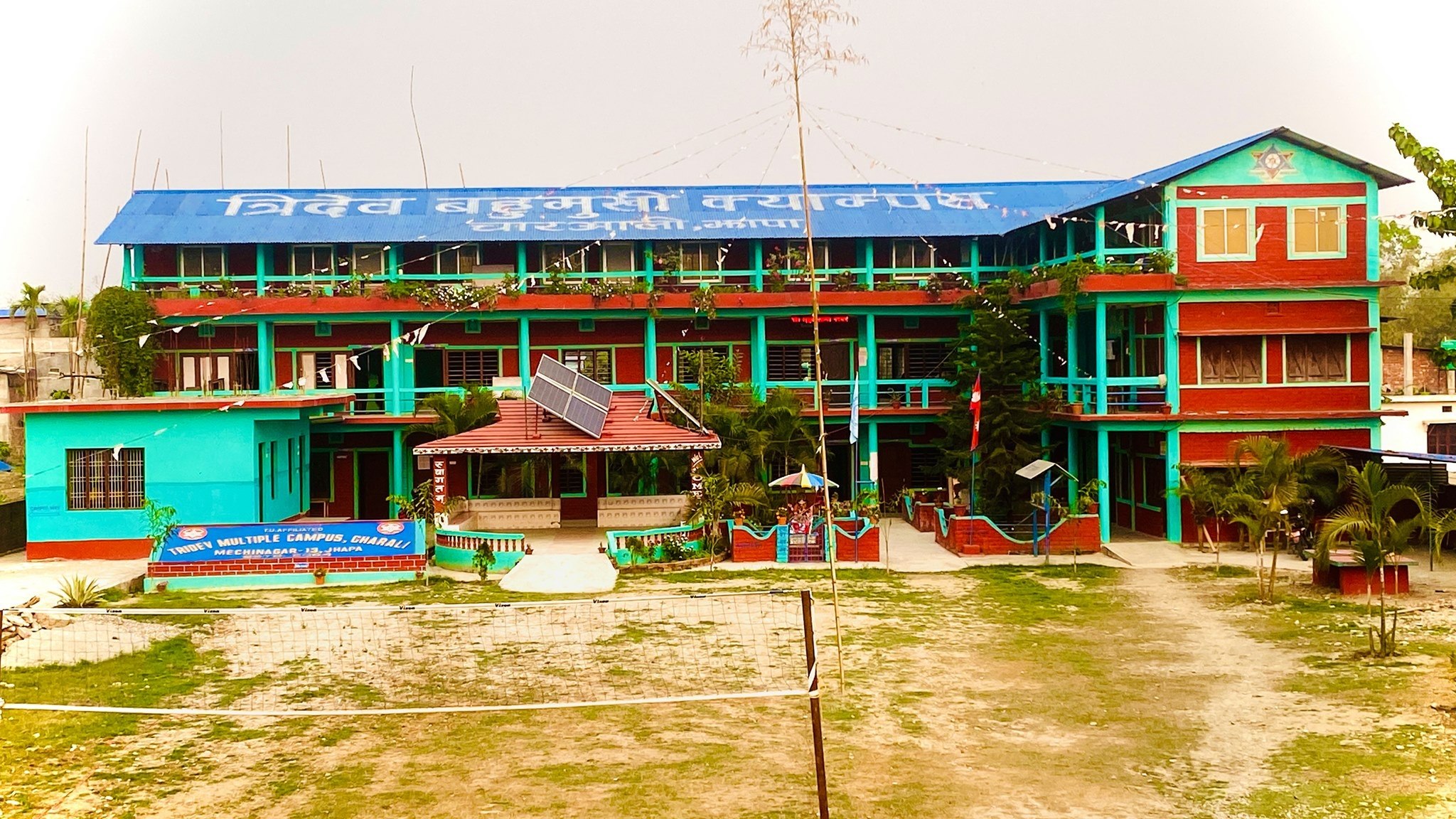
The campus offers a range of programs designed to prepare students for both academic and professional success.
Bachelor of Business Studies (BBS)
Bachelor of Education (B.Ed.) with majors in:
English
Nepali
Economics
Population Studies
Master of Education (M.Ed.) with specializations in:
English
Educational Planning and Management (EPM)
These programs are conducted in line with the academic calendar and curriculum set by Tribhuvan University, ensuring consistency and academic integrity. The NEB-affiliated +2 programs also create a foundational base for students progressing into higher studies.
Each academic session begins with a clear and transparent admission cycle. Prospective students must:
Submit academic certificates and transcripts
Appear for entrance exams (if required by the program)
Attend personal interviews or counseling sessions
Meet all eligibility criteria outlined by TU or NEB
Application details are made available through the official campus website, local newspapers, and physical notices. Admission support is also provided for students from marginalized backgrounds to ensure equal opportunity.
Tridev Campus takes pride in its academic team, comprising experienced teachers with master's and doctoral qualifications. Many faculty members are involved in scholarly research and educational development initiatives.
Teaching methods include:
In-person interactive lectures
Use of multimedia and ICT tools
Assignments, projects, and group discussions
Regular internal assessments and feedback
Individual mentoring and student counseling
Faculty members continually engage in professional development and collaborate on curriculum development, ensuring that instruction remains current and relevant.
The campus is well-equipped to support modern teaching and learning practices. Key facilities include:
Spacious classrooms with whiteboards and digital teaching tools
Central library with reference texts, research journals, and e-library access
Dedicated reading rooms and quiet zones
Computer laboratory with high-speed internet access
Open playground for sports and group activities
Gardens and green spaces promote environmental awareness
Drinking water, restrooms, and sanitation facilities
All infrastructure is aligned with the campus's long-term development master plan.
Campus life at Tridev goes beyond textbooks. Students participate in activities that foster confidence, leadership, and practical experience.
Some highlights include:
Guidance and counseling from the Tracer Study Team
Biannual internal examinations to assess academic growth
Additional support classes for academic reinforcement
Departmental events, inter-program interactions, and student panels
Opportunities for outreach programs and visits to partner institutions
These efforts help students develop both personally and professionally, preparing them for competitive futures.
Recognizing that education encompasses more than academics, the campus actively supports co-curricular and extracurricular activities. Activities are coordinated by specific cells, with involvement from faculty and students.
Regular programs include:
Literary contests (essay, debate, quiz)
Annual cultural celebrations
Inter-college and inter-class sports competitions
Cleanliness campaigns and awareness drives
Local educational excursions and exposure visits
These events foster creativity, collaboration, and social responsibility among students.
Tridev Multiple Campus acknowledges the financial challenges many students face and makes genuine efforts to reduce barriers to education. Funding sources include:
Mechinagar Municipality
Province No. 1 Government
UGC Nepal (regular and development grants)
These resources are used to:
Provide scholarships to academically strong and economically weak students
Cover the cost of infrastructure upgrades
Invest in teacher training and research activities
Annual calls for scholarship applications are announced, and a transparent selection process is followed.
Tridev Multiple Campus has made significant progress since its foundation. Some notable accomplishments are:
QAA Certification from UGC in 2078 B.S.
Graduation of approximately 300 students from bachelor's and master's programs
Successful implementation of an EMIS (Educational Management Information System)
Creation of a dedicated Research Management Cell (RMC) with budget allocation exceeding 5%
Preparation of Annual Academic Quality and Institutional Audit Reports
These milestones highlight a journey of steady improvement and community trust.
To encourage academic inquiry, the campus established a Research Management Cell (RMC), supporting faculty and student research through seminars, journal publications, and workshops. Over 5% of the campus budget is dedicated to research.
Additional initiatives include:
Faculty-led studies on educational planning
Student participation in field surveys and data analysis
Annual publication of academic bulletins and journals
Collaboration with local institutions and government offices for data sharing
Such efforts connect the campus with broader educational discussions and policy dialogues.
The administration emphasizes data-driven decision-making and open communication. Some measures include:
EMIS software for academic and administrative data
Website updates and public information bulletins
Feedback channels for students, faculty, and guardians
Annual calendar outlining academic and co-curricular plans
A dedicated Public Information Cell ensures that timely updates are disseminated to all relevant stakeholders.
As a community-run institution, Tridev’s ethos is deeply rooted in local collaboration. Members of the management committee represent a diverse range of professions, ensuring inclusive decision-making.
The assembly includes:
Local educators and school heads
Political representatives and municipal members
Alumni and intellectuals
Free Student Union leaders
Their collective input ensures policies meet both academic standards and local needs.
Students and families continue to choose Tridev Multiple Campus for reasons grounded in trust, accessibility, and value:
Programs affiliated with a reputed public university
Affordable fee structure
Supportive, student-centered teaching practices
Transparent, community-managed leadership
Continuous academic improvement backed by QAA standards
Its reputation as a reliable center for education in eastern Nepal grows with every graduating batch.
From its founding to present day, Tridev Multiple Campus has stayed true to its purpose—delivering relevant, inclusive, and quality higher education. With the combined strength of its leadership, faculty, community involvement, and student engagement, the campus continues to serve as a dependable academic institution.
Contact Tridev Multiple Campus's administrative office for detailed information on the course, admissions, location, fees, scholarships, facilities, counseling, or eligibility.

.png)