



The Bachelor in Hospitality Management (BHM) at NATHM Bardibas is a four-year undergraduate program conducted in partnership with Kathmandu University (KU). The program covers 132 credit hours across eight semesters and has 30 seats.
Its academic structure moves from core hotel operations into management, accounting, communication, tourism, research, entrepreneurship, service management, specialization, and industrial experience.
The seventh and eighth semesters are devoted to internship components. Eligibility, admission, entrance requirements, curriculum administration, examinations, evaluation, academic completion, and degree award follow Kathmandu University rules and regulations.
| Particular | Details |
|---|---|
| Course | Bachelor in Hospitality Management (BHM) |
| Level | Bachelor's degree |
| Institution | NATHM Bardibas |
| University | Kathmandu University (KU) |
| Duration | 4 years |
| Academic structure | 8 semesters |
| Total credits | 132 credit hours |
| Seats | 30 |
| Location | Bardibas-14, Mahottari |
| Internship | Seventh and eighth semesters |
| Academic regulations | As per Kathmandu University rules and regulations |
The BHM at NATHM Bardibas combines hospitality operations with management-oriented academic study. The program begins with areas such as food production, food and beverage service, room division, hospitality and tourism, leadership, and communication.
Later semesters bring in financial management, software applications, beverage knowledge, sustainability, property safety, accounting, hospitality law, organizational behaviour, research, marketing, entrepreneurship, tourism destination management, service quality, and specialization subjects.
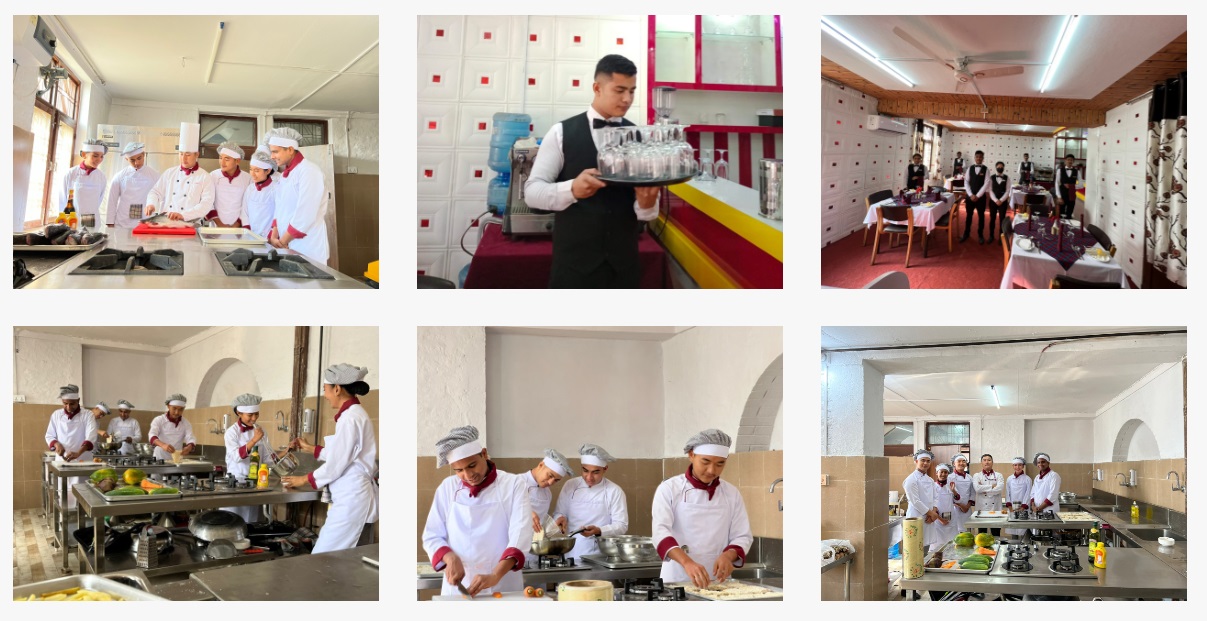
The academic design also includes research work and industrial experience. This gives the program a progression from operational learning in the earlier semesters to broader managerial study and workplace exposure in the later stages.
The course is offered at NATHM Bardibas, while its academic requirements are governed through Kathmandu University.
The BHM is designed around hotel and catering operations at supervisory level. Its stated objectives connect operational knowledge with management, cost awareness, service standards, and entrepreneurship.
Through the program, students are expected to work on areas such as:
management knowledge relevant to hotel and catering operations;
technical and social skills used in hospitality work;
food production, food service, and room division operations;
cost control within business operations;
maintaining service standards;
communication and hospitality-related software use;
research and project work; and
entrepreneurship within small or medium-sized enterprises.
These objectives describe the academic direction of the program rather than guaranteed employment outcomes.
The course may suit students interested in studying hospitality through a mix of practical operations and management subjects.
The curriculum is particularly relevant to students who want academic exposure to:
food production and kitchen operations;
food and beverage service;
room division and accommodation operations;
hospitality and tourism management;
accounting and financial management;
business communication;
hospitality software;
marketing and customer relations;
tourism destination management;
entrepreneurship;
research; and
industrial experience.
Because the curriculum includes both operational and management subjects, students should expect more than practical hotel training alone.
Duration: 4 years
Semesters: 8
Total Credits: 132 credit hours
Seats: 30
The first four semesters carry 18 credits each. The fifth and sixth semesters carry 15 credits each, while the seventh and eighth semesters each carry 15 credits through industrial experience and internship reporting.
This produces the 132-credit structure used for the BHM at NATHM Bardibas.
| Code | Subject | Credit |
|---|---|---|
| BHM 101 | The Contemporary Hospitality and Tourism Industry | 3 |
| BHM 131 | Room Division Operation I | 3 |
| BHM 121 | Food & Beverage Service Operation & Mgmt I | 3 |
| GEM 233 | Fundamental of Hospitality Mgmt & Leadership | 3 |
| BHM 123 | Food Production Operation & Mgmt I | 3 |
| ENG 105 | English for Hospitality | 3 |
Semester Total: 18 credits
The opening semester introduces the hospitality and tourism sector while establishing the three main operational areas of room division, food and beverage service, and food production. Management, leadership, and hospitality-focused English are studied alongside them.
| Code | Subject | Credit |
|---|---|---|
| BHM 122 | Food & Beverage Service Operation & Mgmt II | 3 |
| BHM 202 | Travel and Tourism Service Operation | 3 |
| BHM 124 | Food Production Operation & Mgmt II | 3 |
| BHM 201 | Food Science, Nutrition and Sanitation | 3 |
| BHM 132 | Room Division Operation II | 3 |
| GEM 220 | Success Skill (Professionalism in Hospitality) | 3 |
Semester Total: 18 credits
The second semester continues the principal hotel-operation subjects while adding travel and tourism services, food science, nutrition, sanitation, and professionalism in hospitality.
| Code | Subject | Credit |
|---|---|---|
| BHM 125 | Food Production Operation & Mgmt III | 3 |
| FIN 312 | Financial Management in Hospitality Industry | 3 |
| MAS 122 | Hospitality Business Software Applications | 3 |
| GEM 204 | Business Communication & Writing Skills | 3 |
| BHM 221 | Oenology & Beverage Knowledge | 3 |
| FRN 102 | International Foreign Language | 3 |
Semester Total: 18 credits
International Foreign Language includes Chinese, German, French, or Spanish within the stated curriculum. The semester also shifts into financial management, hospitality software, business communication, and beverage knowledge while continuing food-production study.
| Code | Subject | Credit |
|---|---|---|
| BHM 301 | Sustainable Hospitality Environment | 3 |
| SOS 125 | Ethics and Fair Society | 3 |
| BHM 302 | Property, Safety and Security Management | 3 |
| ACC 314 | Managerial Accounting for Hospitality Industry | 3 |
| Specialization | Any two specialization subjects | 6 |
Semester Total: 18 credits
Students select any two subjects from the stated specialization group:
BHM 320 Food and Beverage Operation and Mgmt Advanced
BHM 330 Room Division Operation and Management
BHM 340 Management of Function & Events
BHM 360 Tourism Product Development
BHM 350 Airlines Operation and Management
BHM 470 Adventure Tourism
This semester combines sustainability, ethics, security, accounting, and focused study through specialization.
| Code | Subject | Credit |
|---|---|---|
| GEM 414 | Hospitality Industry Law | 3 |
| ECO 302 | Behavioural Economic | 3 |
| HRM 213 | Organizational Behavior and Productivity Mgmt | 3 |
| RSH 405 | Research Methodology, Statistics | 3 |
| MKT 325 | Marketing & Sales for Hospitality Businesses | 3 |
Semester Total: 15 credits
The fifth semester moves away from the concentration on hotel operations found in the earlier semesters. Its subjects focus on law, economics, organizational behaviour, research, marketing, and sales within a hospitality context.
The sixth semester carries 15 credits. Its core subjects are:
| Code | Subject | Credit |
|---|---|---|
| RSH 406 | Research Project and Diploma Paper | 3 |
| ENT 414 | Entrepreneurship for Hospitality | 3 |
| BHM 404 | Tourism Destination Management | 3 |
| HRM 223 | Managing Productivity through People | 3 |
| Elective | Any one elective | 3 |
Students select one elective from the stated options:
MKT 405 Customer Relationship Management
GEM 410 Service Quality Management
MKT 432 E-Marketing and Distribution
BHM 455 Hospitality & Tourism Development Seminar
MAS 202 Information Technology in Hospitality
MKT 473 Hospitality Brand Management
MKT 440 Social Media in Hospitality
The semester combines research and entrepreneurship with tourism management, people management, and one area of elective study.
| Code | Subject | Credit |
|---|---|---|
| BHM 206 | Industrial Experience (Internship One) | 14 |
| — | Internship Report I | 1 |
Semester Total: 15 credits
| Code | Subject | Credit |
|---|---|---|
| BHM 207 | Industrial Experience (Internship Two) | 14 |
| — | Internship Report | 1 |
Semester Total: 15 credits
The final academic year is structured around industrial experience. The seventh and eighth semesters together form a year-long internship period within the BHM structure.
Practical study begins from the early semesters rather than being confined to the internship year.
Food production, food and beverage service, and room division appear repeatedly during the first part of the course. These subjects are joined by areas such as food science, sanitation, hospitality software, beverage knowledge, property safety, managerial accounting, and tourism services.
The later semesters change the emphasis toward organizational and managerial study. Students encounter hospitality law, research methodology, marketing, entrepreneurship, destination management, people management, and an elective before moving into industrial experience.
This sequence gives the course three connected academic stages:
operational hospitality study;
management, business, research, and specialization; and
industrial experience.
Research enters the curriculum through Research Methodology, Statistics in the fifth semester and continues with Research Project and Diploma Paper in the sixth semester.
This places formal research study before the internship year. Students therefore encounter research methods and project work as part of the academic program rather than only through operational training.
Industrial experience forms the seventh and eighth semesters.
The seventh semester includes Industrial Experience (Internship One) carrying 14 credits and a one-credit internship report. The eighth semester follows with Industrial Experience (Internship Two), again carrying 14 credits, together with an internship-report component.
The two semesters together account for 30 credits of the overall program structure.
The internship component connects the subjects studied during the first six semesters with an extended period of workplace experience in hospitality or tourism operations.
Eligibility: Eligibility for admission to the Bachelor in Hospitality Management at NATHM Bardibas follows the rules and regulations of Kathmandu University applicable to the program.
This keeps admission eligibility within the university's academic framework rather than treating it as a separate institutional standard.
Admission: Admission procedures are governed by Kathmandu University rules and regulations.
Entrance: Entrance requirements and the admission assessment process follow Kathmandu University regulations applicable to the BHM program.
The program has 30 seats.
Kathmandu University's academic governance gives the Academic Council responsibility for matters that include admission requirements, curriculum, teaching standards, examinations, and evaluation methods.
Examinations and evaluation for the BHM at NATHM Bardibas are conducted within the Kathmandu University academic framework.
KU's Academic Council has responsibility for determining standards of learning and teaching, curricula, types of examinations, evaluation methods, class size, and admission requirements.
Students are therefore subject to the university regulations governing academic assessment, semester examinations, practical work, progression, and completion of the BHM.
The BHM degree is awarded according to Kathmandu University rules and regulations.
Students must complete the academic requirements applicable to the program, including the prescribed coursework and industrial-experience components, before completing the degree requirements.
The university framework governs curriculum, examinations, evaluation, academic completion, and degree award.
The curriculum brings together several areas rather than concentrating on one hotel department.
Students study:
hospitality and tourism;
food production;
food and beverage service;
room division;
travel and tourism service operations;
food science, nutrition, and sanitation;
hospitality management and leadership;
financial and managerial accounting;
hospitality software;
communication;
beverage knowledge;
foreign-language study;
sustainability;
ethics;
property safety and security;
hospitality law;
organizational behaviour;
research;
marketing and sales;
entrepreneurship;
tourism destination management;
people management;
elective study; and
industrial experience.
The specialization and elective stages give students some choice within the overall curriculum.
The academic structure is intended to build a combination of operational, managerial, communication, analytical, and research abilities.
Students work with subjects that support:
food production and service operations;
room division functions;
hospitality communication;
management and leadership;
financial and cost awareness;
software use within hospitality;
customer and service management;
marketing and sales;
research and academic writing;
tourism management;
organizational and people management; and
entrepreneurship.
Development in these areas depends on academic participation, practical work, internship experience, and individual performance.
The BHM was designed to prepare students for supervisory-level work in hotel and catering operations. Its objectives also address technical and social skills, cost control, service standards, management knowledge, and entrepreneurship.
The curriculum supports this orientation through subjects connected with food production, food and beverage service, room division, events, tourism products, airlines operations, adventure tourism, marketing, customer relations, and service quality.
Employment outcomes depend on a graduate's skills, performance, experience, available positions, and labour-market conditions. The course itself does not guarantee a particular job or placement.
NATHM Bardibas is located at Bardibas-14, Mahottari. The Bardibas branch conducts the BHM through its academic partnership with Kathmandu University.
Kathmandu University records Nepal Academy of Tourism and Hotel Management (NATHM), Bardibas with BHM under its institutional academic network.
For students comparing the course with the institution itself, the college page provides the broader institutional context, while the BHM curriculum defines the specific academic workload and progression.
The BHM requires four years of study and includes operational subjects, management courses, research work, specialization or elective choices, and a full internship year.
Students considering the program should be prepared for:
practical hospitality subjects in the early semesters;
business and management coursework;
accounting and research components;
communication and foreign-language study;
specialization and elective selection;
project work; and
industrial experience during the final year.
Admission, eligibility, entrance, examinations, evaluation, and degree completion remain subject to Kathmandu University rules applicable to the program.
BHM stands for Bachelor in Hospitality Management.
The program is conducted in partnership with Kathmandu University, and its academic requirements follow KU rules and regulations.
The program runs for four years across eight semesters.
The BHM consists of 132 credit hours.
The program has 30 seats.
Yes. The curriculum includes operational areas such as food production, food and beverage service, room division, hospitality software, and other practical hospitality subjects.
Yes. Industrial experience forms the seventh and eighth semesters of the program.
The stated specialization options include Food and Beverage Operation and Management Advanced, Room Division Operation and Management, Management of Function & Events, Tourism Product Development, Airlines Operation and Management, and Adventure Tourism.
Students choose one elective from Customer Relationship Management, Service Quality Management, E-Marketing and Distribution, Hospitality & Tourism Development Seminar, Information Technology in Hospitality, Hospitality Brand Management, or Social Media in Hospitality.
Eligibility, entrance, and admission requirements follow Kathmandu University rules and regulations applicable to the program.
Examinations, evaluation, academic completion, and degree award are governed according to Kathmandu University rules and regulations.






