The Bachelor of Information Technology (BIT) at New Everest College, Biratnagar, is a four-year undergraduate program affiliated with Kathmandu University. The program is organized across eight semesters with a total academic load of 127 credit hours.
Its curriculum combines computing, mathematics, communication, management, project work, electives, and an internship. Students move from programming and information systems fundamentals into databases, networking, software development, artificial intelligence, cloud computing, big data, deep learning, and other areas of information technology.
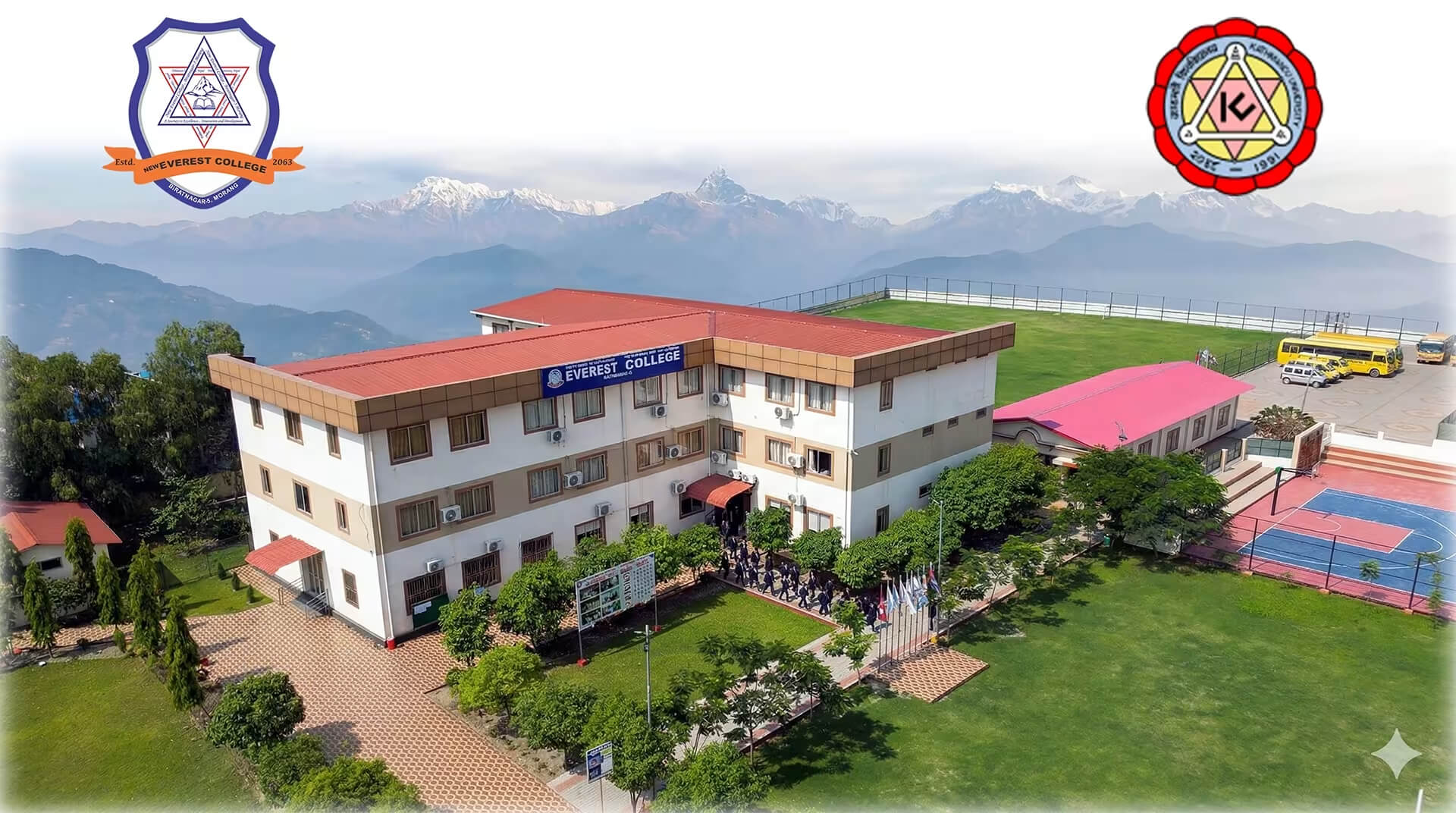
New Everest College is located in Biratnagar-5, Morang, Koshi Province, Nepal. Further institutional information is available on the New Everest College Biratnagar page.
| Course Detail | Information |
|---|---|
| Program | Bachelor of Information Technology (BIT) |
| College | New Everest College |
| Location | Biratnagar-5, Morang, Koshi Province |
| Affiliation | Kathmandu University |
| Level | Bachelor's |
| Duration | 4 Years |
| Semester Structure | 8 Semesters |
| Academic Load | 127 Credit Hours |
| Practical Components | Semester projects and internship |
The academic structure gives students repeated exposure to project work rather than concentrating practical activity in a single semester. Project components appear throughout the program, followed by an internship in the eighth semester.
The BIT curriculum begins with core areas needed for further study in computing and information systems. First-year subjects include programming, digital logic, mathematics, communication, system analysis, management principles, microprocessor concepts, and object-oriented programming.
Later semesters move into more specialized areas such as operating systems, database management, software engineering, mobile applications, data communication, networking, artificial intelligence, web applications, cloud computing, deep learning, and management information systems.
The course also includes management-related subjects. This gives the curriculum a combination of technical study and organizational concepts rather than limiting the program entirely to programming or software development.
| Semester | Subjects |
|---|---|
| Semester I | Introduction to Information System Technology; Calculus & Linear Algebra; Advanced Communication Skills; Digital Logic; Computer Programming; Semester Project I |
| Semester II | System Analysis and Design; Mathematics II; Management Principles; Microprocessor and Assembly Language Programming; Object Oriented Programming; Project II |
| Semester III | IT Ethics & Info Security; Discrete Mathematics; Operating Systems; Data Structures & Algorithms; Database Management; Semester Project III |
| Semester IV | Probability and Statistics; Computer Architecture and Design; Software Engineering; Mobile Application Development; Big Data; Project IV |
| Semester V | Computer Graphics and Multimedia; Marketing Management; Data Communication and Networking; Web Application Development; Artificial Intelligence; Project V |
| Semester VI | Financial Management and Accounting; Cloud Computing; E-Commerce; Deep Learning; Project VI; Elective I |
| Semester VII | Management Information System; Organizational Behavior; Research Seminar; Project VII; Elective II |
| Semester VIII | Digital Economy; Internship; Elective III |
The sequence shows a gradual shift from foundation subjects toward applied computing, data-related study, management applications, research, electives, and workplace exposure.
Project work is built into seven semesters of the BIT curriculum. Students complete Semester Project I through Project VII before moving to the internship component in the final semester.
This structure allows technical concepts studied in individual subjects to be applied through recurring academic projects. Depending on the semester, those projects sit alongside areas such as programming, databases, software engineering, mobile development, networking, web applications, cloud computing, and research.
The eighth-semester internship forms the final practical component listed within the curriculum.
The program includes three elective stages: Elective I, Elective II, and Elective III.
Listed elective options include:
Data Science
Data Mining
Embedded Systems
Information Technology Governance, Risk and Compliance
Wireless Networking
Advanced Cyber Security
Quantum Machine Learning
Natural Language Processing
These electives extend the core curriculum into specialized technical areas and allow students to study topics beyond the compulsory semester subjects.
Eligibility: Nepalese and international applicants are eligible to apply for the BIT program.
Applicants are required to have:
Completed +2 Science or an equivalent qualification
Obtained a minimum GPA of 2.0 or 50% aggregate marks
Studied the required subjects listed for the program, including Physics, Chemistry or Computer Science, and Mathematics
Students should assess these academic requirements against their completed +2 or equivalent qualification before applying.
Programming begins in the first semester through Computer Programming and continues through Object Oriented Programming in the second semester. Data Structures & Algorithms follows in Semester III, while later semesters introduce areas such as mobile and web application development.
This progression connects introductory programming with software-oriented subjects rather than treating programming as an isolated component.
Software Engineering appears in Semester IV, followed by Web Application Development in Semester V. Students also encounter Computer Graphics and Multimedia, operating systems, database management, and system analysis during the program.
Several subjects focus on data and emerging computing areas.
Big Data is included in Semester IV, followed by Artificial Intelligence in Semester V. Cloud Computing and Deep Learning are taught in Semester VI.
Elective options add further study in Data Science, Data Mining, Quantum Machine Learning, and Natural Language Processing.
Together, these subjects create a clear data and computational intelligence component within the BIT curriculum while remaining part of a broader information technology degree.
Networking and security also form part of the academic structure.
IT Ethics & Info Security appears in Semester III, while Data Communication and Networking is included in Semester V. Elective options extend this area through Wireless Networking and Advanced Cyber Security.
The college also includes extra classes related to AI and Cyber Security as part of its technology-focused learning environment.
The curriculum contains several subjects outside core computer science and IT.
Management Principles is taught in Semester II, Marketing Management in Semester V, and Financial Management and Accounting in Semester VI. Semester VII includes Organizational Behavior and Management Information System, while Digital Economy appears in Semester VIII.
These subjects introduce students to organizational and business contexts in which information systems and digital technologies are used.
Research Seminar is included in Semester VII. It appears alongside Management Information System, Organizational Behavior, Project VII, and an elective subject.
The final semester contains the internship, Digital Economy, and Elective III. This arrangement places the internship after students have completed the main sequence of technical, mathematical, management, research, and project-based study.
New Everest College combines regular academic instruction with practical learning activities, semester projects, and extracurricular and co-curricular participation.
Within its technology-focused study environment, areas highlighted by the college include:
Programming
Cybersecurity
Data science
Networking
AI-related learning
Practical project work
Semester-based technical study
The college also identifies air-conditioned classrooms and regular extracurricular opportunities among its learning-environment features.
The BIT program is structured around several connected academic areas:
Programming and software development
Information systems
Mathematics and statistics
Computer architecture and digital systems
Databases and data structures
Mobile and web development
Networking and information security
Artificial intelligence and deep learning
Big data and cloud computing
Management and organizational studies
Research and project work
Elective specialization
Internship experience
The eight-semester structure brings these areas together within a 127-credit undergraduate program under Kathmandu University.
The Bachelor of Information Technology is a four-year program divided into eight semesters.
The program carries a total academic load of 127 credit hours.
The program is affiliated with Kathmandu University.
Applicants need a minimum GPA of 2.0 or 50% aggregate marks and must have completed +2 Science or an equivalent qualification.
Yes. Project work is included from Semester I through Semester VII.
Yes. An internship is included in Semester VIII.
Yes. The curriculum includes Artificial Intelligence, Big Data, and Deep Learning, along with elective options such as Data Science, Data Mining, Quantum Machine Learning, and Natural Language Processing.
Yes. The curriculum includes Data Communication and Networking, IT Ethics & Info Security, and elective options such as Wireless Networking and Advanced Cyber Security.