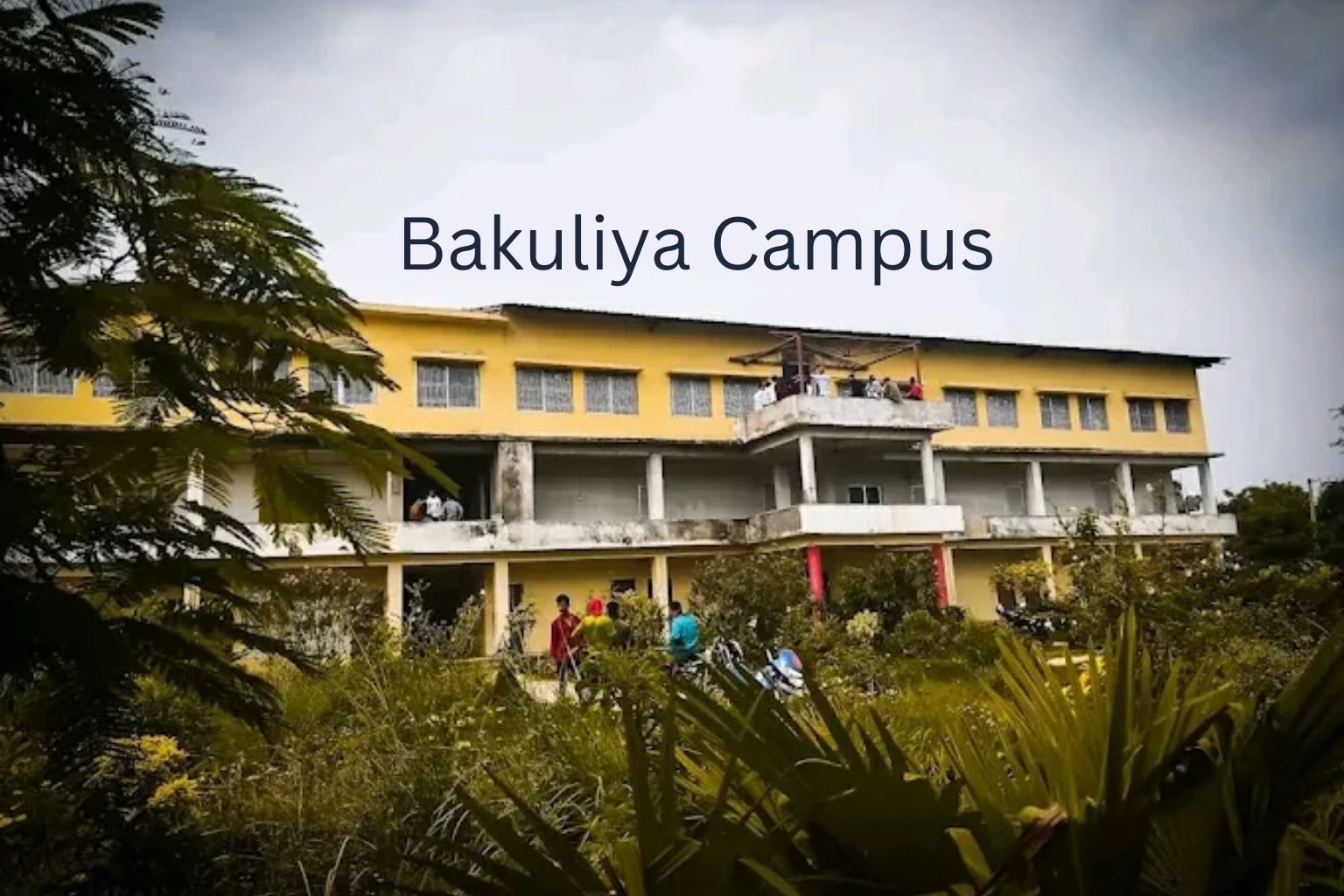
Bachelor of Education (B.Ed.) at Bakuliya Campus is a TU-affiliated undergraduate teacher education program for students in Bara and nearby areas who want to study education without relocating far from home. Bakuliya Campus is a community campus in Jitpur Simara Sub-Metropolitan City, Ward No. 5 (Bhawanipur/Bakuliya), and Bakuliya Campus appears in Tribhuvan University’s affiliated campus list (listed as Bakuliya Campus, Bhabanipur/Jitpur, Bara) in a TU portal document.
The campus information you shared states that Bakuliya Campus is recognized by UGC Nepal, focuses mainly on the Faculty of Education, and runs a 4-year B.Ed. program. This course page uses that campus reference plus TU/Faculty of Education sources for program-level and exam-process facts.
Course: Bachelor of Education (B.Ed.), 4-year program (as shared in campus details)
Campus: Bakuliya Campus, Bhawanipur/Bakuliya, Jitpur Simara, Bara
Campus Type: Community campus
Affiliation: Tribhuvan University (TU) (verified through TU affiliated campus listing)
Academic Focus: Faculty of Education (campus-level focus, as shared)
Campus Facilities: library, basic computer labs, scholarships, extracurricular activities, multimedia classrooms, conference hall
Landmark: near Bakuliya Chhathimata Ghat; about 3.5 km southwest of Simara Airport
TU Faculty of Education maintains a dedicated B.Ed. program page and curriculum/notice sections on its official website, which confirms that B.Ed. is handled under the Faculty of Education structure.
A TU portal source snippet describes the 4-year B.Ed. as an integrated undergraduate program that combines theory courses and practical components. This matters for students because B.Ed. is not only a subject-content degree. It also includes teaching-related study and school-based practice.
At campus level, the exact subject combinations, annual intake capacity, and current course arrangement should be checked from the latest Bakuliya Campus notice or office. Those campus-specific items were not available in the official pages visible in the sources reviewed today.
In practical terms, students in a TU B.Ed. pathway usually move through these study areas during the degree:
Foundations of education (education in society, learner development, school context)
Pedagogy and teaching methods
Assessment and classroom evaluation
Curriculum and instructional planning
Teaching practice / practicum
Students also study teaching in subject areas, which is a major reason B.Ed. supports school teaching careers. The available specialization subjects at a given campus depend on campus approval, staffing, and current intake.
B.Ed. at Bakuliya Campus serves students who want a teacher education route connected to TU and available in the local region. The scope is strongest for students planning to work in school education, tutoring, academic support work, and later education-related higher study.
The course also helps students who need a structured path in pedagogy, classroom communication, student assessment, and school practice. Students from nearby communities often need this local option because travel and living costs affect continuation of study.
By the end of a TU-affiliated B.Ed. course, students are expected to show progress in these areas:
Lesson planning for school-level teaching
Basic classroom management and student engagement practices
Subject teaching methods in chosen specialization areas
Assessment preparation, checking, and feedback habits
Reflective practice after teaching sessions
Professional conduct in school and campus settings
A student example makes this easier to understand. If you are teaching a secondary-level lesson, you need more than subject facts. You need a class objective, a sequence, examples, student questions, and a way to check learning. B.Ed. study trains students in that full process.
Bakuliya Campus reports library access, basic computer labs, multimedia facilities, and a conference hall. Those features are useful for B.Ed. students because teacher education depends on reading, presentation practice, and school-task preparation. (Campus facilities in this section are based on your shared campus details.)
Lesson plan writing
Micro-teaching practice
Classroom presentation and board work
Observation notes during school exposure
Question paper and test-item preparation
Record keeping and assignment checking
Basic digital work for teaching materials (using campus computer lab support where available)
Students often feel pressure when speaking in front of a class for the first time. B.Ed. training helps reduce that fear through repeated practice, feedback, and supervised teaching tasks. That matters for confidence and for actual classroom performance.
Bakuliya Campus’s reported facilities suggest a learning setup that can support classroom teaching, guided study, and presentation-based activities. (This statement links campus facilities to B.Ed. learning use; the facilities list itself comes from your campus details.)
A TU B.Ed. pathway includes both theory and practical work, which is confirmed by TU/FoE-related official sources.
Students should expect a mix of:
Classroom lectures and discussion
Reading and note-based study through library resources
Subject-method tasks and written assignments
Practicum-related preparation and school teaching practice
Internal assessment tasks as required by the campus/TU system
TU Faculty of Education states that students who have completed Grade 12 / higher secondary education (or equivalent) are eligible for the four-year B.Ed. program.
TU Faculty of Education also publishes Common Education Admission Test (CEAT) result notices on the TU portal, which shows that B.Ed. admission processing is linked to FoE entrance/result systems.
Students should verify these points from the latest official notice before applying:
Current minimum grade/marks requirement
CEAT/entrance schedule and form dates
Required documents
Campus admission deadline after entrance result
Subject combination availability at Bakuliya Campus
B.Ed. from a TU-affiliated campus supports education-sector paths such as:
School teaching (subject to current licensing and recruitment rules in Nepal)
Private school teaching and academic support roles
Tuition and remedial teaching
Educational project field roles (literacy, community education, learning support)
School administration support roles
Further study in education (for students planning academic growth)
Students and parents should check current recruitment and licensing notices from the relevant authority at the time of application for jobs. Those rules change over time.
According to the campus details you shared, Bakuliya Campus provides partial to full scholarship support for deserving, marginalized, and needy students, including categories linked to UGC Nepal, MOEST, and government reserve quotas.
Students should confirm these points directly from the campus office each admission cycle:
Scholarship categories open in the current year
Eligibility documents
Deadline and selection process
Continuation rules for later years
Students usually choose B.Ed. at Bakuliya Campus for practical reasons, not slogans.
Local access in Bara and Jitpur Simara area
Community campus setting
TU affiliation (verified in TU affiliated campus list)
Campus focus on education stream (as shared in campus details)
Facilities that support study and presentation work (library, labs, multimedia)
Scholarship support options (as shared; confirm each year)
If your goal is teacher education and you need a nearby campus route, this course has direct relevance.
TU/FoE official source snippets indicate that B.Ed. students take final exams conducted by the Controller of Examinations, and practical exams are also part of the process due to the nature of the program.
A TU academic calendar search snippet also notes a condition that practical (practicum) exams should be completed within two weeks after final exams.
For exam workflow, students should track:
Campus notices (forms, internal deadlines, practical preparation)
TU Office of the Controller of Examinations notices (exam forms, schedules, centers) on the official OCE site
TU result portal for published results (official result site)
This process affects your study planning. Missing a form deadline can delay an exam cycle.
B.Ed. at Bakuliya Campus is a locally important teacher-education option for students in Bara who want a TU-affiliated path in education study. The course value comes from its connection to teaching practice, subject-method study, and exam processes under TU/FoE systems. TU affiliation and FoE/OCE exam-result structures are verifiable through official TU sources.
Campus-level details such as facilities, scholarships, and contact information in this write-up are based on the campus information you provided. Students should confirm the latest intake notice, subject availability, and admission dates from Bakuliya Campus before applying.
Yes. Bakuliya Campus appears in a TU affiliated campus list document on the TU portal.
The campus information you shared states that the campus offers a 4-year B.Ed. program.
TU Faculty of Education indicates that students who completed Grade 12 / higher secondary education (or equivalent) are eligible for the four-year B.Ed. program. Students must still check the latest notice for current year conditions.
TU Faculty of Education publishes CEAT-related result notices on the TU portal, which shows an entrance/result process under FoE for education admissions.
Students should check the TU Office of the Controller of Examinations site for notices and the TU result portal for results.
According to the campus details you shared, yes. The campus reports partial to full scholarships for eligible students under relevant categories. Students should confirm current-year criteria from the campus office.