The BA/BSW program at Bardagoriya College is a four-year bachelor’s degree affiliated with Tribhuvan University (TU). Offered through the Faculty of Humanities and Social Sciences, the course combines classroom study with fieldwork, project work, research, academic writing, and report preparation.
Students study social work alongside subjects that help them understand people, communities, institutions, and social issues. The course begins with the foundations of social work and sociology before moving into psychology, casework, group work, leadership, social problems, and intervention.
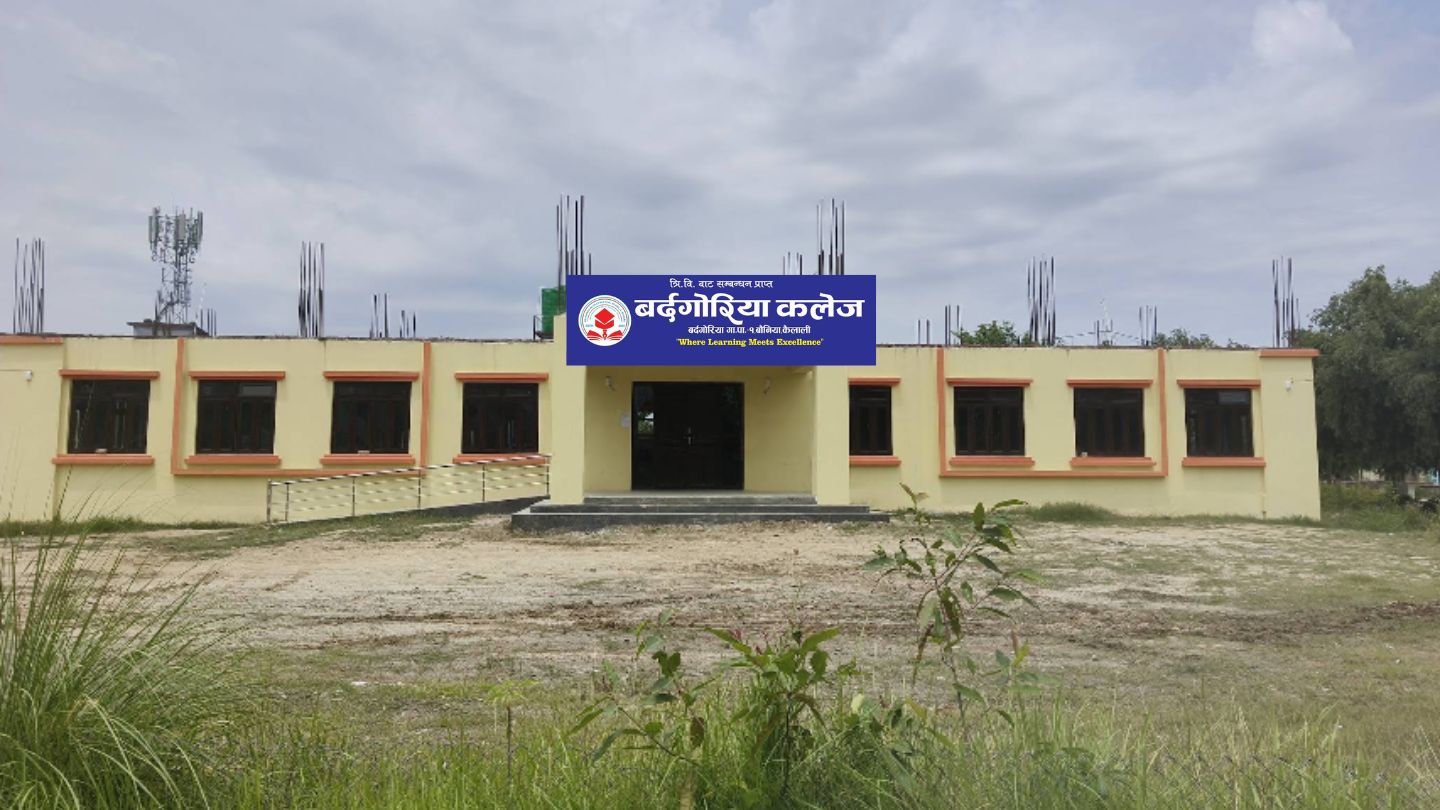
Bardagoriya College is located in Bardagoriya Rural Municipality–1, Bauniya, Kailali, Sudurpashchim Province.
Course: BA/BSW
Program Title: Bachelor of Arts in Social Work (BASW)
College: Bardagoriya College
Faculty: Faculty of Humanities and Social Sciences
Affiliation: Tribhuvan University (TU)
Level: Bachelor’s degree
Duration: Four academic years
Academic System: Annual system
Location: Bardagoriya Rural Municipality–1, Bauniya, Kailali
Learning Components: Theory, fieldwork, project work, research and report writing
The BA/BSW program introduces students to the principles, values, methods, and practical responsibilities of social work. It examines how individuals, families, groups, and communities are affected by social, economic, cultural, and institutional conditions.
Students learn how social problems can be identified, studied, and addressed through organized social-work practice. The curriculum also develops an understanding of human rights, social justice, community needs, service systems, and the professional responsibilities of social workers.
Field-based learning is an important part of the course. Students take part in project work, prepare reports, and present their work as part of the academic evaluation process.
The BA/BSW program may suit students who are interested in working with people and understanding social conditions. It can be relevant to learners interested in community development, social services, research, education, human behaviour, or development-related work.
Students should be prepared for reading, writing, discussion, group activities, field-based assignments, and the study of sensitive social issues. The course also requires regular participation and the ability to connect classroom concepts with real social settings.
Applicants must meet one of the following academic requirements:
At least D+ in every subject in Grade 11 and Grade 12; or
Completion of +2, Intermediate, or PCL from Tribhuvan University or another institution recognized by TU with a minimum of 45 percent marks.
Students from any higher-secondary subject background recognized by Tribhuvan University may apply for admission at the bachelor’s level.
Admission may include a one-hour entrance examination when such an examination is provisioned by the Faculty of Humanities and Social Sciences or the Department of Social Work.
When an entrance examination applies, applicants must obtain the required qualifying score. Selection is based on merit and the approved enrolment quota under the relevant TU rules.
The four-year curriculum moves from introductory concepts to more focused areas of social-work practice.
SW 421: Introduction to Social Work
SW 422: Basic Sociology for Social Work
The first year introduces the meaning, goals, history, methods, values, and ethics of social work. Students also study society, culture, social interaction, family, institutions, inequality, health, disability, and the relationship between sociology and social work.
SW 423: Basic Psychology for Social Work
SW 424A: Social Case Work Practice
SW 424B: Social Work Practice with Groups
Second-year study focuses on human behaviour, psychological development, mental and psychosocial well-being, individual casework, communication, interviewing, group processes, and group-based social-work practice.
Third-year study includes social issues, leadership development, and elective learning. It moves students towards a broader understanding of how social concerns can be examined through organized leadership and intervention.
The final year covers theoretical approaches to social work and the identification of social problems and possible interventions.
Across the four years, the social-work curriculum contains eight papers. It is supported by compulsory courses that include English, Nepali, Nepal Studies, and Academic Writing. Compulsory English is studied in the first and third years, while Compulsory Nepali is studied in the second year. Alternative English is available in place of Compulsory Nepali for international students.
Practical learning is included through fieldwork, project assignments, report writing, and presentations. Students may work individually or in groups on topics related to social-work principles, community conditions, social institutions, inequality, social change, and other relevant issues.
The work may draw on field-based study or secondary and archival materials. Students prepare reports under faculty guidance and present them in a viva voce conducted by the department or college.
These activities help students practise observation, assessment, communication, analysis, academic writing, and presentation within a structured learning process.
The program follows an annual examination system, with a final examination held at the end of each academic year.
Evaluation is divided into:
Internal evaluation: 30 percent
External evaluation: 70 percent
Internal assessment covers class attendance, participation, discussion, presentations, assignments, and written class tests. External evaluation is generally conducted through written examinations. Social Work Practicum and Field Work courses also include practical external evaluation.
Regular attendance is an important requirement for appearing in internal and final examinations.
Classes are taught by skilled and experienced professors. Students also have access to a library for course-related reading, assignment preparation, and independent study.
The college conducts regular internal examinations to monitor academic progress. Its clean and peaceful environment supports classroom study, discussion, project preparation, and other academic activities.
Scholarships are available in various fields for eligible students.
The BA/BSW curriculum prepares students for entry-level social-work practice and further study in social work or related disciplines.
Graduates may explore opportunities connected with community organizations, government and non-government sectors, social services, education, research, development programs, and media. Access to a particular role depends on the requirements of the employer, the graduate’s academic record, practical experience, and any additional qualifications required for the position.
College Principal: 9858484731/9
Accountant: 9765590411
Email: bardagoriyacollege500@gmail.com
Address: Bardagoriya Rural Municipality–1, Bauniya, Kailali, Sudurpashchim Province, Nepal
What is the duration of BA/BSW at Bardagoriya College?
The program runs for four academic years under the annual system of Tribhuvan University.
Which faculty manages the BA/BSW program?
The program falls under the Faculty of Humanities and Social Sciences at Tribhuvan University.
Can students from any +2 stream apply?
Students with a higher-secondary qualification in any subject recognized by Tribhuvan University may apply, provided they meet the stated academic requirements.
Does the course include practical work?
Yes. Fieldwork, project work, report writing, presentations, practicum activities, and viva voce evaluation form part of the course.
What subjects are studied in the program?
The curriculum covers social work, sociology, psychology, casework, group work, social issues, leadership, social-work theories, and intervention, along with compulsory language and academic courses.