The Master of Arts in Rural Development at Bardagoriya College is a two-year postgraduate program affiliated with Tribhuvan University (TU). It follows a four-semester structure and examines rural development through economic, social, cultural, political, and environmental perspectives.
The course connects development theory with research, field-based practice, local governance, rural finance, entrepreneurship, agriculture, tourism, technology, and natural resource management. It is designed for graduates who want to study the challenges and development needs of rural communities in greater depth.
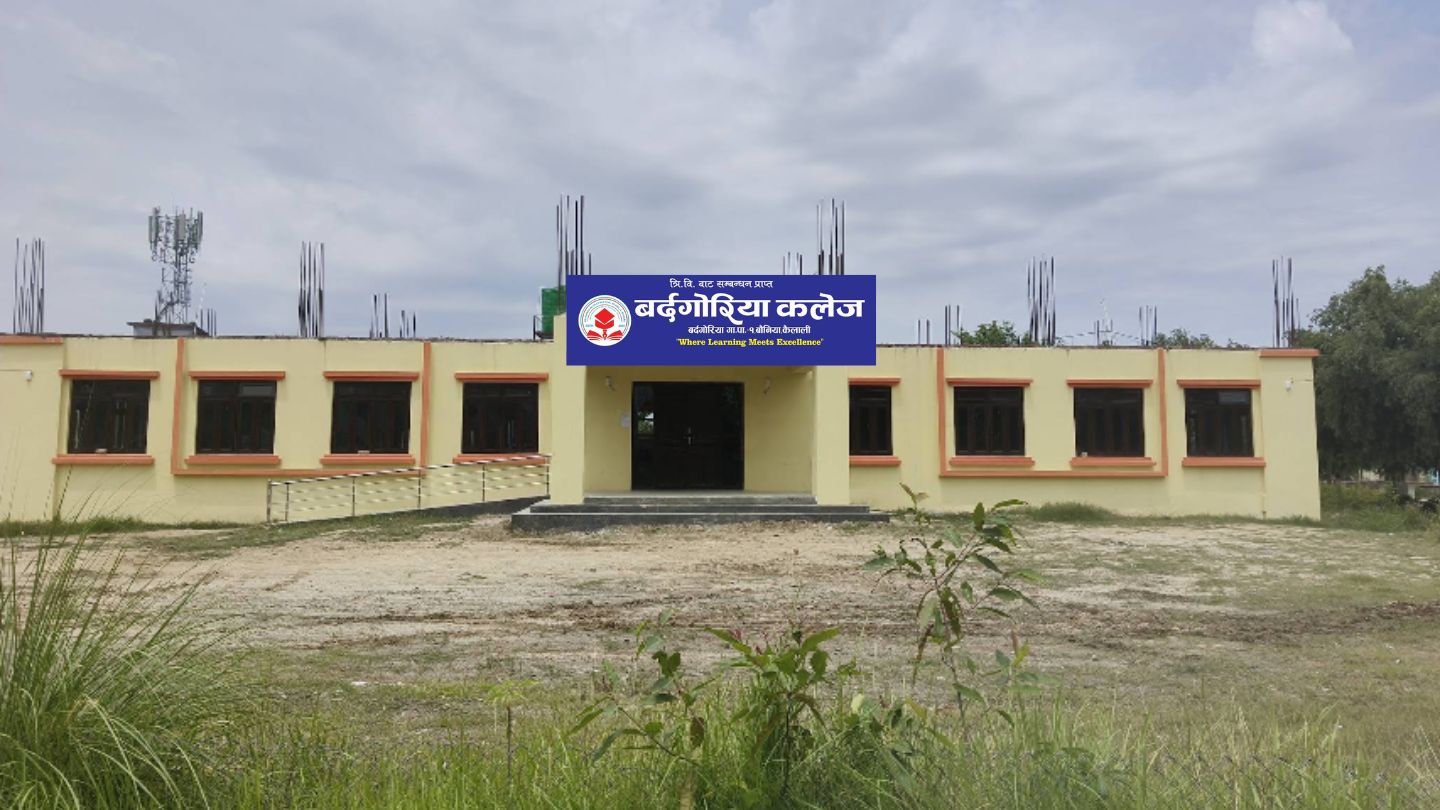
Bardagoriya College is located in Bardagoriya Rural Municipality–1, Bauniya, Kailali, Sudurpashchim Province, Nepal.
Course: Master of Arts in Rural Development
Abbreviation: MA RD / MRD
College: Bardagoriya College
Affiliation: Tribhuvan University (TU)
Level: Master’s degree
Duration: Two years
Academic Structure: Four semesters
Location: Bardagoriya Rural Municipality–1, Bauniya, Kailali
Evaluation: 40 percent internal and 60 percent external
Minimum Attendance: 80 percent
Research Component: Compulsory thesis
Rural development is a multidisciplinary field concerned with the conditions that shape life and change in rural areas. The MA program studies development in relation to poverty, inequality, unemployment, migration, local institutions, livelihoods, public policy, economic activity, culture, and the environment.
Students examine how development plans and policies are prepared and applied in different social and economic settings. The course also gives attention to research methods and field-based study, helping students connect academic concepts with rural conditions and development practices.
The program may suit graduates interested in rural communities, local governance, development planning, public policy, social research, cooperatives, agriculture, natural resources, or community-based programs.
It involves academic reading, written assignments, presentations, statistical and research work, practical study, and thesis preparation. Students should therefore be prepared for both classroom learning and independent research.
Applicants must hold at least a bachelor’s degree in any discipline from Tribhuvan University or another recognized university.
Admission is connected with an entrance system. Candidates who secure a position through the merit-based entrance process become eligible for admission.
The first semester establishes the theoretical, economic, social, governance, and research foundations of rural development.
RDS 501: Rural Development—Theory and Discourse
RDS 502: Economic Dimensions of Rural Development
RDS 503: Socio-cultural Dimensions of Rural Development
RDS 504: Local Governance in Nepal
RDS 505: Research Methodology in Rural Development
The second semester places greater emphasis on Nepal’s rural context, planning, finance, cooperatives, and the practical use of research methods.
RDS 511: Rural Development in Nepal
RDS 512: Planning, Policies, and Strategies for Rural Development
RDS 513: Rural-Urban Linkage
RDS 514: Rural Finance and Cooperative Development
RDS 515: Application of Research Methodology
Third-semester study moves towards project management, technology, tourism, entrepreneurship, and practical rural development work.
RDS 521: Energy and Rural Technology
RDS 522: Rural Project Management
RDS 523: Tourism for Rural Development
RDS 524: Rural Marketing and Entrepreneurship Development
RDS 525: Rural Development Practice
The final semester covers natural resources, climate change, livelihoods, optional study areas, and thesis research.
RDS 531: Natural Resource Management
RDS 532: Climate Change and Livelihood Strategies
RDS 533: Human Resource Development — Optional
RDS 534: Nepalese Agriculture and Development — Optional
RDS 535: Gender and Development — Optional
RDS 536: Thesis — Compulsory
The semester curriculum combines core academic study with practical work and independent research.
Student evaluation is divided between internal assessment and the semester-end written examination.
Internal Evaluation: 40 percent
External Examination: 60 percent
Internal assessment includes assignments, an individual term paper, presentations, a midterm examination, attendance, punctuality, and participation in classroom discussions.
Students must attend at least 80 percent of classes to appear in the end-term examination. They must also sit for the midterm examination to qualify for the external semester examination.
Research is included throughout the program, beginning with research methodology and continuing through its practical application. Students also complete Rural Development Practice in the third semester and a compulsory thesis in the fourth semester.
These components allow students to work with research questions, collect and assess information, study rural conditions, prepare academic reports, and present findings in a structured form.
Bardagoriya College provides a library for academic reading, assignment work, and research preparation. Classes are taught by skilled and experienced professors, and regular internal examinations are conducted to assess student progress.
The college maintains a clean and peaceful academic environment. Scholarships are also available in various fields for eligible students.
Graduates may explore work related to rural development, community programs, local governance, development projects, cooperatives, social research, rural entrepreneurship, tourism, agriculture, and natural resource management.
The course is also relevant to development-related roles in government and non-government organizations. Individual opportunities depend on academic performance, research ability, practical experience, organizational requirements, and the nature of available positions.
College Principal: 9858484731/9
Accountant: 9765590411
Email: bardagoriyacollege500@gmail.com
Address: Bardagoriya Rural Municipality–1, Bauniya, Kailali, Sudurpashchim Province, Nepal