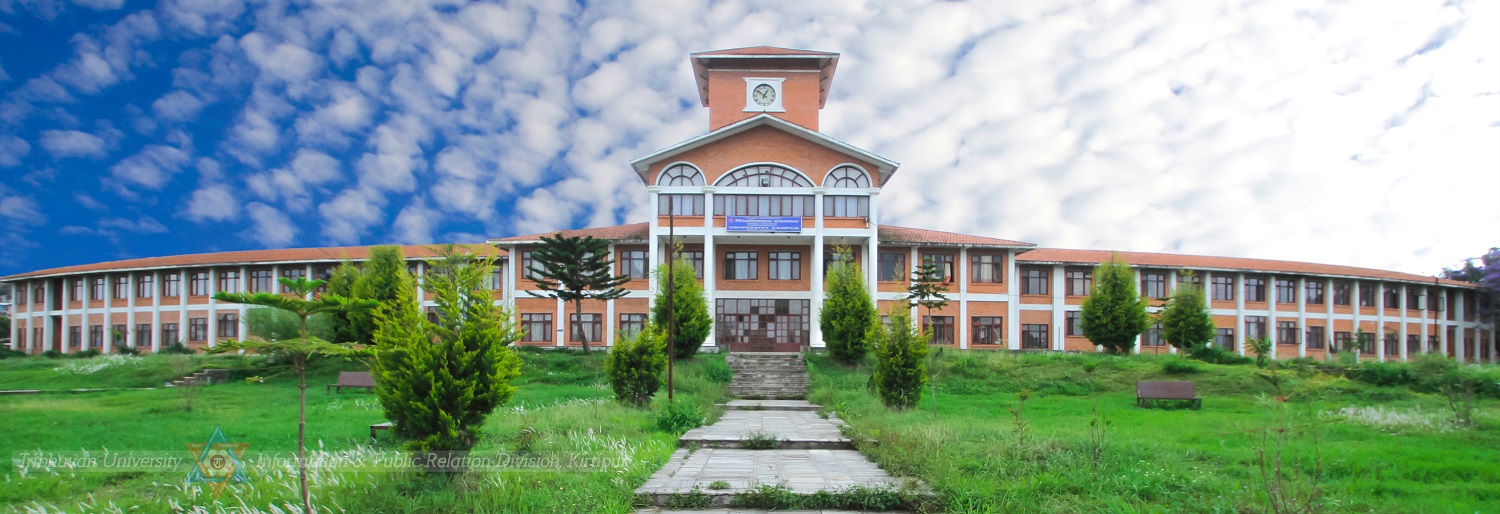
The Master of Arts (MA) in Buddhist Studies at the Central Department of Buddhist Studies, Tribhuvan University (TU), Kirtipur, Kathmandu, Nepal, is a 69-credit-hour postgraduate program completed over four semesters.
The program covers Buddhist history, religion, philosophy, literature, art, iconography, scripts, architecture, archaeology, the Buddhism of Nepal Mandala, Buddhist traditions in Asia, world religion and philosophy, the Buddhist heritage of Northern Nepal, research methods, information technology, Buddhist tourism, field study, thesis work, and Buddhist practices.
Students from any academic discipline may apply after completing a bachelor's degree or equivalent qualification from a recognized university. Admission is merit-based through a written entrance examination.
| Area | Details |
|---|---|
| Course | Master of Arts (MA) in Buddhist Studies |
| Department | Central Department of Buddhist Studies |
| University | Tribhuvan University (TU) |
| Location | Kirtipur, Kathmandu, Nepal |
| Level | Master's |
| Total Credits | 69 credit hours |
| Duration | Four semesters |
| Eligibility | Bachelor's degree or equivalent from a recognized university |
| Admission Basis | Merit through written entrance examination |
| Entrance Examination | 2 hours, 100 marks |
| Main Academic Areas | Buddhist history, philosophy, literature, heritage, art, research, tourism, and practices |
The MA in Buddhist Studies combines the study of Buddhist thought, history, texts, material heritage, cultural traditions, and research.
Its academic coverage extends from Buddhist religion and philosophy to literature, architecture, archaeology, iconography, scripts, regional traditions, and heritage. Students also study subjects connected with world religion and philosophy, Buddhist tourism, research methods, information technology, field study, and Buddhist practices.
The four-semester structure allows students to move from foundational and historical areas of study toward regional traditions, research methodology, field-based work, and thesis preparation.
Duration: Four semesters
Total Credits: 69 credit hours
The MA in Buddhist Studies is organized as a four-semester postgraduate degree. Its courses are distributed across the semesters, with the final semester including research-oriented and applied components such as research methods, field study and report writing, and thesis work.
The program is intended to develop academic understanding across different areas of Buddhist Studies.
Its objectives include:
Developing knowledge of Buddhist history, teachings, and practices.
Studying religious and philosophical dimensions of Buddhism.
Examining Buddhist literature and scriptural traditions.
Studying Buddhist art, iconography, architecture, and archaeology.
Understanding cultural and ritual aspects of Buddhist traditions.
Examining Buddhist traditions in Nepal and other parts of Asia.
Studying archaeological chronologies, traditions, and cultures connected with Buddhist heritage and tourism.
Examining different Buddhist schools and traditions alongside the study of world religions.
Developing research skills for academic work in Buddhist Studies.
Building basic knowledge of information technology relevant to academic study and research.
Eligibility: Applicants may come from any academic discipline but must have successfully completed a bachelor's degree or its equivalent from a recognized university.
The program therefore allows graduates from different educational backgrounds to pursue postgraduate study in Buddhist Studies.
Admission is based on merit determined through a written entrance examination.
Entrance Examination Duration: Two hours
Total Marks: 100
The examination consists of:
50 marks for objective questions
50 marks for essay writing
Performance in the written test is used to determine merit for admission to the program.
The MA in Buddhist Studies is divided into four semesters. The curriculum moves through historical, philosophical, literary, artistic, regional, comparative, research, technological, practical, and heritage-related areas of study.
The first semester introduces core areas of Buddhist history, religion, philosophy, literature, visual culture, scripts, and the Buddhism of Nepal Mandala.
Courses are:
History of Buddhism I
Buddhist Religion and Philosophy I
Buddhist Literature I
Buddhist Art, Iconography, and Scripts
Buddhism of Nepal Mandala I
The second semester continues the study of history, philosophy, literature, and Nepal Mandala while adding Buddhist architecture and archaeology.
Courses are:
History of Buddhism II
Buddhist Religion and Philosophy II
Buddhist Literature II
Buddhist Architecture and Archaeology
Buddhism of Nepal Mandala II
The third semester places greater attention on Buddhist traditions across Asia, comparative religious and philosophical study, and the Buddhist heritage of Northern Nepal.
Courses are:
Buddhist Traditions in Asia I
World Religion and Philosophy I
Buddhist Traditions in Asia II
Buddhist Heritage of Northern Nepal I
World Religion and Philosophy II
The fourth semester includes research, heritage, tourism, information technology, field-based study, thesis work, and Buddhist practices.
Courses are:
Methods of Research in Buddhist Studies
Buddhist Heritage of Northern Nepal II
Buddhist Tourism
Basic Knowledge on Information Technology
Field Study and Report Writing
Thesis
Buddhist Practices
History, religion, and philosophy form central parts of the program.
Students study History of Buddhism I and II alongside Buddhist Religion and Philosophy I and II. These courses provide an academic basis for examining the historical development of Buddhism and its philosophical and religious traditions.
The curriculum also includes World Religion and Philosophy I and II, placing Buddhist Studies within a wider comparative academic setting.
Buddhist Literature I and II are included during the first two semesters.
The curriculum also includes the study of scripts through Buddhist Art, Iconography, and Scripts. Together, these areas allow students to engage with literary and scriptural dimensions of Buddhist traditions as part of their postgraduate study.
The curriculum includes dedicated study of Buddhist material and visual heritage.
Buddhist Art, Iconography, and Scripts appears in the first semester, followed by Buddhist Architecture and Archaeology in the second semester.
These subjects extend the program beyond textual and philosophical study by including artistic, architectural, archaeological, and iconographic dimensions of Buddhism.
Buddhism of Nepal Mandala is studied over two semesters:
Buddhism of Nepal Mandala I
Buddhism of Nepal Mandala II
These courses provide a specific academic component focused on Buddhist traditions associated with Nepal Mandala.
The third semester includes:
Buddhist Traditions in Asia I
Buddhist Traditions in Asia II
These courses extend the geographical scope of the program beyond Nepal and allow students to study Buddhist traditions within a broader Asian context.
The curriculum includes a two-part study of the Buddhist heritage of Northern Nepal.
Buddhist Heritage of Northern Nepal I is taught in the third semester.
Buddhist Heritage of Northern Nepal II is included in the fourth semester.
This sequence gives the program a specific heritage-related component focused on Northern Nepal.
Research becomes a major part of the final stage of the MA program.
The fourth semester includes Methods of Research in Buddhist Studies, Field Study and Report Writing, and Thesis.
Through these components, students work with research methods, field-based study, academic reporting, and independent research. Thesis work allows students to apply their academic preparation to a defined area of Buddhist Studies.
Field Study and Report Writing provides a practical research component within the fourth semester.
Students engage with field-based academic work and prepare a report connected with their study. This component links research methods with practical investigation and academic writing.
The fourth semester includes Basic Knowledge on Information Technology.
This subject introduces IT knowledge as part of the program's academic structure and supports the use of technological tools in study and research.
Buddhist Tourism is included in the fourth semester.
The subject connects the academic study of Buddhism with Buddhist heritage and tourism. It forms part of the program's broader coverage of archaeological traditions, cultural heritage, and Buddhist sites and traditions in Nepal, Asia, and other contexts.
Buddhist Practices is also included in the fourth semester.
Its inclusion gives the curriculum a practical dimension alongside historical, philosophical, literary, heritage, and research-based study.
After completing the MA in Buddhist Studies, students are expected to be able to:
Demonstrate knowledge of Buddhist history, religion, and philosophy.
Understand major areas of Buddhist literature and cultural traditions.
Examine Buddhist art, iconography, architecture, archaeology, and scripts.
Analyze Buddhist texts, artifacts, traditions, and related academic materials.
Understand Buddhist traditions in Nepal and other parts of Asia.
Apply research methods in Buddhist Studies.
Conduct independent academic research.
Prepare academic reports and thesis-based research.
Present research findings through academic writing.
Use basic information technology tools in study and research.
Understand Buddhist heritage and tourism as areas of academic study.
The MA in Buddhist Studies may be relevant to graduates from different academic backgrounds who want postgraduate study centered on Buddhism.
The course may particularly suit students interested in:
Buddhist history
Buddhist religion and philosophy
Buddhist literature
Art and iconography
Architecture and archaeology
Buddhist heritage
Asian Buddhist traditions
Comparative religion and philosophy
Academic research
Buddhist tourism
Field-based study
Because applicants may come from any discipline, the program provides an entry point into formal postgraduate Buddhist Studies for graduates with varied undergraduate backgrounds.
Graduates may consider academic and professional areas connected with their postgraduate study, subject to the requirements of individual employers and institutions.
Possible areas include:
Universities and educational institutions
Academic and research work
Cultural preservation and heritage organizations
Museums
Art galleries
Cultural centers
Religious and spiritual organizations
Tourism and travel-related organizations
Publishing
Media
Non-governmental organizations working in cultural and religious fields
Employment depends on factors such as individual qualifications, research experience, additional skills, institutional requirements, and available positions. Completion of the degree does not guarantee employment in any particular field.
The MA program includes research methods, field study, report writing, and thesis work, providing academic preparation for students interested in continuing with advanced research.
The Central Department of Buddhist Studies also offers a PhD in Buddhist Studies, providing a doctoral-level pathway for students seeking further specialization and original research in the field.
Fees and Scholarships: Students can contact the administrative office of the Central Department of Buddhist Studies for current information concerning fees and scholarship-related matters for the MA in Buddhist Studies.
The administrative office can also provide course-related information concerning facilities, counseling, eligibility, and other admission matters.
It is a 69-credit-hour master's degree offered by the Central Department of Buddhist Studies at Tribhuvan University in Kirtipur, Kathmandu, Nepal.
The program is completed over four semesters.
Applicants from any academic discipline may apply after completing a bachelor's degree or equivalent qualification from a recognized university.
Admission is based on merit determined through a written entrance examination.
The entrance examination is a two-hour, 100-mark written test consisting of 50 marks of objective questions and 50 marks of essay writing.
The program carries a total of 69 credit hours.
Yes. The fourth semester includes Methods of Research in Buddhist Studies, Field Study and Report Writing, and Thesis.
Yes. The curriculum includes Buddhist Art, Iconography, and Scripts as well as Buddhist Architecture and Archaeology.
Yes. The third semester includes Buddhist Traditions in Asia I and II, while the curriculum also includes World Religion and Philosophy I and II.
Yes. Buddhist Tourism is included in the fourth semester.
Yes. Basic Knowledge on Information Technology is included in the fourth semester.
The Central Department of Buddhist Studies also offers a PhD in Buddhist Studies for students interested in advanced doctoral research.