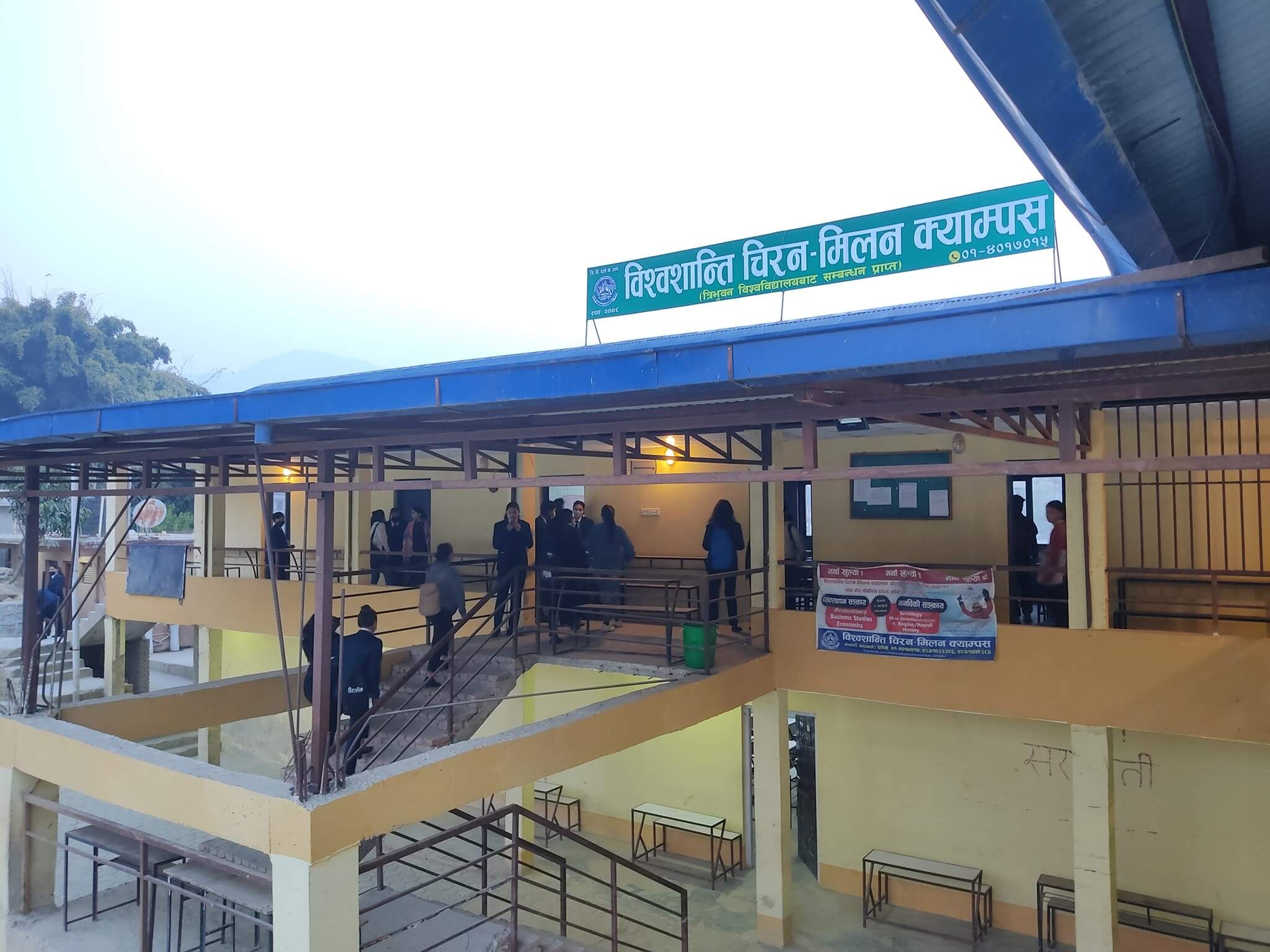
BBS at Bishwa Shanti Chiran-Milan Campus, Bansbari, Kathmandu, runs under Tribhuvan University (TU) and focuses on accounting, finance, marketing, and management.
Students seeking a TU BBS in Kathmandu find clear subject pathways, steady internal evaluation, and a study routine that suits local commuters.
Affiliation: Tribhuvan University (Faculty of Management)
Shift: Morning and Evening
Medium of instruction: English and Nepali
Location: Bansbari (Maharajgunj area), Kathmandu Metropolitan City
Internal assessment: Unit tests, class assignments, and scheduled internal exams
The campus follows TU’s BBS structure with year-wise papers and internal evaluation that prepares you for the final board exams. Core subjects offered at the campus include:
Accountancy
Business English
Microeconomics
Principles of Management
Business Statistics
Subject delivery follows a paced plan. Teachers assign ledgers, cost sheets, and short analytical notes in accounting and statistics. Business English builds email etiquette, summaries, and meeting minutes. Microeconomics covers demand, cost, and market forms using numerical practice. Principles of Management introduces planning, organizing, and decision routines through short case notes and class discussions.
Students complete periodic class tests before the internal exam window. The campus publishes calendars to avoid clashes and to keep preparation on track. Library hours in the morning and after classes help you review examples and past questions.
Build a clear base in accounting, finance, and organizational processes
Improve writing through Business English tasks that match workplace documents
Strengthen numerical practice in statistics and economics for entry-level roles
Prepare for TU assessments through steady internal testing
Graduates pursue accounting support roles in trading firms and cooperatives, sales and operations coordination in local businesses, and entry tracks in banking and microfinance subject to separate tests. Many students continue to MBS or MBA, while some attempt professional routes such as CA or ACCA after gaining experience.
Prepare journals, ledgers, trial balances, and basic financial statements
Use ratios, break-even, and simple statistics to explain a business situation
Write short, clear reports that follow TU formatting habits
Read market summaries and connect them to local business examples
Accounting practice: from vouchers to final accounts using classroom datasets
Quantitative tools: descriptive statistics, index numbers, and cost-volume-profit tasks
Workplace writing: emails, memos, proposals, and brief meeting notes
Presentation basics: 3–5 minute talks using charts or tables relevant to the course
Classes run in Morning and Evening shifts. Teachers use board work, guided examples, and short presentations. The Examination Committee coordinates unit tests and internal exams.
Past paper practice, timed writing, and peer discussion help you learn exam formats without guesswork. Faculty keep feedback short and actionable so you can adjust study habits quickly.
Applicants must have completed 10+2 or equivalent from a recognized board, meeting TU eligibility rules for the intake year. The campus accepts applications within announced deadlines.
You should carry transcripts/marksheets, character certificate, recent photographs, and an identity copy for verification. Subject-group confirmation happens during admission to avoid timetable clashes.
Accounts assistant and store/accounts clerk in local firms
Sales and operations support in trading and distribution companies
Banking and microfinance entry routes (separate recruitment/aptitude tests apply)
Administrative roles in community bodies and NGOs that accept TU bachelor’s degrees
The campus provides need-based and merit support as per institutional rules and available funds. Notices specify forms, categories, and deadlines. You should verify the latest criteria during admission.
TU BBS with campus delivery in Morning and Evening shifts
Medium in English and Nepali to support different classroom needs
Regular internal evaluation that mirrors board patterns and reduces last-minute pressure
Practical tasks that connect accounting and management topics to local business cases
BBS at Bishwa Shanti Chiran-Milan Campus offers a clear route into business studies in Kathmandu. Students follow a predictable calendar, practice core tools weekly, and sit for assessments that reflect TU expectations. The structure suits learners who prefer steady routines and practical classroom tasks that translate to early job roles or further study.