Overview
Bachelor of Arts (BA) at Bishwa Shanti Chiran-Milan Campus, Bansbari, Kathmandu
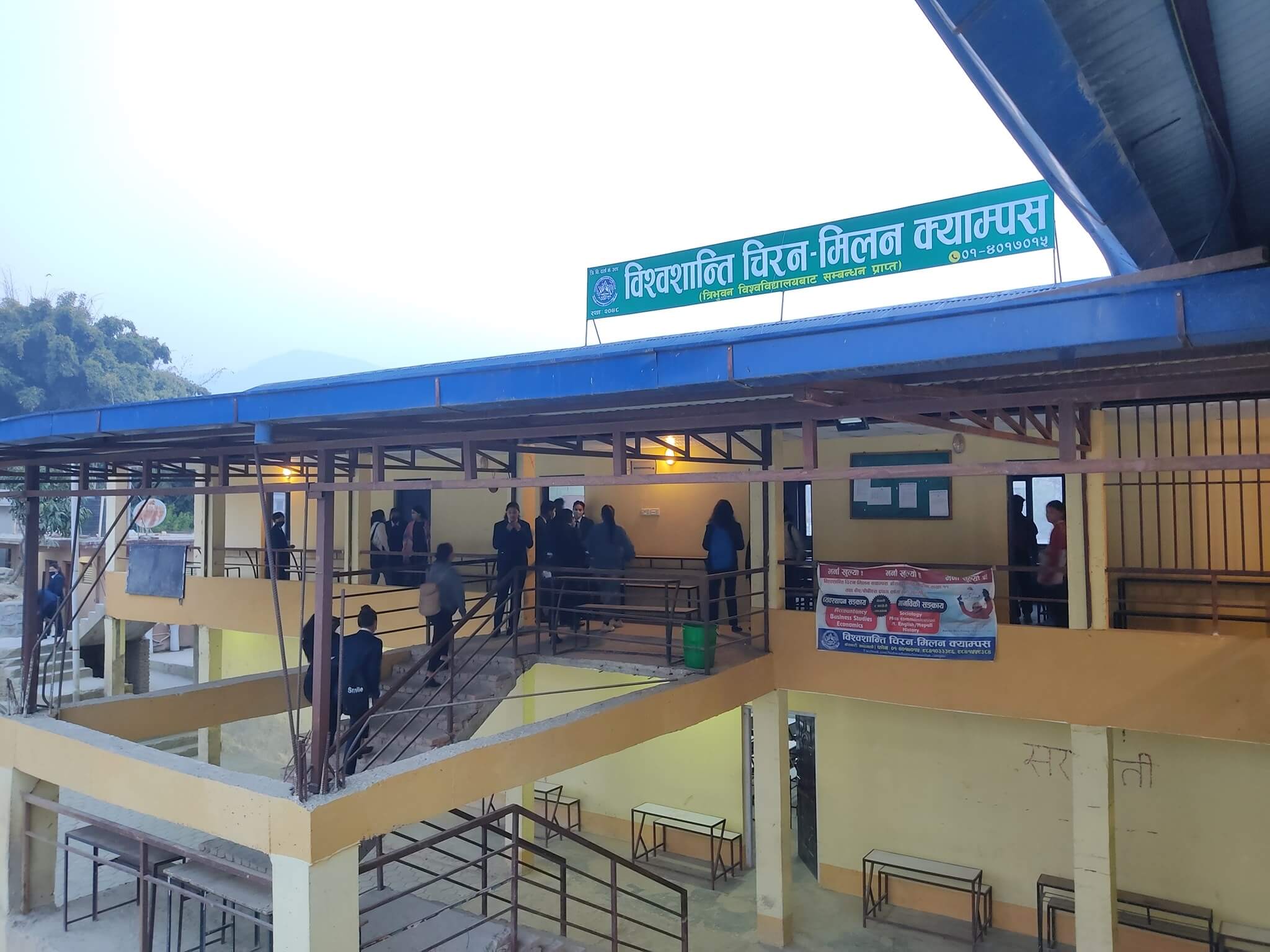
BA at Bishwa Shanti Chiran-Milan Campus in Bansbari, Kathmandu, runs under Tribhuvan University (TU) and focuses on languages and social sciences. Students choose majors that match interests in writing, media, and society.
Highlights
-
Affiliation: Tribhuvan University (Faculty of Humanities and Social Sciences)
-
Majors available at the campus: Major English, Major Nepali, Major Journalism, Major Sociology
-
Shift: Morning and Evening
-
Medium of instruction: English and Nepali
-
Assessment: Unit tests, assignments, and internal exams scheduled by the campus
Curriculum Details
The BA stream combines compulsory papers with one major. The campus offers these majors:
Major English
Students read poetry, drama, and prose that reflect both global and Nepali contexts. Writing practice includes response papers, critical summaries, and short research notes. Classroom discussion builds close reading habits, while presentation tasks improve clarity and tone.
Major Nepali
Learners explore Nepali literature across genres and periods. Assignments involve textual analysis, historical context mapping, and short essays. Grammar refreshers and vocabulary logs help maintain accuracy in academic Nepali writing.
Major Journalism
Students study news values, reporting basics, editing, and media ethics. Practical exercises include short news reports, headline practice, and interview notes. Classes discuss current media examples and the role of local outlets.
Major Sociology
The major introduces core concepts such as socialization, institutions, culture, and change. Field-note assignments encourage observation of local settings. Short papers connect theory to everyday life in Kathmandu and beyond.
Compulsory English and Nepali strengthen reading and composition for all majors. Library access supports independent reading, while guided reading lists keep you focused on exam-relevant texts.
Objectives
-
Strengthen language skills for academic and workplace communication
-
Build analytical habits for literature, media, and society courses
-
Encourage short field-based or text-based tasks that lead to stronger exam answers
-
Prepare students for higher study or entry-level roles that value writing and documentation
Scope
Graduates move into teaching (subject to license rules), media and communications support, editing, documentation roles in NGOs and offices, and early research assistance. Many students pursue MA in English, Nepali, Sociology, or Journalism, or shift to professional programs that accept a BA background.
Learning Outcomes
-
Write clear summaries, response papers, and short analytical essays
-
Present arguments using examples from texts, media, or observed settings
-
Apply core ideas from the chosen major to explain local issues
-
Prepare assignments that follow TU expectations for citation and structure
Skill Development Modules
-
Language and writing: grammar refreshers, academic style, citation basics
-
Media and documentation: news briefs, features, captions, and field notes
-
Research basics: topic selection, source notes, and small data tables
-
Presentation: short talks supported by outlines and reading extracts
Teaching Methodology
Morning and Evening shifts allow flexible attendance. Teachers use close reading, guided discussion, and timed writing. Internal tests run on a published calendar managed by the Examination Committee. Feedback highlights specific edits and next steps so you can improve within the semester/annual cycle.
Admission Requirements
Applicants must have completed 10+2 or equivalent from a recognized board, meeting TU criteria for the intake year. The campus confirms major availability during admission. You should bring transcripts/marksheets, character certificate, recent photographs, and an identity copy for verification.
Career Opportunities
-
Teaching after meeting license and recruitment rules
-
Media and communications support in print, radio, or digital teams
-
Content writing and editing for education providers and community projects
-
Documentation roles in NGOs, local bodies, and offices that value clear writing
Scholarships and Financial Aid
Need-based and merit support is available as per campus rules and funds. Students should check notice boards and office announcements for current categories and deadlines.
Why Choose This Course?
-
Choice of majors: English, Nepali, Journalism, Sociology
-
Medium in English and Nepali to match classroom needs
-
Internal assessment that keeps you writing regularly rather than cramming at the end
-
Library habit that supports steady reading in your major
Conclusion
BA at Bishwa Shanti Chiran-Milan Campus offers a practical path through languages and social sciences. Students read, write, discuss, and present in a routine that suits Morning or Evening shifts. The pathway supports higher study and early roles where clear writing and social understanding matter.