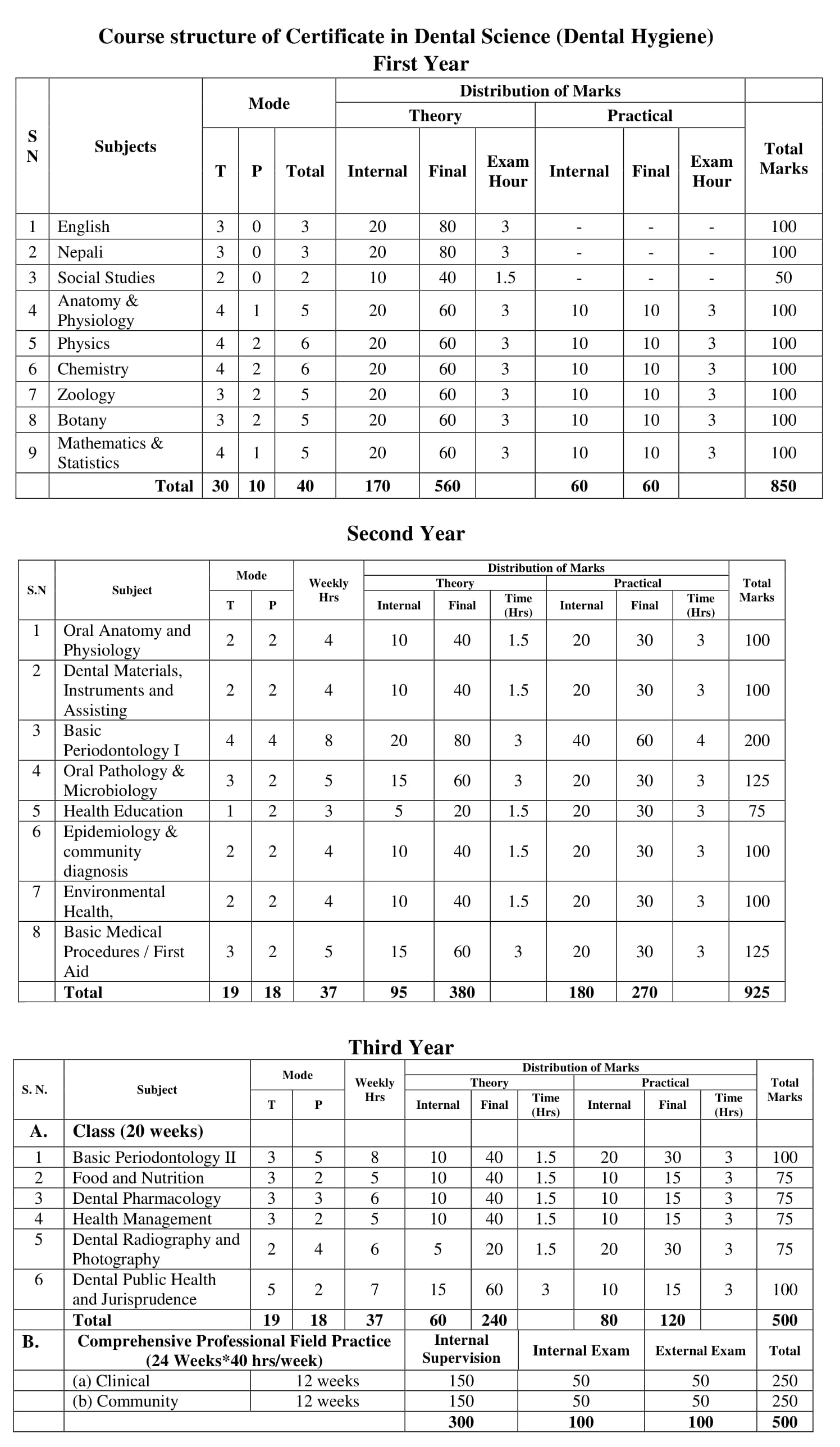
The Certificate in Dental Science (Dental Hygiene) program at Chitwan Medical College (CMC), affiliated with the CTEVT, is tailored to produce middle-level oral health professionals. The course emphasizes providing essential dental and oral healthcare services in clinical, hospital, and community settings. Graduates will develop the skills to work as Dental Assistants under the supervision of Dental Surgeons, with the competence to diagnose and manage basic dental health issues while contributing to preventive oral health initiatives.
The program spans three academic years, following a yearly system.
First Year: Focus on foundational sciences and basic medical knowledge.
Second Year: Emphasis on core dental science subjects and practical applications.
Third Year: Clinical practice, hands-on training in hospitals/clinics, and real-world work experience.
Program Structure:
One academic year: 39 weeks.
Weekly academic hours: 40 hours (excluding evaluation periods).
To qualify for the program, candidates must meet the following requirements:
Minimum Grade C in Mathematics, English, and Science in the School Leaving Certificate (SLC) examination with an average GPA of at least 2.0.
Alternatively, 45% of the aggregate in SLC is for compulsory subjects: Science, Mathematics, and English.
Entrance Examination: Conducted by CTEVT with merit-based selection.
Application Requirements:
SLC Pass Certificate
Character Certificate
Citizenship Certificate
Quota System: Admission is as per CTEVT policy, ensuring inclusivity.
Final Selection: Based on entrance exam scores and verification of submitted documents.
The curriculum includes theoretical knowledge with practical skills and focuses on real-world applications. It is divided into three years:
English
Nepali
Physics
Chemistry
Mathematics
Basic Anatomy and Physiology
Community Health and First Aid
Oral Anatomy and Physiology
Dental Materials
Dental Radiology
Periodontics
Preventive Dentistry
Oral Pathology
Dental Pharmacology
Basic Pathology and Microbiology
Dental Radiography and Imaging
Clinical Periodontics
Preventive Oral Health Care
Community Dentistry
Clinical Training in Hospitals/Clinics
Research and Project Work
Field Training and Internships
Basic Sciences (Physics, Chemistry, Anatomy, Physiology)
Dental Materials
Oral Anatomy and Physiology
Oral Pathology
Preventive Dentistry
Periodontics
Dental Radiology
Dental Pharmacology
Community Dentistry
Clinical Training and Internships
The Certificate in Dental Science program aims to:
Develop competent middle-level dental health professionals to serve hospitals, clinics, and communities.
Equip graduates with practical skills for diagnosing and managing basic oral health problems.
Promote ethical and professional practices in dental healthcare.
Educate patients and communities on preventive oral health care and plaque control measures.
Enhance graduates’ abilities to perform dental scaling, radiography, and basic therapeutic procedures.
Foster skills for conducting outreach programs and referring specialized cases to dental surgeons.
The program employs innovative and interactive teaching techniques, including:
Lectures and Classroom Discussions
Hands-On Laboratory Training
Clinical Demonstrations and Rotations
Field Work and Community Outreach Programs
Project-Based Learning
Workshops and Seminars
Internships in Clinical and Hospital Settings
Research and Case-Based Learning
Graduates of the program will:
Understand the anatomy, physiology, and pathology of oral and dental structures.
Demonstrate competency in performing dental scaling, basic diagnostic procedures, and X-rays.
Develop skills to manage common periodontal diseases under supervision.
Educate and motivate patients on oral hygiene and plaque control measures.
Assist dental surgeons during complex dental procedures.
Safely handle and maintain dental instruments and materials.
To Conduct community outreach programs to promote oral health awareness.
Work effectively as a team member in hospital and clinical settings.
Graduates of the Certificate in Dental Science program can explore various opportunities:
Further Education: Pursue advanced studies in dental hygiene or related fields.
Clinical Practice: Work as Dental Assistants in hospitals, clinics, and dental care centers.
Community Health: Serve in government health programs and community oral health initiatives.
Research: Contribute to studies on oral health and dental care improvements.
International Careers: Explore opportunities abroad, especially in countries with demand for dental hygienists.
Upon completion, graduates can work as:
Dental Hygienist
Dental Assistant
Oral Health Educator
Community Dental Health Worker
Dental Lab Technician
Research Assistant in Oral Health Programs
Merit-Based Scholarships: Awarded to top-performing students.
Need-Based Financial Aid: Support for students from disadvantaged backgrounds.
Institutional Awards: Scholarships for outstanding academic and practical performance.
The program fees are determined according to CTEVT guidelines. Students are encouraged to contact the admission office for detailed information.
Students participate in health camps, dental awareness programs, seminars, clinical workshops, and community outreach activities to enhance practical learning.
Graduates apply their skills to diagnose and treat common dental issues, assist dental surgeons, and promote oral hygiene awareness in clinical and community settings.
The program addresses the need for accessible dental care in underserved areas, improving community oral health through preventive care and education.
Students acquire technical skills in dental hygiene, radiography, and clinical assistance while developing communication, teamwork, and patient education abilities.
The program equips students with competencies recognized internationally, offering opportunities to work in global healthcare settings where dental hygienists are in demand.
Well-equipped dental labs and clinics.
Experienced and dedicated faculty.
Comprehensive library resources.
Clinical training in reputed hospitals and dental care centers.
Mentorship and career guidance.
The program includes theoretical knowledge with hands-on training, preparing students for rewarding careers in dental healthcare. It offers clinical exposure, ethical training, and opportunities to serve communities.
This program is ideal for individuals passionate about dental care and community service and those working as vital members of healthcare teams.
The demand for dental hygienists increases as oral health awareness grows globally, creating numerous career opportunities in healthcare and community settings.
To excel in dental science, actively participate in practical sessions and clinical training. Consistent practice with dental instruments and materials will enhance technical proficiency. Engage in group discussions and collaborative projects to clarify doubts and learn from peers. Regularly attend health camps and workshops to gain hands-on experience. Stay updated by reading dental journals and research articles. Build strong communication skills to educate patients on oral hygiene practices effectively. Manage time efficiently by balancing theoretical studies, practical training, and revisions. Seek guidance from mentors and take feedback constructively to refine your skills. Lastly, apply what you learn in real-world settings to the connection between knowledge and practice.
The Certificate in Dental Science (Dental Hygiene) program at Chitwan Medical College empowers students with practical skills, ethical values, and clinical expertise to thrive in oral healthcare and contribute to better health outcomes for individuals and communities.