Bachelor of Education (B.Ed.) at Dapcha Krishna Multiple Campus (दाप्चा कृण्ण बहुमुखी क्याम्पस) is a Tribhuvan University (TU) affiliated bachelor’s program delivered in the four-year annual system. The campus is a community campus located in Namobuddha Municipality-9, Dapcha Road, Chhatrebanjha, Kavre, Bagmati Province, Nepal.
The program follows TU rules, guidelines, and the TU annual calendar for admission, curriculum, annual examinations, and results. Within TU’s Faculty of Education structure, the four-year B.Ed. is organized around communication skills, professional core courses, specialization major and minor subject areas, and a teaching internship/practicum.
College: Dapcha Krishna Multiple Campus (दाप्चा कृण्ण बहुमुखी क्याम्पस)
Location: Namobuddha Municipality-9, Dapcha Road, Chhatrebanjha, Kavre, Bagmati Province, Nepal
Affiliation: Tribhuvan University (TU)
Course: Bachelor of Education (B.Ed.)
Duration & system: Four years, annual system
Total requirement: 22 courses, 2200 full marks
Core components: Communication skills, professional core, major/minor specialization, teaching internship/practicum
Contact: +977-11-413057
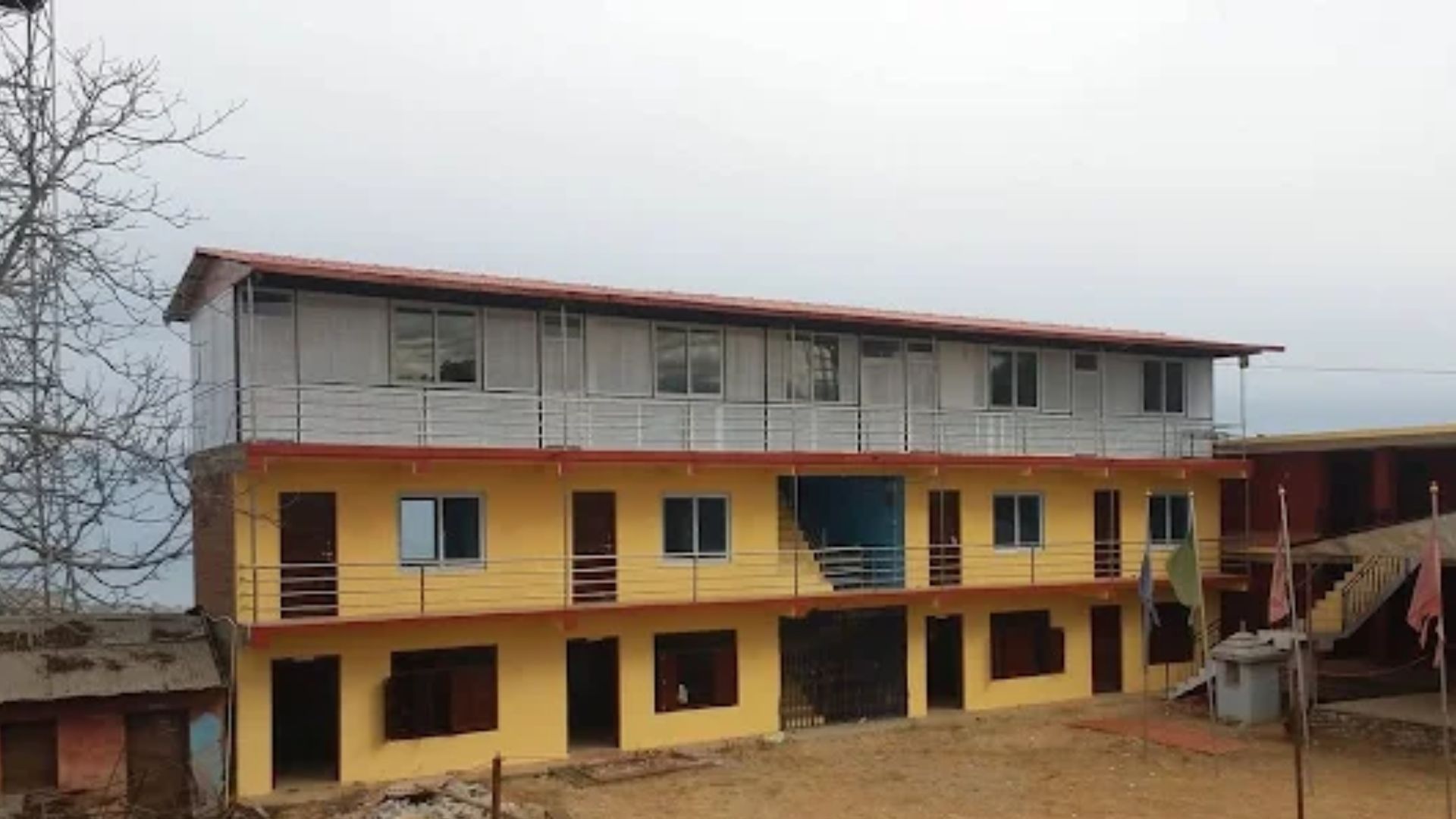
TU’s four-year B.Ed. (annual system) is structured as a professional and academic program intended to prepare teachers who can teach two subjects at the secondary level. Students study one specialization as a major and another as a minor, along with education foundations and a teaching practice component.
The four-year B.Ed. requires students to pass 22 courses. Courses are grouped into five areas: communication skills, professional core, specialization major, specialization minor, and teaching internship/practicum.
Course grouping and marks (annual system):
| Group | Area | No. of courses | Full marks |
|---|---|---|---|
| A | Communication skills | 2 | 200 |
| B | Professional core areas | 4 | 400 |
| C | Specialization major | 10 | 1000 |
| D | Specialization minor | 5 | 500 |
| E | Teaching internship/practicum | 1 | 100 |
Year-wise distribution totals: first year 600, second year 600, third year 500, and fourth year 500.
Communication skills (Group A) includes two compulsory courses: General Nepali and General English.
Professional core courses (Group B) include Philosophical and Sociological Foundations of Education, Educational Psychology, Curriculum and Evaluation, and one elective from Instructional Technology, ICT in Education, or ICT in Specialized Subject.
Students select one specialization area as a major (10 courses). The listed major areas include: Nepali Language Education, English Language Education, Math Education, Science Education, Health and Physical Education, Population Education, Geography Education, Economics Education, History Education, and Political Science Education.
Students select one specialization area as a minor (5 courses) that is different from the major. The listed minor areas include: Nepali Language Education, English Language Education, Math Education, Science Education, Health Education, Physical Education, Population Education, Geography Education, Economics Education, History Education, Political Science Education, and additional listed areas such as Primary Education, Early Childhood Development Education, Vocational Education, Non-Formal Education, and Education Management.
Minor selection rule: the minor subject area should be different from the major subject area, and biology minor is restricted to students majoring physical science.
Teaching Internship/Practicum (Group E) is a dedicated component of the four-year B.Ed., with a 100-mark allocation in the course structure. Teaching Practice (Ed. 441) appears in the fourth-year course cycle section.
General eligibility for admission: students with Higher Secondary Education Examination Pass Certificate (HSEEPC/HSE), Proficiency Certificate Level (PCL) of TU, or an equivalent qualification to HSE/Grade 12 are eligible to apply for B.Ed.
Additional entry requirements apply by major specialization area. Examples listed include:
Nepali Education: Grade 12/PCL with Nepali major with at least 200 marks.
English Education: Grade 12/PCL with English or Linguistics major, or 50% in General English, or 50% in an entrance examination conducted by the respective department of the campuses.
Mathematics Education: Grade 12/PCL with Mathematics major containing at least 200 marks.
Science Education: Grade 12/PCL with Physics, Chemistry, and Biology with at least 100 full marks in each subject.
Health and Physical Education: Grade 12/PCL with Health & Physical Education, or related backgrounds as listed; candidates without the background must pass a physical fitness related entrance test.
Dapcha Krishna Multiple Campus lists facilities and student-support features that include a library, sports, multimedia support, journal, counseling, scholarships, classrooms, tours, and extra-curricular activities (ECA).
Phone: +977-11-413057
Location: Namobuddha Municipality-9, Dapcha Road, Chhatrebanjha, Kavre, Bagmati Province, Nepal
It is a four-year B.Ed. program delivered in the annual system under TU affiliation.
The program requires 22 courses with a total of 2200 full marks, grouped into communication skills, professional core, major specialization, minor specialization, and teaching internship/practicum.
The communication skills group includes General Nepali and General English, and both are compulsory.
Professional core courses include Philosophical and Sociological Foundations of Education, Educational Psychology, Curriculum and Evaluation, and one elective selected from Instructional Technology, ICT in Education, or ICT in Specialized Subject.
Major specialization areas listed include Nepali Language Education, English Language Education, Math Education, Science Education, Health and Physical Education, Population Education, Geography Education, Economics Education, History Education, and Political Science Education.
No. The minor subject area must be different from the major subject area; biology minor is restricted to students majoring physical science.
Yes. Teaching Internship/Practicum is part of the course structure, and Teaching Practice (Ed. 441) appears in the fourth-year course cycle.