The Bachelor of Science in Computer Science and Information Technology (B.Sc. CSIT) at D.A.V. International College is a four-year undergraduate program affiliated with Farwestern University. Organised across eight semesters, the course combines computer science foundations with the applied study of information technology. Students engage in classroom instruction, laboratory exercises, projects, research activities, presentations, and internships.
The program covers programming, software development, computer networks, cybersecurity, data management, data analysis, artificial intelligence, web technologies, and information systems. Its academic approach also gives attention to problem-solving, communication, teamwork, and professional responsibility.
| Field | Details |
|---|---|
| Course | Bachelor of Science in Computer Science and Information Technology |
| Abbreviation | B.Sc. CSIT |
| College | D.A.V. International College |
| Affiliation | Farwestern University |
| Level | Bachelor’s degree |
| Duration | Four years |
| Academic structure | Eight semesters |
| Learning format | Classes, laboratories, projects, research activities, presentations, and internships |
| Academic support | Faculty mentorship and Research and Placement Cell |
B.Sc. CSIT brings together the study of computing principles and the practical use of information technology. At D.A.V. International College, the course is delivered through an academic structure that connects conceptual learning with laboratory and project-based work.
Students study how software is designed and developed, how computer and network systems operate, and how data is organised, managed, and analysed. The course also introduces areas such as cybersecurity, artificial intelligence, web technologies, and information systems.
The eight-semester structure allows students to develop their technical understanding gradually. Classroom study provides the conceptual base, while practical activities give students opportunities to apply what they have learned.
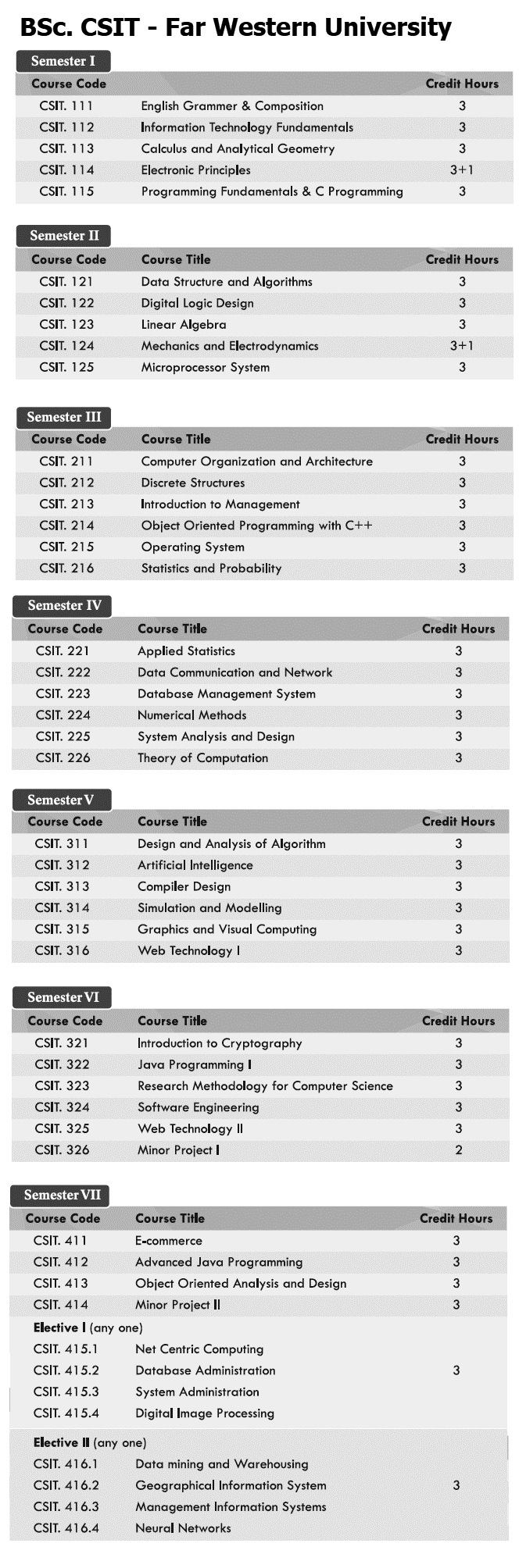
The academic coverage of the B.Sc. CSIT program includes:
Programming
Software development
Network administration
Cybersecurity
Data analysis
Data management
Artificial intelligence
Web technologies
Computer and information systems
These areas expose students to different parts of computing. Programming and software development focus on building digital applications, while networking and cybersecurity address computer communication and system protection.
Data-related study develops an understanding of how information is stored, organised, and examined. Web technologies and information systems connect computing knowledge with applications used by organisations and digital service providers.
Practical work is integrated into the course through:
Laboratory exercises
Individual and group projects
Applied assignments
Research activities
Internships
Technical presentations
Problem-solving tasks
Laboratory exercises allow students to test technical concepts in a controlled setting. Projects require them to plan tasks, develop solutions, assess results, and present their work.
Research activities introduce structured inquiry, documentation, and evidence-based analysis. Internships provide exposure to workplace routines and help students understand how technical responsibilities are organised in professional settings.
Through academic and practical work, students may develop abilities in:
Programming and software development
Technical problem-solving
Computer and network system analysis
Data organisation and analysis
Technical documentation
Research and project work
Communication and presentation
Team coordination
Adaptation to changing technical requirements
The level of competence developed in each area depends on academic participation, practical work, project quality, independent practice, and continued learning.
Facilities relevant to the B.Sc. CSIT program include an advanced laboratory, smart classrooms, a library, and a Wi-Fi zone. The college also has an auditorium for presentations and academic activities.
Faculty mentorship supports students during classroom study, laboratory work, and projects. The Research and Placement Cell and Career Cell provide an institutional structure for research-related activities, professional preparation, and placement support.
Other campus facilities include a cafeteria, yoga zone, and sports complex, giving students access to spaces for breaks, physical activity, and interaction outside scheduled classes.
Graduates may explore roles connected with software, computer systems, networks, data, digital services, and technical support. Possible pathways include:
Software Developer
Systems Analyst
Web Developer
Network Administrator
Database Administrator
Cloud Solutions Architect
Business Intelligence Analyst
DevOps Engineer
UX/UI Designer
Data Engineer
IT Consultant
Technical Support Specialist
Digital Marketing Specialist
Blockchain Developer
Career outcomes depend on technical competence, academic performance, project experience, communication skills, professional exposure, employer requirements, and available positions. Some roles may require specialised training or deeper study beyond the undergraduate program.
The course may suit students interested in programming, software development, computer systems, networks, data, cybersecurity, and web technologies.
Students considering the program should be prepared for regular technical practice, laboratory work, projects, teamwork, presentations, and independent study. Interest in logical reasoning and structured problem-solving can also support progress throughout the course.
B.Sc. CSIT stands for Bachelor of Science in Computer Science and Information Technology.
The B.Sc. CSIT program at D.A.V. International College is affiliated with Farwestern University.
The program runs for four years and is organised across eight semesters.
The course covers programming, software development, network administration, cybersecurity, data analysis, data management, artificial intelligence, web technologies, and computer information systems.
Yes. Practical components include laboratory exercises, individual and group projects, applied assignments, research activities, presentations, and internships.
Relevant facilities include an advanced laboratory, smart classrooms, a library, a Wi-Fi zone, and an auditorium.
Graduates may explore roles in software development, systems analysis, web development, networking, database administration, data engineering, technical support, IT consulting, cloud systems, and related fields.