D.A.V. International College was established in 2024 AD and is located in Dhobighat, Lalitpur. The college focuses on computer science and information technology. Affiliated with Farwestern University, it offers the Bachelor of Science in Computer Science and Information Technology (B.Sc. CSIT).
The four-year program is organised across eight semesters and combines theoretical study with laboratory work, projects, research activities, internships, and faculty guidance. The college also has a Research and Placement Cell, a Career Cell, smart classrooms, an advanced laboratory, a library, and spaces for academic and student activities. Its academic approach gives attention to technical knowledge, practical application, problem-solving, communication, teamwork, and responsible professional practice.
| Field | Details |
|---|---|
| Institution | D.A.V. International College |
| Established | 2024 AD |
| Affiliation | Far Western University |
| Academic focus | Computer science and information technology |
| Program | Bachelor of Science in Computer Science and Information Technology |
| Program abbreviation | B.Sc. CSIT |
| Duration | Four years |
| Academic structure | Eight semesters |
| Learning components | Classes, laboratory work, projects, research activities, internships, and mentorship |
| Career support | Research and Placement Cell and Career Cell |
D.A.V. International College was founded to provide degree-level education in computer science and information technology. Its academic direction reflects the growing need for graduates who can understand computing concepts and apply them to practical problems.
The college combines classroom instruction with laboratory work, projects, research activities, and internships. This structure allows students to study technical principles and then apply them through practical assignments and guided academic work.
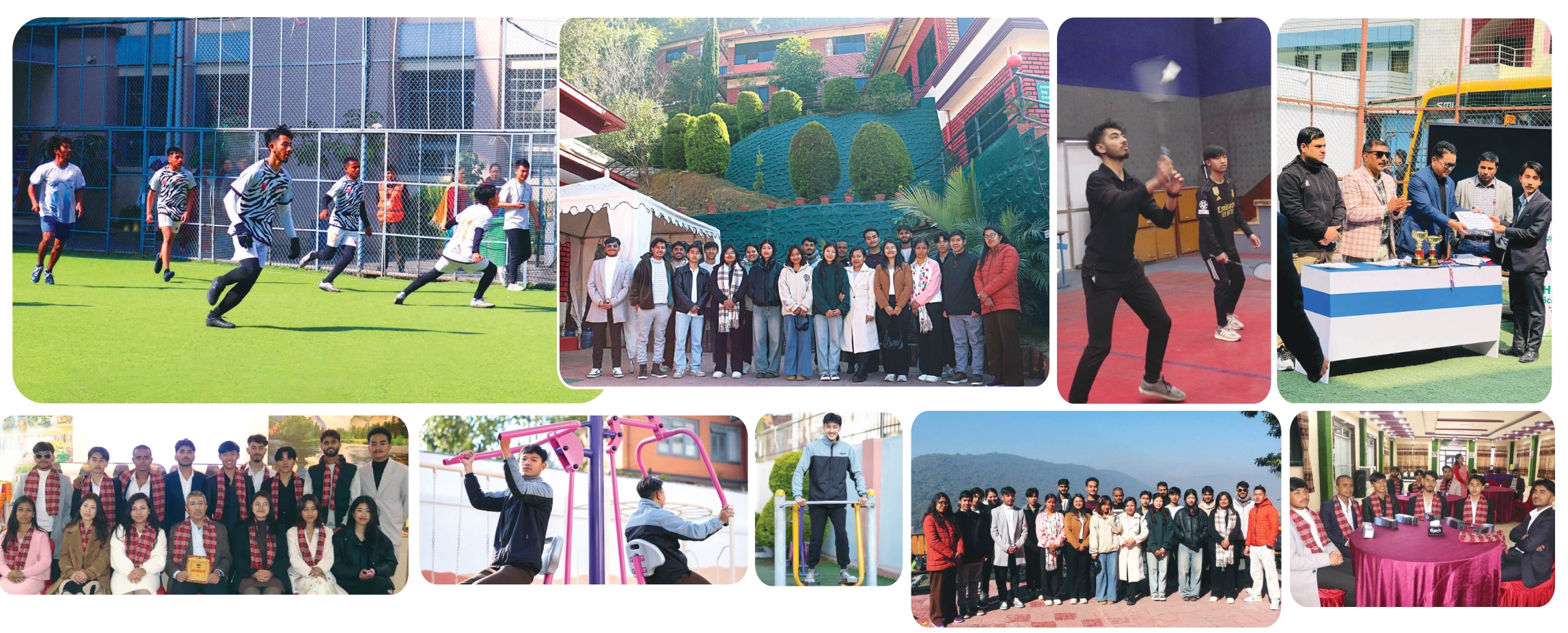
The learning environment also supports activities beyond regular lectures. Academic facilities, career-related units, recreation spaces, and areas for student interaction form part of the college setting.
D.A.V. International College is affiliated with Farwestern University. The affiliation connects the college’s B.Sc. CSIT program with the university’s academic framework in computer science and information technology.
The B.Sc. CSIT program follows a four-year, eight-semester structure. Its academic coverage includes programming, software development, networking, data management, cybersecurity, data analysis, artificial intelligence, and related areas of computing.
D.A.V. International College is responsible for delivering classroom instruction, laboratory activities, projects, guidance, and student support within this academic framework.
The mission of D.A.V. International College is to:
Provide education in computer science and information technology.
Develop critical thinking, problem-solving, and creative abilities.
Prepare students for professional responsibilities in technology-related fields.
Encourage responsible contributions to society and the technology sector.
The college’s vision is to:
Prepare graduates for leadership responsibilities in technology.
Support the use of technology to improve productivity and quality of life.
Maintain a learning environment based on creativity, ethical practice, and academic exploration.
Build a recognised academic identity in technology education.
The academic direction of the college is guided by its chairman, academic head, and program head.
| Name | Position |
|---|---|
| Mr. Anil Kedia | Chairman |
| Mr. Shashi Bhushan Chaturwedi | Academic Head |
| Mr. Sudip Adhikari | Program Head |
Mr. Anil Kedia’s academic direction focuses on preparing students for changing professional requirements in the technology sector. His approach combines technical study with practical experience and encourages students to develop the ability to respond to unfamiliar problems.
His academic message also gives importance to creativity, critical thinking, adaptability, and leadership. Students are expected to understand technical concepts, apply knowledge, assess problems, and take responsibility for their work.
Mr. Shashi Bhushan Chaturwedi emphasises practical learning, critical thinking, adaptability, and teamwork. His academic direction recognises that technology graduates require both subject knowledge and the ability to work effectively with others.
Communication, collaboration, and problem-solving are treated as important parts of academic development alongside technical learning.
Mr. Sudip Adhikari oversees the academic direction of the B.Sc. CSIT program. His program approach combines theoretical foundations with projects, laboratory work, internships, and faculty mentorship.
The program also encourages students to develop communication, teamwork, presentation, and leadership abilities alongside their technical knowledge.
The Bachelor of Science in Computer Science and Information Technology at D.A.V. International College is a four-year undergraduate program divided into eight semesters.
The program provides a foundation in computer science and information technology. Students study how software is developed, how computer and network systems operate, how data is organised and analysed, and how computing can be applied to practical requirements.
The program covers areas such as:
Programming
Software development
Network administration
Cybersecurity
Data analysis
Data management
Artificial intelligence
Web technologies
Computer and information systems
These areas expose students to several branches of computing and information technology.
Practical work forms an important part of the B.Sc. CSIT program. Students take part in:
Laboratory exercises
Individual and group projects
Applied assignments
Research activities
Internships
Presentations
Problem-solving tasks
Laboratory and project work allow students to test concepts and develop working solutions. Research activities introduce structured inquiry, technical documentation, and evidence-based analysis. Internships provide exposure to professional settings and workplace responsibilities.
The program also gives attention to communication, teamwork, and leadership. These abilities are relevant when students work on group assignments, explain technical decisions, prepare documentation, present findings, and coordinate tasks.
Technical education remains the central focus, while these supporting abilities help students organise and communicate their work.
D.A.V. International College has a Research and Placement Cell that includes members of its academic and institutional leadership. The cell provides an organised structure for research guidance, professional preparation, and placement-related activities.
Its members include:
Mr. Anil Kedia, Chairman
Mr. Suman Basnet, Member
Dr. Rameswor Subedi (Ph.D.), Member
Mr. Shashi Bhushan Chaturwedi, Member
Mr. Sudip Adhikari, Member
Dr. Sunil Chaudhary, Ph.D. in Cybersecurity, Member
The cell supports the college’s academic program through research-related activities and career preparation.
D.A.V. International College has facilities for academic work, career support, recreation, and student activities.
Available facilities include:
Wi-Fi zone
Smart classrooms
Career Cell
Auditorium
Cafeteria
Yoga zone
Sports complex
Library
Advanced laboratory
The Wi-Fi zone and smart classrooms support classroom and technology-based learning. The library provides space for reading and academic study, while the advanced laboratory supports practical work connected with the B.Sc. CSIT program.
The auditorium provides space for presentations and college activities. The cafeteria, yoga zone, and sports complex support breaks, physical activity, and student interaction.
The college identifies recruiter and job placement partners from information technology, telecommunications, banking, insurance, manufacturing, healthcare, retail, aviation, media, and professional services.
Examples include WorldLink, Subisu, Vianet, Classic Tech, AccessWorld, DishHome, Ncell, Sofos, Standard Chartered, NIMB, Everest Bank, Kumari Bank, Himalayan Bank, Siddhartha Bank, NMB Bank, Global IME Bank, Laxmi Bank, NIC ASIA, Citizens Bank, Nepal Bank, Prime Bank, Sanima Bank, K.L. Dugar Group, Berger, Daraz, Nestlé, Tata, Hyundai, Sipradi, CG Holdings, Grande International Hospital, National Kidney Center, Himalaya Airlines, and Mountain Television.
Recruitment outcomes depend on available positions, employer requirements, selection procedures, student performance, technical ability, and professional preparation.
Graduates of the B.Sc. CSIT program may consider roles related to software, computer systems, data, networks, digital services, and technical support.
Possible career pathways include:
Software Developer
Systems Analyst
Web Developer
Network Administrator
Database Administrator
Cloud Solutions Architect
Business Intelligence Analyst
DevOps Engineer
UX/UI Designer
Data Engineer
IT Consultant
Technical Support Specialist
Digital Marketing Specialist
Blockchain Developer
Preparation for a particular role depends on academic performance, practical ability, project work, communication, professional exposure, and employer requirements.
Some positions may require specialised technical preparation beyond the undergraduate curriculum. Projects, internships, research activities, and continued practice can help students develop stronger competence in their chosen area.
The college’s academic approach combines technical study with wider student development. Students are encouraged to analyse problems, test ideas, work with others, and communicate their findings.
Projects and laboratory exercises support practical discipline. Research activities require careful inquiry and documentation. Group work develops coordination and task-sharing abilities, while presentations help students explain technical work clearly.
Campus facilities also give students access to spaces for reading, academic events, physical activity, and interaction outside regular classroom sessions.
D.A.V. International College was established in 2024 AD.
The college is affiliated with Farwestern University.
The college offers the Bachelor of Science in Computer Science and Information Technology, commonly known as B.Sc. CSIT.
The program runs for four years and is divided into eight semesters.
The program covers programming, software development, network administration, cybersecurity, data analysis, data management, artificial intelligence, web technologies, and computer systems.
Yes. Practical learning includes laboratory work, projects, applied assignments, research activities, presentations, and internships.
Facilities include a Wi-Fi zone, smart classrooms, a Career Cell, an auditorium, a cafeteria, a yoga zone, a sports complex, a library, and an advanced laboratory.
The college has a Research and Placement Cell and a Career Cell that support career preparation and placement-related activities.