Overview
BBS at Divya Gyan College, Putalisadak, Kathmandu
Bachelor of Business Studies (BBS) at Divya Gyan College is a four-year Tribhuvan University (TU) program offered from the college’s city-center location at Putalisadak, Kamaladi Mode, Kathmandu. The college states that it runs BBS in affiliation with TU and focuses on management and IT education. Students learn core business subjects while also gaining access to structured add-on training and internships that run alongside the university curriculum.
If you are comparing BBS options in Kathmandu, this guide explains what you study under the TU syllabus, how Divya Gyan organizes skill modules, where internships fit in, and what support exists on campus. The goal is clarity—so you can make a confident, informed decision.
Highlights
-
Affiliation and Program: TU-affiliated BBS; program oversight by TU Faculty of Management.
-
Location: Putalisadak, Kamaladi Mode, Kathmandu—walkable academic zone with public transport access.
-
Parallel Skill Tracks: Non-credit vocational courses run each year in addition to university courses.
-
Internship Pathway: College-industry tie-ups plus in-house internship opportunities.
-
Earn While You Learn: Structured internship/apprenticeship model integrated into BBS with time-bound daily work hours in early phases.
-
Dedicated Placement Cell: Vacancy circulation, CV forwarding, interview orientation, and industry talks.
-
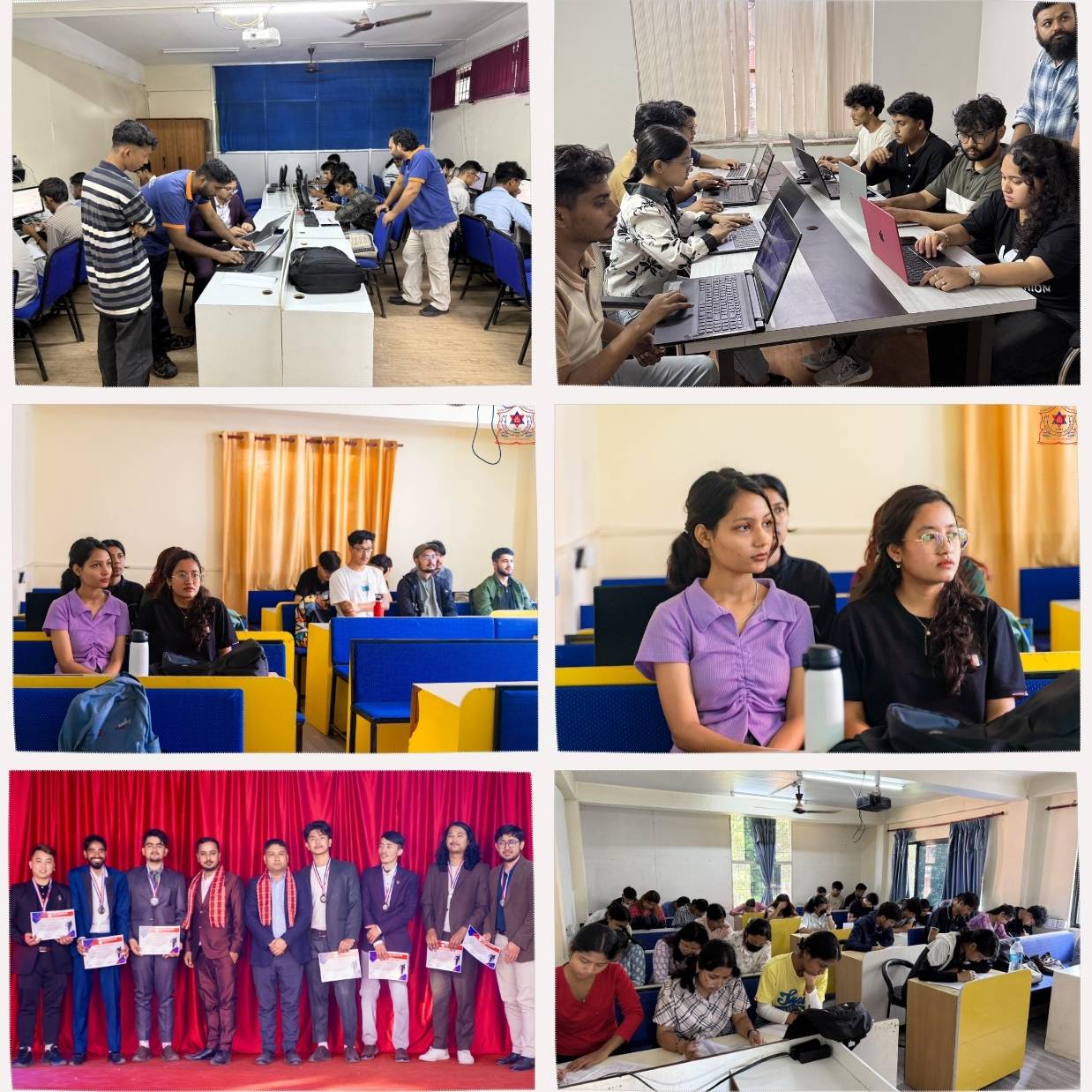
Campus Life: Sports week, tours, cultural events, and a cafeteria that seats about 100–120 students.
Curriculum Details
BBS follows the Tribhuvan University (Faculty of Management) four-year structure. Course codes and titles such as MGT-201 Business English, MGT-202 Business Statistics, MGT-207 Microeconomics for Business, MGT-211 Financial Accounting and Analysis, MGT-213 Principles of Management, MGT-214 Fundamentals of Marketing, MGT-204 Business Law, MGT-205 Business Communication, MGT-209 Macroeconomics for Business, and others are standard under TU.
Divya Gyan’s BBS page lists representative first–fourth year course codes that mirror TU’s framework (e.g., MGT-201, MGT-202, MGT-207, MGT-211, MGT-213 in early years; area courses such as FIN-251, FIN-253, MKT-251/252/253, ACC-250/251/252/256, MGT-221, MGT-225 later). Always check the current TU syllabus and annual notices for any updates to titles or sequencing.
Typical academic coverage (TU):
-
Business communication, statistics, micro/macro-economics, business law
-
Principles of management; accounting and cost/management accounting
-
Finance, marketing, banking, investments, international business, research, entrepreneurship
Reference the TU Faculty of Management BBS syllabus PDFs for official composition and codes.
Objectives
The BBS program under TU builds foundational competence in major business domains—accounting, finance, marketing, economics, and management—so graduates can enter entry-level roles or pursue postgraduate study such as MBS or MBA. The course set aims to strengthen analytical thinking, communication for business settings, and ethical decision-making through the standard TU course grid.
From the college’s perspective, BBS learners at Divya Gyan also receive structured exposure to applied skills through short modules and internships that complement the TU curriculum.
Scope
Students complete a broad business curriculum that supports roles in accounting support, administration, sales coordination, banking operations, customer relations, and entry-level analysis. Many use BBS as a base for professional certifications or further study. TU’s syllabus mix—law, finance, marketing, research, and entrepreneurship—keeps pathways open across sectors.
At Divya Gyan, internships and the Earn While You Learn model give early workplace contact so you can test interests before graduation. This reduces guesswork and helps you identify a suitable domain for your first job.
Learning Outcomes
By the end of the program, students are expected to:
-
Prepare and interpret basic financial statements; apply cost concepts in routine decisions.
-
Explain market behavior and business environments using micro and macro concepts.
-
Communicate in written and oral formats used in business, applying standard formats and tone.
-
Apply fundamentals of marketing, banking, investments, and operations in case and project work.
-
Plan small projects using business research methods and entrepreneurship coursework.
These outcomes link directly to the TU course codes and the college’s project and training provisions.
Skill Development Modules
Divya Gyan runs add-on training for BBS each academic year:
-
Year 1: Computer basics and MS Office; format letters, manage data, perform calculations, build presentations; later, advanced Excel for analysis and visualization.
-
Year 2: Exposure to accounting software to simulate real-world bookkeeping and reporting.
-
Year 3: Digital marketing modules—Search Engine Optimization and Social Media Marketing practice with tools.
-
Optional: Python for data analysis to work with larger datasets for managerial decision contexts.
-
Soft skills: Sessions on leadership, communication, and presentations are part of the training mix.
This structure helps you move from classroom concepts to applied tasks that employers recognize.
Teaching Methodology
The college describes a four-part teaching approach:
-
Step I—Curriculum: Experienced faculty use multimedia-aided classes to connect theory and practice.
-
Step II—Non-credit Courses: Short modules and workshops run across four years to build workplace readiness.
-
Step III—Internships: Industry linkages and in-house internships provide supervised, real-task exposure.
-
Step IV—Placement: Guidance continues into job applications and transition support.
Students also see the “Earn While You Learn” pathway, where early internship hours are capped (up to four hours per day initially) and scaled as skills grow, keeping study commitments intact.
Admission Requirements
Institution-specific: Divya Gyan states that BBS applicants should have completed +2 or PCL and pass the entrance test conducted by the affiliated college. Contact the college for current test dates and required documents.
University framework: Follow TU Faculty of Management norms for BBS eligibility and enrollment as published in official TU/FoM notices and syllabus documents. Always review the latest circulars for any revisions.
Career Opportunities
Graduates commonly start in roles such as accounts assistant, junior officer (banking support), sales and marketing associate, administrative coordinator, or customer relations representative. Many move to specialized tracks—finance, taxation, banking operations, logistics, or entrepreneurship—after gaining initial experience or completing a master’s degree. TU’s BBS course basket provides the academic base for these moves.
Divya Gyan’s placement support includes vacancy postings, CV forwarding, interview orientation, and industry talks, which helps you navigate first applications.
Scholarships and Financial Aid
The college information highlights affordability as a principle and runs skill-building modules at no extra training cost in several cases; for precise fee waivers or scholarships, request the current policy from the admissions desk, as financial support schemes change over time.
Why Choose BBS at Divya Gyan College?
-
TU-recognized BBS with clearly mapped subjects and codes.
-
Skill modules each year for BBS: Office tools, accounting software, digital marketing, optional data analysis.
-
Earn While You Learn structure that links early training to supervised internships.
-
Active placement cell, guest lectures, and industry visits to keep you current with market practices.
-
Student life with sports week, tours, cultural events, and a working cafeteria space that encourages peer connection.
Conclusion
If your plan is a management degree in Kathmandu that balances TU academics with structured skill practice, BBS at Divya Gyan offers a clear pathway: study the TU curriculum, complete targeted yearly modules, enter internships with guardrails on hours, and use the placement cell when you are ready to apply. Review TU’s official syllabus and the college’s latest admissions notice before you submit forms.
FAQ
1) Where is the campus located?
Putalisadak, Kamaladi Mode, Kathmandu.
2) Which university is the BBS affiliated to?
Tribhuvan University, through its Faculty of Management.
3) What subjects will I study under TU BBS?
Core areas include Business English (MGT-201), Business Statistics (MGT-202), Microeconomics for Business (MGT-207), Business Law (MGT-204), Business Communication (MGT-205), Principles of Management (MGT-213), Financial Accounting and Analysis (MGT-211), Fundamentals of Marketing (MGT-214), plus advanced and area courses in later years. Refer to the Faculty of Management PDFs for official details.
4) Does Divya Gyan offer extra training for BBS students?
Yes. Annual training covers Office tools and advanced Excel; accounting software practice; digital marketing; optional Python for data analysis; and soft skills.
5) Is there an internship model for BBS?
Yes. The college runs in-house and partner internships. The Earn While You Learn model starts with limited daily hours and scales with performance so study time stays protected.
6) What support does the placement cell provide?
Vacancy sharing, CV forwarding, interview orientation, and expert talks; industry visits are arranged to observe workflows.
7) What is the college’s minimum stated requirement?
+2 or PCL passed and a qualifying entrance test conducted by the college. Always verify the latest intake notice.