Overview
BCA at Divya Gyan College, Putalisadak, Kathmandu
Bachelor of Computer Application (BCA) at Divya Gyan College is conducted under Tribhuvan University (TU), Faculty of Humanities and Social Sciences. The college sits at Putalisadak, Kamaladi Mode, Kathmandu, and has offered IT and Management education since 2007. You study in a central location with access to city resources, transport, and industry networks that support internships and early career exposure.
The college follows TU’s BCA framework and complements it with non-credit skill modules, on-site tasks, and structured internships. This mix helps you apply classroom learning to real tasks from the first semesters onward.
Highlights
-
TU-affiliated BCA (4 years/8 semesters) with campus location at Putalisadak, Kathmandu.
-
Teaching–learning includes university courses plus non-credit professional modules each year.
-
Stepwise learning pathway: curriculum, non-credit modules, internships, and placement support.
-
“Earn While You Learn” pathway integrates internships and apprenticeships during study.
-
Industry tie-ups and in-house internships across development, testing, networking, and UI/multimedia.
-
Official training partner: IT Training Nepal Pvt. Ltd. for professional training.
Curriculum Details
TU’s BCA curriculum spans eight semesters. At Divya Gyan, you follow the university scheme while the college adds non-credit enhancers across semesters.
Core early courses build your base in computing and math, while later semesters move into systems, networking, cloud, data, and projects. Examples from the TU structure include:
-
Semester I: Computer Fundamentals and Applications; Society & Technology; English I; Mathematics I; Digital Logic
-
Semester II: C Programming; Financial Accounting; English II; Mathematics II; Microprocessor & Computer Architecture
-
Semester III: Data Structures and Algorithms; Probability & Statistics; System Analysis and Design; Object-Oriented Programming in Java; Web Technology
-
Semester IV: Operating System; Numerical Methods; Software Engineering; Scripting Language; Database Management System; Project I
-
Semester V: MIS & E-Business; .NET Technology; Computer Networking; Introduction to Management; Computer Graphics & Animation
-
Semester VI: Mobile Programming; Distributed System; Applied Economics; Advanced Java; Network Programming; Project II
-
Semester VII: Cyber Law & Professional Ethics; Cloud Computing; Internship; Image Processing; Electives (Database Administration/Network Administration); Operational Research; Project III
-
Semester VIII: Database Programming; GIS; Data Analysis & Visualization; Machine Learning
You can expect course codes such as CACS, CACO, CAEN, CAMT, CAAC, CAIN, CAPJ across the semesters, reflecting the TU structure. For the official BCA syllabus and periodic semester notices, refer to the Faculty of Humanities and Social Sciences , TU.
Objectives
-
Build a strong base in computing concepts, programming, databases, networks, and systems.
-
Help you read technical documents, write clean code, document your work, and manage small projects.
-
Introduce applied areas such as mobile apps, cloud, data visualization, and machine learning so you understand how these pieces work together in real tasks.
-
Encourage ethical practice and professional conduct through modules on cyber law and professional standards.
-
Prepare you to enter internships before graduation so you gain practical exposure and confidence.
Scope
BCA graduates work in software and web development, quality assurance, database administration, network and system administration, cloud support, IT coordination, and entry-level data roles. The campus emphasizes early exposure to work settings through industry tie-ups and a structured internship ladder, which extends your reach toward junior developer, tester, analyst, and support engineer roles across software firms, ISPs, banks, media, and service companies.
Learning Outcomes
By the end of the program, you should be able to:
-
Analyze a user problem, plan a solution, and implement a working prototype using appropriate languages and frameworks.
-
Work with databases: schema planning, queries, transactions, and basic administration.
-
Explain how operating systems, networks, and distributed systems handle processes, memory, I/O, and communication.
-
Build and consume APIs and follow version control workflows in small teams.
-
Prepare reports, present your work, and follow professional etiquette and cyber-ethics in projects and internships.
Skill Development Modules
Divya Gyan augments university courses with non-credit offerings and professional training. These modules vary by cohort and align with current tools in development, testing, networking, and UI. Examples include:
-
Web fundamentals, programming in Python/Java/.NET stacks, database practice, and small web app builds.
-
QA basics with manual test design, API testing fundamentals, and exposure to automation tools.
-
Networking practice with routers/switches and introductory CCNA topics; system administration on Windows/Linux.
-
UI and graphics practice using tools such as Figma and Adobe tools for interface and media work.
Professional training is supported by IT Training Nepal Pvt. Ltd., the college’s official training partner.
Teaching Methodology
The college follows a four-step delivery:
-
Curriculum: Classroom teaching with experienced faculty, audio-visual aids, and practical demonstrations.
-
Non-credit Courses: Short modules to strengthen specific skills for workplace readiness.
-
Internships: In-house and external placements through industry linkages.
-
Placement: CV review, interview guidance, and continued mentoring as you transition to jobs.
Teaching happens inside and outside class—projects and on-site tasks help you see how ideas work in practice.
Admission Requirements
Tribhuvan University sets the following baseline for BCA admissions:
-
Minimum “D” in each subject of Grade 11 and 12 with CGPA 2.0, or
-
Second division in 10+2/PCL or equivalent.
Semester notices, syllabus files, and entrance information are published by the FoHSS Dean’s Office on official channels, including the entrance portal for online registration. Check current calls and dates on the FoHSS notice/downloads pages and the entrance portal.
Application Steps (typical flow)
-
Review eligibility and syllabus on FoHSS channels.
-
Register for the entrance via the FoHSS portal and keep the OTP/credentials safe.
-
Sit for the TU entrance as scheduled; submit documents during admission at the college after result publication. (Refer to the latest FoHSS notices for the current session.)
Career Opportunities
Common entry roles after BCA include junior software developer, web/app developer, QA trainee/engineer, database assistant, network support, and IT support officer. In Nepal’s software and service sector, many roles expect a learning mindset, teamwork, documentation skill, and readiness to work on small features or test cycles from day one. Divya Gyan’s pathway stresses early practice and internships to help you build a project portfolio before graduation.
Internships and “Earn While You Learn”
The college runs an in-house internship program and maintains relationships across software companies, training institutes, banks, hotels, media, PR, and HR organizations. Students enter internships after foundational training and faculty evaluation. A successful three-month stint can lead to a paid internship stage with a monthly stipend covering basic daily costs.
“Earn While You Learn” captures the idea that you start real work as soon as you gain enough theoretical base, so classroom progress and field experience grow together. This pathway applies to both BCA and BBS at the college.
Internship Areas for BCA
-
Application development: Java, MERN, Python, .NET, PHP/MySQL, Flutter.
-
Software testing: test case writing, API testing exposure, and basic automation.
-
Networking/system administration: routers, switches, Windows/Linux server practice; ISP referrals.
-
UI/graphics/multimedia: interface design workflows and production tools.
Placement Support
A placement unit helps review CVs, match openings, and prepare you for interviews. Guest sessions and industry visits add market context and help you understand expectations at the workplace. Vacancy information circulates through notice boards and student groups.
Student Life and Facilities
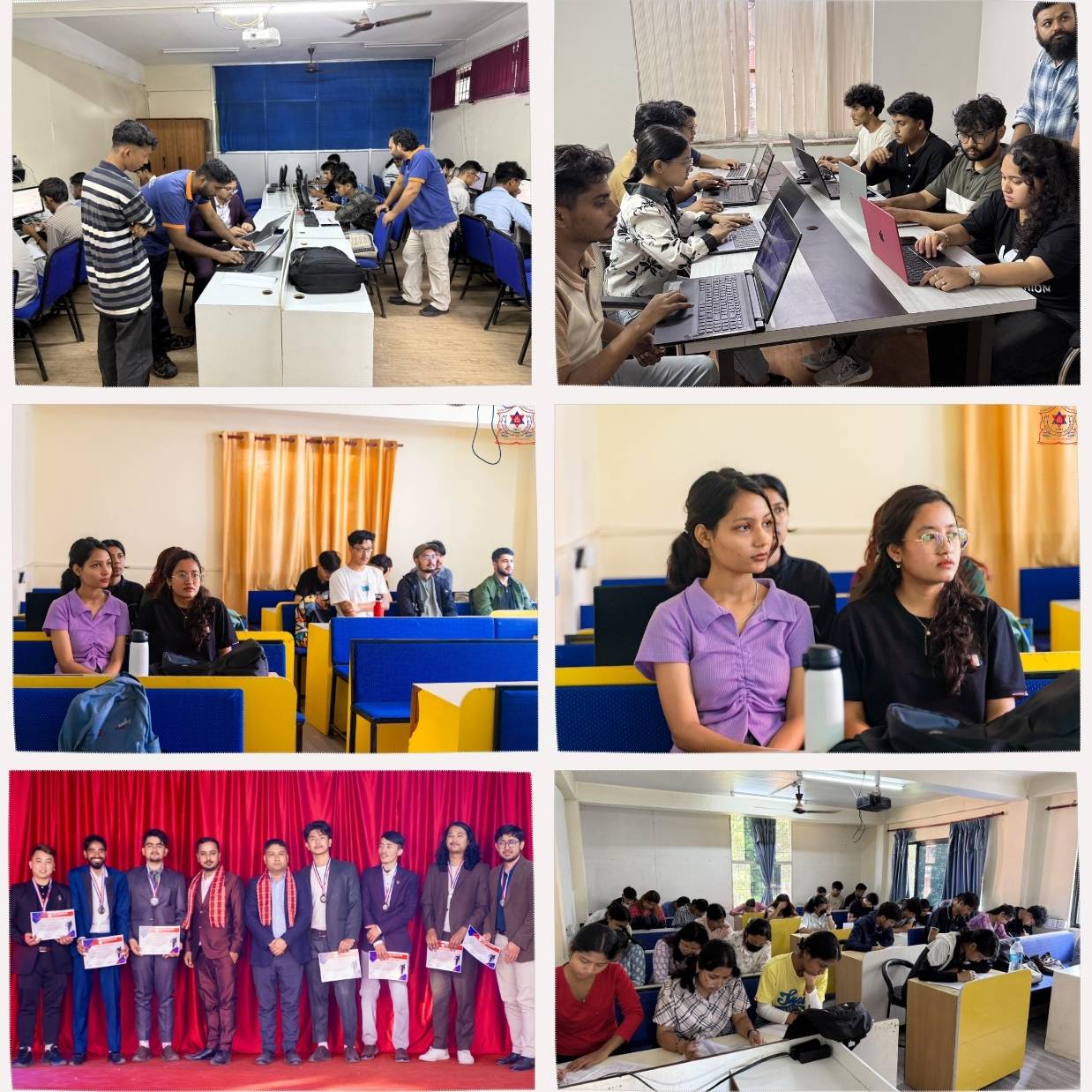
Campus life includes sports, an annual sports week, academic competitions, guest talks, workshops, and cultural events run with student participation. Educational tours cover places like Pokhara, Dhampus, Chitwan, Chitlang, Ilam, Muktinath, Lumbini, Dharan, and Bhedetar, which helps you connect with peers and learn teamwork in unfamiliar settings.
The cafeteria seats around 100–120 students and offers internet access, which helps when you need to revise code or prepare presentations while you eat. Feedback channels exist to keep services in check.
Scholarships and Financial Aid
Merit-based and need-based information changes by session. The academic office provides the current rules, application windows, and any partner-supported assistance available at the time of admission. (Use the latest college notice and TU guidance when you apply.)
Why Choose BCA at Divya Gyan College?
-
TU-recognized curriculum with clear semester structure and project work.
-
Non-credit skills and short trainings that keep you moving beyond the minimum course list.
-
Structured pathway to internships and a realistic “Earn While You Learn” plan.
-
Official training partner support and industry tie-ups that connect you to real tasks sooner.
-
Central Kathmandu location that reduces commute time and expands access to events and job interviews.
Conclusion
If you want structured learning plus early workplace exposure, BCA at Divya Gyan offers a clear route. You work through TU’s semester plan, add focused skills, and step into internships before graduation. The result is a portfolio of code, teamwork evidence, and references that speak to your readiness for entry-level roles in Nepal’s IT market and beyond.
FAQ
What is the affiliation of BCA at Divya Gyan College?
The BCA program runs under Tribhuvan University (Faculty of Humanities and Social Sciences).
Where is the college located?
Putalisadak, Kamaladi Mode, Kathmandu, Nepal.
What is the minimum eligibility?
Minimum “D” in each subject of Grade 11 and 12 with CGPA 2.0, or second division in 10+2/PCL or equivalent, as per TU’s BCA rule. Check current FoHSS notices for any updated cohort rules.
How do I register for the TU entrance?
Use the FoHSS entrance portal for online registration and follow the on-screen OTP verification process.
What internship options are available for BCA?
Options include app development (multiple stacks), QA/testing, networking/system administration, and UI/graphics/multimedia. In-house and external placements exist.
Does the college support placements?
A placement unit helps with CVs, interview prep, and forwarding applications to partner companies; guest lectures and visits add labor-market context.
Are there non-credit trainings?
Yes. Short modules supplement the university syllabus to help you gain specific workplace skills during the four years.