Overview
Divya Gyan College is a Kathmandu-based institution offering undergraduate study in Information Technology and Management with an emphasis on practical learning and early industry exposure. Established in 2007 and located at Putalisadak (Kamaladi Mode), the college runs Bachelor of Computer Application (BCA) under Tribhuvan University’s Faculty of Humanities and Social Sciences and Bachelor of Business Studies (BBS) under the Faculty of Management.
The Divya Gyan College Kathmandu approach links classroom learning with non-credit skills modules, internships, and a placement cell so students can build job-ready capability while completing their degree.
Quick Highlights
-
Established: 2007 A.D.
-
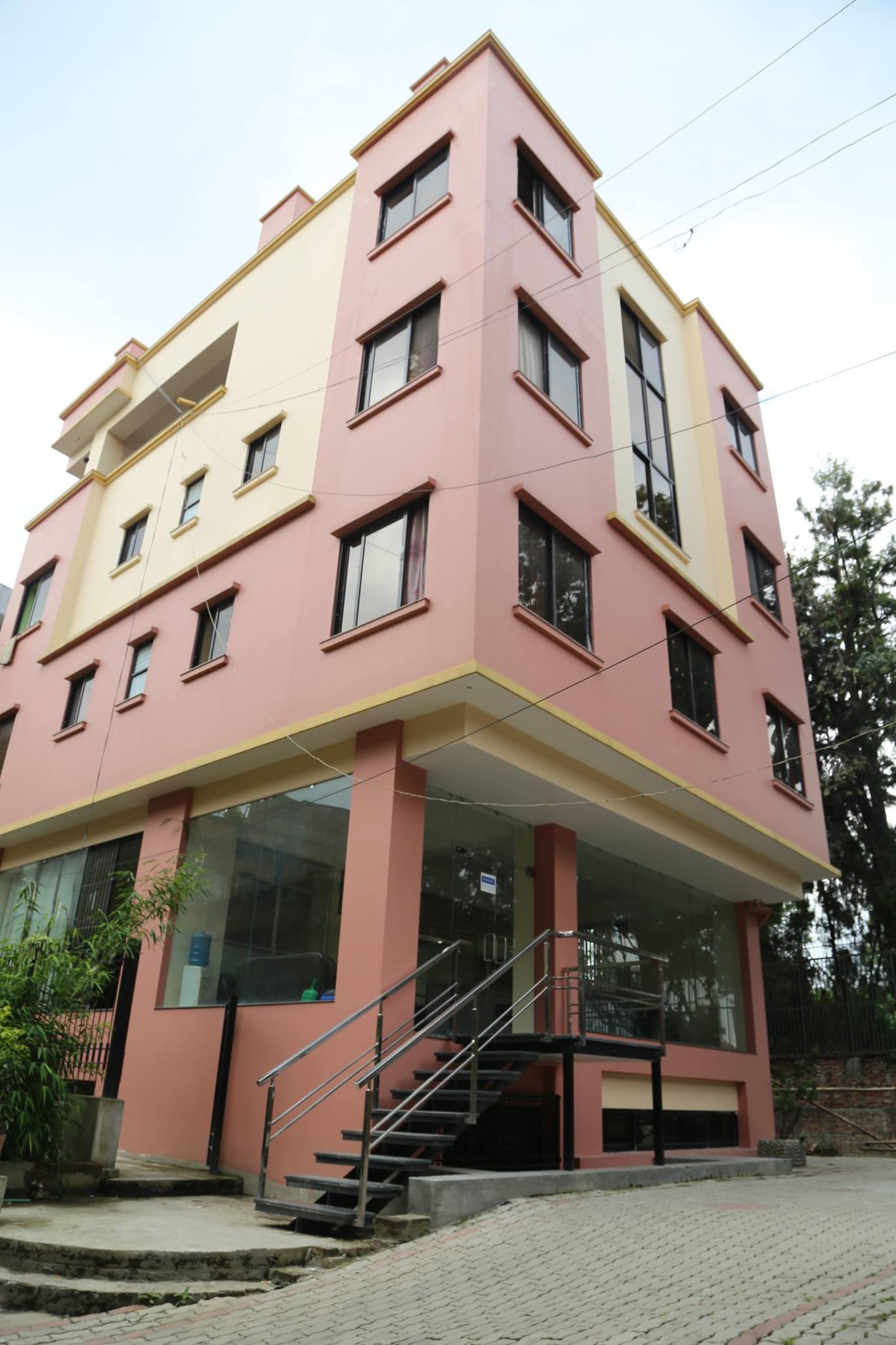
Location: Putalisadak, Kamaladi Mode, Kathmandu, Nepal
-
Affiliation: Tribhuvan University (TU) — BCA (FoHSS) and BBS (FoM)
-
Academic Focus: Information Technology and Management with non-credit skill modules every semester
-
Signature Practice: “Earn While You Learn” pathway linking training, internships, and paid placements where applicable
-
Student Support: In-house internships, placement assistance, guest talks, workshops, and project mentoring
-
Campus Life: Sports, tours, cultural events, competitions; cafeteria capacity ~100–120 seats with internet access
About the Institution
Divya Gyan College was founded by a team of academicians and professionals with a shared goal of expanding practical higher education in IT and Management in central Kathmandu. The college states a motto of “Unleashing Limitless Possibilities,” reflecting an emphasis on skills, professional habits, and early workplace experience. Its stated mission is to keep education affordable and build both academic and professional growth, including soft skills such as communication, leadership, and presentation. The vision describes establishing the college as a recognized center in IT and Management while nurturing socially responsible graduates who can compete globally.
The teaching approach adds non-credit learning and projects to TU’s syllabus, backed by classroom multimedia, industry mentors, and structured internships. A placement stage follows so graduates can move into roles aligned with their skills and interests.
Academic Programs Offered
Bachelor of Computer Application (BCA)
BCA at Divya Gyan College is a four-year, eight-semester undergraduate degree under TU’s Faculty of Humanities and Social Sciences. The curriculum covers programming, data structures, networking, databases, operating systems, web technologies, mobile apps, distributed systems, cloud computing, and electives such as database or network administration. The stated objective is to prepare graduates for roles such as software developer, database developer, network engineer, system administrator, security analyst, QA analyst, systems analyst, or IT manager.
Learning structure: Alongside TU courses, the college schedules non-credit modules and project-based tasks. Students encounter core computing subjects in semesters one to four; advanced topics, management exposure, and projects in semesters five to seven; and electives and specialized units in later semesters. An internship is part of the later-stage experience.
Eligibility: Applicants require minimum “D” in all Grade 11–12 subjects with CGPA 2.0 or second division in 10+2/equivalent. Candidates who meet TU’s criteria are eligible to seek admission.
Illustrative syllabus: Early semesters include Computer Fundamentals, Digital Logic, C-Programming, Microprocessor & Architecture, Mathematics, English, and Society & Technology. Mid-program courses include Data Structures, Java (OOP and Advanced), Web Technology, Operating Systems, Software Engineering, Scripting, DBMS, and Project I–III. Advanced units list Mobile Programming, Distributed Systems, Cloud Computing, Image Processing, Network/Database Administration (electives), and Machine Learning.
Skill add-ons: Non-credit workshops, guest talks, coding competitions, and guided projects aim to reinforce practical skills for internships and placements.
Bachelor of Business Studies (BBS)
BBS is a four-year management degree under TU’s Faculty of Management. The college notes that the BBS program is popular across Nepal and gives a broad foundation in accounting, finance, marketing, economics, HR/OB, law, and business environment, with scope to pursue postgraduate study or early career roles in business and administration.
Learning structure: The coursework spans management principles, statistics, business English and communication, micro/macro-economics, marketing, business law, taxation, investment, international business, services marketing, technology and information management, entrepreneurship, research methods, and a project component.
Eligibility: +2 or PCL passed, with entrance test conducted by the affiliated college.
Skill add-ons: Annual professional training for BBS students ranges from MS Office and Excel (with analytics) to accounting software exposure and digital marketing modules, supporting employment-ready skills.
Admission Process
General steps:
-
Inquiry & counseling: Obtain program guidance, document checklist, and timeline.
-
Application: Submit the application within the announced window with academic credentials.
-
Assessment: BCA follows TU’s eligibility criteria; BBS requires +2/PCL and an entrance test conducted by the affiliated college. Specific dates and modalities are as per annual call.
-
Selection & enrollment: Admission is granted based on eligibility and announced procedures; admitted students complete registration at the college and TU.
Teaching Faculty and Learning Methodology
Divya Gyan describes a four-stage learning model:
-
Step I: Curriculum. TU-aligned teaching delivered by experienced faculty, supported by classroom multimedia for clear visualization of key ideas.
-
Step II: Non-credit courses. Semester-wise professional modules and workshops delivered by subject experts to build practical competence early.
-
Step III: Internships. Tie-ups with software firms, training centers, banks, hotels, media, PR, and HR organizations; in-house internships are also available.
-
Step IV: Placement. Career guidance and referrals after training and internship to support a smooth transition into jobs.
This staged model is reinforced by the Earn While You Learn framework, which encourages students to work part-time (up to four hours daily at the outset) in aligned roles once they hold the necessary foundational skills, with workload gradually adjusted based on performance and academic progress.
Professional Training and Industry Exposure
Earn While You Learn: Approach and Rationale
The college positions early workplace exposure as a way to close the gap between classroom theory and on-the-job practice. Students undergoing training from the first semester can progress to internships by the third semester and, based on performance, to paid roles that help cover living and study costs. The model includes routine assessments to track progress.
Program-Specific Training
-
For BCA students: Initial modules include web fundamentals (HTML, CSS, basic JavaScript), a foundation programming language (Python, C, or PHP), database basics (queries for select, update, delete), and guided development of web-based applications such as student or routine management, news/job portals, e-commerce, inventory, rental, or booking systems. After initial projects, students choose an advanced programming track before internship.
-
For BBS students: Year-wise training includes computer applications and advanced Excel, practical accounting (with software exposure), and digital marketing (SEO and social media). Interested students can opt for data analysis in Python to handle larger datasets relevant to managerial roles.
The college lists IT Training Nepal Pvt. Ltd. as an official training partner for professional courses.
Internship Areas
-
BCA: Application development (Java, ReactJS, MERN, Python, Flutter/Dart, PHP/MySQL, ASP.NET/C#), software testing (manual, automation, API), networking and system administration (including Cisco and server exposure), UI/graphics/multimedia (Figma, Photoshop, Illustrator, InDesign).
-
BBS: Digital marketing, administration, HR, accounts, and marketing roles in the college’s partner or sister organizations.
Students completing three months of internship with strong performance may progress to paid internships with stipends to cover daily expenses.
Infrastructure and Learning Facilities
-
Teaching spaces: Classrooms are equipped with multimedia projectors for audiovisual instruction.
-
Sports & recreation: Space for outdoor and indoor games, including basketball, table tennis, and badminton.
-
Cafeteria: Seating for approximately 100–120 students with high-speed internet; provision for student gatherings; hygiene and feedback mechanisms noted.
Student Life and Campus Experience
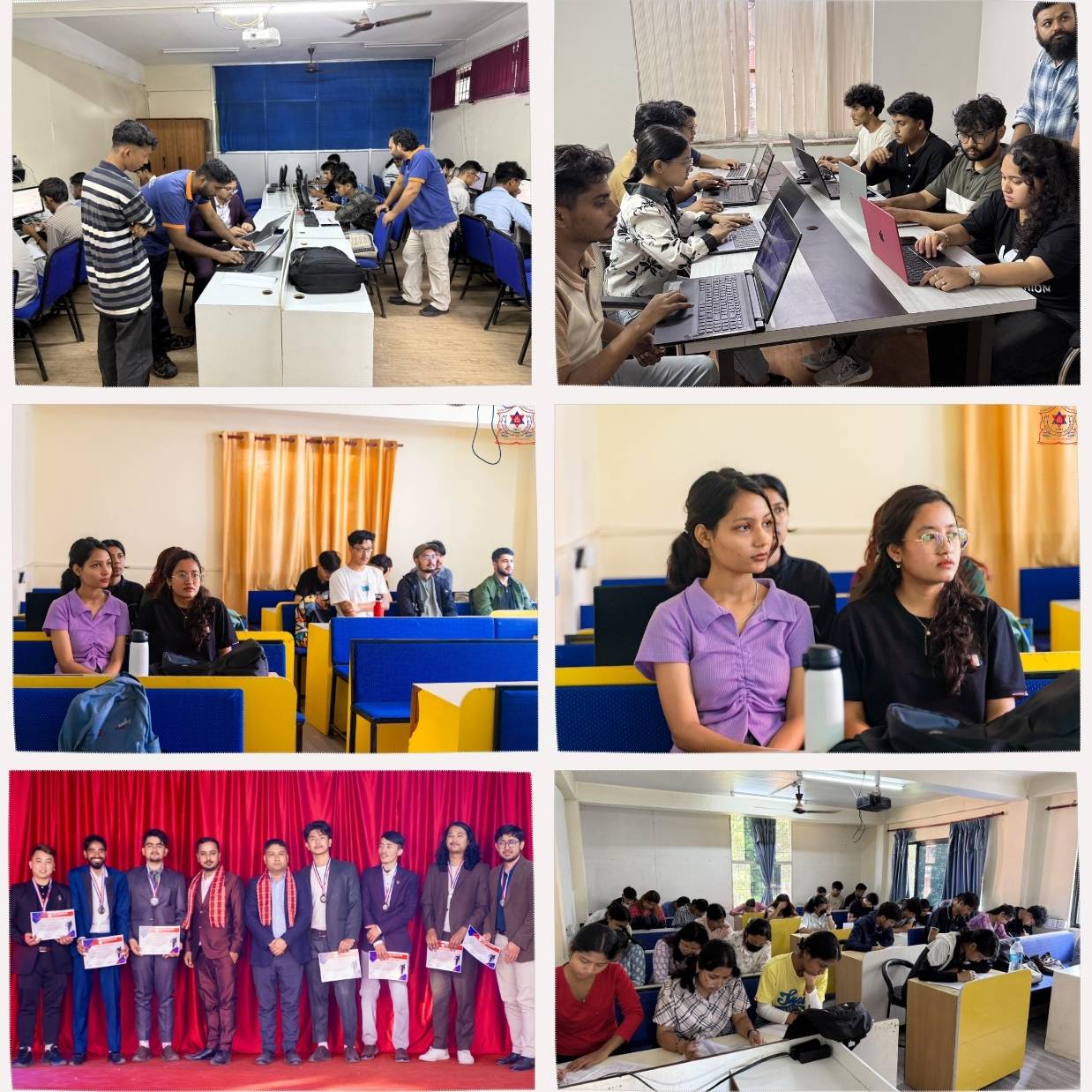
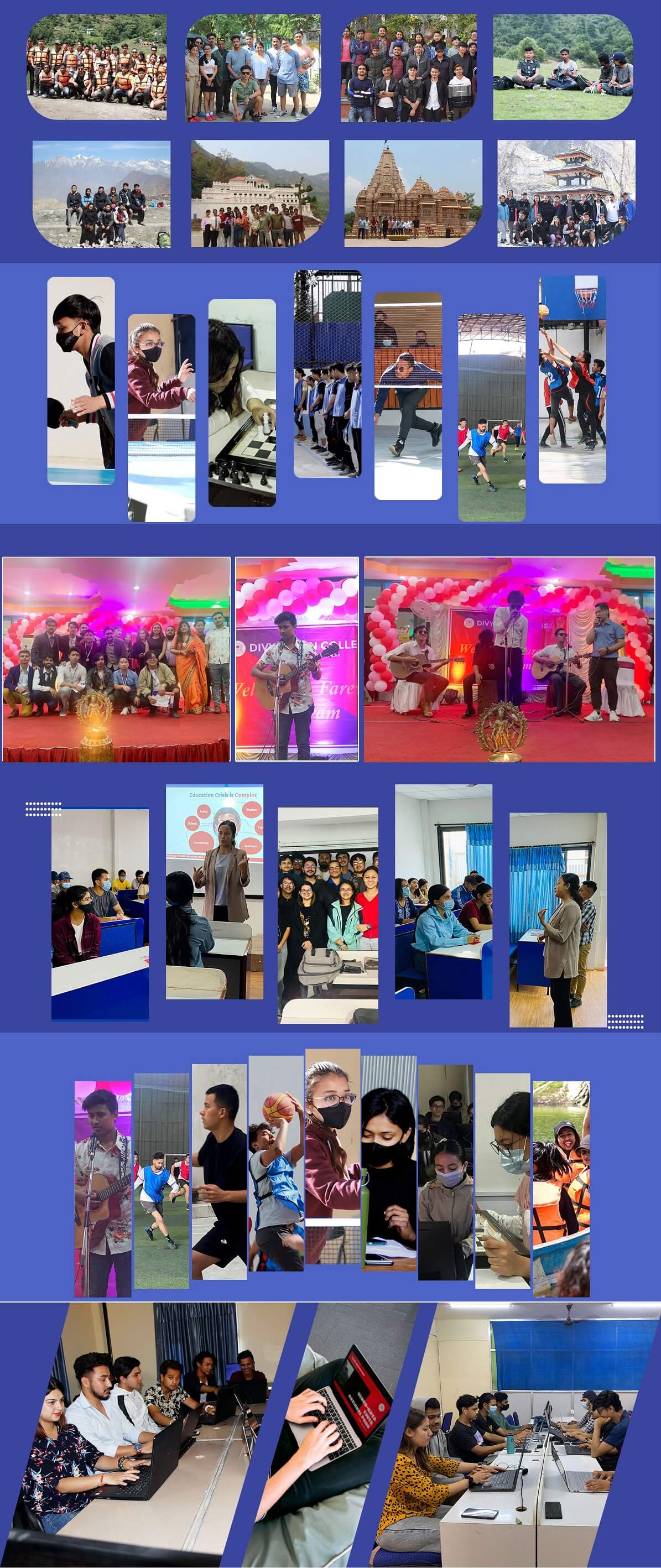
Students participate in workshops, seminars, guest sessions by industry professionals, software/project competitions, and cultural programs. The college organizes educational tours to locations such as Pokhara, Chitwan, Dhampus, Ilam, Lumbini, Dharan, and Bhedetar to deepen peer networks and broaden exposure beyond the classroom. An Annual Sports Week encourages participation in team and individual events, with medals/certificates for top placements.
Extracurricular Activities (ECA)
-
Sports: Outdoor and indoor games on campus; student-organized teams for events like basketball and futsal.
-
Academic engagement: Software and project competitions; webinars and expert talks to stay aligned with current practices.
-
Cultural events: Welcome and farewell programs where students showcase music, dance, and other talents.
-
Tours: College-organized visits across Nepal to strengthen social bonds and learning outside class.
Scholarships and Financial Support
The uploaded document highlights affordability as a guiding value and notes that students who transition to paid internships receive a stipend that helps with daily expenses. It does not enumerate specific scholarship categories or fee waivers. Prospective students should request the latest scholarship policy and need/merit criteria from the admissions office.
Placement and Career Support
A dedicated placement cell supports resume preparation, interview practice, and job referrals. Job notices from partner organizations circulate via notice boards and online student groups. The college organizes guest lectures and industry visits to explain current market practices and help students prepare for selection processes. Faculty and internship supervisors continue to guide students during transitions into employment.
Achievements and Institutional Milestones
The college’s document underlines a sustained industry linkage model since its founding, with in-house internships and a staged “training → internship → placement” pathway across IT and Management. While specific rankings or awards are not listed, the long-running Earn While You Learn practice and project-based training have become core institutional features.
Why Choose Divya Gyan College?
-
Central location: Putalisadak (Kamaladi Mode), accessible from major city routes.
-
Practical emphasis: Non-credit modules each semester aligned to actual tasks and tools.
-
Early career exposure: Structured internships with the possibility of paid roles.
-
Guided projects: Multi-stage projects in BCA; research and practical components in BBS.
-
Placement support: Interview coaching, CV review, and employer connections.
-
Campus life: Sports, tours, cultural programs, and a sizable cafeteria with internet access.
How to Reach
Putalisadak, Kamaladi Mode, Kathmandu. The locality is a common higher-education hub with public transport access and proximity to key city services.
Conclusion
Divya Gyan College presents a practice-oriented environment for BCA and BBS students who want structured skill growth, guided projects, and early workplace exposure while completing a TU undergraduate degree. The staged learning model and placement support are central features. Applicants should verify current admission dates, seat counts, and any scholarship updates directly with the college.
Frequently Asked Questions (FAQ)
1) Which programs are currently offered?
BCA (TU, FoHSS) and BBS (TU, FoM).
2) Where is the campus located?
Putalisadak, Kamaladi Mode, Kathmandu, Nepal.
3) What is the minimum BCA eligibility?
As per the college’s document referencing TU: minimum “D” in each Grade 11–12 subject with CGPA 2.0, or second division in 10+2/equivalent.
4) Does the college provide internships?
Yes. There are in-house and partner-organization internships, with areas covering development, testing, networking, UI/graphics for BCA, and administration, HR, accounts, marketing for BBS.
5) Is there an Earn While You Learn option?
Yes. Students may progress to paid internships after initial training and performance reviews; typical early workload caps near four hours a day.
6) What professional training is available for BCA?
Web foundations, programming (Python/C/PHP), databases, and later advanced stacks (Java, MERN, ReactJS, ASP.NET/C#, Flutter), plus project supervision.
7) What professional training is available for BBS?
Computer applications and advanced Excel, practical accounting with software, digital marketing (SEO and social media), and optional Python for data analysis.
8) How does placement support work?
The placement cell helps with CVs, interview practice, job circulation, guest talks, and employer referrals.
9) Are scholarships listed?
The document emphasizes affordability and notes paid internships with stipends; named scholarship schemes are not itemized in the provided text. Request current scholarship details from the college.
10) What is campus life like?
Sports, tours, cultural events, competitions, and a cafeteria with around 100–120 seats and internet access.