



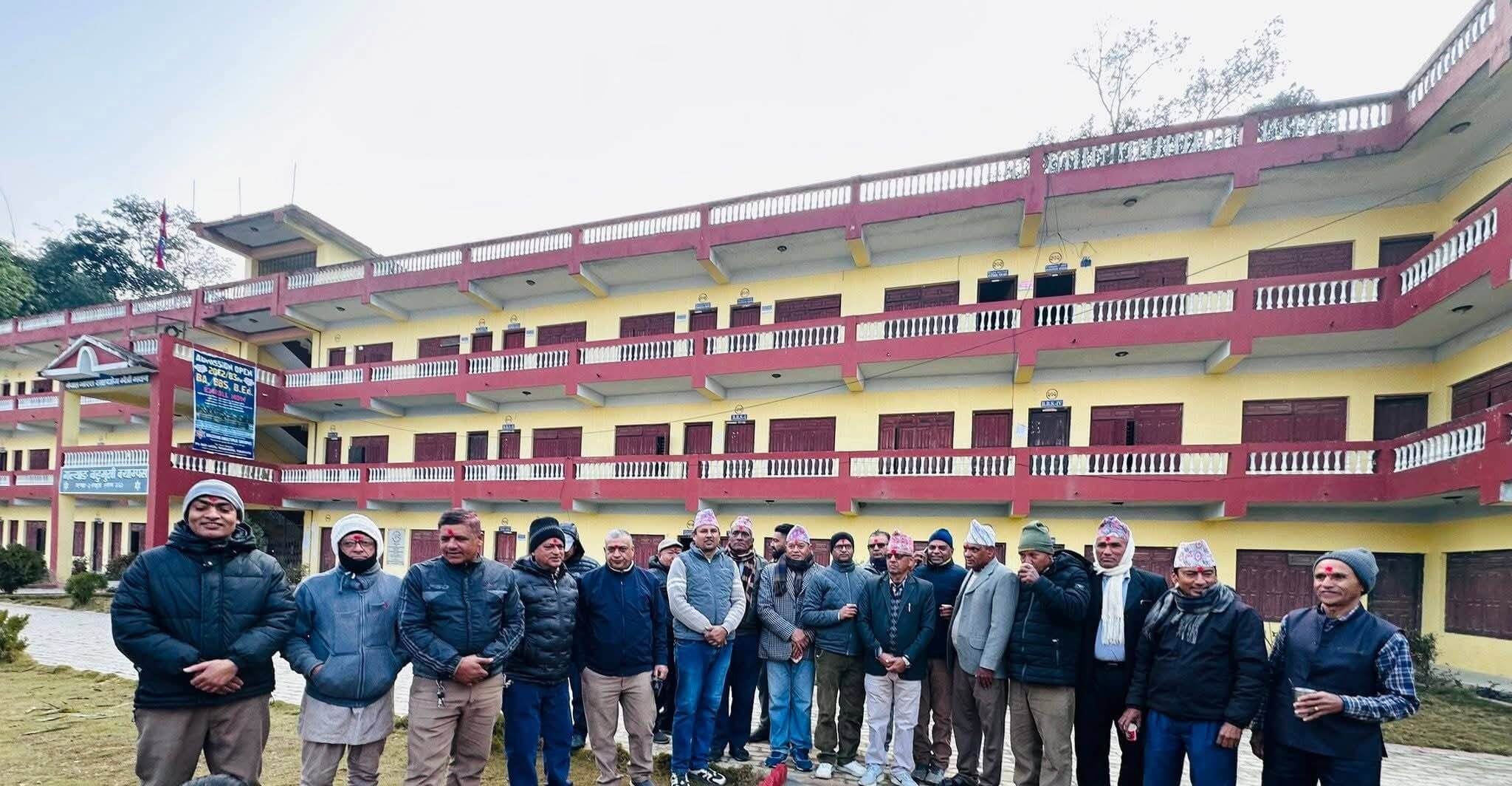
The MA in Sociology at Galyang Multiple Campus is a postgraduate program affiliated with Tribhuvan University. The campus is located in Galyang Municipality-3, Galyang Bazar, Syangja, Gandaki Province, Nepal. Within the campus setting, the program is offered alongside other bachelor’s and master’s courses and is supported by facilities such as a library, computer lab, multimedia resources, classrooms, counseling, conference hall, and digital study rooms.
The program follows the semester system and combines sociological theory, research methods, optional specialization papers, and a compulsory thesis. Its academic structure places strong emphasis on research, field-based understanding, and the study of social institutions, inequality, development, and social change.
Course: MA in Sociology
College: Galyang Multiple Campus
Affiliation: Tribhuvan University
Faculty: Faculty of Humanities and Social Sciences
Location: Galyang Municipality-3, Galyang Bazar, Syangja, Gandaki Province, Nepal
Duration: 2 years
Academic System: Semester
Semester Pattern: 4 semesters
Course Structure: 18 papers and a compulsory thesis in the fourth semester
Compulsory Papers: 14
Optional Pattern: Three optional courses in the third semester and one optional course in the fourth semester
Attendance Requirement: 80 percent
Scholarship Support: Available for needy and deserving students
The MA in Sociology is organized across four semesters and combines required papers, optional choices, practical academic work, and thesis writing.
Total duration: 2 years
Total semesters: 4
Overall structure: 18 papers and a compulsory thesis in the fourth semester
Required papers: 14 from the first to fourth semesters
Optional pattern: three optional papers in the third semester and one optional paper in the fourth semester
The first semester includes Introduction to Sociology, Qualitative Research Methods in Sociology, Structural-functional Approach, Caste and Class, and Theories of Social Change and Development.
The second semester includes Marxist Perspective and Quantitative Research Methods in Sociology, along with optional choices such as Practice of Social Change and Development in Asia, Politics and Society: Interface between Nation, State and Globe, Sociology of Health, and Household and Family in Transition.
The third semester includes World-System Perspective and Basic Statistics in Sociological Research, with optional areas such as Sociology of Gender, Identity, Inequality and Intersectionality, Migration, Social Network, Remittance and Development, Sociology of Ageing and Disability, Power Leadership, Governmentality, and Development, Urban Sociology, and Sociology of Disaster.
The fourth semester includes Agency/Micro versus Structure/Macro Perspectives, Survey Research and Computer Data Analysis, a compulsory thesis, and optional choices such as Gender, Power and Sexuality, Changing Livelihoods, Market and Society, Sociology of Education, Sociology of Tourism, and Research Design and Writing.
Build updated knowledge of sociological theories and methods
Train students in field-work and secondary data analysis
Prepare skilled human resources for development-related work
Encourage understanding of human rights and social justice
Strengthen professional ability in sociological theory and research
The MA in Sociology covers social structure, human behavior, institutions, inequality, development, health, family transition, migration, education, tourism, and disaster. Its course design brings together theory and research rather than limiting the program to one narrow area of study.
At Galyang Multiple Campus, the program is situated within a multi-program academic environment and supported by study facilities that are relevant to semester-based postgraduate work. The inclusion of research methods, statistics, computer data analysis, and thesis writing gives the course a clear academic path for students who want advanced study in sociology.
Understand major sociological theories and perspectives
Study qualitative and quantitative research methods
Analyze social change, inequality, institutions, and development
Conduct academic research through survey and data analysis work
Complete thesis-based postgraduate study in sociology
Qualitative research skills
Quantitative research skills
Field-work and secondary data analysis
Class discussion and presentation
Term paper writing
Survey research
Computer data analysis
Thesis writing
The program follows a semester-based academic structure that combines coursework, research training, and continuous evaluation. At Galyang Multiple Campus, this takes place in an environment supported by experienced lecturers, library access, multimedia resources, computer facilities, and digital study rooms.
Class participation, discussion, and presentation with précis
Term paper writing
Class tests
Research-based coursework
Practical work in computer-supported courses
Thesis preparation and completion in the fourth semester
Sociologist
Social services roles
Education-related work
Public policy-related work
Research-oriented work with government and organizations
Scholarships are available for needy and deserving students.
The campus publishes the admission notice for the program.
Applicants submit the prescribed application form.
Eligible applicants must hold a bachelor’s degree recognized by Tribhuvan University.
Eligible backgrounds include Sociology, Anthropology, Social Work, Nepalese History, Culture and Archaeology, Psychology, History, Home Science, Geography, Economics, and Political Science.
Applicants from the faculties of education, management, and law are also eligible.
Applicants from medicine, engineering, forestry, agriculture, and animal science are also eligible.
Applicants must appear in the entrance examination conducted by the Office of the Dean, Faculty of Humanities and Social Sciences.
Admission is based on the merit list and the enrollment capacity of the campus.
Bachelor’s Degree Transcript or Marksheet
Bachelor’s Degree Certificate or Provisional Certificate
Character Certificate from the bachelor-level institution
Migration Certificate, if applicable
Transfer Certificate (TC)
Citizenship Certificate or Birth Certificate copy
Passport-size photographs
Entrance Examination scorecard
Completed admission or application form
Admission fee payment receipt
Equivalence certificate, if applicable
The MA in Sociology follows the semester system. University examination is held every six months at the end of each semester, and students must maintain 80 percent attendance in class.
Evaluation is based on 40 percent internal and 60 percent external assessment. Internal evaluation covers class attendance, class participation and presentation with précis, term paper writing, and class tests. The external evaluation is conducted by the Dean’s Office through final written examination. In practical courses, the external component is also conducted practically in the computer lab.
The MA in Sociology at Galyang Multiple Campus offers a structured postgraduate program in sociology within the semester system of Tribhuvan University. Its curriculum combines theory, research methods, optional papers, computer-based analysis, and thesis work across four semesters.
For students seeking sociology study in Syangja, the program connects postgraduate academic work with campus facilities used for regular research and classroom learning, including the library, computer lab, multimedia support, counseling services, and digital study rooms.






