Bachelor of Business Studies (BBS) at Gauri Shankar Campus, Nijgadh, is a Tribhuvan University-affiliated management program for students who want a strong academic base in business, management, economics, accounting, and workplace decision-making.
Gauri Shankar Campus is a community-based campus in Nijgadh, Bara, and the campus states that it is affiliated with Tribhuvan University and approved by UGC Nepal, with academic activity across Education, Management, and Humanities. 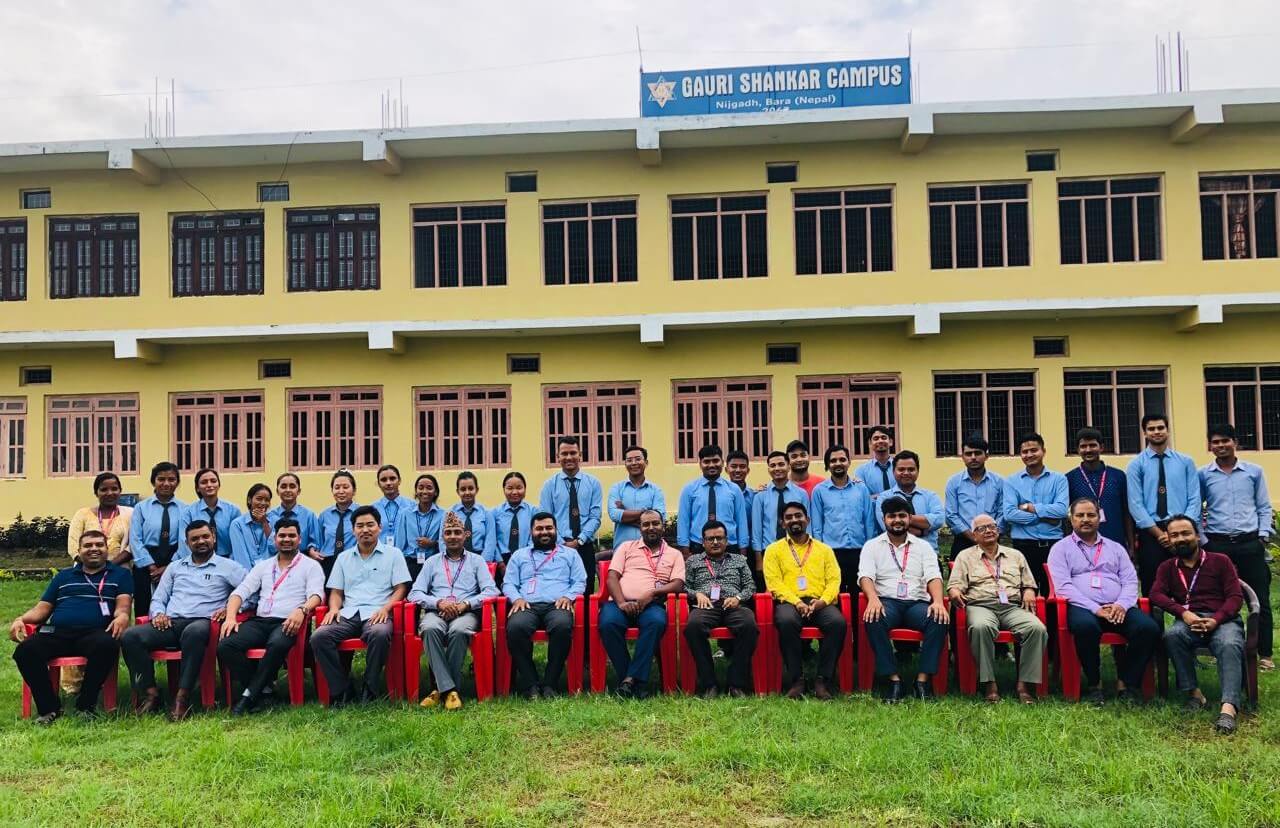
BBS at Gauri Shankar Campus is a management degree for students who want a practical and academically grounded route into business studies in a local campus setting.
Students often face a common problem after Grade 12. Students want a degree that is recognized, affordable, and relevant to jobs, further study, and public or private sector work. BBS addresses that need when students want a broad management degree under Tribhuvan University.
Gauri Shankar Campus adds an institutional context that matters for local students in Bara and nearby areas. The campus highlights community ownership, equity-focused access, participatory learning practices, and support for marginalized and economically disadvantaged students. That matters when students are balancing study, family responsibilities, travel distance, and financial limits.
Bachelor of Business Studies (BBS)
Gauri Shankar Campus, Nijgadh, Bara, Nepal
The campus identifies the campus as affiliated with Tribhuvan University and approved by UGC Nepal.
Bachelor’s level
TU BBS is a four-year annual system program under the Faculty of Management.
The campus reports community-based governance, local access focus, scholarship support for identified groups, research activity through the GS WOW journal, and ongoing QAA-related academic quality work.
The official TU BBS curriculum (effective from 2016) organizes the program into four academic years with core courses in the first three years and concentration plus research/project work in the fourth year. TU also states the BBS degree is awarded after successful completion of all required courses and final project requirements.
The first year builds the base for management study. TU lists five 100-mark courses:
MGT 201: Business English
MGT 202: Business Statistics
MGT 203: Microeconomics
MGT 211: Accounting for Financial Analysis
MGT 213: Principles of Management
TU presents this stage as the foundation for later business studies. Students who come from non-commerce backgrounds often need extra discipline in statistics, accounting, and economic concepts during this year.
The second year moves students into business communication and functional management subjects. TU lists:
MGT 205: Business Communication
MGT 206: Macroeconomics
MGT 212: Cost and Management Accounting
MGT 214: Fundamentals of Marketing
MGT 216: Foundations of Human Resource Management
This stage is important for students who want to improve writing, reporting, and communication while also learning cost control, market basics, and people management. TU curriculum text presents the second year as a stage for basic concepts and tools in business studies.
The third year pushes students into legal, financial, strategic, tax, and behavioral areas. TU lists:
MGT 204: Business Law
MGT 215: Fundamentals of Financial Management
MGT 217: Business Environment and Strategy
MGT 218: Taxation and Auditing
MGT 219: Organizational Behavior
This year often feels heavier for students because the subjects require reading, concept linking, and application in Nepali business and institutional settings. Students who keep a weekly revision routine usually manage this year better than students who study only near exams.
TU states that the fourth year has two main purposes: concentration in one functional area and project/research work. TU lists:
MGT 220: Entrepreneurship and Enterprise Development (100)
MGT 221: Business Research Methods (50)
MGT 401: Final Project (50)
Students select three concentration papers from one functional area. TU identifies four concentration streams:
Accounting
Finance
Management
Marketing
A practical point for students at campus level is this: stream availability can depend on campus teaching capacity and student numbers in a given year. Students should confirm the concentration options currently opened by Gauri Shankar Campus before final year selection.
TU states that the BBS program aims to prepare students as competent managers for organized sectors and to build broad knowledge plus reality-based skills linked to the operation and management of organizations. TU also links the degree to careers in business, industry, government, and entrepreneurship.
From a student perspective at Gauri Shankar Campus, the practical objectives are clear:
Build a strong base in accounting, economics, management, and communication
Learn how business decisions work in real organizations
Prepare for jobs, self-employment, and postgraduate study
Develop research and reporting habits before graduation
Study in a local campus environment with community connection
BBS has broad scope in Nepal because the degree covers multiple business functions instead of a narrow subject path.
Students can use BBS as a base for:
Entry-level jobs in finance, administration, sales, office operations, and customer-facing business roles
Competitive preparation where business, economics, or general management knowledge helps
Higher study such as MBS and other management-related postgraduate pathways under eligible conditions
Local entrepreneurship and family business management
NGO/INGO and cooperative sector administrative roles
Students in semi-urban and growing municipal areas like Nijgadh often look for a degree that keeps options open. BBS fits that need when students are still deciding between job, business, and further study.
After completing BBS under TU structure, students are expected to gain:
Working knowledge of business communication and report writing
Basic statistical and economic analysis skills
Accounting and cost analysis fundamentals
Understanding of marketing, HR, finance, and organizational behavior
Awareness of business law, taxation, and audit concepts
Introductory research skills through Business Research Methods
Project-writing experience linked to field exposure in the final year
TU makes project work an essential requirement and links it to field work and organizational study, which gives students direct exposure beyond classroom notes.
BBS is not a short-term module course, but students can understand the program in skill blocks that develop across four years.
Business English and Business Communication help students write clearly, present ideas, prepare reports, and handle formal communication.
Business Statistics, Microeconomics, and Macroeconomics help students read trends, compare data, and understand market and policy effects.
Accounting for Financial Analysis and Cost and Management Accounting build financial record understanding and decision support skills.
Marketing, HR, financial management, and organizational behavior prepare students for common workplace functions and team situations.
Business Law and Taxation and Auditing help students read business rules, compliance basics, and documentation practices.
Business Research Methods and the Final Project teach problem selection, data collection, report format, and presentation discipline. TU states final project work includes field study time and evaluation by internal and external examiners.
TU states that campuses offering BBS should use a mix of lectures, group discussions, problem-solving exercises, guest lectures, practical work, project work, and case method where possible.
The campus also describes teaching practices at Gauri Shankar Campus that fit well with TU expectations:
Regular lectures
Participatory learning
Classroom simulations
Guest lectures and seminars
Research-based assignments
Field work
Academic mentoring by faculty
Students who learn better through discussion and practice, not only dictation-based notes, usually benefit from this type of teaching pattern.
TU’s official BBS curriculum states eligibility conditions for admission. A candidate applying to BBS must have completed 10+2 in business/commerce or an equivalent course from a recognized board/university, or must have studied mathematics or economics as a full paper at 10+2 level. TU also states English must have been studied as a full paper, and minimum marks/other entry criteria are set by the Faculty Board or the campus concerned.
The campus notes that admission at Gauri Shankar Campus follows TU guidelines and may include:
Application form submission
Academic credential submission
Entrance exam (if applicable)
Interview (in some departments)
Students should confirm the current admission notice, calendar, and required documents directly from the campus office before applying.
BBS does not lock you into one career path. The degree gives a broad base that supports multiple directions.
Accounts assistant and finance support roles
Administrative assistant and office management roles
Sales, marketing, and customer relations roles
HR support and documentation roles
Cooperative, microfinance, and local business operations
School/college administration support roles
NGO/community project administration roles
Students who want stronger specialization later often move into postgraduate management study after BBS, or build work experience first and continue study later.
Students who want to start a small enterprise can also use BBS learning in budgeting, marketing, record-keeping, and business communication.
The campus states that Gauri Shankar Campus provides scholarship support for:
Economically disadvantaged students
Dalit, Janajati, and Madhesi communities
Female students
Merit-based academic achievers
The same states that scholarship selection is handled through a committee process with transparency.
Students and parents should verify current scholarship quotas, eligibility documents, deadlines, and continuation conditions from the campus administration office for the current academic year.
Students usually ask two practical questions before choosing BBS: “Will this degree help me build a stable path?” and “Can I study it well from my current location and financial condition?”
BBS at Gauri Shankar Campus is relevant for students who want:
A TU-affiliated management degree in Nijgadh/Bara area
A broad course base before choosing a specialization path later
A campus setting connected to local community needs
Academic exposure across class learning, assignments, and field work
A degree route that can support jobs, entrepreneurship, and higher study
The campus also points to a wider academic culture through the GS WOW research journal and QAA-related quality processes, which can help students who want a stronger academic environment, not only exam attendance.
TU BBS follows an annual examination system. TU states that the final evaluation is done through annual examinations conducted by the Office of the Controller of Examinations, Tribhuvan University. TU also states that students need at least 70 percent attendance of classes actually held to qualify to appear in the annual examinations.
TU’s curriculum also lists division thresholds in annual examinations:
Third Division: 35 percent
Second Division: 45 percent
First Division: 60 percent
Distinction Division: 75 percent
TU states that students must pass theoretical, practical, and project components separately where applicable. TU also makes the final project work a formal requirement in the fourth year, including field work, report submission, and viva-related evaluation procedures at campus level before final scrutiny through the examination system.
The Gauri Shankar Campus website notice listing also shows active notices related to examination and registration forms, practical examinations, and academic schedules, which is useful for students who track campus updates online.
BBS at Gauri Shankar Campus, Nijgadh, is a practical and academically recognized management degree path for students who want a TU-affiliated bachelor’s program in a community-based campus setting.
The strength of this course lies in its broad subject coverage, annual progression structure, and final-year concentration plus project work. The value for students increases when students attend classes regularly, build writing habits early, and prepare year by year instead of waiting for final exam months.
Students who want exact current details on fees, seat numbers, concentration stream availability, and admission dates should confirm them from Gauri Shankar Campus directly before submitting the application.
The BBS is affiliated with and follows the TU Faculty of Management curriculum.
The official TU BBS curriculum document cited here identifies BBS as a four-year annual system program.
Students study accounting, economics, management, marketing, HR, finance, business law, taxation and auditing, organizational behavior, business research, and entrepreneurship, along with concentration papers in the fourth year.
Yes. TU states final project work is an essential academic requirement in the fourth year and includes field work plus report submission and evaluation.
TU states students need a minimum of 70 percent attendance of classes actually held to qualify for annual examinations.
TU eligibility allows 10+2 in business/commerce or equivalent, and it also mentions the mathematics/economics full-paper condition at 10+2 level, along with English as a full paper and campus/Faculty Board entry requirements. Students should verify the current admission notice from the campus for the latest session.