Bachelor of Education (B.Ed.) at Gauri Shankar Campus, Nijgadh, is a teacher-education pathway for students who want subject knowledge and classroom teaching skills in a Tribhuvan University academic framework.
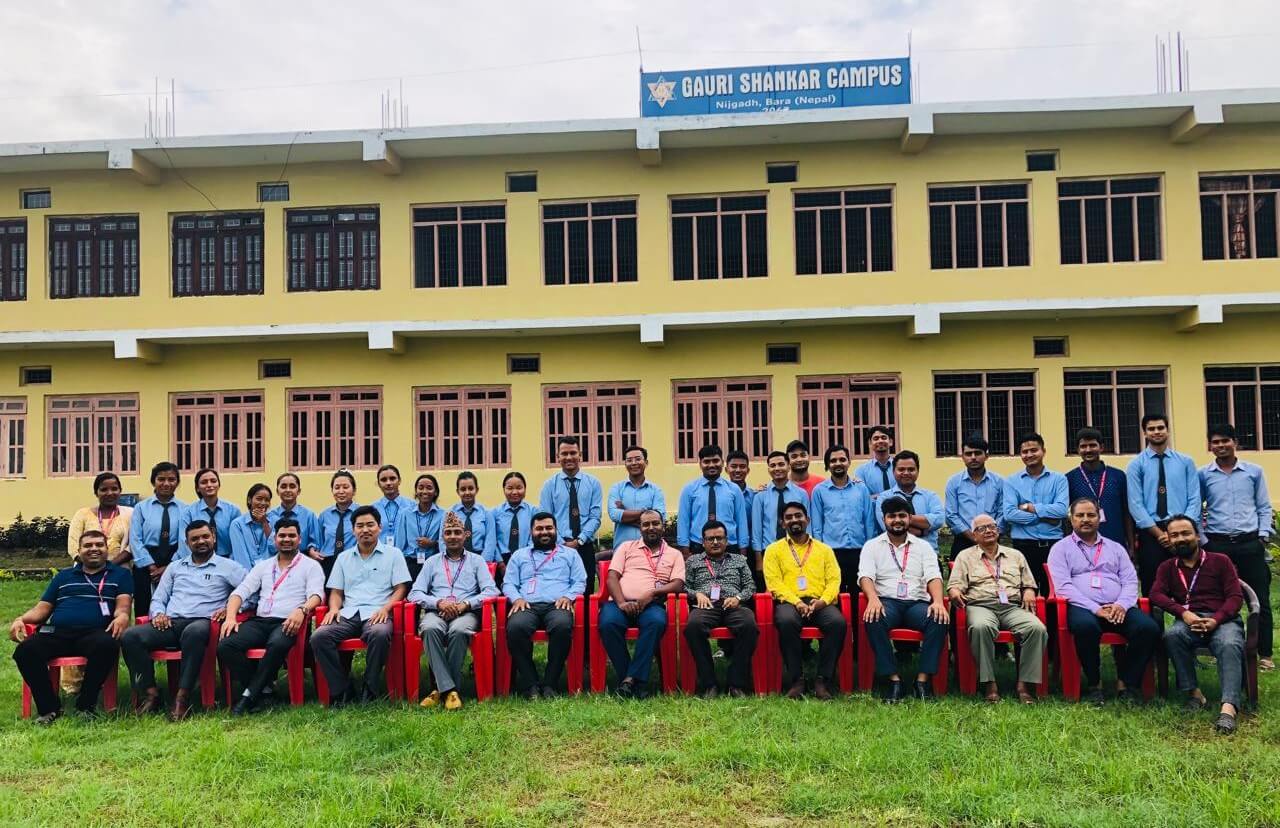
B.Ed. at Gauri Shankar Campus is suitable for students who want to study education as a professional field and prepare for teaching, academic work, education support roles, and further study.
Students often face a practical question after Grade 12. Students may be interested in teaching, but they also want a degree that gives a clear subject base, university recognition, and a path to long-term work. A B.Ed. course addresses that need when students want to study how learning happens, how classrooms work, and how subject teaching is planned and assessed.
Gauri Shankar Campus matters in this decision becauseCampus information shows a community-based institution in Nijgadh, Bara, with a local access mission, scholarship support for multiple groups, and a teaching environment that includes lectures, participatory learning, classroom simulations, seminars, assignments, and field work. That context is useful for students who want a campus close to home without losing academic structure.
Campus information also lists B.Ed. subject areas in English Education, Nepali Education, and Health Education. This helps students choose a study direction that fits their strength and future teaching interest.
Bachelor of Education (B.Ed.)
Gauri Shankar Campus, Nijgadh, Bara, Nepal
Community-based higher education institution (based on the information you shared)
Campus information identifies the campus as affiliated with Tribhuvan University and approved by the University Grants Commission (UGC) Nepal.
Bachelor’s level
English Education
Nepali Education
Health Education
The TU Faculty of Education four-year B.Ed. course-cycle document shows a four-year annual system with 22 courses grouped into communication skills, professional core areas, specialization major, specialization minor, and teaching internship/practicum.
The TU B.Ed. course-cycle document states that students complete 22 courses in total and that the structure is divided into five groups:
Group A: Communication Skills
Group B: Professional Core Areas
Group C: Specialization Major Courses
Group D: Specialization Minor Courses
Group E: Teaching Internship/Practicum
The same document shows the total marks and year-wise distribution in the four-year annual system:
Total full marks: 2200
First year: 600
Second year: 600
Third year: 500
Fourth year: 500
This structure is important for students because B.Ed. is not only a subject-content degree. Students study language communication, education foundations, psychology, curriculum, and teaching practice along with their chosen subject areas.
TU states that B.Ed. students select one specialization major and one specialization minor, and the minor must be different from the major. The document also lists multiple subject areas for major and minor, including Nepali Language Education, English Language Education, and Health and Physical Education in the major list, while Health Education appears in the minor list.
This point matters for Gauri Shankar Campus students because campus information lists English Education, Nepali Education, and Health Education under B.Ed. offerings. Students should confirm the current major-minor combinations that the campus is opening in the current intake year before admission.
TU’s B.Ed. course-cycle document shows the first year includes core/compulsory subjects and the start of both major and minor subject study.
Core subjects shown in the first-year course cycle include:
Compulsory Nepali (Nep. Ed. 401)
General English (Eng. Ed. 411)
Philosophical and Sociological Foundations of Education (Ed. 412)
For specialization examples relevant to campus-listed B.Ed. streams, the first-year table shows:
Eng.Ed. 416 Foundations of Language and Linguistics
Eng.Ed. 417 Reading Writing and Critical Thinking
HP.Ed. 416 Foundation of Health Education
HP.Ed. 417 Foundation of Physical Education
H.Ed. 418 Foundations of Health Education
The Nepali Education paper titles in the first-year table are present in Nepali script in the parsed document. Students planning Nepali Education should collect the exact paper list and codes from the campus admission desk or TU/FoE subject sheet for the current session.
TU’s second-year table shows continuation of core study plus additional major and minor papers.
The core paper visible in the second-year table is:
Ed. 421 Educational Psychology
Relevant examples for the campus-listed streams include:
Eng.Ed. 422 Expanding Horizons in English
Eng.Ed. 423 English for Communication
Eng.Ed. 424 Academic Writing
Eng.Ed. 428 English for Communication
Eng.Ed. 429 Academic Writing
HP.Ed. 422 Fundamentals of Public Health
HP.Ed. 423 Management and Supervision of Health and Physical Education
HPE. 424 Sports Science and Games
H.Ed. 428 Fundamentals of Public Health
H.Ed. 429 Management and Supervision of Health and Physical Education (wording in the parsed text includes a spelling variation)
The parsed file also shows that the course cycle extends into third and fourth years and includes teaching internship/practicum as a formal part of the degree.
The TU document provides the program framework and sample course-cycle structure. Campus-level operation can vary by intake, teacher availability, and student numbers. Students should confirm:
Which B.Ed. major and minor combinations are open this year
Exact year-wise paper list and paper codes used by the campus
Class shift timing
Practicum school placement process
Internal assessment schedule and submission rules
B.Ed. at Gauri Shankar Campus can serve students who want to build a teacher identity with subject knowledge and classroom practice.
The practical objectives for students are:
Learn how teaching and learning work in real classrooms
Build strong subject understanding in a chosen teaching area
Study educational psychology, curriculum, and evaluation
Learn lesson planning, classroom interaction, and assessment practices
Prepare for teaching practice and later professional teacher training pathways
Build a base for higher study in education
Students who choose B.Ed. usually want work that is connected to people, learning, and social contribution. This course speaks to that goal through subject study plus school-oriented practice.
B.Ed. has academic and professional scope in Nepal, especially for students who want a path connected to school education and educational services.
Students may use B.Ed. as a base for:
School teaching pathways after meeting applicable service and licensing requirements
Private and institutional teaching roles
Academic support roles in schools and educational organizations
Curriculum support, tutoring, and learning support services
Education-related community programs and NGOs
Higher study in education and related fields
Students in Nijgadh and nearby areas often need a degree that is locally reachable and still useful for long-term academic movement. A TU-affiliated B.Ed. in a community campus setting can meet that need when students stay consistent with coursework and practicum work.
By the end of B.Ed., students can expect growth in these areas:
Communication skills in Nepali and English for academic and classroom use
Understanding of education foundations and learner psychology
Basic knowledge of curriculum and evaluation concepts
Subject teaching knowledge in a selected major area
Supporting subject knowledge in a selected minor area
Lesson planning and classroom delivery practice
Observation, reflection, and teaching practicum experience
Students who take the practicum seriously often gain clarity about classroom discipline, time management, and student diversity before graduation.
TU places communication skills as a separate course group in B.Ed., including General Nepali and General English. This helps students write, present, and communicate in classroom and academic settings.
TU lists professional core areas such as philosophical and sociological foundations, educational psychology, curriculum and evaluation, and an elective in instructional technology or ICT-related options. These papers help students understand teaching beyond subject content.
Students build deeper content knowledge through major papers and supporting knowledge through minor papers. For Gauri Shankar Campus students, English Education, Nepali Education, and Health Education pathways are especially relevant because those are listed in campus information.
TU includes teaching internship/practicum as a separate group in the B.Ed. structure. This is where students connect theory, subject knowledge, lesson planning, and school practice.
The campus information describes a learning approach that includes:
Regular lectures
Participatory learning
Classroom simulations
Guest lectures and seminars
Research-based assignments
Field work
Faculty mentoring
This teaching pattern fits B.Ed. well because teaching is learned through study and practice together. Students usually understand educational psychology better when they also observe learner behavior in class activities and school settings.
A simple student example makes this clear. A student in English Education may study academic writing in a TU paper and later use that skill while preparing lesson notes, reflective journals, and practicum reports.
TU’s B.Ed. course-cycle document states that students with HSE/Grade 12 pass, PCL, or equivalent can apply to the four-year B.Ed. program, and subject-specific conditions apply for some major areas.
The same TU document states:
Nepali Education and English Education majors are open to students from any stream (Grade 12/PCL or equivalent)
Health and Physical Education majors require related background, or students without that background must pass a physical-fitness-related entrance test conducted by the campus department
Minor subject areas are open across prior study areas, but the minor must be different from the major, and physical science majors must take biology minor
The campus also states that admissions follow TU guidelines and may include:
Academic credential submission
Application form completion
Entrance exam where applicable
Interview in some departments
Students should confirm the current intake notice and document checklist from the campus office.
B.Ed. is most useful when students connect course learning with a clear path early.
Teaching roles in schools after meeting required procedures and eligibility
Subject teaching support and tutoring
Academic coordination support in educational institutions
Education project roles in community and non-profit programs
Content support work in education-focused organizations
Higher study in education for subject specialization or academic advancement
Students who are unsure between English, Nepali, and Health-related teaching can use the first year to judge their reading load, writing ability, and comfort with classroom presentation.
The campus states that Gauri Shankar Campus provides scholarship support for:
Economically disadvantaged students
Dalit, Janajati, and Madhesi communities
Female students
Merit-based academic achievers
Campus information also states that a scholarship committee handles selection with transparency. Students should verify current quotas, deadlines, and renewal terms directly from the campus office.
This section is best read as a student-fit check, not a promotional claim.
B.Ed. at Gauri Shankar Campus may suit you if:
You want a TU-affiliated education degree in the Nijgadh and Bara area
You want to study teaching as a long-term field
You prefer a community-based campus environment
You want subject-focused B.Ed. options such as English, Nepali, or Health-related study listed by the campus
You need a course path that combines theory, subject study, and practicum
Students who choose B.Ed. only because it is nearby often struggle later if they do not enjoy reading, writing, and class preparation. Students who choose it with a teaching interest usually handle the workload better.
TU’s B.Ed. course-cycle document presents B.Ed. as a four-year annual system and includes teaching internship/practicum as part of the degree structure.
This is useful for B.Ed. students because class participation, assignments, and practice teaching habits affect later practicum performance.
Students should verify the current year’s exam form deadlines, practical dates, practicum schedule, and result notice channels directly from Gauri Shankar Campus and relevant TU notices.
B.Ed. at Gauri Shankar Campus, Nijgadh, offers a meaningful academic path for students who want to study education with subject specialization and classroom practice in a community-based campus setting.
The strongest use of this degree comes when students choose their subject area carefully, attend classes regularly, write consistently, and treat practicum as a serious part of training. English Education, Nepali Education, and Health Education pathways listed by the campus give students clear entry points based on interest and academic background.
Students and parents should confirm the current intake notice, major-minor combinations, and fee details from the campus office before final admission decisions.
The campus is affiliated with Tribhuvan University and approved by UGC Nepal.
The TU Faculty of Education B.Ed. course-cycle document used here shows a four-year annual system structure.
Yes. TU includes teaching internship/practicum as a separate course group in the B.Ed. structure.
The TU B.Ed. course-cycle document states that Nepali Education and English Education majors are open to Grade 12/PCL or equivalent from any stream.
Students should confirm current subject combinations, seat availability, fee structure, class timing, practicum process, and admission deadlines from the campus office.