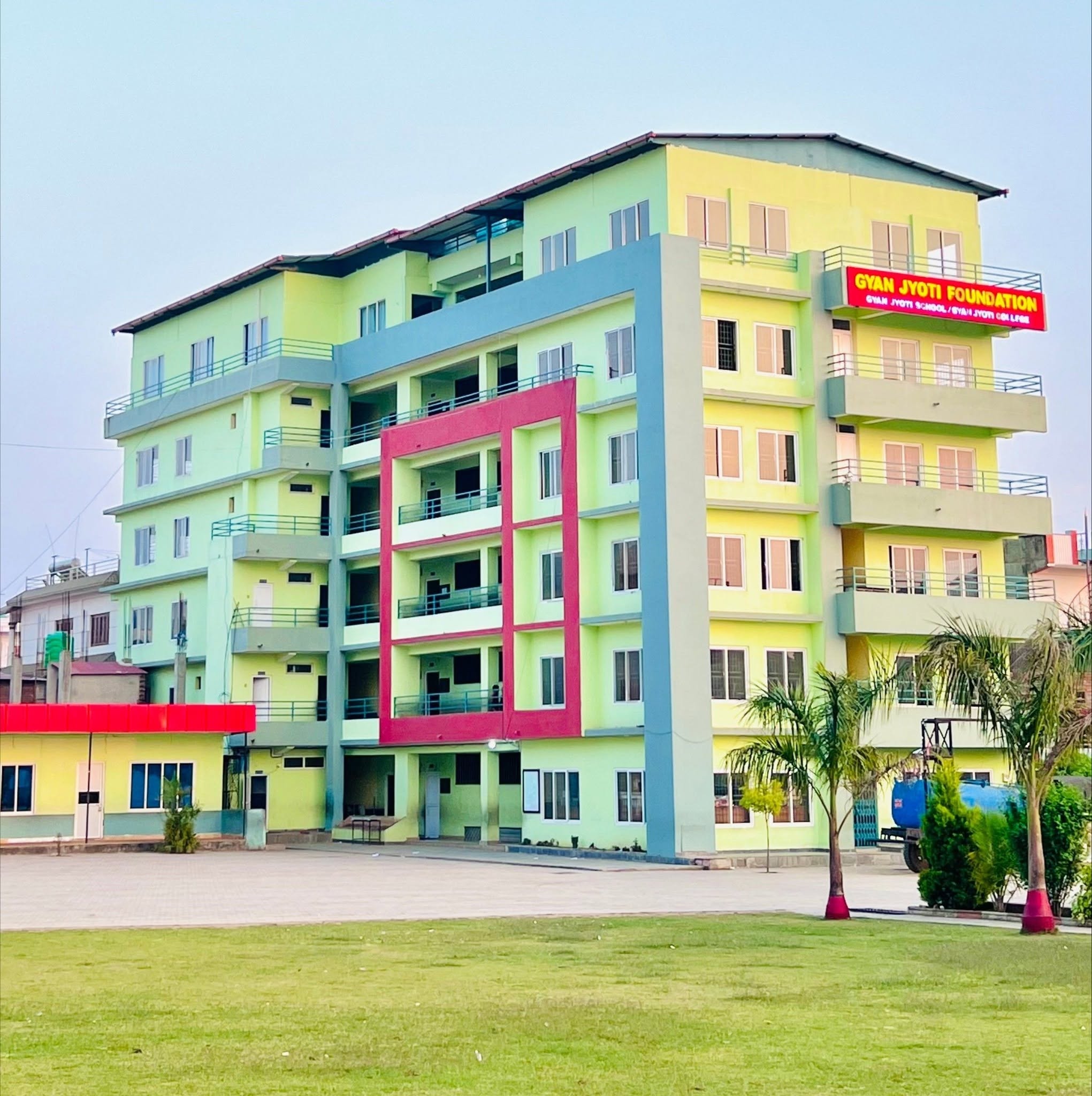
The Bachelor of Business Administration (BBA) at Gyan Jyoti College is a four-year undergraduate management program affiliated with Far Western University. The college is located in Tulsipur-6, Dang, Lumbini Province, Nepal.
The program combines business theory with communication, quantitative analysis, information technology, managerial decision-making, project work, and field-based learning. Its semester-based structure allows students to move from foundation subjects to functional management areas, specialization courses, electives, practicum work, and business attachment activities.
Course: Bachelor of Business Administration (BBA)
Level: Bachelor’s degree
Duration: Four years
Academic Structure: Eight semesters
Total Credits: 120
Faculty: Faculty of Management
Affiliation: Far Western University
College: Gyan Jyoti College
Location: Tulsipur-6, Dang, Lumbini Province, Nepal
The BBA curriculum is intended to develop an understanding of business concepts, management practices, organisational environments, and contemporary commercial issues. It gives students opportunities to study how businesses operate while strengthening their analytical, communication, research, and decision-making abilities.
The curriculum is divided across eight semesters and carries 120 credits. Courses are arranged in a gradual sequence so students first study foundational areas before moving into business core subjects, specialization, electives, synthesis courses, and field-based components.
The program focuses on preparing students to understand different functional areas of business and management. It also develops awareness of the broader environment in which organisations operate in Nepal and internationally.
Students engage with research, business intelligence, information technology, academic writing, interpersonal communication, teamwork, professional relationships, and leadership. The curriculum also gives attention to creativity and entrepreneurial thinking, including the ability to translate ideas into practical business activities.
The BBA curriculum combines courses from business, economics, communication, mathematics, technology, accounting, behavioural studies, and management. Selected subjects include:
Microeconomics
Computer Applications in Management
English Grammar and Composition
Business Mathematics
English for Business Administration
Business Communication
Psychology
Fundamentals of Marketing
Organizational Behaviour
Operation Management
Cost and Management Accounting
Banking and Insurance
Taxation in Nepal
Microeconomics introduces demand, supply, consumer behaviour, production, costs, market structures, and factor pricing. Computer Applications in Management examines information systems, hardware, software, data, networks, enterprise computing, and the role of technology in organisations.
Communication courses develop grammar, academic writing, business language, presentations, meetings, negotiation, and workplace interaction. Management-focused subjects address organisational behaviour, marketing, operations, accounting, banking, insurance, and taxation within business settings.
The academic structure includes several connected course groups:
Foundation courses in economics, behavioural sciences, statistics, mathematics, information technology, communication, and the legal environment of business
Business core courses covering major functional areas of management
Specialization courses for focused study in selected management areas
Synthesis courses that connect knowledge from different business functions
Open electives related to business applications
Practicum, attachment, project, and field-based learning activities
The curriculum provides seven specialization areas. Students also select elective courses from the options included within the program structure.
Project work and practical assignments allow students to apply concepts outside routine classroom study. The program includes field-based assignments, industry visits, community attachment, business attachment, and individual research projects.
In the senior year, students may work as interns with community organisations or suitable business organisations and undertake field-based research. These activities are intended to connect academic learning with organisational practices and workplace responsibilities.
At Gyan Jyoti College, students have access to furnished classrooms, a library, computer facilities, academic guidance, extracurricular activities, and committee-based student support.
Through coursework and academic activities, students may develop abilities in:
Business analysis and problem-solving
Written and verbal communication
Teamwork and interpersonal relations
Quantitative and qualitative analysis
Information technology applications
Managerial decision-making
Research and report writing
Leadership and organisational understanding
Entrepreneurial planning and creative thinking
Skill development depends on academic participation, practical engagement, individual effort, and the ability to apply concepts in relevant situations.
BBA graduates may consider entry-level opportunities connected with business administration, operations, marketing, banking, insurance, accounting support, taxation, organisational coordination, and entrepreneurship. Career outcomes depend on individual skills, experience, performance, location, and available opportunities.
The program can also provide an academic base for postgraduate education in management and related business disciplines.
College: Gyan Jyoti College
Address: Tulsipur-6, Dang, Lumbini Province, Nepal
Phone: 082-520955
Website: www.gdc.edu.np
Email: admin@gyandeepcollege.edu.np
What is the full form of BBA?
BBA stands for Bachelor of Business Administration.
How long is the BBA program at Gyan Jyoti College?
The program runs for four years and is divided into eight semesters.
How many credits are required for the BBA degree?
The Far Western University BBA curriculum comprises 120 credits.
Which university is the program affiliated with?
The BBA program at Gyan Jyoti College is affiliated with Far Western University.
What subjects are included in the BBA curriculum?
The curriculum covers economics, mathematics, communication, information technology, psychology, marketing, organisational behaviour, operations, accounting, banking, insurance, and taxation.
Does the program include practical learning?
Yes. The curriculum includes project work, field-based assignments, industry visits, community attachment, business attachment, internship-related learning, and research activities.