Rapti Engineering College is located at Ghorahi-16, Saniambapur Sarra, Dang, Nepal. Established in 2008 AD by a group of engineering, information technology, and academic professionals, the college provides bachelor-level higher education as well as technical and vocational education.
Its bachelor’s programs are affiliated with Pokhara University, while its diploma and pre-diploma programs are affiliated with the Council for Technical Education and Vocational Training (CTEVT). The academic portfolio covers business administration, computer applications, computer engineering, civil engineering, electronics and communication engineering, and technical programs in computer, civil, electrical, and survey engineering.
REC began Bachelor of Computer Application (BCA) in 2010. Bachelor of Civil Engineering and Bachelor of Electronics and Communication Engineering followed in 2011. Bachelor of Computer Engineering and Bachelor of Business Administration (BBA) were introduced in 2024.
The combination of university and CTEVT programs means students at REC follow different academic routes depending on their chosen level and field. The bachelor’s programs operate within the Pokhara University academic system, while the diploma and pre-diploma programs follow the CTEVT technical education structure.
| Particular | Details |
|---|---|
| Institution | Rapti Engineering College |
| Established | 2008 AD |
| Location | Ghorahi-16, Saniambapur Sarra, Dang, Nepal |
| Bachelor’s affiliation | Pokhara University |
| Technical affiliation | CTEVT |
| Academic areas | Management, computing, engineering, technical and vocational education |
| Bachelor’s programs | BBA, BCA, BE Computer, BE Civil, BE in Electronics and Communication |
| Technical programs | Diploma in Computer Engineering and three pre-diploma engineering programs |
The college’s academic development has taken place in stages. Its earlier bachelor-level activity centered on computer applications, civil engineering, and electronics and communication engineering. The later introduction of computer engineering and business administration widened the undergraduate offering beyond the original engineering and computing areas.
This academic mix gives students several distinct routes rather than a single engineering-focused path. A student considering management, for example, enters a different curriculum from one choosing computer applications, civil engineering, computer engineering, or a CTEVT technical program.
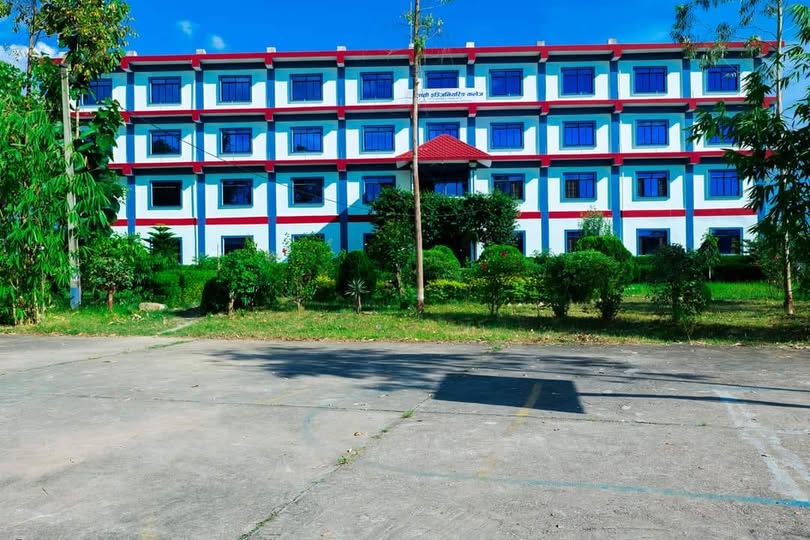
Rapti Engineering College is based at Ghorahi Sub-Metropolitan City-16, Saniambapur Sarra, Dang. Its location in Dang places the institution within Lumbini Province while its academic affiliations connect the college with national university and technical education systems.
The location is relevant for students who want to compare higher and technical education options available in Dang. REC brings Pokhara University bachelor’s programs and CTEVT technical programs into one institutional setting, although the academic level, curriculum, and affiliation of each program remain separate.
The bachelor-level programs at REC are affiliated with Pokhara University. These programs cover management, computer applications, computer engineering, civil engineering, and electronics and communication engineering.
The technical programs operate under the Council for Technical Education and Vocational Training (CTEVT). They include Diploma in Computer Engineering and pre-diploma programs in civil engineering, electrical engineering, and survey engineering.
This distinction is important when comparing programs. A Pokhara University bachelor’s degree follows a university-level academic structure, whereas a CTEVT diploma or pre-diploma program belongs to the technical and vocational education system.
Rapti Engineering College offers nine programs across its Pokhara University and CTEVT streams.
| Program | Affiliation | Seats |
|---|---|---|
| Bachelor of Business Administration (BBA) | Pokhara University | 96 |
| Bachelor of Computer Engineering (BE Computer) | Pokhara University | 48 |
| Bachelor of Civil Engineering (BE Civil) | Pokhara University | 96 |
| Bachelor of Computer Application (BCA) | Pokhara University | 48 |
| Bachelor of Electronics and Communication Engineering (BE in Electronics and Communication) | Pokhara University | 48 |
| Diploma in Computer Engineering | CTEVT | 48 |
| Pre-Diploma in Civil Engineering (Civil Sub-Overseer) | CTEVT | 40 |
| Pre-Diploma in Electrical Engineering (Electrical Sub-overseer) | CTEVT | 40 |
| Pre-Diploma in Survey Engineering (AMIN) | CTEVT | 40 |
BBA and BE Civil each have 96 seats. BCA, BE Computer, BE in Electronics and Communication, and Diploma in Computer Engineering each have 48 seats. The three pre-diploma programs each have 40 seats.
The seat figures help distinguish the scale of each program while also showing that the college maintains separate intakes across management, computing, engineering, and technical education.
Bachelor of Business Administration is one of the newer Pokhara University programs at REC, introduced in 2024. Its addition extended the college’s undergraduate portfolio into management education.
The Pokhara University BBA curriculum is organized across eight semesters. The initial semesters include English, Basic Mathematics, IT for Business, Behavioral Science, Principles of Management, Business Communication, Business Mathematics, Introduction to Microeconomics, Fundamentals of Organizational Behavior, and Financial Accounting.
The middle part of the program includes Business Statistics, Introduction to Macroeconomics, Cost and Management Accounting, Essentials of Finance, Principles of Marketing, Data Analysis and Modeling, Business and Society, Business Research Methods, Human Resource Management, and Introduction to Financial Management.
Later semesters introduce Entrepreneurship and Innovation, Fundamentals of Operations Management, Management Information System, Project Management, Essentials of e-Business, International Business, Strategic Management, Business Law, Business Environment, concentration subjects, electives, project work, and internship.
Practical components are distributed across the curriculum through Software Skills Practicum, Soft Skills Practicum, Digital Marketing Practicum, Fintech Practicum, Academic Writing, Business Development Project, Community Engagement Project, and Internship.
Bachelor of Computer Application has been offered at REC since 2010 and has 48 seats under Pokhara University.
The BCA curriculum is arranged over eight semesters and totals 126 credits. It starts with English for IT Professionals, Mathematics I, Digital Logic System, Computer Fundamental and Application, Programming Logic and Technique, and Computer Application Workshop.
The second semester moves into Business and Technical Communication, Mathematics II, Financial Accounting, Programming in C, Microprocessor and Computer Architecture, and Project I.
Students later study Object Oriented Programming using Java, Data Structure and Algorithms, Systems Analysis and Project Management, Web Technology, Operating Systems, Software Engineering, Database Management System, Computer Graphics and Multimedia Technology, Probability and Statistics, and Numerical Methods.
Advanced parts of the curriculum include Data Communication and Computer Network, Research Methodology, Data Science and Analytics, Management Information Systems, Simulation and Modeling, Organization Management, Cyber Law and Professional Ethics, Mobile Application Development Technology, Applied Economics, Cloud Computing, and Digital Economy.
Project work appears at several stages through Project I, Project II, Project III, and Project IV. An internship is included in Semester VII.
The elective groups cover a broad range of computing subjects, including Artificial Intelligence, Internet of Things, Cryptography, Cyber Security and Ethical Hacking, Distributed Database System, Software Testing and Project Management, Blockchain Technology, Network Programming, Natural Language Processing, Deep Learning, and related areas.
Engineering remains a major part of REC’s bachelor-level offering. The college runs Bachelor of Civil Engineering, Bachelor of Computer Engineering, and Bachelor of Electronics and Communication Engineering.
Bachelor of Civil Engineering and Bachelor of Electronics and Communication Engineering have been offered since 2011. Bachelor of Computer Engineering was introduced in 2024.
BE Civil has 96 seats, while BE Computer and BE in Electronics and Communication each have 48 seats.
The Bachelor of Civil Engineering curriculum identified for 2025 begins with subjects such as Applied Chemistry, Applied Physics, Calculus I, Computer Programming, Engineering Drawing, Applied Mechanics, Algebra and Geometry, Basic Electrical and Electronics Engineering, Civil Engineering Materials, Civil Engineering Workshop, Engineering Geology, and Introduction to Energy Engineering.
As students move through the program, the curriculum includes Building Technology, Calculus II, Fluid Mechanics, Numerical Methods, Strength of Materials, Surveying, Hydraulics, Probability and Statistics, Communication Techniques, Soil Mechanics, Structural Analysis, Engineering Hydrology, Foundation Engineering, Transportation Engineering, Water Supply Engineering, and Concrete Technology and Masonry Structure.
Later study includes Engineering Economics, Design of Steel and Timber Structure, Irrigation and Drainage Engineering, Sanitary Engineering, Transportation Engineering II, Construction Project Management, Design of R.C.C. Structures, Estimating and Valuation, electives, and project work.
The sequence moves from science, mathematics, drawing, mechanics, and engineering fundamentals toward surveying, structures, geotechnical subjects, transportation, water-related engineering, construction, design, and projects.
The CTEVT stream at REC provides technical education through one diploma and three pre-diploma programs.
Diploma in Computer Engineering has 48 seats. The three pre-diploma programs each have 40 seats:
Pre-Diploma in Civil Engineering (Civil Sub-Overseer)
Pre-Diploma in Electrical Engineering (Electrical Sub-overseer)
Pre-Diploma in Survey Engineering (AMIN)
These programs form a separate technical route from the Pokhara University bachelor’s degrees. The distinction is important because students entering a CTEVT program are pursuing a different academic level and institutional structure from students enrolled in a university bachelor’s program.
Earlier institutional usage also referred to the pre-diploma streams through terms such as Civil Sub-Overseer, Electrical Sub-Overseer, and Basic Survey (AMIN). The program titles presented above retain the current pre-diploma naming while preserving the commonly associated technical designations.
REC’s vision is to build and develop the college as a center for creating technical professionals whose competencies remain in harmony with contemporary and future national needs.
Its mission covers academic infrastructure, teaching and learning, research, collaboration, professional development, and institutional relationships. The main priorities include:
creating and continuously upgrading academic infrastructure;
continuously improving the teaching-learning process;
focusing on productive research;
identifying areas of expertise in relation to Nepalese, regional, and global needs;
undertaking collaborative projects that allow long-term interaction with academia and industry;
developing intellectual and professional potential in technical fields;
supporting academic excellence, scientific temper, technical and professional competencies, and life skills; and
developing long-term relationships with educational institutions, government bodies, and non-government organizations.
These priorities reflect the range of disciplines within the college. Management, computing, engineering, and technical education each involve different academic requirements, practical components, and learning methods.
Rapti Engineering College identifies several values connected with academic and professional development:
academic integrity and accountability;
respect and tolerance for the views of every individual;
attention to issues of national relevance and global concern;
appreciation of intellectual excellence and creativity; and
an unbound spirit of exploration and judiciousness.
These values place academic conduct, respect, intellectual work, and broader social awareness alongside technical education.
The college’s objectives include providing opportunities and a suitable learning environment for higher education and research in engineering, technology, and allied sciences.
REC also identifies several operational and academic goals:
increasing library resources by 10 percent each year;
improving teaching through problem-based learning and emerging teaching methods;
using an objective measurement chart to monitor and evaluate departmental output;
planning, designing, and carrying out at least one engineering or IT research program annually under the guidance of the R&D department;
increasing educational standards and quality; and
developing technical, social, economic, cultural, and ethical dimensions of educational skills.
These are stated institutional objectives rather than completed outcomes. They indicate the areas in which the college intends to direct its academic and organizational work.
The programs at REC differ considerably in content and academic purpose.
BBA moves from communication, mathematics, economics, accounting, and management foundations into finance, research, entrepreneurship, international business, strategic management, projects, and internship.
BCA begins with mathematics, digital logic, computer fundamentals, and programming before progressing into software engineering, databases, networking, web technology, data science, mobile application development, cloud computing, electives, projects, and internship.
Civil Engineering starts with science, mathematics, mechanics, engineering drawing, and materials and then moves into surveying, structures, geotechnical engineering, transportation, water systems, construction, design, and project work.
The CTEVT diploma and pre-diploma programs belong to a separate technical education route. Students comparing REC programs therefore need to consider the academic level, affiliation, field of study, curriculum, and seat capacity together.
Admission requirements vary according to the program and affiliating body. Students considering REC should first identify the exact program and then follow the requirements applicable to that Pokhara University or CTEVT course.
The administrative office handles enquiries concerning courses, admissions, eligibility, fees, scholarships, facilities, counseling, and location.
This program-by-program approach is particularly important at REC because applicants to BBA, BCA, engineering, diploma, and pre-diploma programs are entering different academic streams. The relevant affiliation, academic level, curriculum, and seat capacity should therefore be considered before making an admission decision.
Rapti Engineering College has operated in Ghorahi, Dang since 2008. Its academic portfolio has expanded over time from computer applications and engineering into additional areas of computing and management while continuing its technical programs under CTEVT.
BCA began in 2010, Civil Engineering and Electronics and Communication Engineering in 2011, and BBA and Computer Engineering in 2024.
The college now brings together five Pokhara University bachelor’s programs and four CTEVT technical programs. For students comparing options at REC, the most useful starting point is the intended academic level and subject, followed by the relevant affiliation, curriculum, and available seats.
Rapti Engineering College is located at Ghorahi-16, Saniambapur Sarra, Dang, Nepal.
Rapti Engineering College was established in 2008 AD.
The bachelor’s programs at Rapti Engineering College are affiliated with Pokhara University. The college also offers diploma and pre-diploma technical programs under CTEVT.
The college offers the following Pokhara University bachelor’s programs:
Bachelor of Business Administration (BBA)
Bachelor of Computer Application (BCA)
Bachelor of Computer Engineering (BE Computer)
Bachelor of Civil Engineering (BE Civil)
Bachelor of Electronics and Communication Engineering
The college offers Diploma in Computer Engineering along with Pre-Diploma in Civil Engineering (Civil Sub-Overseer), Pre-Diploma in Electrical Engineering (Electrical Sub-overseer), and Pre-Diploma in Survey Engineering (AMIN).
BBA and BE Civil each have 96 seats. BCA, BE Computer, and BE in Electronics and Communication each have 48 seats.
Diploma in Computer Engineering has 48 seats. Each of the three pre-diploma programs has 40 seats.
The college began BCA in 2010. Bachelor of Civil Engineering and Bachelor of Electronics and Communication Engineering started in 2011. BBA and Bachelor of Computer Engineering were introduced in 2024.
Yes. Its bachelor’s programs operate under Pokhara University, while its diploma and pre-diploma technical programs operate under CTEVT.
Students can contact the administrative office for information related to courses, admission, eligibility, fees, scholarships, facilities, counseling, and location. Admission requirements depend on the selected program and its affiliating body.