



The Bachelor of Civil Engineering (BE Civil) at Rapti Engineering College is a four-year engineering degree affiliated with Pokhara University. The program is divided into eight semesters and carries 129 credits under the Pokhara University Bachelor of Civil Engineering 2025 curriculum. REC has offered BE Civil since 2011 and currently has 96 seats for the program.
The course covers the main areas of civil engineering through mathematics, science, engineering mechanics, construction materials, surveying, structures, geotechnical engineering, transportation, water resources, environmental engineering, construction management, projects, and internship.
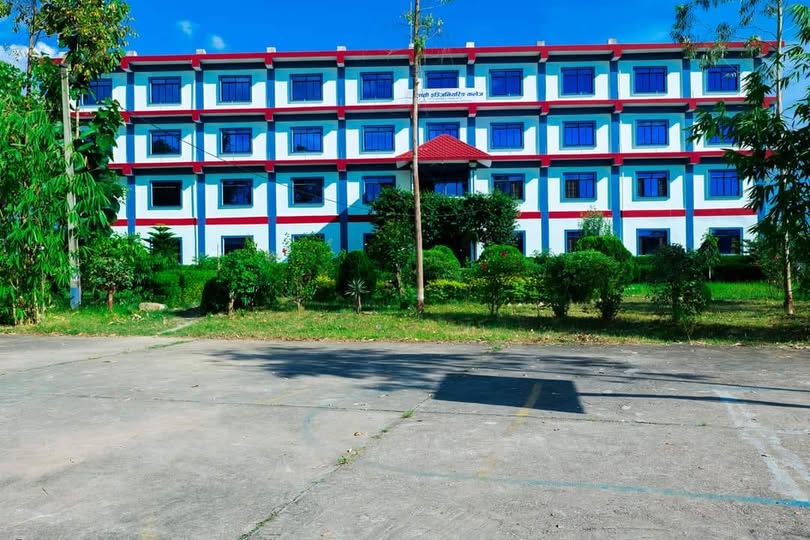
| Particular | Details |
|---|---|
| Course | Bachelor of Civil Engineering (BE Civil) |
| College | Rapti Engineering College |
| Affiliation | Pokhara University |
| Location | Ghorahi-16, Saniambapur Sarra, Dang |
| Duration | 4 years |
| Academic structure | 8 semesters |
| Total credits | 129 |
| Seats | 96 |
| Started at REC | 2011 |
| Final semester | Internship and Engineering Professional Practice |
BE Civil is an engineering degree focused on the planning, analysis, design, construction, and management of physical infrastructure. At REC, students follow the Pokhara University curriculum, which starts with mathematics, science, programming, drawing, mechanics, and engineering fundamentals before moving into specialized civil engineering subjects.
The later semesters cover surveying, soil mechanics, structural analysis, foundation engineering, transportation engineering, water supply, hydrology, irrigation and drainage, sanitary engineering, structural design, hydropower engineering, estimating and valuation, and construction project management. Project and field components are included alongside classroom study.
This structure makes the degree suitable for students who are interested in how buildings, roads, water systems, foundations, transportation networks, and other infrastructure are studied and developed from an engineering perspective.
BE Civil may suit students who are comfortable with mathematics and science and have an interest in structures, construction, surveying, water systems, transportation, and infrastructure.
Students should expect both numerical and practical work. The curriculum includes calculations and analysis as well as drawing, laboratory work, workshops, surveying, field projects, engineering projects, and internship.
The course can be particularly relevant for students interested in subjects such as:
structural analysis and design;
building and construction work;
surveying and field measurement;
soil and foundation engineering;
roads and transportation;
water supply and sanitation;
irrigation and drainage;
hydropower; and
construction project management.
Pokhara University’s eligibility requirements for undergraduate engineering programs apply to BE Civil.
Eligibility:
Completion of Grade 12 in the Science stream or an equivalent qualification from a recognized institution.
Study of Physics, Chemistry, and Mathematics, with at least one course carrying a minimum of 100 full marks or 5 credits in each required area.
At least C grade or 45 percent in each of Physics, Chemistry, and Mathematics.
Overall GPA of at least 2.0 on a 4.0 scale or equivalent.
Mathematics of at least 100 marks in Grade 11 or Grade 12.
These requirements are directly connected with the mathematics and science used throughout the engineering curriculum.
Applicants for Pokhara University undergraduate programs submit an application with their personal information, academic history, and program preference. Academic transcripts, a citizenship certificate, and passport-sized photographs are among the required application documents.
Applicants must sit for an entrance examination conducted by Pokhara University or its affiliated colleges. Admission is merit-based, with rankings determined by entrance examination performance. Engineering applicants are expected to perform strongly in mathematics and physics. Final enrollment depends on merit and available seats.
Rapti Engineering College has 96 seats for BE Civil.
The 2025 Pokhara University curriculum contains 129 credits across eight semesters. The academic progression moves from basic engineering science to specialized civil engineering study and then to design, management, professional practice, and internship.
| Semester | Main study areas | Credits |
|---|---|---|
| I | Applied Chemistry, Applied Physics, Calculus I, Computer Programming, Engineering Drawing, Applied Mechanics | 15 |
| II | Algebra and Geometry, Dynamics, Electrical and Electronics Engineering, Civil Engineering Materials, Workshop, Engineering Geology, Energy Engineering | 16 |
| III | Building Technology, Calculus II, Fluid Mechanics, Numerical Methods, Strength of Materials, Surveying I | 16 |
| IV | Project I, Hydraulics, Probability and Statistics, Communication Techniques, Soil Mechanics, Structural Analysis I, Surveying II | 17 |
| V | Engineering Hydrology, Survey Field Project, Foundation Engineering, Structural Analysis II, Transportation Engineering I, Water Supply Engineering, Concrete Technology | 18 |
| VI | Engineering Economics, Steel and Timber Design, Elective I, Irrigation and Drainage, Sanitary Engineering, Transportation Engineering II | 18 |
| VII | Project II, Construction Project Management, R.C.C. Design, Estimating and Valuation, Elective II, Hydropower Engineering | 18 |
| VIII | Elective III, Engineering Professional Practice, Internship | 11 |
The first year establishes the scientific and engineering base of the course. Applied Chemistry and Applied Physics are combined with Calculus I, Algebra and Geometry, Computer Programming, Engineering Drawing, Applied Mechanics, and Basic Electrical and Electronics Engineering.
Civil Engineering Materials, Civil Engineering Workshop, Engineering Geology, and Introduction to Energy Engineering begin connecting these foundations with civil engineering practice.
Structural subjects become more prominent from the second year onward. Strength of Materials is followed by Structural Analysis I and II, Concrete Technology and Masonry Structure, Design of Steel and Timber Structure, and Design of R.C.C. Structures.
Geotechnical study includes Engineering Geology, Soil Mechanics, and Foundation Engineering. Construction-oriented subjects include Building Technology, Estimating and Valuation, and Construction Project Management.
Together, these subjects introduce students to how materials, loads, soil conditions, structural systems, cost estimation, and project organization relate to civil engineering work.
Surveying is covered through Surveying I, Surveying II, and a Survey Field Project. These courses combine academic study with field-oriented work.
Transportation Engineering I and II address another major part of the curriculum. Water-related study includes Fluid Mechanics, Hydraulics, Engineering Hydrology, Water Supply Engineering, Irrigation and Drainage Engineering, Sanitary Engineering, and Hydropower Engineering.
This combination gives students exposure to several branches of civil engineering rather than concentrating only on buildings and structural design.
Practical components are distributed across the degree. The curriculum includes Civil Engineering Workshop, laboratory work attached to several subjects, Survey Field Project, Project I, Project II, and internship.
The eighth semester contains a six-credit internship carrying 12 practical hours in the curriculum structure. Engineering Professional Practice and an elective course are also included in the final semester.
These components allow students to work with field measurement, engineering problems, project preparation, and practical settings alongside theoretical coursework.
Through its subjects and practical components, the course may help students develop abilities related to:
engineering calculations and numerical analysis;
surveying and field measurement;
interpretation of engineering drawings;
structural analysis and design concepts;
construction materials and building technology;
soil and foundation assessment;
estimating and valuation;
transportation engineering;
water supply, sanitation, and irrigation systems;
hydrology and hydropower concepts;
construction project planning; and
engineering project work.
The level of competence developed in each area depends on academic performance, practical participation, project work, and further professional experience.
Civil engineering graduates may explore work connected with surveying, planning, design, estimating, construction supervision, project management, quality control, infrastructure development, and maintenance.
Possible roles identified for civil engineering graduates include:
Civil Engineer
Project Engineer
QA/QC Engineer
Property Valuator
Planning Engineer
CAD Engineer
Material Engineer
Surveying Engineer
Construction Engineer or Site Engineer
Relevant employment settings may include consulting firms, contracting companies, infrastructure developers, housing and real-estate organizations, government bodies, academic institutions, NGOs, and other organizations involved in construction or infrastructure work. Career outcomes depend on a graduate’s skills, experience, performance, employer requirements, and available opportunities.
BE Civil graduates can continue to master’s-level education in civil engineering and related science and technology fields.
Pokhara University also offers graduate programs relevant to civil engineering backgrounds, including MSc programs in Construction Management, Hydropower Engineering, Structural Engineering, Transportation Engineering & Management, and Interdisciplinary Water Resource Management. Admission to a particular graduate program depends on its specific academic requirements.
Pokhara University scholarship provisions include full and partial scholarships across its undergraduate faculties. Scholarship categories include merit-based, need-based, and inclusion-focused support, with quotas and eligibility criteria announced through the university’s scholarship process.
The Bachelor of Civil Engineering is a four-year program divided into eight semesters.
The BE Civil program at Rapti Engineering College is affiliated with Pokhara University.
The program has 96 seats.
Rapti Engineering College began offering Bachelor of Civil Engineering in 2011.
The Pokhara University Bachelor of Civil Engineering 2025 curriculum contains 129 credits across eight semesters.
Yes. The curriculum includes Survey Field Project, engineering projects, practical components, and a six-credit internship in Semester VIII.
Major areas include surveying, structural engineering, soil and foundation engineering, transportation engineering, water supply, hydrology, irrigation, sanitation, hydropower, estimating and valuation, and construction project management.






