Bachelor in Civil Engineering (BE Civil) at Acme Engineering College is an undergraduate engineering program affiliated with Purbanchal University. The college is located in Basundhara, Kathmandu, and offers 144 seats for BE Civil across morning and day shifts.
The curriculum follows the Purbanchal University Faculty of Engineering course structure effective from the 2021 batch. It is organized across eight semesters and moves from mathematics, science, mechanics, engineering materials, drawing, and workshop practice into surveying, structures, hydraulics, geotechnical engineering, transportation, water supply, hydropower, construction management, project work, and internship.
Course: Bachelor in Civil Engineering (BE Civil)
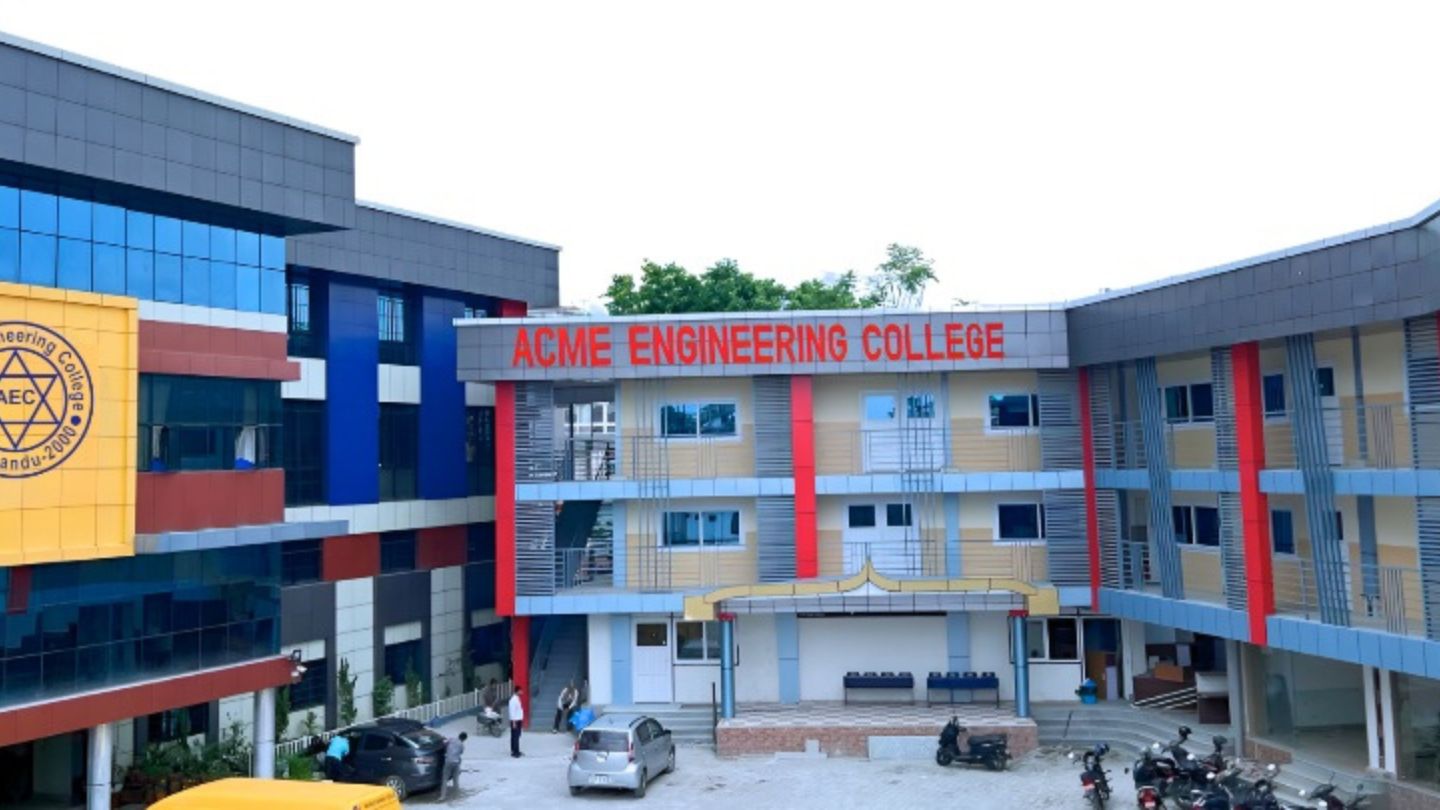
College: Acme Engineering College
Location: Basundhara, Kathmandu, Nepal
Affiliation: Purbanchal University
Level: Bachelor’s
Academic Structure: 8 semesters
Seats: 144
Shift: Morning and Day
Curriculum: Purbanchal University Faculty of Engineering structure effective from the 2021 batch
Practical Components: Laboratory work, engineering drawing, workshop practice, surveying, survey camp, projects, and internship
Internship: 30 working days in the eighth semester
Project Work: Civil Engineering Project I and Civil Engineering Project II
The opening semesters establish the mathematical, scientific, and engineering base needed for later civil engineering subjects.
Semester I carries 19 credit hours and includes Mathematics-I, Chemistry, Applied Mechanics-I (Statics), Civil Engineering Materials, Basic Electrical Engineering, Engineering Drawing-I, and Workshop Technology. Semester II has 18 credit hours, covering Mathematics-II, Physics, Applied Mechanics-II (Dynamics), Building Technology, Fundamental of Thermodynamics and Heat Transfer, and Engineering Drawing II.
The third and fourth semesters move further into civil engineering analysis and field-oriented subjects. Students study Mathematics-III, Strength of Materials, Fluid Mechanics, Survey I, Engineering Geology, Basic Electronics Engineering, and Computer Programming in Semester III. Semester IV covers Probability & Statistics, Survey-II, Hydraulics, Theory of Structure-I, Concrete Technology and Masonry Structures, Civil Engineering Drawing, and English for Technical Communication.
Semester V introduces Soil Mechanics, Theory of Structure-II, Water Supply Engineering, Transportation Engineering-I, Engineering Hydrology, and Design of Steel and Timber Structure. It also contains a Survey Camp with a minimum duration of 12 days.
Semester VI continues with Foundation Engineering, Irrigation Engineering, Sanitary Engineering, Transportation Engineering-II, Numerical Methods, and Engineering Economics. These semesters bring together structural, geotechnical, transportation, water, sanitation, and economic aspects within the same academic sequence.
The seventh semester includes Design of Reinforced Concrete Structure, Hydropower Engineering, Estimation and Valuation, Safety Engineering, Construction Project Management, Elective-I, and Civil Engineering Project I.
Semester VIII is centered more heavily on applied academic work. It consists of Civil Engineering Project II, Engineering Professional Practice, Elective-II, and Internship. The internship component is specified as 30 working days.
BE Civil is not structured entirely around classroom theory. Practical and field components appear throughout the curriculum.
Engineering Drawing and Workshop Technology are included from the first year. Survey I and Survey-II combine surveying study with practical work, followed by the Survey Camp in Semester V. Subjects including materials, fluid mechanics, geology, hydraulics, concrete technology, soil mechanics, transportation, sanitary engineering, and reinforced concrete design also contain practical components within their respective semester structures.
Project work becomes a named part of the curriculum in the final year. Civil Engineering Project I is included in Semester VII, followed by Civil Engineering Project II in Semester VIII. The final semester also contains Engineering Professional Practice and the 30-working-day internship.
Purbanchal University’s engineering entrance eligibility covers Bachelor in Civil Engineering along with its other bachelor-level engineering programs.
For 10+2 or equivalent applicants, the criteria include Mathematics, Physics, and Chemistry/Computer under the university’s specified subject and minimum grade requirements. Diploma in Engineering and NEB Technical or equivalent routes are also included under the stated CGPA, percentage, and subject conditions. A Level applicants have a separate route based on Mathematics, Physics, and Chemistry/Computer.
Candidates seeking admission to BE/B.Arch programs are required to pass the entrance examination conducted by Purbanchal University.
Acme Engineering College was established in 2000 and is located in Basundhara, Kathmandu. Undergraduate teaching uses lectures supplemented by tutorials, seminars, laboratory work, and field study where required. Audiovisual media and guest lectures are also included within the college’s teaching activities.
The college library has more than 20,000 books, with textbooks provided at a stated 1:1 ratio. Students also have opportunities to participate in internships, exhibitions, tours, seminars, and workshops.
For BE Civil students, these college-level learning arrangements accompany a curriculum that already includes drawing, workshops, surveying, field-based study, practical sessions, project work, and internship.
The scholarship arrangement includes merit-based and classified categories. The top 5% of admitted students in each faculty based on entrance examination performance are included under the merit scholarship provision, while another 5% of admitted students receive classified scholarships.
BE Civil at Acme Engineering College is affiliated with Purbanchal University.
The program has 144 seats.
BE Civil is offered in both morning and day shifts.
The Purbanchal University curriculum is organized across eight semesters, beginning with basic science and engineering subjects and progressing into structural, surveying, geotechnical, water, transportation, construction, project, and professional practice subjects.
Yes. The curriculum includes surveying practical work and a Survey Camp of at least 12 days in Semester V.
Yes. Semester VIII contains an internship of 30 working days.
Yes. Civil Engineering Project I is included in Semester VII, followed by Civil Engineering Project II in Semester VIII.
Yes. Candidates must pass the entrance examination conducted by Purbanchal University for admission to the BE/B.Arch programs.