Acme Engineering College (ACE) is an engineering and technology college in Basundhara, Kathmandu, Nepal. Established in 2000 AD, the college provides bachelor’s and master’s level study in engineering, architecture, information technology, information systems, and engineering management.
Its academic programs are affiliated with Purbanchal University. The current program range covered here consists of six courses only: BIT, BE Civil, BE Computer, B.Arch., M.Sc. Information System Engineering, and M.Sc. Engineering Management. The listed seat allocations range from 30 seats in each master’s program to 144 seats in BE Civil.
Established in 2000 AD and located in Basundhara, Kathmandu, Nepal.
Academic programs are affiliated with Purbanchal University.
Offers six programs: BIT, BE Civil, BE Computer Engineering, Bachelor of Architecture (B.Arch.), M.Sc. Information System Engineering, and M.Sc. Engineering Management.
BE Civil has 144 seats and is available in both morning and day shifts.
BIT and B.Arch. each have 48 seats and are offered in the morning shift.
BE Computer Engineering has 60 seats and is offered in the day shift.
M.Sc. Information System Engineering and M.Sc. Engineering Management each have 30 seats.
Engineering, computing, and architecture curricula include practical, laboratory, workshop, project, drawing, field, or studio components according to the respective program structure.
The college library has more than 20,000 books, with textbooks provided at a stated 1:1 ratio.
Academic activities include lectures, tutorials, seminars, laboratory work, field study, workshops, guest lectures, and educational activities outside regular classroom instruction.
Students may participate in domestic and overseas internships as well as exhibitions, seminars, workshops, and educational tours.
Scholarship provisions include merit-based scholarships for the top 5% of admitted students in each faculty based on entrance examination performance and classified scholarships for another 5% of admitted students.
The college combines undergraduate technical education with postgraduate study. Its course mix allows students to study across civil engineering, computer engineering, architecture, information technology, information systems, and the management side of engineering practice.
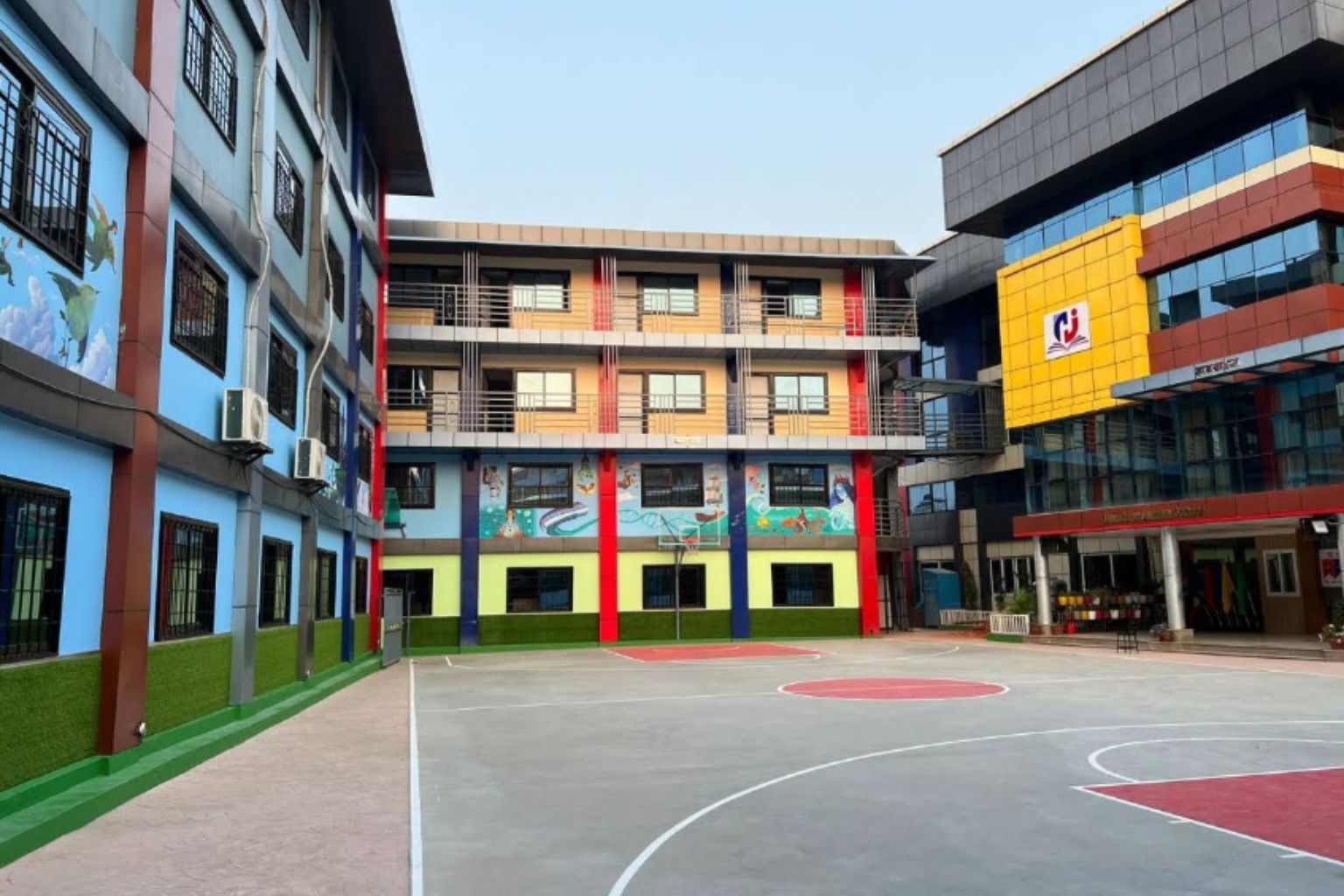
Acme Engineering College has defined seat allocations for its six offered programs. BE Civil is available in both morning and day shifts, while BIT and B.Arch. are offered in the morning shift and BE Computer is offered in the day shift.
| Program | Seats | Shift |
|---|---|---|
| BIT | 48 | Morning |
| BE Civil | 144 | Morning and Day |
| BE Computer Engineering | 60 | Day |
| Bachelor of Architecture (B.Arch.) | 48 | Morning |
| M.Sc. Information System Engineering | 30 | |
| M.Sc. Engineering Management | 30 |
The seat distribution places the largest intake in BE Civil, followed by BE Computer, BIT and B.Arch., with 30 seats each in the two master’s programs.
The academic connection with Purbanchal University is reflected in the course structures used across the college’s engineering, architecture, information technology, and postgraduate programs.
The BE Civil curriculum follows a semester-based engineering structure. The first semester includes Mathematics-I, Chemistry, Applied Mechanics-I (Statics), Civil Engineering Materials, Basic Electrical Engineering, Engineering Drawing-I, and Workshop Technology. The second semester continues with Mathematics-II, Physics, Applied Mechanics-II (Dynamics), Building Technology, Fundamental of Thermodynamics and Heat Transfer, and Engineering Drawing II. The available curriculum is identified as effective from the 2021 batch.
BE Computer Engineering also follows the Purbanchal University engineering structure effective from the 2021 batch. Its first semester combines Mathematics I, Physics, English for Technical Communication, Computer Programming, Fundamental of Computing Technology, Engineering Drawing, and Workshop Technology. In the second semester, students move into Mathematics-II, Chemistry, Object Oriented Programming with C++, Digital Logic, Basic Electrical Engineering, and Applied Mechanics.
The BIT curriculum begins with a combination of mathematics, computing, communication, electrical fundamentals, management, programming, and project work. First-semester subjects include Mathematics-I, Fundamentals of Information Technology, Technical Communication (English), Basic Electrical System & Circuit, Principles of Management, Computer Programming-I, and Project-I.
B.Arch. starts with subjects that connect architectural design with construction and technical foundations. The first semester covers Building Material-I, Building Construction-I, Mathematics-I, Applied Mechanics, An Introduction to Architecture, Workshop-I, Model and Sculpture, Art & Graphics-I, and Basic Design-I. Later semesters continue through building construction, building science, design studios, structural study, architectural history, services, and computer-aided design and drafting.
This difference in subject structure gives each undergraduate program a distinct academic direction. Civil and computer engineering begin with common scientific and engineering foundations before moving into their disciplines, BIT introduces computing alongside project work from the first semester, and architecture combines technical subjects with design, graphics, construction, and studio work.
Acme Engineering College offers two master’s programs with 30 seats each: M.Sc. Information System Engineering and M.Sc. Engineering Management.
M.Sc. Engineering Management is structured as a two-year program. Its coursework brings engineering and management subjects together through areas such as quantitative methods, research methodology, organizational behavior, engineering economics, entrepreneurship, operational research, strategic management, quality management, human resource management, technology marketing, managerial accounting, project management, and a final dissertation or thesis.
The program is relevant to engineering graduates who want postgraduate study that adds management, economic, organizational, research, and project-related coursework to their technical background.
M.Sc. Information System Engineering forms the other postgraduate option within the college’s stated program portfolio and has an allocated intake of 30 seats.
Teaching at Acme Engineering College uses lectures as a core method for undergraduate study, supported by tutorials, seminars, laboratory work, and field study where required by the course.
The college uses the approach “Learn by Experience, Learn by Exposure.” Students are encouraged to participate in academic activities beyond routine lectures, including seminars, workshops, talk programs, papers, exhibitions, and educational tours. Audiovisual media is also used in classroom instruction, and guest lectures form part of the academic activities.
This format is particularly relevant to programs in which classroom theory has to be connected with drawings, programming, laboratories, design work, projects, field activities, or applied problem-solving. The supplied engineering and architecture curricula themselves include practical, drawing, workshop, project, and studio components alongside theory subjects.
The college has a library collection of more than 20,000 books. Textbooks are provided at a stated 1:1 ratio, giving individual students access to course-related texts within the college’s academic support arrangement.
Its learning environment also includes full-time faculty members, audiovisual teaching, guest lectures, laboratory and field-based activities, and opportunities to take part in workshops and seminars.
Students may also participate in domestic and overseas internships. Academic and cultural exchange opportunities are connected with MoUs established with universities and institutes outside the college.
Alongside academic activities, the college has several forms of student support. These include:
participation in national and international exhibitions, tours, seminars, workshops, and related academic activities;
domestic and overseas internship opportunities;
medical and lodging discounts at Star Hospital, Sanepa;
a low-interest study loan facility; and
scholarship provisions based on entrance performance and classified categories.
These provisions sit alongside the academic support offered through faculty interaction, textbooks, library access, practical activities, and course-based laboratories or workshops.
Admission requirements vary by academic level and program, with Purbanchal University eligibility and entrance provisions applying to the relevant courses.
For BIT, the minimum eligibility criteria effective from the new intake of 2082-2083 allow several academic routes. Applicants may qualify after passing +2 or equivalent with at least a D grade in each subject, D+ under the old grading system, and an aggregate GPA of at least 2.0. Another route is at least 45% in Intermediate with 100 marks in Mathematics or Computer Science. A three-year diploma in any stream is also included. For A Level applicants, the stated requirement is at least an E grade in each subject or an aggregate of 45%.
For BE and B.Arch., eligibility is linked to Purbanchal University’s engineering entrance criteria. The stated routes include 10+2 or equivalent study involving Mathematics, Physics, and Chemistry/Computer, along with qualifying engineering diploma, NEB Technical, and A Level pathways under the university’s specified academic requirements.
The M.Sc. Engineering Management eligibility criteria include BE Computer, BE Electronics and Communication, or BE Civil with at least 45% marks in aggregate.
Admission therefore depends on the academic route and program selected rather than a single college-wide eligibility rule.
The scholarship arrangement at Acme Engineering College includes merit-based and classified categories.
Merit scholarships are linked to entrance examination performance. The top 5% of admitted students in each faculty based on entrance results are eligible under this category. A further 5% of admitted students fall under the classified scholarship provision.
Because these categories are tied to admission and student classification, the scholarship structure is separate from the college’s low-interest study loan facility.
The academic range at Acme Engineering College is concentrated rather than broad across unrelated disciplines. Its undergraduate portfolio consists of BIT, BE Civil, BE Computer, and B.Arch., while its postgraduate portfolio consists of M.Sc. Information System Engineering and M.Sc. Engineering Management.
This combination gives the college three clear academic strands. Civil engineering and architecture deal with the built environment from engineering and design perspectives. Computer engineering and BIT concentrate on computing and technology through different curricular routes. The master’s programs extend the portfolio into information systems and engineering management.
The course structures also show that practical components are built into the programs in different ways. Civil and computer engineering include laboratories, engineering drawing, workshop practice, and discipline-specific technical subjects. BIT introduces project work from the first semester. Architecture combines construction, graphics, model work, technical study, and design studios.
Since its establishment, Acme Engineering College has developed its academic offering around engineering, architecture, information technology, information systems, and engineering management in Kathmandu. Its six listed programs are affiliated with Purbanchal University and have defined seat allocations, with separate morning and day arrangements for the specified undergraduate programs.
For prospective students, the main distinctions lie in the academic field, seat allocation, study shift, curriculum, and entrance eligibility of the selected program. The college’s academic support includes library resources, textbooks, practical learning, seminars, workshops, internships, scholarships, and other student-support provisions.
Acme Engineering College is located in Basundhara, Kathmandu, Nepal.
Acme Engineering College was established in 2000 AD.
The college is affiliated with Purbanchal University.
The college offers six programs:
Bachelor in Information Technology (BIT)
BE Civil
BE Computer Engineering
Bachelor of Architecture (B.Arch.)
M.Sc. Information System Engineering
M.Sc. Engineering Management
BE Civil has 144 seats, BE Computer Engineering has 60 seats, BIT has 48 seats, and B.Arch. has 48 seats. M.Sc. Information System Engineering and M.Sc. Engineering Management each have 30 seats.
The morning shift includes BE Civil, BIT, and B.Arch. The day shift includes BE Civil and BE Computer Engineering. BE Civil is therefore available in both shifts.
Eligibility depends on the selected program and the applicable Purbanchal University requirements. BIT, BE, B.Arch., and master’s programs have separate academic eligibility criteria and admission requirements.
Yes. Merit-based scholarships are available to the top 5% of admitted students in each faculty based on entrance examination performance. Another 5% of admitted students receive classified scholarships.
The academic programs include practical components according to their respective curricula. These may include laboratory work, engineering drawing, workshops, projects, field study, programming activities, and architecture studio work.
Academic support includes a library with more than 20,000 books, textbooks provided at a stated 1:1 ratio, laboratory and practical activities, seminars, workshops, guest lectures, and field-based learning where required by the program.
Students may participate in domestic and overseas internships. The college also provides opportunities to take part in exhibitions, seminars, workshops, educational tours, and related academic activities.
Yes. The college offers M.Sc. Information System Engineering and M.Sc. Engineering Management, with 30 seats allocated to each program.