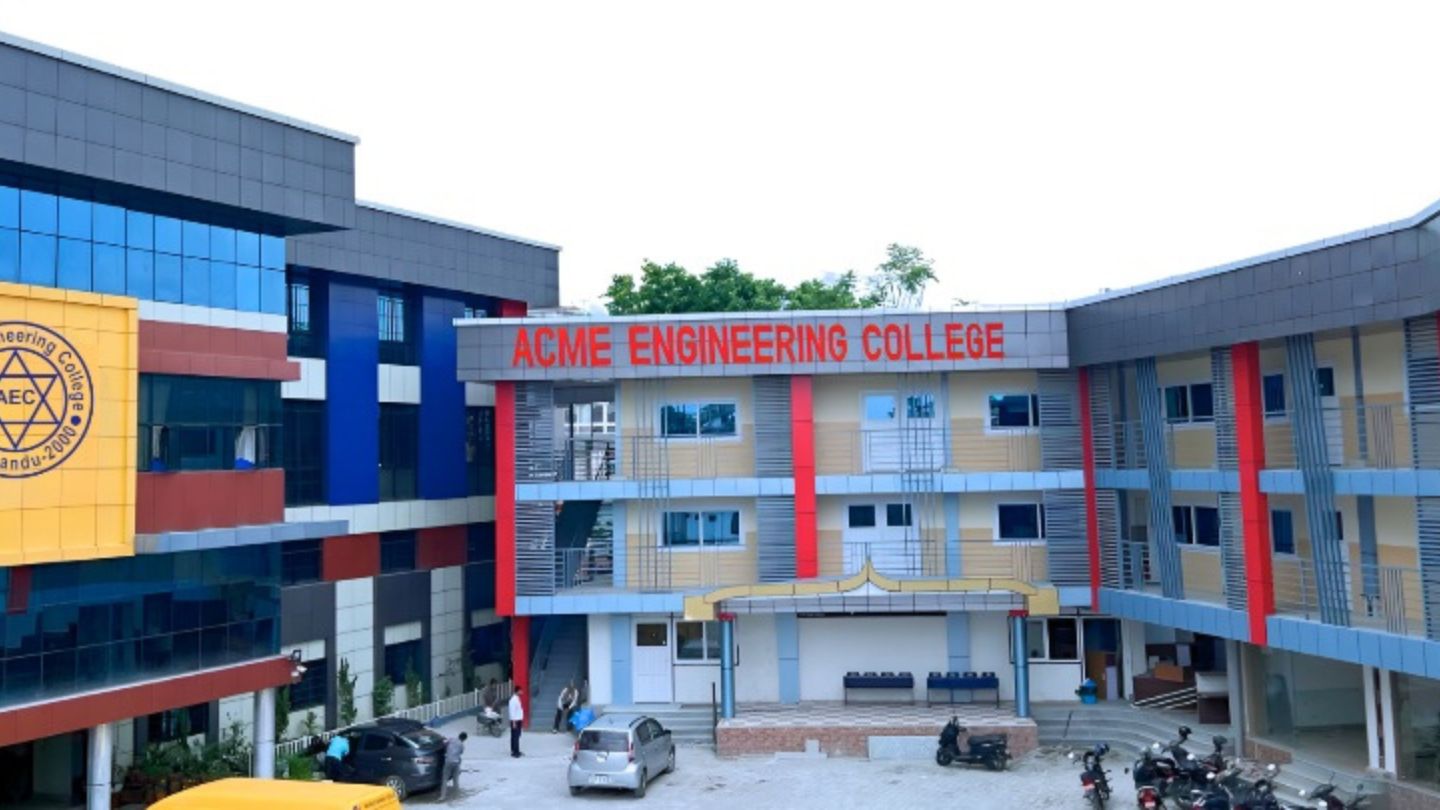
M.Sc. Engineering Management (M.Sc. EM) at Acme Engineering College is a postgraduate program that brings engineering and management study into the same academic framework. Acme Engineering College is located in Basundhara, Kathmandu, and the program is affiliated with Purbanchal University.
The course runs for two years and progresses through management, research, economics, operations, finance, marketing, project management, and a final dissertation or thesis.
Acme Engineering College has 30 seats for M.Sc. Engineering Management.
Course: M.Sc. Engineering Management (M.Sc. EM)
College: Acme Engineering College
Location: Basundhara, Kathmandu, Nepal
Affiliation: Purbanchal University
Level: Master’s
Duration: 2 years
Seats: 30
Academic Structure: 4 semesters
Eligibility: BE Computer, BE Electronics & Communication, or BE Civil with at least 45% marks in aggregate
Admission Requirement: Purbanchal University entrance examination
Entrance Format: 100 objective-type multiple-choice questions
Final Academic Component: Dissertation/Thesis
Engineering Management sits at the intersection of engineering or technology and business management. The program addresses the management side of engineering operations and systems while retaining an engineering-focused academic setting.
At Acme Engineering College, the curriculum moves from quantitative and research-oriented subjects into organizational, strategic, operational, financial, and project-related study. The final semester is devoted to a dissertation or thesis.
For engineering graduates, this structure introduces management subjects without separating them from the context of technical organizations and engineering activities.
The first semester establishes a foundation in quantitative analysis, research, organizational study, economics, and entrepreneurship.
Subjects are:
Quantitive Method — 3 credits
Research Methodology — 3 credits
Organization Behavior — 3 credits
Engineering Echonomics — 3 credits
Entrepreneurship — 3 credits
Engineering Economic Analysis — 3 credits
Research Methodology introduces formal research study early in the program, while the economics and quantitative subjects place analytical work alongside organizational and entrepreneurial study.
The second semester moves further into management decisions, organizational systems, operations, quality, and human resources.
Subjects are:
Legal and Ethical Issues Management — 3 credits
Operational Research, System Modeling and Risk Management — 3 credits
Strategic Management — 3 credits
Quality Management — 3 credits
Final Management — 3 credits
Human Resource Management — 3 credits
This stage broadens the course beyond engineering economics by covering risk, strategy, quality, legal and ethical issues, and the management of people within organizations.
Semester III connects management study more closely with technology, accounting, finance, and project work.
Subjects are:
Technology Marketing — 3 credits
Managerial Accounting — 3 credits
Financing and Management — 2 credits
Elective I — 3 credits
Elective II — 3 credits
Project Management — 3 credits
The two electives provide space within the semester alongside the required subjects, while Project Management forms a direct link between managerial study and organized project activity.
The fourth semester is devoted to:
Dissertation/Thesis — 16 credits
Placing the dissertation or thesis in the final semester gives students a substantial research component after completing the taught subjects in the earlier semesters.
The course-specific eligibility criteria include the following engineering degrees:
BE Computer with at least 45% marks in aggregate
BE Electronics & Communication with at least 45% marks in aggregate
BE Civil with at least 45% marks in aggregate
The academic requirement is therefore based on a prior engineering qualification from the specified disciplines.
Candidates seeking admission to the master’s program are required to pass the entrance examination conducted by Purbanchal University.
For M.Sc. Engineering Management, the entrance examination consists of 100 objective-type multiple-choice questions. The stated coverage includes:
Principles of Organization Management
Structure
Communication
Motivation
Leadership
Applicants preparing for admission should therefore expect the entrance test to assess management concepts rather than relying only on their previous engineering coursework.
The course moves through several connected areas rather than concentrating on a single branch of management.
The quantitative and economic subjects introduce methods used in analysis and decision-making. Research Methodology prepares students for structured academic investigation, which later connects with the dissertation or thesis.
Organizational Behavior, Human Resource Management, Strategic Management, and Legal and Ethical Issues Management address the organizational side of engineering-related work. Operational Research, System Modeling and Risk Management adds a systems and decision perspective.
Technology Marketing, Managerial Accounting, Financing and Management, and Project Management appear later in the program, bringing technology, financial understanding, and project organization into the curriculum.
Research is introduced in the first semester through Research Methodology rather than being left entirely to the end of the degree.
The final semester then consists of a 16-credit Dissertation/Thesis.
This sequencing gives research a defined place at both the beginning and the conclusion of the academic structure.
Acme Engineering College was established in 2000 and is located in Basundhara, Kathmandu. Its postgraduate academic portfolio includes Engineering Management and Information System Engineering.
The college library has more than 20,000 books, with textbooks provided at a stated 1:1 ratio. Academic activities also include audiovisual lectures, guest lectures, seminars, workshops, and opportunities for students to participate in internships and other academic activities.
M.Sc. Engineering Management is studied within this broader engineering-focused college environment alongside undergraduate engineering, architecture, and information technology programs.
Scholarship provisions at Acme Engineering College include merit-based and classified categories.
The top 5% of admitted students in each faculty based on entrance examination performance fall under the merit-based scholarship provision, while another 5% of admitted students receive classified scholarships.
The scholarship scheme also includes a provision for students from Acme continuing to a master’s program.
The program is structured for eligible engineering graduates who want postgraduate study that adds management, economics, research, organizational, operational, financial, and project-related subjects to their engineering background.
Students considering the course should look closely at its subject mix. It is not structured as another specialized technical engineering degree. Its academic emphasis moves toward the management of engineering-related organizations, operations, projects, resources, and systems while maintaining an engineering entry requirement.
The dissertation or thesis also means students should be prepared for an independent research component in the final semester.
M.Sc. EM stands for Master of Science in Engineering Management.
The program is affiliated with Purbanchal University.
The program has a duration of two years.
Acme Engineering College has 30 seats for M.Sc. Engineering Management.
Applicants with BE Computer, BE Electronics & Communication, or BE Civil and at least 45% marks in aggregate meet the stated course-specific eligibility criteria.
Yes. Candidates must pass the entrance examination conducted by Purbanchal University.
The entrance examination includes 100 objective-type multiple-choice questions covering areas such as organization management, structure, communication, motivation, and leadership.
Yes. Project Management is a three-credit subject in Semester III.
Yes. Elective I and Elective II are included in the third semester, each carrying three credits.
Yes. The fourth semester consists of a 16-credit Dissertation/Thesis.