Thapathali Campus (थापाथली क्याम्पस) is a constituent engineering campus of the Institute of Engineering (IOE) under Tribhuvan University (TU). Located in Thapathali, Kathmandu Metropolitan City Ward No. 11, Bagmati Province, the campus conducts undergraduate engineering, architecture, and postgraduate engineering programs within the academic and examination system of IOE and Tribhuvan University.
Its academic development reflects a long transition from technical and vocational training to diploma education, bachelor's-level engineering, architecture, and specialized master's programs. Engineering departments, workshops, laboratories, architecture studios, computing facilities, research activities, projects, a library, hostel accommodation, and administrative sections support its academic functions.
The programs offered at Thapathali Campus fall under Tribhuvan University. Curriculum, eligibility, entrance requirements, admission procedures, examinations, results, and degree awards follow the applicable rules and regulations of TU and the Institute of Engineering.
| Particular | Details |
|---|---|
| Institution | Thapathali Campus |
| Institution Type | Constituent Engineering Campus |
| Institute | Institute of Engineering (IOE) |
| University | Tribhuvan University |
| Location | Thapathali, Kathmandu Metropolitan City Ward No. 11, Bagmati Province, Nepal |
| Academic Levels | Bachelor's and Master's |
| Undergraduate Programs | 7 |
| Master's Programs | 3 |
| Degree-Awarding University | Tribhuvan University |
| Academic and Examination Authority | Institute of Engineering, TU |
| Engineering Regulatory Alignment | Nepal Engineering Council |
| Official Website | https://www.tcioe.edu.np |
The history of Thapathali Campus begins with technical training rather than university-level engineering education. The Technical Training Institute Project was established in 2019 BS with assistance from the Government of the Federal Republic of Germany. Its purpose was to prepare technical manpower in areas required for Nepal's development.
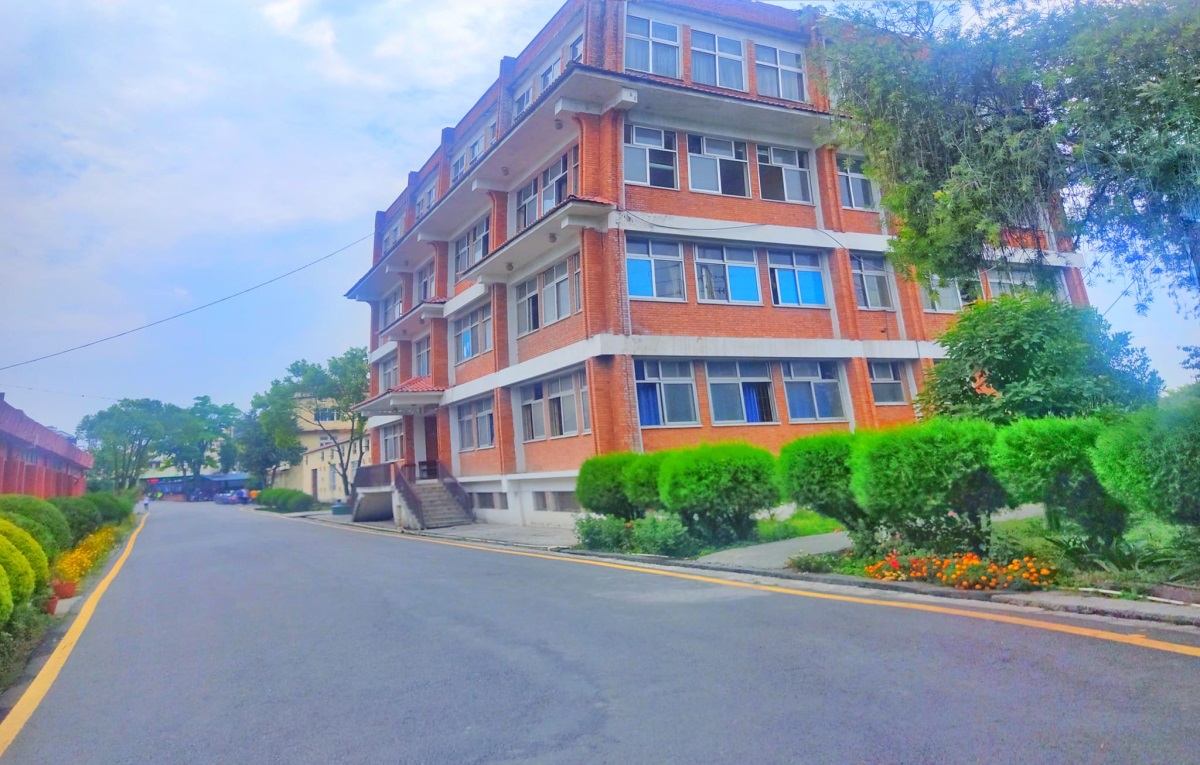
Technical training in mechanical, automobile, and electrical trades was introduced for SLC graduates during the early period of the institute. The Technical Training Institute was formally inaugurated on 29 Falgun 2023 BS, corresponding to 13 March 1967. Mechanical drafting was also part of the early technical education structure, although the three-year Mechanical Drafting course was transferred to Pulchowk.
A major institutional change followed when the technical institute came under Tribhuvan University and the Institute of Engineering. From 2029 BS, the institution operated as Thapathali Campus under IOE. This brought the campus into TU's wider engineering education system and gradually changed its academic role.
The campus spent several decades teaching technical and diploma-level programs. It introduced a two-year proficiency certificate level course in 1977 AD and later three-year diploma programs in Mechanical Engineering and Automobile Engineering. Diploma-level Computer Engineering and Electronics Engineering were subsequently introduced as the campus expanded its technical disciplines.
The next phase was the transition from diploma education to bachelor's-level engineering. Bachelor in Industrial Engineering was among the first engineering degree programs introduced at the campus, followed by Civil Engineering, Electronics and Communication Engineering, and Mechanical Engineering. Architecture, Automobile Engineering, Computer Engineering, and postgraduate engineering studies were later added.
New intake into diploma programs was eventually discontinued as Thapathali Campus shifted toward university-level undergraduate and graduate education. Its current academic structure is centered on engineering bachelor's degrees, the Bachelor of Architecture, and specialized Master of Science programs.
This development gives the campus a distinct academic progression: its early identity was based on trade and technician training, while its later development established a multi-department engineering campus within Tribhuvan University.
Thapathali Campus is a constituent campus under the Institute of Engineering and Tribhuvan University. Tribhuvan University remains the degree-awarding authority, while IOE provides the central academic and examination framework for engineering education.
The campus is headed administratively by a Campus Chief. Academic departments operate under departmental leadership, while assistant campus chiefs and administrative sections manage academic affairs, student-related services, institutional logistics, and other assigned responsibilities.
Academic matters are directly connected with the broader IOE system. Curriculum structures, examination procedures, assessment requirements, grading arrangements, and related academic regulations are handled through the relevant IOE bodies, including subject committees, the Faculty Board, and the Examination Control Division.
Students therefore study at Thapathali Campus while remaining within the academic framework of TU and IOE from admission through graduation.
The institutional direction emphasizes engineering education, research, practical problem-solving, professional preparation, integrity, inclusiveness, and sustainability. These areas are reflected in the combination of classroom study, laboratory and workshop work, projects, field activities, and postgraduate research.
Thapathali Campus offers seven undergraduate programs and three postgraduate programs. The engineering bachelor's programs generally follow a four-year, eight-semester structure, while the Bachelor of Architecture follows a five-year academic structure. The master's programs are structured over two academic years and four semesters.
The program intake is as follows:
| Program | Duration | Seats |
|---|---|---|
| Bachelor in Industrial Engineering | 4 Years | 48 |
| Bachelor of Electronics, Communication and Information Engineering | 4 Years | 48 |
| Bachelor of Civil Engineering | 4 Years | 144 |
| Bachelor of Architecture | 5 Years | 48 |
| Bachelor in Automobile Engineering | 4 Years | 48 |
| Bachelor of Mechanical Engineering | 4 Years | 48 |
| Bachelor of Computer Engineering | 4 Years | 48 |
| M.Sc Mechanical Engineering in Design and Manufacturing | 2 Years | 20 |
| M.Sc Earthquake Engineering | 2 Years | 20 |
| M.Sc. in Informatics and Intelligent Systems Engineering | 2 Years | 20 |
The Bachelor in Industrial Engineering combines engineering study with areas related to production systems, operations, quality, ergonomics, scheduling, and industrial processes. The academic unit responsible for industrial engineering focuses on subjects connected with the organization and operation of production and industrial systems.
Electronics, Communication and Information Engineering and Computer Engineering are connected with the Department of Electronics and Computer Engineering. Teaching areas associated with the department include digital electronics, communication systems, computer systems, microprocessor applications, networks, embedded systems, and software-related study.
Civil Engineering has the largest listed intake among the bachelor's programs, with 144 seats. Its curriculum follows the IOE semester framework and includes engineering mathematics and sciences alongside civil engineering areas such as mechanics, materials, geology, surveying, structures, hydraulics, and related practical work. The BE Civil Engineering structure spans eight semesters.
Mechanical Engineering and Automobile Engineering are supported by mechanical, manufacturing, workshop, thermal, and automobile-related facilities. Their practical setting includes machine work, manufacturing equipment, mechanical testing, automotive work, instrumentation, and associated laboratory activities.
The Bachelor of Architecture follows a five-year structure. Architecture teaching incorporates design and studio work alongside the academic requirements of the IOE curriculum. The later stage includes thesis work, giving the program a different academic format from the four-year BE programs.
The M.Sc. in Earthquake Engineering is associated with the Civil Engineering discipline. Its curriculum is organized across four semesters and includes core subjects, electives, a project, and a thesis.
The first semester includes Solid Mechanics, Theory of Vibrations, Engineering Seismology, and Geotechnical Earthquake Engineering. The second semester includes Seismic Resistant Design of Structures, Finite Element Methods, and elective courses. The third semester contains further electives and a project, while the fourth semester is assigned to the thesis.
Elective areas include nonlinear structural analysis, structural health monitoring, seismic-resistant substructures, masonry, disaster risk evaluation and management, performance-based design, seismic risk assessment and retrofitting, structural control, base isolation, bridge design, and earthquake engineering laboratory work.
The project and thesis may involve industrial, community, literature-based, analytical, experimental, prototype, case-study, or field-based problems. Thesis work begins from the third-semester stage and is formally completed in the fourth semester. Eligibility is BE in Civil Engineering, and the degree award is M.Sc. in Earthquake Engineering (Civil Engineering).
The M.Sc Mechanical Engineering in Design and Manufacturing is a two-year postgraduate program connected with mechanical design, solid mechanics, manufacturing processes, systems and components, and related engineering applications.
Facilities associated with this area include a machine design workstation, computer and simulation workstation, advanced mechanical and automobile workshops, a metrology and instrumentation laboratory, CNC equipment, 3D printing equipment, a material testing laboratory, hydraulic and pneumatic system simulation facilities, and fluid and thermal laboratory facilities.
The specified academic background for admission includes a four-year engineering degree in Mechanical, Industrial, or Automobile Engineering, together with the admission requirements prescribed through the Institute of Engineering. The program has an intake of 20 seats.
The M.Sc. in Informatics and Intelligent Systems Engineering is a two-year multidisciplinary postgraduate program. Its academic areas include information processing, computational methods, intelligent systems, machine learning, optimization, information theory, and computer vision.
The first semester contains Numerical Analysis, Information Theory, Computational Intelligence, and Computer Vision. The second semester includes Applied Machine Learning, Engineering Research and Optimization, and electives. The third semester combines project work with electives, while the fourth semester is devoted to a thesis.
Eligibility covers specified four-year bachelor's degrees in Electronics, Computer, Software, or Information Technology, or equivalent engineering qualifications recognized under the applicable academic rules. Selection follows the postgraduate entrance and merit system prescribed by the Institute of Engineering.
The academic programs are organized through discipline-based departments and supporting academic units. Their functions extend beyond classroom teaching to laboratories, studios, projects, practical instruction, and postgraduate academic work.
The main academic areas include:
Department of Civil Engineering, covering Civil Engineering and postgraduate Earthquake Engineering, with structural, mechanics, surveying, soil, concrete, fluid, and related laboratory work.
Department of Mechanical and Automobile Engineering, supporting mechanical, automobile, workshop, manufacturing, thermal, design, instrumentation, and vehicle-related academic activities.
Department of Electronics and Computer Engineering, supporting electronics, communication, computer, embedded, networking, software, and postgraduate intelligent-systems study.
Department of Industrial Engineering, with academic work related to industrial systems, operations research, quality, supply-chain concepts, ergonomics, and production planning.
Department of Architecture, supporting design studios, drafting, model preparation, planning-related study, and architectural thesis work.
Department of Applied Sciences and Humanities, supporting common foundation subjects such as mathematics, physics, chemistry, and communication-related coursework.
This departmental structure allows common foundation courses to sit alongside discipline-specific engineering instruction, with specialized work increasing as students progress through their programs.
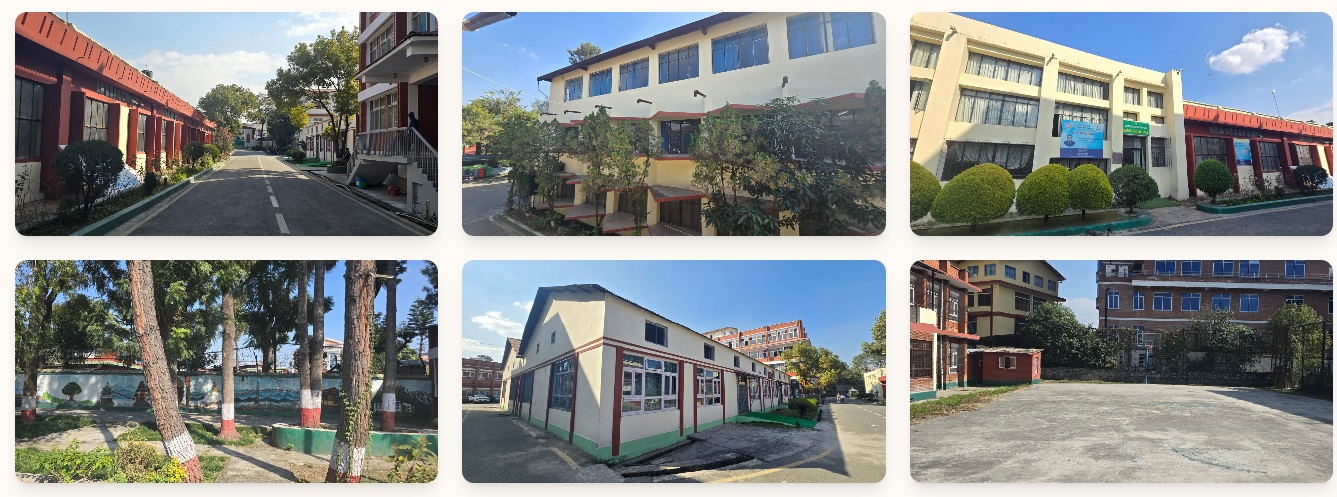
Admission to Thapathali Campus is governed through the Institute of Engineering and Tribhuvan University system rather than a separate campus-specific academic standard.
For undergraduate engineering admission, candidates are required to take and qualify through the IOE entrance process. Admission proceeds through the centralized merit and program-selection system applicable to IOE constituent campuses. Candidate eligibility, academic qualifications, entrance requirements, priority selection, admission procedures, and other conditions follow the applicable TU and IOE rules.
The same institutional principle applies to postgraduate admission. Applicants must satisfy the academic background specified for the relevant master's program and complete the IOE postgraduate entrance and selection procedure. Individual master's programs can require different undergraduate engineering backgrounds because their academic disciplines differ.
The campus does not independently determine the wider TU curriculum, entrance standard, degree requirements, or examination framework. These remain governed by Tribhuvan University and the Institute of Engineering.
Programs at Thapathali Campus follow semester-based curricula. Four-year BE programs span eight semesters, B.Arch extends across five academic years, and the listed master's programs are organized into four semesters.
Engineering study combines several forms of academic work. Depending on the program and semester, students may undertake lectures, tutorials, practical sessions, laboratories, workshops, design work, projects, field activities, studios, internal assessment, and final examinations.
The assessment framework combines internal academic work with final examinations administered under IOE. Internal assessment can include tests, assignments, laboratory records, attendance requirements, practical work, projects, or other components defined by the curriculum. Final examinations operate within the IOE examination system.
The Exam and Academic Administration section handles many of the campus-level processes that connect students with this system. Its work includes admission-related records, TU registration, examination forms, admit cards, internal assessment records, practical examination documentation, result-related records, mark-sheet handling, recommendations, and character certificates.
Degree completion remains subject to TU and IOE academic regulations. Final degrees are conferred by Tribhuvan University.
Engineering education at Thapathali Campus is supported by discipline-specific laboratory and workshop facilities. The available laboratory areas include brick laying, carpentry, plumbing, electrical work, automobile engineering, basic machines, fabrication, physics, chemistry, engineering materials and soil, hydraulics, water supply, surveying, mechanics, and computing.
The mechanical and manufacturing area includes equipment and spaces for machine-related practical work. The wider facility structure includes machine tools, mechanical workshops, automobile work areas, metrology and instrumentation, manufacturing equipment, material testing, simulation workstations, and thermal and fluid-related laboratory activity.
Civil Engineering practical work is supported through areas such as soil mechanics, concrete and material testing, fluid mechanics, surveying, mechanics, and structural study. Surveying equipment and field-based work complement classroom instruction.
Electronics and computer-related study uses computing and hardware facilities that support programming, networking, microprocessor-related study, simulations, and other technical coursework.
Architecture students work through studio-based learning, drawing and drafting, model preparation, reviews, projects, and thesis activity. The physical requirements of architecture therefore differ from conventional lecture-and-laboratory engineering programs.
Beyond the teaching departments, the campus structure also includes units for Material Testing Laboratory, Consultancy Services, Internal Quality Assurance, Research and Development, Education Management Information System, and Automation and Incubation.
The campus library contains 30,792 books, manuals, and copies of important documents and papers. Its academic collection also includes reference resources, project work, and theses.
Library administration covers book registration, cataloguing, classification, lending, library cards, reference services, maintenance of book records, and organization of student projects and theses. Computers and internet facilities form part of the library's study resources, while separate study areas support individual and shared academic work.
An electronic library component provides another means of accessing learning materials. The broader learning-resource system also includes textbook lending and access to research material relevant to engineering coursework and project preparation.
For an engineering campus with programs ranging from bachelor's coursework to master's thesis research, the library supports both regular course study and longer research or project assignments.
Research at Thapathali Campus is connected with postgraduate study, final-year engineering projects, technical publications, laboratory work, design activity, and the Research and Development Unit.
Undergraduate capstone work has addressed infrastructure, seismic engineering, industrial systems, transportation, computing, and other engineering problems. Student technical activities have also included engineering design competitions, robotics-related work, student electric-vehicle fabrication, and energy-related prototypes.
The postgraduate programs place a stronger formal requirement on research. Earthquake Engineering includes a project followed by thesis work, and the Informatics and Intelligent Systems Engineering curriculum similarly progresses through project and thesis components. Research themes can involve experimental, analytical, computational, field-based, organizational, community, or case-study approaches.
Practical exposure is also built into discipline-specific study. Civil Engineering includes surveying and field-oriented work. Mechanical, Automobile, and Industrial Engineering curricula include industrial exposure through workshops, visits, attachments, or practical activities according to the academic requirements of their programs.
The Research and Development Unit, Automation and Incubation Unit, Material Testing Laboratory, and consultancy functions connect academic projects with applied technical work.
The admission structure under IOE includes regular or subsidized and full-fee categories, with scholarship and free-studentship arrangements administered according to applicable IOE and Tribhuvan University provisions. Merit in the entrance system and academic performance form part of the scholarship structure identified for students.
The campus academic administration also handles scholarship-related records and the processing of merit-based scholarship matters assigned to it.
Because fees, detailed category allocations, scholarship amounts, and financial provisions can be revised through university decisions, the program table focuses on the stated total intake rather than variable financial figures.
Thapathali Campus has hostel accommodation for 69 students coming from outside Kathmandu.
Sports facilities include:
Volleyball court
Table-tennis hall
Badminton court
Campus administration is also responsible for general operational matters such as drinking water, security, internet and electrical services, building and equipment maintenance, campus cleanliness, and oversight of common facilities.
These support functions sit outside the academic departments but contribute to the day-to-day environment in which teaching, laboratory work, examinations, and student activities take place.
Several administrative sections connect academic activity with the institutional rules of TU and IOE.
The Exam and Academic Administration section handles student admission records, TU registration, examination forms, admit cards, internal-assessment records, practical examination information, mark-sheet processing, character certificates, recommendations, and scholarship-related work.
The Financial Administration section deals with budgeting, accounting, student financial records, payments, audits, scholarships, and other financial responsibilities. Personnel and General Administration deal with staff records, appointments and service-related documentation, maintenance, security, utilities, infrastructure, and routine campus operations.
Planning and quality-related work includes institutional planning, procurement coordination, interaction with academic and administrative stakeholders, and coordination with the Internal Quality Assurance Unit. The campus also maintains procurement and store functions for equipment, furniture, computers, machinery, laboratory materials, stationery, and other operational items.
Together, these sections provide the administrative connection between academic departments and the wider regulatory structure of Tribhuvan University.
The engineering bachelor's programs operate within the professional regulatory environment of the Nepal Engineering Council.
A university engineering degree and professional engineering registration are separate processes. Completion of a BE degree results in an academic qualification awarded through Tribhuvan University, while professional registration in Nepal follows the applicable Nepal Engineering Council requirements.
This distinction is relevant for engineering students because academic graduation is managed through TU and IOE, while professional registration is handled separately under the engineering regulatory system.
Thapathali Campus is located in Thapathali, Kathmandu Metropolitan City Ward No. 11, Bagmati Province, Nepal.
Institution: Thapathali Campus, Institute of Engineering, Tribhuvan University
Location: Thapathali, Ward No. 11, Kathmandu, Nepal
Phone: +977-1-5346375 / +977-1-5341245
Email: info@tcioe.edu.np
Website: https://www.tcioe.edu.np
Thapathali Campus has developed through several distinct stages: technical training, proficiency and diploma education, bachelor's-level engineering, architecture, and postgraduate engineering study. That progression is visible in both its program mix and its academic facilities.
Its seven undergraduate programs cover civil, mechanical, automobile, industrial, electronics and communication, computer, and architecture disciplines. Three postgraduate programs extend the academic scope into earthquake engineering, mechanical design and manufacturing, and informatics and intelligent systems engineering.
The campus's role remains closely tied to the Institute of Engineering. Students enter through the applicable IOE admission system, study curricula governed through TU and IOE, complete internal and final assessment requirements, and receive their academic degrees through Tribhuvan University. Laboratories, workshops, studios, projects, research work, the library, hostel, sports facilities, and administrative units support this academic structure.
For applicants, Thapathali Campus provides the teaching and campus environment, while admission, eligibility, curriculum, examinations, results, and degree awards remain governed by the rules and regulations of Tribhuvan University and the Institute of Engineering.
Thapathali Campus is a constituent engineering campus of the Institute of Engineering (IOE) under Tribhuvan University. It offers undergraduate engineering, architecture, and postgraduate engineering programs.
Thapathali Campus is located in Thapathali, Kathmandu Metropolitan City Ward No. 11, Bagmati Province, Nepal.
Thapathali Campus operates under the Institute of Engineering of Tribhuvan University. Tribhuvan University is the degree-awarding university.
The campus offers Bachelor in Industrial Engineering, Bachelor of Electronics, Communication and Information Engineering, Bachelor of Civil Engineering, Bachelor of Architecture, Bachelor in Automobile Engineering, Bachelor of Mechanical Engineering, Bachelor of Computer Engineering, M.Sc Mechanical Engineering in Design and Manufacturing, M.Sc Earthquake Engineering, and M.Sc. in Informatics and Intelligent Systems Engineering.
Bachelor of Civil Engineering has 144 seats. Bachelor in Industrial Engineering, Bachelor of Electronics, Communication and Information Engineering, Bachelor of Architecture, Bachelor in Automobile Engineering, Bachelor of Mechanical Engineering, and Bachelor of Computer Engineering each have 48 seats.
M.Sc Mechanical Engineering in Design and Manufacturing, M.Sc Earthquake Engineering, and M.Sc. in Informatics and Intelligent Systems Engineering each have 20 seats.
Admission follows the rules and procedures of Tribhuvan University and the Institute of Engineering. Undergraduate engineering admission is connected with the IOE entrance and merit-based selection system, while postgraduate admission follows the relevant IOE postgraduate entrance and program eligibility requirements.
Academic assessment and examinations operate under the Institute of Engineering and Tribhuvan University system. The campus Exam and Academic Administration section manages campus-level examination records and related academic processes.
Degrees are awarded by Tribhuvan University after students complete the academic and examination requirements applicable to their programs.
The campus has discipline-specific laboratories, workshops, architecture studios, computing facilities, a library, material testing facilities, research-related units, and facilities supporting mechanical, automobile, civil, electronics, computer, industrial, and architecture studies.
Yes. The campus has hostel accommodation for 69 students coming from outside Kathmandu.
The campus has a volleyball court, table-tennis hall, and badminton court.
Yes. Research and project activities form part of undergraduate and postgraduate study. The campus also has a Research and Development Unit, Material Testing Laboratory, Automation and Incubation Unit, and consultancy-related functions.
The engineering bachelor's programs generally follow a four-year, eight-semester structure. Bachelor of Architecture follows a five-year structure, while the listed master's programs follow a two-year, four-semester structure.
The engineering bachelor's programs operate within the professional regulatory environment of the Nepal Engineering Council. Academic degrees are awarded through Tribhuvan University, while professional registration is handled separately under the applicable engineering regulatory system.