Hillside College of Engineering is a Purbanchal University-affiliated college established in 2012 and located in Balkumari, Koteshwor, Kathmandu. Its academic work is centered on engineering, information technology, construction management, electrical power engineering, laboratory practice, project work, and technical research. The college now has undergraduate and postgraduate study options spanning civil, electrical, computer, information technology, construction management, and electrical power engineering.
Students considering Hillside College of Engineering can choose from six programs with specified seat allocations. The academic setting combines university curricula with laboratory work, projects, field exposure, presentations, seminars, case studies, and research-related activities.
College: Hillside College of Engineering
Established: 2012
Location: Balkumari, Koteshwor, Kathmandu
Affiliation: Purbanchal University
Academic Levels: Bachelor's and Master's
Programs Offered: Six
Academic Areas: Civil, electrical, computer, information technology, construction management, and electrical power engineering
Learning Components: Lectures, tutorials, laboratory work, projects, field visits, case studies, seminars, presentations, and research activities
Student Support: Library resources, scholarships, extracurricular activities, and academic guidance
Hillside College of Engineering was established with an academic orientation toward engineering education, technical study, practical work, and research. Its course portfolio has expanded beyond its earlier civil and electrical engineering offerings to include computer engineering and information technology at the undergraduate level, along with two engineering-related master's programs.
The college is affiliated with Purbanchal University. The affiliation is central to its academic structure because the engineering and information technology programs follow university course frameworks, subject structures, examinations, and academic requirements.
The college's location in Balkumari, Koteshwor places its academic activities in Kathmandu. Its teaching arrangements include classroom instruction alongside laboratory sessions, project assignments, field-based learning, seminars, presentations, and supervised academic work.
Rather than treating practical study as a separate activity, the teaching approach connects it with subjects taught during the semester. Engineering students work with laboratory exercises and projects, while computing programs include programming, technical subjects, practical hours, and project components within their course structures.
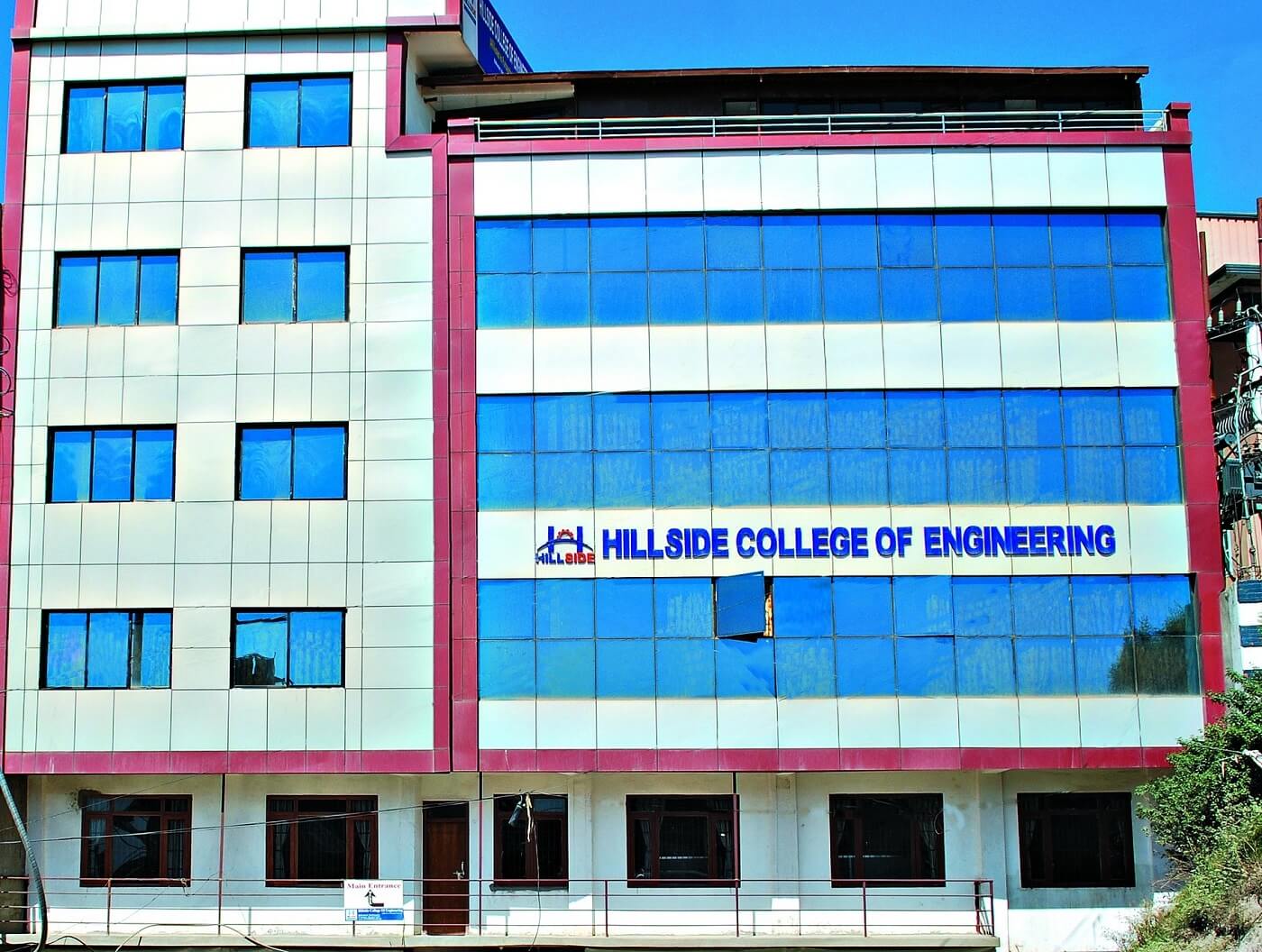
Hillside College of Engineering offers four undergraduate programs and two postgraduate programs. The listed seat allocations are as follows.
| Program | Level | Seats |
|---|---|---|
| Bachelor of Information Technology (BIT) | Bachelor's | 48 |
| Bachelor of Civil Engineering (BE Civil) | Bachelor's | 96 |
| Bachelor of Electrical Engineering | Bachelor's | 48 |
| Bachelor of Computer Engineering (BE Computer) | Bachelor's | 48 |
| MSc Electrical Power Engineering | Master's | 20 |
| MSc Construction Management | Master's | 20 |
This combination gives the college a program range that begins with broad undergraduate technical education and extends into specialized postgraduate study in construction management and electrical power systems.
Bachelor of Civil Engineering is a four-year Purbanchal University program. At Hillside College of Engineering, it has 96 seats, making it the largest program by seat allocation among the six courses.
The academic scope includes structural engineering, water resource engineering, environmental engineering, geotechnical engineering, and transportation engineering. These areas place students in contact with different parts of civil engineering rather than concentrating the degree on a single branch.
Structural engineering deals with the analysis and design of structures. Geotechnical study addresses the behavior of soil and rock in relation to foundations and construction. Transportation engineering examines transportation systems, while water resource and environmental engineering bring water management and environmental considerations into the civil engineering curriculum.
Project work and field visits form part of the college's teaching approach. For civil engineering students, these activities give academic subjects a practical setting in which design, materials, construction processes, site conditions, and engineering decisions can be discussed beyond the classroom.
Bachelor of Electrical Engineering is also structured as a four-year program under Purbanchal University. Hillside College of Engineering has 48 seats for the program.
Its academic areas include power electronics, communication and signal processing, electromagnetic fields, solid-state devices, digital systems, and control systems. Together, these subjects cover electrical power, electronic components, signals, digital technology, and system control.
Laboratory sessions form an important part of this study. Students work with electrical and electronic concepts through practical exercises involving circuits, hardware, control-related systems, and communication applications.
The college's wider teaching model also includes projects, presentations, group discussions, and seminars. These activities allow students to explain technical work, work through engineering problems with classmates, and connect mathematical and theoretical concepts with practical assignments.
Bachelor of Computer Engineering has 48 seats. The Purbanchal University course structure effective from the 2021 batch shows a curriculum that combines computing with mathematics, physical science, electronics, electrical engineering, communication, and engineering foundations.
The first semester includes Mathematics I, Physics, English for Technical Communication, Computer Programming, Fundamental of Computing Technology, Engineering Drawing, and Workshop Technology. The second semester moves into Mathematics II, Chemistry, Object Oriented Programming with C++, Digital Logic, Basic Electrical Engineering, and Applied Mechanics.
By the third and fourth semesters, students encounter subjects such as Data Structure and Algorithm, Object Oriented Analysis and Design, Computer Graphics, Electronic Devices and Circuits, Database Management System, Python Programming, Discrete Structure, Microprocessor, Communication System, and Probability & Statistics. Project I also appears in the third-semester structure.
This subject sequence shows the engineering character of the degree. Programming is studied alongside electronics, electrical fundamentals, mechanics, mathematics, communication systems, computer hardware concepts, databases, and structured project work.
Laboratory and practical hours are built into several subjects, including programming, digital logic, computer graphics, database study, microprocessors, and electronics-related courses.
Bachelor of Information Technology has 48 seats. Its curriculum has a different balance from computer engineering, even though both programs deal with computing.
The Purbanchal University BIT first-semester structure includes Mathematics I, Fundamentals of Information Technology, Technical Communication (English), Basic Electrical System & Circuit, Principles of Management, Computer Programming-I, and Project-I.
The first semester therefore places computing study alongside mathematics, communication, electrical fundamentals, management, programming, and project work. Fundamentals of Information Technology introduces computer systems, software, data and database concepts, telecommunications, networks, the internet, multimedia, information security, and applications of information technology.
Practical work is included within the curriculum. Computer Programming-I and Fundamentals of Information Technology both carry practical components, while Project-I begins project-based study from the first semester.
For students comparing BIT with BE Computer at the same college, the curricula show two distinct academic structures. BE Computer has a stronger engineering framework involving electronics, mechanics, electrical study, microprocessors, communication systems, and engineering subjects, while BIT begins with information technology, programming, management, communication, and project work within its own university curriculum.
MSc Construction Management is a two-year postgraduate program with 20 seats.
The course concentrates on the management side of construction projects. Its study areas include project planning and scheduling, cost estimation and control, construction law and contracts, project delivery methods, and risk management.
These subjects deal with questions that arise when construction moves from technical design into organized project execution: how activities are scheduled, how resources are planned, how costs are monitored, how contracts are handled, and how project risks are identified and managed.
Case-study work and quantitative and qualitative methods are also part of the academic approach. This gives postgraduate students opportunities to examine construction management problems through structured analysis rather than studying management concepts only in abstract form.
MSc Electrical Power Engineering is another two-year postgraduate program and has 20 seats.
The program covers power system analysis, power electronics, power system protection, high-voltage engineering, and renewable energy integration. Its academic direction is tied to the operation, analysis, protection, and control of electrical power systems.
Students also work with software-based modeling and simulation as part of advanced study. Research activity forms another component, including the development and presentation of academic work.
The master's program sits alongside the college's undergraduate electrical engineering program but operates at a more specialized level, with greater concentration on electrical power systems and related technical analysis.
Hillside College of Engineering uses several forms of academic work beyond conventional lectures. These include project assignments, field visits, laboratory exercises, case-study analysis, group discussions, seminars, individual projects, presentations, and interactive classroom activities.
Project work asks students to apply course concepts to defined technical problems. Laboratory sessions provide structured time for experiments, programming, hardware work, measurements, and other practical activities associated with individual subjects.
Field visits give engineering students a chance to observe technical work outside the classroom. Depending on the academic area, the settings can include construction-related sites, power-related facilities, or other locations connected with engineering practice.
Case studies are particularly relevant to construction management and other subjects where students need to examine decisions, constraints, resources, risks, and project situations. Group discussions and presentations add a communication component to technical study, requiring students to explain their reasoning rather than submit written work alone.
Teaching assistants work alongside professors in providing academic guidance. The college also conducts interactive sessions with people from different professional and technical fields.
The college has laboratories for practical and experimental work. These spaces support engineering and computing subjects in which students need access to instruments, hardware, laboratory exercises, or technical software.
Teaching spaces also use presentation and classroom technologies such as projectors and interactive teaching tools. These resources support lectures, demonstrations, student presentations, and visual explanation of technical material.
An online and offline library gives students access to study and reference materials. The combination is useful for regular coursework as well as projects, reports, presentations, and research assignments.
The college also has a Research and Development Academy intended for research activities involving students and faculty. Its presence gives research a defined place within the institution rather than limiting academic work to scheduled classes and examinations.
Student life includes academic and extracurricular activities. Students can take part in clubs and groups connected with interests such as robotics, coding, and cultural activities.
Sports are included among the extracurricular options. Cultural events provide another setting for student participation outside technical coursework.
Workshops and seminars extend the academic environment beyond the standard semester timetable. These activities can be connected with technical subjects, professional discussions, research interests, or areas that complement classroom study.
The combination of clubs, sports, cultural programs, workshops, seminars, projects, and presentations gives students several ways to participate in college activities while continuing their formal academic work.
For bachelor-level engineering admission, candidates are required to complete the entrance examination conducted by Purbanchal University.
The academic eligibility stated for engineering applicants includes I.Sc. or +2 Science, or a three-year Diploma in Engineering, with a minimum grade of C in all subjects. Candidates also participate in an interview at Hillside College of Engineering.
The admission documents include:
Original and copy of the SEE mark sheet
SEE character certificate
Intermediate-level transcript
Provisional certificate
Migration certificate
Character certificate
Citizenship certificate
Two recent passport-sized photographs
Students applying to a specific program should follow the admission requirements attached to that program and admission cycle.
Scholarship arrangements include provisions connected with Purbanchal University rules for reserved-quota students and entrance performance.
The college also has scholarship support linked with students' academic performance during their semesters. Financial assistance arrangements include bank financing support for education costs and assistance for students who require financial support.
Scholarship eligibility can depend on the applicable university rules, entrance performance, academic results, and the conditions attached to a particular form of support.
Hillside College of Engineering has an academic structure that now covers six programs rather than a single branch of engineering. Civil and electrical engineering remain part of its core engineering offering, while computer engineering and BIT add two computing pathways. At postgraduate level, Construction Management and Electrical Power Engineering provide two specialized options.
The distinction between these courses is important for prospective students. Civil engineering centers on infrastructure and the built environment. Electrical engineering covers electrical, electronic, communication, and control systems. Computer engineering combines computing with an engineering foundation, while BIT follows an information-technology curriculum with programming, management, communication, and project study. The two master's programs move into specialized construction management and electrical power study.
Across these programs, laboratory work, projects, field learning, seminars, presentations, and research-related activity give practical and analytical work a recurring place in the academic environment.


Hillside College of Engineering is located in Balkumari, Koteshwor, Kathmandu.
The college is affiliated with Purbanchal University.
The college offers Bachelor of Information Technology, Bachelor of Civil Engineering, Bachelor of Electrical Engineering, Bachelor of Computer Engineering, MSc Construction Management, and MSc Electrical Power Engineering.
Bachelor of Civil Engineering has 96 seats, the highest seat allocation among the six listed programs.
BIT has 48 seats, and Bachelor of Computer Engineering also has 48 seats.
MSc Construction Management has 20 seats, while MSc Electrical Power Engineering has 20 seats.
Yes. Its academic activities include laboratory work, projects, field visits, case studies, group discussions, seminars, individual projects, and presentations.
Engineering applicants are required to complete the Purbanchal University entrance examination. The stated academic routes include I.Sc., +2 Science, or a three-year Diploma in Engineering with a minimum grade of C in all subjects, followed by an interview at the college.